Table of Contents >> Show >> Hide
- What “Europe’s Next-Gen Fighter” Really Means (Hint: It’s Not One Thing)
- Airbus’s Role in FCAS: Building the Team, Not Just the Jet
- So What Would the New Generation Fighter Actually Be?
- The Biggest Challenge Isn’t Aerodynamics—It’s Alignment
- Why Airbus (and Europe) Cares So Much: Strategy, Sovereignty, and the F-35 Shadow
- FCAS vs. GCAP: Two Programs, Two Speeds, One Shared Reality
- What to Watch Next: Signals That Planning Is Turning Into Building
- Experiences Related to Airbus Planning Europe’s Next-Gen Fighter (About )
Europe is trying to do something that sounds simple until you say it out loud: build a next-generation fighter jet that can out-think, out-see, and out-network tomorrow’s threats—while also satisfying multiple governments, multiple air forces, multiple industrial champions, and the occasional national ego that arrives without a flight plan.
Airbus sits right in the middle of this high-wire act. Through the Future Combat Air System (FCAS), Airbus isn’t just helping sketch a new fighter—it’s shaping a whole system of systems built around a New Generation Fighter (NGF), uncrewed “remote carriers” (think: mission-adaptable drones), and a secure data backbone often described as a combat cloud. In other words: the airplane is important, but it’s not the whole point anymore. The point is the team.
If that sounds like a lot, that’s because it is. But it’s also where modern air power is heading: fewer crewed aircraft, more autonomy, more sensors, more electronic warfare, more networking, and a huge premium on making decisions faster than the other side can say, “Wait, what just happened?”
What “Europe’s Next-Gen Fighter” Really Means (Hint: It’s Not One Thing)
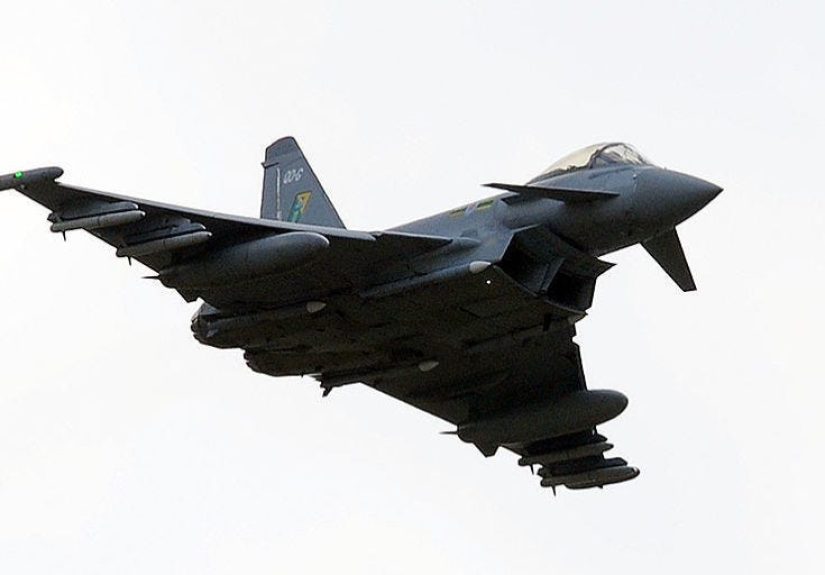
When people say “Europe’s next-gen fighter,” they often mean the NGF inside FCAS—the Franco-German-Spanish effort first announced in 2017. FCAS is aimed at a future capability around 2040, with demonstrators expected late in the 2020s. But Europe also has a second, parallel sixth-generation track: the Global Combat Air Programme (GCAP), led by the U.K., Italy, and Japan, targeting entry into service around 2035.
So, Europe is effectively running two big bets at the same time. That might sound redundant, but it reflects two realities: different operational needs (including carrier operations and national strategic missions) and different industrial coalitions. It also reflects the strategic urgency Europe feels after years of rising tension, high-end air-defense proliferation, and an increasing desire for defense autonomy alongside NATO commitments.
FCAS in one sentence
FCAS is a future air combat ecosystem where a piloted NGF works with uncrewed remote carriers and other assets across domains, connected by a secure combat cloud. It’s designed to bring “collaborative combat” to life at scale.
GCAP in one sentence
GCAP is a separate next-generation fighter program that also emphasizes networked warfare and crewed-uncrewed teaming, built around a trilateral structure with a dedicated industrial joint venture and an ambitious 2035 timeline.
Airbus’s Role in FCAS: Building the Team, Not Just the Jet
Airbus is co-leading FCAS overall and serves as a main partner for the NGF demonstrator pillar. Just as importantly, Airbus leads major FCAS pillars including Remote Carriers and the Combat Cloud, and has key work tied to enhanced low observability. That portfolio tells you how Airbus sees the future: air combat won’t be won by a single “hero aircraft,” but by a coordinated set of connected, upgradeable capabilities that can evolve over decades.
Airbus also frames FCAS as a phased roll-out: improvements and connectivity in the late 2020s, more advanced manned-unmanned teaming in the early 2030s, and the full NGWS vision by around 2040. This approach matters because it aligns with how militaries actually adopt technology: in increments, with lots of testing, training, and hard lessons learned along the way.
Remote carriers: the “extra hands” that change the math
Airbus uses the term Remote Carriers for purposely designed, modular uncrewed aerial vehicles meant to team with the NGF and even upgraded legacy fighters such as the Eurofighter. One core idea is to restore “combat mass” in highly contested environments: instead of needing more expensive crewed jets (and more pilots), you expand effects with multiple uncrewed partners that can scout, jam, decoy, strike, or extend sensing.
In plain English: if modern air defenses make it harder to get close, remote carriers give you more options for how to get the job done without risking the pilot every time you need a sensor closer to the threat.
The combat cloud: the part nobody photographs, but everyone fights over
The Combat Cloud is the connective tissue. Airbus describes it as a data cloud that links crewed and uncrewed assets to other systems across domains (air, space, land, sea, cyber), enabling platforms to act as sensors, effectors, and command-and-control nodes within an open, scalable architecture. If the remote carriers are the extra hands, the combat cloud is the nervous system.
This is also where many modern programs get complicated fast: data standards, latency, cybersecurity, cross-domain interoperability, sovereignty over sensitive information, and who controls which “black boxes.” In next-gen airpower, the software and the network can be as strategically sensitive as the airframe itself.
So What Would the New Generation Fighter Actually Be?
Public details are intentionally limited, but the direction is consistent with what’s generally meant by a sixth-generation fighter: survivability in advanced integrated air-defense environments, reduced observability, long-range sensing and effects, electronic warfare baked into the design, and a cockpit experience that looks more like mission command than classic stick-and-rudder heroics.
One of the best ways to understand NGF is to think in roles rather than shapes:
- Quarterback of the formation: managing remote carriers, fusing sensor data, and directing effects.
- Stealthy node in a network: contributing to the combat cloud while resisting jamming and cyberattack.
- Flexible strike and air dominance platform: still able to fight for air superiority, but with more options than “launch missile, turn hard, repeat.”
Airbus also stresses that FCAS is not only about the NGF. That matters because it avoids a trap that has swallowed many defense projects: building an exquisite aircraft that becomes too expensive to buy in meaningful numbers. A system-of-systems approach is partly a strategy for affordability and scalability: let uncrewed systems take on certain tasks, and keep the crewed platform focused on what humans must still do.
The Biggest Challenge Isn’t Aerodynamics—It’s Alignment
The technical ambition is enormous. But FCAS’s most visible turbulence has come from governance, workshare, technology rights, and leadership. Dassault is the prime contractor for the NGF, with Airbus as the main partner representing Germany and Spain, and public reporting has repeatedly described deep friction over how responsibilities and decision-making should work.
In 2025, Dassault’s CEO described cooperation with Airbus on the sixth-gen fighter as “very, very difficult,” and emphasized that it was up to the governments to improve management of the program. Those kinds of statements are not casual venting; they are flares fired in daylight.
Meanwhile, the calendar keeps moving. Phase 1B began with a multi-billion-euro contract intended to mature technologies and prepare demonstrators. But as FCAS edges toward its next phases, any delay compounds: supplier schedules slip, talent gets reallocated, costs rise, and export credibility fades.
A program under stress: the “two-fighter solution” idea
In early 2026, Airbus publicly signaled it was open to a major structural change: a “two-fighter solution” that could keep FCAS alive even if the NGF pillar can’t be reconciled as a single design. Airbus leadership described FCAS as being at a difficult junction and emphasized that other pillars (combat cloud, remote carriers, engine) were making good progress even as the fighter segment stalled.
Shortly after, Airbus’s CEO also said Airbus could develop a fighter on its own if needed, while still expressing a preference for continued European co-development. That’s both a negotiating position and a strategic message: Airbus doesn’t want FCAS to fail, but it also doesn’t want to be held hostage by deadlock.
Requirements: one size does not fit all
The friction isn’t only corporate. National requirements diverge. France has historically emphasized sovereign capabilities, including an aircraft compatible with carrier operations and strategic missions, while Germany and Spain have their own operational and budget realities. When requirements diverge, you either compromise (and annoy everyone equally) or you split (and pay more).
Why Airbus (and Europe) Cares So Much: Strategy, Sovereignty, and the F-35 Shadow
Europe’s fighter future is happening in a world where fifth-generation aircraft are already common, advanced air defenses are improving, and electronic warfare is a daily fact of life. Many European nations are buying the F-35, which is a capable aircraft with a powerful ecosystem. But dependence comes with trade-offs: sovereignty over upgrades, data, supply chains, and long-term freedom of action.
FCAS is often described as a pillar of European strategic autonomy—not in opposition to NATO, but as a way to ensure Europe can contribute high-end capability without relying entirely on non-European industrial pipelines. Airbus explicitly frames FCAS as vital to Europe’s independence and as a driver of advanced industry and technology that can spill over beyond defense.
There’s also a practical angle: aerospace is a talent game. Programs like FCAS and GCAP keep design teams alive, preserve supply chains, and sustain industrial competitiveness. If Europe stops building frontline fighters, it doesn’t just lose a product—it loses a capability that takes decades to rebuild.
FCAS vs. GCAP: Two Programs, Two Speeds, One Shared Reality
GCAP is often portrayed as moving faster, with an industrial joint venture (with equal shareholding among the key partners) designed to keep the program organized and aligned with a government body overseeing it. The plan targets a 2035 in-service date and explicitly anticipates operating with uncrewed collaborative platforms.
FCAS, by contrast, aims for around 2040 and is structured around multiple pillars and a “system of systems” approach. It is ambitious and comprehensive—but also more vulnerable to disagreements because so many components and stakeholders must remain synchronized.
The big takeaway is not that one is “good” and the other is “bad.” It’s that Europe is experimenting with governance models for complex, software-heavy air combat systems. And governance, more than glossy renderings, may determine who actually fields capability on time.
What to Watch Next: Signals That Planning Is Turning Into Building
If you want to know whether Airbus is truly “planning Europe’s next-gen fighter” in a way that becomes real hardware, watch for these concrete indicators:
- Phase decisions and contract clarity: especially around the NGF pillar and demonstrator work.
- Stable governance: clear leadership roles, decision rights, and rules for technology sharing.
- Demonstrator milestones: late-2020s flight activity is a major credibility marker.
- Operational requirement convergence: whether customers accept common requirements or formalize divergence.
- Software and network maturity: combat cloud progress is a leading indicator of system-of-systems viability.
Airbus can design airframes, integrate systems, and lead major pillars. But no industrial champion can brute-force a trinational political agreement. In modern defense programs, the hardest part often isn’t making the aircraft fly. It’s making everyone agree on what “success” looks like.
Experiences Related to Airbus Planning Europe’s Next-Gen Fighter (About )
Even if you never set foot on a flight line, the experience of watching a next-generation fighter program unfold is oddly personal—because it’s a front-row seat to how technology, politics, and culture collide at 30,000 feet.
Start with the aviation fan experience: you go to an airshow (or watch highlight reels online), and you see a Eurofighter or Rafale do something that looks like it violates several laws of physics and at least one unspoken agreement with gravity. The crowd cheers, cameras tilt up, and you think, “What on earth could possibly be next?” Then you hear engineers talk about the future and realize the next trick isn’t a tighter turn. The next trick is an airplane that behaves like a flying command center—quietly coordinating sensors, drones, and data links while the pilot manages the mission more than the mechanics.
There’s also the experience of following the language shift. Fighter programs used to be described with words like speed, agility, and thrust. Now you hear “combat cloud,” “collaborative combat,” and “system of systems.” It can sound like corporate jargon—until you map it to a real scenario: a contested environment where a single aircraft can’t safely get close, but a team of uncrewed partners can probe forward, jam defenses, spot targets, and feed the pilot a fused picture. Suddenly the buzzwords feel less like marketing and more like survival.
For professionals who live around aerospace—engineers, maintainers, program managers, even policy folks—the experience is equal parts thrilling and exhausting. Thrilling because you get to imagine capabilities that didn’t exist a decade ago: modular drones that can be configured for different missions, secure networks that turn every platform into a sensor node, and software-defined upgrades that keep a fleet relevant for decades. Exhausting because progress isn’t just a technical checklist. It’s meetings, agreements, negotiations, and careful decisions about what gets shared, what stays sovereign, and who owns which slice of the future.
And then there’s the human experience for pilots and operators who may one day fly these systems. Imagine training not just to fly a jet, but to manage a small team of semi-autonomous aircraft. It’s less “Top Gun” and more “airborne orchestra conductor,” where the job is to keep tempo while every instrument is also listening to the enemy. The cockpit becomes a decision space. The mission becomes a data problem. And the most valuable skill might be knowing when to trust automation—and when to override it because the sky has a way of humbling even the best code.
Ultimately, the experience of this moment is realizing that Airbus isn’t just planning a fighter. It’s planning a new way of fighting in the air, where the jet is the visible symbol, but the real advantage comes from the invisible connections behind it. It’s the kind of shift you don’t fully appreciate until you notice that the most important part of the next-generation fighter might be the part you never see in a photo: the network.