Table of Contents >> Show >> Hide
- Why Shenzhen Feels Like Hardware’s Natural Habitat
- Hackaday Energy, Shenzhen Scale
- Huaqiangbei: The Bazaar That Rewires Your Brain
- From Shanzhai to Open Hardware Confidence
- The Bridges Between Makers and Manufacturers
- Maker Faire Shenzhen Proved It Was Cultural, Not Just Industrial
- What Shenzhen Gets Right About Modern Making
- The Caveats Matter Too
- Conclusion: Why The Spirit Of Hackaday Still Shines There
- An Experiential Look At Shenzhen’s Maker Energy
There are cities that feel engineered for finance, cities that feel tailored for tourism, and then there is Shenzhen, which often feels like it was built by a sleep-deprived team of engineers who collectively said, “What if we turned the entire town into a prototype?” That is exactly why the spirit of Hackaday shines so brightly there. Shenzhen is not just a place where electronics get manufactured. It is a place where ideas get ambushed by possibility.
If Hackaday represents curiosity with a soldering iron, then Shenzhen is the city where that curiosity gets turbocharged. The same instinct that drives a late-night bench hack, a 3D-printed fix, or a weird but brilliant open-source gadget also runs through Shenzhen’s maker culture. The tools are bigger, the supply chain is faster, the stakes are higher, and the coffee probably arrives after the PCB revision. But the attitude is familiar: take things apart, learn by doing, improve what exists, and ship something that actually works.
That is what makes the relationship between Hackaday-style hardware culture and Shenzhen so compelling. One celebrates fearless tinkering. The other turns tinkering into momentum. Put them together and you get a powerful story about modern making, where experimentation is not a side hobby but a way of building the future one connector, sensor, enclosure, and “let’s try this real quick” moment at a time.
Why Shenzhen Feels Like Hardware’s Natural Habitat
Shenzhen has become famous for a reason. It sits at the intersection of manufacturing depth, entrepreneurial energy, and logistical speed. In practical terms, that means a designer can move from sketch to prototype much faster than in most places on Earth. In romantic terms, it means the city has the vibe of a giant workbench with better public transit.
What makes Shenzhen special is not just that parts exist there. Parts exist everywhere now, at least online. What makes Shenzhen different is density. Suppliers, traders, assembly experts, board houses, packaging vendors, tooling specialists, and manufacturing consultants are packed into one ecosystem. If a prototype fails, the answer is often not a three-week delay and a sad email thread. It is a walk, a train ride, or a WeChat message away.
That speed matters because hardware is stubborn. Software developers can patch later. Hardware developers get to discover the thrilling character-building exercise known as “the connector is 1.5 millimeters off and now everything is pain.” Shenzhen reduces that pain by shrinking the distance between problem and solution. It lets builders iterate in the real world, not just in CAD dreams and optimistic spreadsheets.
Hackaday Energy, Shenzhen Scale
Hackaday has always been about more than gadgets. Its real center of gravity is a mindset: irreverent, inventive, hands-on, and suspicious of black boxes. It cheers for people who want to understand how things work, not just consume them. Shenzhen reflects that same energy, but on a citywide scale.
The Joy of Taking Things Apart
Walk through Shenzhen’s electronics districts and you quickly realize this is not a place that treats technology as sacred. Devices are opened, modified, repaired, combined, tested, and reimagined. Components are not abstract line items on a purchasing sheet. They are tangible possibilities sitting behind glass, stacked in drawers, or hanging in reels. That physical accessibility changes the way people think. A project stops being theoretical the moment the pieces are in your hand.
That feels deeply Hackaday. The site has long celebrated the people who stare at a finished object and see a beginning instead of an end. Shenzhen rewards that impulse. It says yes to curiosity, but it also adds a practical follow-up: “Great, how many do you want built?”
From Breadboard Chaos to Production Reality
The classic maker fantasy goes like this: you build a scrappy prototype, the internet loves it, and then somehow the universe kindly handles sourcing, manufacturing, packaging, certification, and yield issues. Shenzhen is where fantasy meets paperwork, tolerances, and economics. Oddly enough, that does not make the city less magical. It makes it more useful.
In Shenzhen, the distance between “cool demo” and “sellable object” is shorter than in most maker scenes. Accelerators, contract manufacturers, and local hardware veterans have helped countless founders understand that design for manufacturing is not the enemy of creativity. It is creativity’s reality check. Hackaday celebrates the clever hack. Shenzhen asks whether the clever hack can survive revision three, a production run, and a shipment deadline. That combination is not a contradiction. It is the full lifecycle of making.
Huaqiangbei: The Bazaar That Rewires Your Brain
No discussion of Shenzhen is complete without Huaqiangbei, the electronics district that has achieved near-mythic status among makers, founders, and curious nerds with strong opinions about test equipment. Huaqiangbei is not just a market. It is a sensory event. You do not simply shop there. You absorb it.
Floors of LEDs, cables, screens, connectors, tools, modules, batteries, repair gear, and components create a kind of hardware overload that makes normal retail stores feel emotionally underclocked. Need a strange display, a tiny fan, a connector whose name you forgot, or a part that looked discontinued everywhere else? Huaqiangbei has a talent for making impossible requests sound adorable.
Of course, the district is not a frictionless paradise. It is overwhelming. Quality varies. Counterfeits exist. Vendor relationships matter. Language still matters. Bargaining skill definitely does not hurt. But even those complications reveal something important: Shenzhen’s hardware culture is not neat and curated. It is alive. It is messy, transactional, collaborative, and intensely practical. The city does not perform innovation for an audience. It conducts business.
That is a big part of the Hackaday connection. Hackaday has never romanticized making as a spotless lifestyle product. Real hacking is messy. So is real manufacturing. Huaqiangbei embodies both truths at once.
From Shanzhai to Open Hardware Confidence
One of the most misunderstood ideas in discussions about Shenzhen is shanzhai. Outside China, the term is often flattened into a lazy synonym for copying. But that misses the more interesting reality. In Shenzhen’s broader hardware culture, shanzhai has also described a fast-moving, collaborative, remix-heavy way of developing products. It can be rough around the edges, yes, but it is also adaptive, responsive, and deeply networked.
That matters because Hackaday culture has always respected the educational power of reverse engineering, modification, and open exchange. Shenzhen’s ecosystem showed the world that innovation is not always born from isolated genius in a pristine lab. Sometimes it emerges from dense communities that iterate relentlessly, swap knowledge informally, and treat products as things that can always be revised.
The healthiest interpretation of that lesson is not “copy everything.” It is “learn fast, improve fast, and do not be precious about version one.” That philosophy has shaped generations of open hardware builders, including those who came to Shenzhen searching for parts and left with a new understanding of how product ecosystems really work.
The Bridges Between Makers and Manufacturers
Shenzhen’s rise did not happen because parts were piled in buildings and everyone somehow figured it out by telepathy. A major reason the city became so important to global hardware culture is that a network of bridges formed between independent makers, startups, and manufacturing experts.
HAX, Seeed, and the Translator Layer
Organizations like HAX helped turn Shenzhen into more than a shopping destination for component obsessives. They made it a launchpad. HAX’s role in bringing early-stage hardware teams into the heart of the supply chain helped founders understand that building a device is as much about ecosystem fluency as invention. You do not just need a working prototype. You need manufacturing literacy.
Seeed played a similarly important role in connecting maker culture to scalable production. The company became well known for helping makers and small teams bridge the gap between open-source experimentation and real-world manufacturing. That is a very Hackaday kind of mission. It respects the playful roots of hardware hacking without trapping projects in permanent demo mode.
Even firms working to replicate a “Shenzhen-style” supply chain elsewhere end up proving the same point: what makes Shenzhen powerful is not any single building or company. It is the network effect. The city teaches that manufacturing is not just a back-end process. It is a creative ecosystem.
Maker Faire Shenzhen Proved It Was Cultural, Not Just Industrial
If Huaqiangbei shows Shenzhen’s transactional side, Maker Faire Shenzhen revealed its cultural one. The event demonstrated that the city’s hardware identity was not confined to factories and sourcing floors. It also belonged to artists, educators, students, startups, and open-source builders who saw technology as something to share, remix, and celebrate in public.
That is where the spirit of Hackaday becomes unmistakable. Hackaday is not interested only in polished commercial devices. It loves oddball experiments, educational builds, functional art, ambitious failures, and projects that make you laugh before they make you think. Maker Faire Shenzhen embraced that same range. It blended technical seriousness with playful invention, the exact mix that keeps maker culture alive instead of turning it into corporate wallpaper.
Shenzhen’s fairs, makerspaces, and community hubs also helped correct a stale stereotype: the idea that manufacturing and creativity live in separate zip codes. In Shenzhen, they share elevators. The engineer, artist, startup founder, student, and factory contact often occupy the same orbit. That is not just efficient. It is culturally generative.
What Shenzhen Gets Right About Modern Making
The real lesson of Shenzhen is not that every city should try to become a clone of it. Good luck with that, for starters. The deeper lesson is that making thrives when experimentation, supply, talent, and feedback sit close together.
Shenzhen also understands something many tech scenes forget: manufacturing is not the boring part after innovation. Manufacturing is where innovation gets tested by physics, cost, reliability, and users who do not care how elegant your concept sketch looked. That pressure can be brutal, but it can also be clarifying. It forces better questions. Can the design be assembled easily? Can it be repaired? Can the parts be sourced consistently? Can the product survive outside a demo table and an enthusiastic tweet?
Hackaday readers instinctively appreciate that kind of honesty. They know the gap between “it works once on my bench” and “it works for other humans under normal conditions” can be a canyon. Shenzhen does not eliminate that canyon, but it builds a lot of bridges across it.
The Caveats Matter Too
It would be lazy to turn Shenzhen into a techno-utopian cartoon. The city’s speed can hide complexity. Supply chains raise ethical questions. Environmental pressures are real. Hardware culture there, like anywhere else, operates inside larger economic and political systems that can complicate the story. Visitors can easily romanticize the rush of sourcing and prototyping while overlooking the labor, infrastructure, and trade-offs beneath the surface.
But that is exactly why the best writing about Shenzhen has always balanced awe with realism. The city deserves both. It is extraordinary, but not magical in the fairy-dust sense. Its magic is built from logistics, expertise, repetition, risk, and people who know how to turn one conversation into a working object by next Tuesday.
Conclusion: Why The Spirit Of Hackaday Still Shines There
Shenzhen matters because it proves that hardware can still be dynamic, weird, and alive. It proves that making is not just nostalgia for solder fumes and old oscilloscopes. It is a present-tense way of thinking, one that connects curiosity to capability. And that is why the spirit of Hackaday shines in Shenzhen so clearly.
Both celebrate learning by doing. Both trust builders more than buzzwords. Both understand that innovation is rarely a lightning bolt from nowhere; it is usually a chain reaction of experimentation, failure, revision, collaboration, and stubborn optimism. Shenzhen simply runs that chain reaction at city scale.
So when people call Shenzhen the hardware capital of the world, they are not just describing factories or markets. They are describing a culture of possibility. A place where the person holding a sketch, a broken gadget, or a ridiculous idea is not told to calm down. They are told to keep going. That is not just good for startups. It is good for the future of making.
An Experiential Look At Shenzhen’s Maker Energy
To understand why this topic resonates so strongly, it helps to imagine the experience many builders describe when they first encounter Shenzhen in person. You begin the day with a neat mental checklist. Maybe you need a better power module, a display option, some enclosure ideas, and a backup sensor because the original one is acting like it was designed by chaos itself. By lunchtime, your checklist has exploded into twenty new possibilities. By dinner, you are no longer thinking like a shopper. You are thinking like a system designer.
That transformation is one of Shenzhen’s most remarkable qualities. The city does not just provide parts; it changes your expectations. A builder used to waiting a week for samples suddenly realizes that multiple alternatives can appear in an afternoon. A founder who once treated manufacturing as a distant, mysterious phase starts to see it as part of the design conversation from day one. A hobbyist who thought in terms of one-off hacks begins to imagine small-batch production. Shenzhen has a way of turning passive ideas into active plans.
Visitors often describe the pace as both exhilarating and humbling. Exhilarating because the ecosystem feels responsive, almost conversational. Humbling because you quickly realize how much you do not know. Which vendors are brokers and which represent factories? Which part is authentic, which is a clone, and which clone is actually good enough for your use case? What should be customized now, and what should wait until the next revision? Shenzhen is generous with options, but not with certainty. That is part of the education.
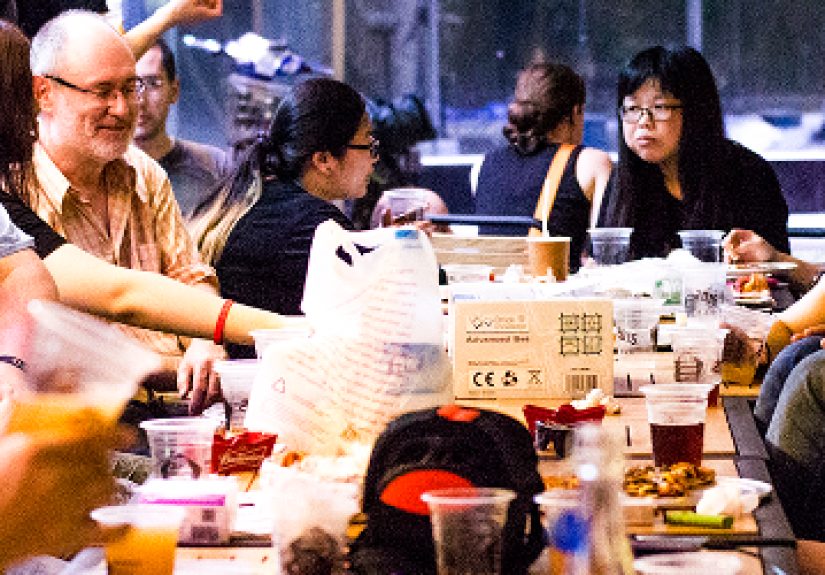
There is also a social side to the experience that matters more than outsiders sometimes realize. Deals do not happen in a vacuum. Advice circulates through casual conversations, introductions, repeat visits, and the growing trust between people who understand the same technical problem from different angles. A builder might spend the morning talking tolerances, the afternoon comparing modules, and the evening at a barbecue learning more about the supply chain than any polished slide deck could ever teach. That blend of business and community is part of what gives Shenzhen its reputation for momentum.
And then there is the emotional effect. For many makers, Shenzhen can feel strangely validating. The obsessions that might seem niche elsewhere suddenly feel normal there. Caring too much about connectors, panel cutouts, lead times, heat dissipation, or test fixtures does not make you eccentric. It makes you understandable. The city speaks fluent hardware. That alone can be energizing for people who spend most of their year explaining to others why a tiny revision matters so much.
At the same time, the experience can sharpen a person’s sense of responsibility. The more real a product becomes, the more real its consequences become too. Cost decisions affect quality. Schedule decisions affect stress. Manufacturing decisions affect waste, labor, and long-term repairability. Shenzhen does not let hardware remain an abstract act of creativity for very long. It turns it into a series of practical choices. In that sense, the city does not just amplify the maker mindset; it matures it.
That is why the connection to Hackaday feels so natural. The most memorable experience associated with Shenzhen is not simply “wow, look at all the stuff.” It is the realization that making can be both playful and serious, improvised and disciplined, local and global. One minute you are marveling at a stall full of components. The next, you are rethinking how innovation actually happens. That kind of shift stays with people. It is more than a travel memory. It is a new operating system for the way they build.