Table of Contents >> Show >> Hide
- Before You Start: What Kind of “Wicker” Are We Talking About?
- What You’ll Need (No Fancy Stuff)
- Step 1: Empty It, Dry-Dust It, and De-gunk the Weave
- Step 2: Spot-Clean with a Gentle Solution (Minimal Moisture, Maximum Results)
- Step 3: Dry Completely (Then Keep It Cleaner Longer)
- Bonus: Quick Troubleshooting (Because Life Happens)
- FAQ
- Real-World Experiences: What Actually Makes Wicker Cleaning Easy (and What Makes It a Nightmare)
- Wrap-Up: Clean Wicker, Happy Home
Wicker baskets are the MVPs of home organization: they hold toys, towels, mail, pantry snacks, “I’ll deal with this later” clutter, andsomehowevery dust particle in your ZIP code. The good news? Cleaning wicker isn’t hard. The bad news? If you drown it like a houseplant, it will absolutely hold a grudge (warp, loosen, and grow mystery fuzz).
This guide keeps things simple and safe: 3 steps, a few basic supplies, and just enough moisture to get the job done without turning your basket into a modern art sculpture.
Before You Start: What Kind of “Wicker” Are We Talking About?
“Wicker” is a weaving style, not one single material. Your basket might be woven from natural fibers (rattan, willow, seagrass, bamboo, water hyacinth) or synthetic resin. Cleaning is similar, but natural wicker hates soaking more than a cat hates bath time.
Quick identify checklist
- Natural wicker: lighter, more textured, may feel slightly rough or dry; can stain/warp if over-wet.
- Synthetic wicker: often smoother, more uniform “strand” look; more water-resistant, usually used outdoors.
- Painted/dyed: color can lift if you scrub aggressively or use harsh cleanersalways spot test.
- Vintage/antique: treat gently; avoid heavy scrubbing, heavy water, and strong chemicals.
What You’ll Need (No Fancy Stuff)
- Vacuum with a brush attachment or a soft paintbrush
- Microfiber cloths (at least 2)
- A soft toothbrush (for crevices)
- Mild dish soap
- Warm water in a bowl
- Optional (for odors): baking soda
- Optional (for mildew): white vinegar + water spray bottle
- Optional (for safety if moldy/dusty): gloves + mask
Two big “don’ts” (tattoo these on your cleaning caddy)
- Don’t soak natural wicker. No bucket baths. No “just a quick dunk.”
- Don’t use harsh chemicals (bleach, strong solvents, heavy-duty all-purpose cleaners) unless the manufacturer specifically says it’s safe.
Step 1: Empty It, Dry-Dust It, and De-gunk the Weave
This step does most of the work. Dust and grit settle deep in the weave, and if you skip dry-cleaning, you’ll just turn that grit into a gritty mud paste later. (Congratulationsyou invented wicker exfoliation. Your basket did not ask for it.)
1A) Empty and shake (responsibly)
Take everything out. If you can, turn the basket upside down outdoors and give it a gentle shake or tap the bottom. If the basket is lined with fabric, remove the liner and wash it according to the label.
1B) Vacuum or brush the weave
- Vacuum method: Use a brush attachment and follow the direction of the weave. Light pressure onlyno basket “microneedling.”
- Brush method: Use a clean, dry paintbrush to sweep dust out of corners and tight areas.
- Detail work: Use a dry toothbrush for stubborn crumbs in the weave (especially pantry baskets).
1C) Deal with sticky stuff before it spreads
If you see dried syrup, candle wax, or mystery residue: gently scrape with a fingernail or a plastic card first. Dry removal is safer than soaking it loose.
Mini example: A pantry basket that held onions and potatoes often collects papery skins and dust. Vacuum first, then brush the cornersotherwise your “wipe down” becomes a gritty brown smear.
Step 2: Spot-Clean with a Gentle Solution (Minimal Moisture, Maximum Results)
Your mission is to clean the surface without saturating the fibers. Think “slightly damp cloth,” not “accidental swamp.”
2A) Make a mild cleaning mix
In a bowl, mix warm water with a few drops of mild dish soap. You want light suds, not a bubble bath worthy of a romance novel.
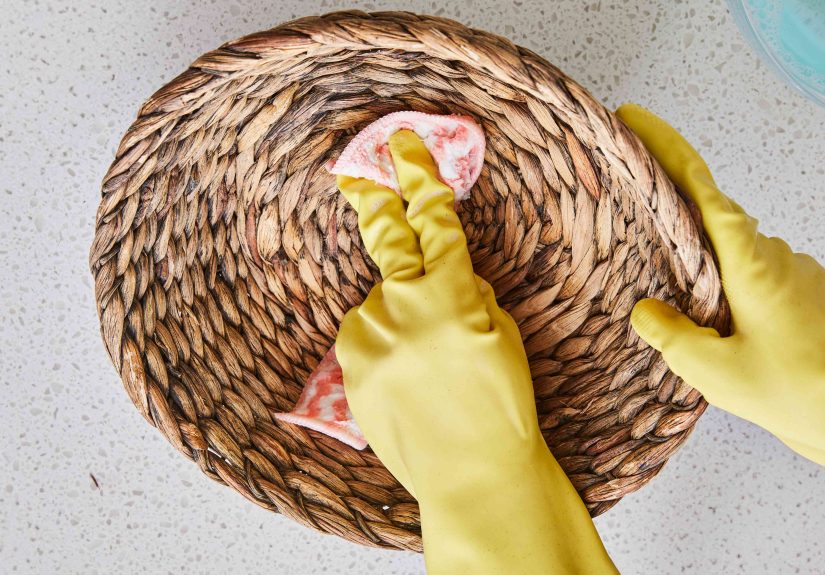
2B) Wipe, don’t drench
- Dip a microfiber cloth into the soapy water.
- Wring it out hard. Then wring it out again for good measure.
- Wipe the basket following the weave.
- Use a toothbrush dipped in the solution for dirty crevices (light pressure).
2C) Rinse the smart way (no running-water waterfall)
Soap residue attracts dirt. To remove it safely, use a separate cloth dampened with plain water (again: well-wrung) and wipe once more.
2D) Handling stains, odors, and mildew (pick your problem)
For food or grease stains
Spot clean only. Dab the soapy cloth on the area, then gently brush with a toothbrush. Repeat rather than scrubbing harder. If you store snacks in the basket, let it dry completely before refilling.
For musty smells
Sprinkle baking soda lightly over the basket (inside and out), work it gently into the weave with a dry brush, let it sit for a few hours (or overnight), then vacuum thoroughly. It’s like a spa day, but for your basket’s vibes.
For light mildew (small spots)
Mix a spray bottle of white vinegar + water (a gentle ratio is about 1 part vinegar to 3–4 parts water). Lightly mist a microfiber cloth (do not spray the basket like you’re putting out a fire), then wipe the affected area. Follow with a plain-water damp cloth.
Important: Wicker is porous. If mold has penetrated deeply, keeps returning, or the basket was stored in a damp place for a long time, it may be safer to replace itespecially if you use it for food, linens, or anything you want to keep fresh.
For “this basket lived through a humid summer” mold situations
If you’re dealing with a larger mold problem, protect yourself (gloves, mask, good ventilation) and consider whether the basket is worth saving. Sometimes the best cleaning move is: retire the basket with honor.
Mini example: A bathroom basket holding washcloths can pick up mildew if the room stays steamy. Vinegar-water wipe + thorough drying + moving the basket away from the shower zone can stop repeat offenders.
Step 3: Dry Completely (Then Keep It Cleaner Longer)
Drying is not an optional “bonus round.” Any trapped moisture can warp natural fibers or invite mildew. Your basket should feel dry in the weavenot just “dry-ish on top.”
3A) Towel-dry immediately
Use a clean, dry towel to blot the basket. Press into the weave gently to pull out moisture.
3B) Air-dry with airflow
- Place the basket in a well-ventilated area.
- If possible, aim a fan at it for 30–60 minutes.
- Avoid placing natural wicker in harsh, direct heat (like right in front of a heater) which can dry fibers too fast and make them brittle.
- If you dry outdoors, choose shade or mild sun and don’t leave it out long enough to bake or fade.
3C) Set up a “maintenance schedule” that doesn’t feel like a schedule
- Weekly/biweekly: quick vacuum or brush-through (1–2 minutes).
- Monthly: wipe the handles and rim (where hands transfer oils).
- Seasonally: a gentle deep clean, especially for baskets used in kitchens, bathrooms, or entryways.
3D) Preventing future grime (the lazy-smart way)
- Add liners: Fabric liners reduce crumbs and dust buildup and are easy to wash.
- Avoid damp storage: Keep baskets away from leaky windows, steamy corners, and basements unless dehumidified.
- Rotate “high-use” baskets: Pantry baskets that hold potatoes/onions get dirty fastgive them a quick brush-out when you restock.
Bonus: Quick Troubleshooting (Because Life Happens)
“My basket got wet. Now it’s warped.”
Don’t panic. Blot it dry, reshape gently by hand, and let it dry with airflow. Avoid piling weight on it while drying, which can “set” the warp. If it’s badly misshapen, it may not fully returnbut you can often improve it.
“The weave is fuzzy or splintery.”
That’s often age, dryness, or abrasion. Clean gently, skip aggressive scrubbing, and consider using the basket for low-contact storage (blankets, craft supplies), not for delicate fabrics.
“Can I sanitize a wicker basket?”
Wicker isn’t like glass or stainless steelyou can’t truly “sterilize” it at home without risking damage. For baskets used with food items, the best approach is regular dry cleaning, gentle spot cleaning, and thorough drying. If you need a food-safe container for direct food contact, use a liner or choose a washable bin.
FAQ
Can I hose off a wicker basket?
For synthetic wicker, usually yes (gentle spray, no pressure washing), then dry thoroughly. For natural wicker, hosing is riskytoo much water can swell fibers, loosen glue, and warp the structure. Stick with damp-cloth cleaning.
Is vinegar safe for wicker?
In diluted form and used lightly, vinegar is commonly used for mildew odors and small spots. Always spot test first, especially on dyed, painted, or vintage baskets.
What if my basket is used for baby items?
Use the gentlest method: dry clean (vacuum/brush), mild soap wipe with minimal moisture, then dry completely. Consider adding a removable, washable liner for easier upkeep.
Real-World Experiences: What Actually Makes Wicker Cleaning Easy (and What Makes It a Nightmare)
Let’s talk about the part no one puts on the label: wicker baskets don’t get dirty in a neat, Pinterest-friendly way. They collect the exact kind of mess that loves texture dust, crumbs, pet hair, pollen, and that weird sticky spot you swear you didn’t create.
One of the most common “learning moments” people run into is over-wetting. It’s such an understandable mistake: the basket looks grimy, so your brain says, “Water! Soap! Scrub!” But natural wicker behaves more like wood than plastic. Too much moisture can make strands swell, shift, and dry in slightly new positionswhich is a fancy way of saying your basket can come out a little… abstract. The fix is simple: use moisture like seasoning. A little makes everything better; too much ruins dinner.
Another real-life lesson: Step 1 (dry dusting) is the secret weapon. People who skip it usually end up working twice as hard. Imagine an entryway basket that catches outdoor grit and dust. If you go straight to a damp cloth, you don’t remove the dirtyou smear it into the weave. Then you’re stuck with muddy streaks that take multiple passes to lift. Dry vacuuming first is like sweeping before mopping. It’s not “extra,” it’s the difference between a quick win and an afternoon you’ll complain about forever.
Kitchens create their own special category of wicker chaos: invisible grease. Pantry baskets near a stove or frequently handled with cooking hands can build a thin film. You might not notice until the basket looks dull or feels slightly tacky. Here’s what tends to work best: wipe the rim and handles first (that’s where skin oils and cooking residue concentrate), then do the rest lightly. If the basket holds produce, consider using paper liners or cloth liners you can swap out. Your basket can keep doing its job without becoming a crumb museum.
Bathrooms and laundry rooms teach a different lesson: humidity changes the rules. A basket that’s perfectly fine in a bedroom can get musty fast in a steamy space. People often assume the solution is a stronger cleaner. In reality, the long-term solution is airflow. After cleaning, drying thoroughly matters more than using a fancy product. A fan for an hour can outperform a cabinet full of “miracle sprays.” And if a basket keeps developing a musty smell, that’s your cue to relocate it a few feet away from the shower splash zone or add a dehumidifier if the room stays damp.
The most frustrating situation is mold. The hard truth: sometimes replacement is the smartest “cleaning” decision. If mold has penetrated deep into porous fibers, it can keep returning even after you wipe the surface clean. People typically notice this when the smell comes back or the spots reappear after a few weeks. If the basket was stored in a damp basement, sat through a leak, or has widespread mold growth, it may be safer to retire itespecially if you use it for linens, baby items, or pantry storage. You’re not “giving up.” You’re preventing the same problem from renting space in your home again.
Finally, the easiest long-term hack is boring but powerful: clean baskets while they’re empty. When you restock towels, rotate seasonal decor, or refill pantry staples, take sixty seconds to vacuum and brush the weave. That tiny habit keeps dirt from getting embedded and turns “deep cleaning” into “quick touch-up.” Your future self will feel personally thanked.