Table of Contents >> Show >> Hide
- What Makes a Scandinavian Outdoor Dining Space Work?
- Start With a Simple, Purposeful Layout
- Choose the Right Table: Natural, Sturdy, and Unfussy
- Mix Seating Without Making It Look Random
- Build a Calm Scandinavian Color Palette
- Add Texture With Outdoor Rugs and Natural Fibers
- Use Lighting to Create Hygge After Sunset
- Bring in Greenery Without Overcrowding the Table
- Create Shade With Simple Structures
- Keep the Table Setting Casual but Beautiful
- Add DIY Storage for Outdoor Dining Essentials
- Use Black Accents for Modern Contrast
- Make It Weather-Ready
- Budget-Friendly Ways to Steal the Look
- Scandinavian Outdoor Dining Space Shopping and DIY Checklist
- Common Mistakes to Avoid
- 500-Word Experience Section: What It Feels Like to Build and Use This Look
- Conclusion
- SEO Tags
Note: This article is written as original, publication-ready content based on real outdoor design principles, DIY patio guidance, and Scandinavian style concepts. No unnecessary source markers or copied text are included.
There is something almost suspiciously charming about a Scandinavian outdoor dining space. It looks effortless, as if a teak table, linen napkins, string lights, and a bowl of lemons simply wandered outside and arranged themselves into a magazine spread. But behind that calm, breezy look is a smart formula: clean lines, natural materials, practical comfort, soft neutrals, layered lighting, and just enough greenery to make the space feel alive without turning dinner into a jungle expedition.
The good news? You do not need a lakeside cabin in Sweden or a design budget that causes emotional damage. With a few DIY upgrades, thoughtful styling choices, and a strong commitment to not buying twelve random patio pillows “because they were on sale,” you can create a Scandinavian outdoor dining space that feels warm, modern, and beautifully relaxed.
This guide breaks down how to steal the looklegally, stylishly, and without making your backyard look like a furniture showroom had a nervous breakdown.
What Makes a Scandinavian Outdoor Dining Space Work?
Scandinavian design is famous for simplicity, function, and warmth. It favors clean shapes, light woods, neutral colors, natural textures, and clutter-free arrangements. But the style is not cold or empty. Done well, it feels calm, cozy, and deeply usable. That is especially important outdoors, where every piece has to deal with sun, wind, rain, pollen, and the occasional guest who balances a plate on one knee like a circus act.
For an outdoor dining area, the Scandinavian approach translates into a few core ideas: choose practical furniture, keep the palette soft, use nature as decoration, layer lighting for atmosphere, and focus on comfort without visual chaos. Think less “fussy garden party” and more “fresh air, good bread, relaxed conversation, and no one has to move three decorative objects before setting down a salad bowl.”
Start With a Simple, Purposeful Layout
Before you buy a single chair, step outside and study the space. Scandinavian design begins with function. Where does the sun hit in the afternoon? Is there shade during dinner? Can people walk around the table easily? Is the grill nearby, or will you need hiking boots to carry burgers from the kitchen?
The best outdoor dining spaces feel intentional. Even a tiny patio can work beautifully if you define the zone. Place the table where it naturally fits, then give it a visual anchor. That could be an outdoor rug, a pergola, a line of planters, a fence backdrop, a wall-mounted trellis, or café lights overhead. The goal is to make the dining area feel like an outdoor room, not just a table that got lost in the yard.
Small Space Tip
If you have a balcony, narrow deck, or small patio, choose a round table or a foldable rectangular table. Round tables soften tight spaces and make conversation easier. Folding furniture is perfect for renters or anyone who needs the patio to perform multiple duties, such as morning coffee spot, plant hospital, and emergency laundry-drying zone.
Choose the Right Table: Natural, Sturdy, and Unfussy
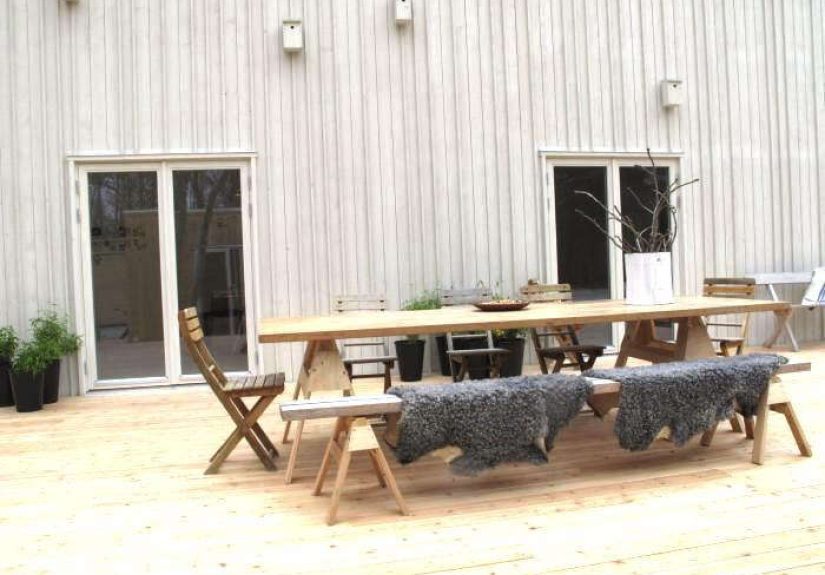
The dining table is the visual heart of the space. For a Scandinavian outdoor dining look, focus on natural wood or wood-look materials with simple lines. Teak, acacia, eucalyptus, cedar, and other outdoor-suitable woods work well because they bring warmth without needing heavy ornamentation. A slatted tabletop is especially fitting because it looks casual, drains water more easily, and has that clean Nordic sensibility.
If a new outdoor dining table is not in the budget, DIY your way there. Sand down a secondhand wood table, repair loose joints, and finish it with an exterior-rated stain or sealant. Choose a light oak, warm honey, weathered gray, or natural brown tone. Avoid glossy finishes that look too formal outdoors. Scandinavian style prefers matte, touchable surfaces that say, “Yes, we eat outside here,” not “please admire this table from a respectful distance.”
DIY Table Upgrade
For a budget-friendly refresh, clean the table thoroughly, sand rough spots, tighten hardware, and apply an outdoor wood oil or exterior stain. If the tabletop is beyond saving, consider replacing only the top boards while keeping the base. It is less expensive than buying a new dining set and more satisfying than pretending water rings are “character.”
Mix Seating Without Making It Look Random
Scandinavian outdoor dining spaces often look collected rather than perfectly matched. That does not mean dragging out every chair in the house and hoping for a design miracle. The trick is controlled mixing. Combine one bench with dining chairs, pair wood chairs with woven seats, or use black metal chairs around a light wood table for contrast.
A bench is a particularly smart choice. It saves space, seats extra guests, and gives the setup a casual, communal feeling. Add a thin outdoor cushion in beige, gray, oatmeal, charcoal, or muted green. Keep patterns subtle. A tiny stripe, simple check, or textured weave is enough. Scandinavian style does not need pillows shouting from across the yard.
Comfort Matters
Minimalist does not mean uncomfortable. Choose chairs with supportive backs and enough seat depth for lingering. Outdoor dinners are not supposed to feel like a meeting in a stylish waiting room. If your chairs are beautiful but painful after fifteen minutes, add weather-resistant seat pads or swap them for something more forgiving.
Build a Calm Scandinavian Color Palette
The classic Scandinavian palette is light, natural, and easy on the eyes. For an outdoor dining space, start with whites, creams, soft grays, beige, taupe, charcoal, pale wood, and muted earth tones. Then bring in gentle accents from nature: sage green, clay, terracotta, dusty blue, moss, sand, or black.
This palette works outdoors because it lets the garden, sky, and food provide color. A bowl of strawberries, a pitcher of lemonade, or grilled vegetables suddenly looks like part of the design. Congratulations, your salad is now décor.
To keep the space from feeling flat, layer textures instead of adding loud colors. Pair smooth wood with woven placemats, linen napkins, matte ceramic plates, metal lanterns, and leafy plants. The result feels rich without being busy.
Add Texture With Outdoor Rugs and Natural Fibers
An outdoor rug can instantly make a dining area feel finished. It grounds the table, defines the zone, and adds softness underfoot. For a Scandinavian look, choose a low-profile rug in jute-like texture, flatweave stripes, geometric neutrals, or warm gray tones. Make sure it is made for outdoor use, because real indoor jute and rain have a relationship best described as tragic.
If your patio gets wet often, choose polypropylene or another weather-resistant material that mimics natural fiber. It will dry faster, resist mildew better, and survive more than one thunderstorm. Select a size large enough for chairs to stay on the rug when pulled out. A rug that only fits under the table can look skimpy, like it gave up halfway through the assignment.
Use Lighting to Create Hygge After Sunset
Lighting is where the magic happens. During the day, Scandinavian outdoor dining is simple and fresh. At night, it becomes cozy, intimate, and slightly cinematic. The goal is layered lighting: overhead glow, table-level warmth, and small accents around the edges.
String lights are a classic choice for a reason. Hang them in straight lines for a clean modern look, zigzag them over the table, or attach them to posts if you do not have trees or a pergola. Choose warm white bulbs rather than cool white. Cool lighting can make dinner feel like it is being served in a dental office, which is rarely the mood.
Add lanterns on the ground or near planters, rechargeable table lamps, or LED candles in glass hurricanes. The Scandinavian feel comes from soft pools of light, not one harsh spotlight blasting the potato salad.
DIY Light Posts
No pergola? No problem. Set tall wooden posts in heavy planters filled with concrete or gravel, then string café lights between them. Paint or stain the posts black, natural wood, or warm gray. This simple project defines the dining area and adds height, especially on a plain patio.
Bring in Greenery Without Overcrowding the Table
Plants are essential to the Scandinavian outdoor look because they connect the dining area to nature. But the planting style should feel edited. Use a few oversized planters instead of many tiny pots scattered around like botanical confetti. Choose grasses, herbs, small evergreens, lavender, rosemary, hydrangeas, ferns, or olive-style trees depending on your climate.
For the tabletop, keep it simple. A low bowl of herbs, a ceramic vase with clipped branches, or a row of small potted plants creates a natural centerpiece without blocking conversation. The best centerpiece is one that does not require guests to lean sideways to ask for the salt.
Planting for Function
Herbs are especially useful near an outdoor dining area. Basil, mint, thyme, rosemary, parsley, and chives look good, smell good, and can be snipped directly into food or drinks. That is Scandinavian practicality at its finest: beautiful, useful, and unlikely to demand applause.
Create Shade With Simple Structures
Comfort is a major part of outdoor dining. If the table sits in full sun, guests may enjoy your design while quietly melting. Scandinavian style handles shade in clean, practical ways: a canvas umbrella, a sail shade, a pergola, linen-look outdoor curtains, or a simple canopy.
For the most natural look, choose off-white, beige, charcoal, or soft gray fabric. A wood-frame pergola pairs beautifully with a Scandinavian dining setup, especially when softened with climbing vines or string lights. If you rent, a freestanding umbrella or tension-mounted shade solution can give you flexibility without permanent construction.
Keep the Table Setting Casual but Beautiful
A Scandinavian outdoor table does not need to be elaborate. In fact, overdecorating works against the style. Start with simple dinnerware in white, cream, stone gray, or matte black. Add linen or cotton napkins, wooden serving boards, clear glassware, and maybe one handmade-looking ceramic piece for texture.
Skip tall floral arrangements and fussy chargers. Instead, use low, practical layers. A linen runner, small votives, a bowl of fruit, and a few sprigs of greenery can be enough. The table should feel ready for real food, not like it is waiting for a lifestyle photographer named Sebastian.
Easy Scandinavian Table Formula
Try this simple setup: light wood table, beige runner, white plates, charcoal napkins, clear glasses, one ceramic pitcher, a small herb centerpiece, and three candles in glass holders. It is calm, affordable, and works for weeknight dinners or weekend gatherings.
Add DIY Storage for Outdoor Dining Essentials
A great outdoor dining area is easier to use when everything has a place. Add a slim storage bench, rolling cart, wall hooks, or a weather-resistant cabinet for napkins, cushions, candles, serving trays, and grilling tools. Scandinavian design loves function, and outdoor storage keeps the space from turning into a cushion migration zone.
A rolling cart is especially useful. It can hold drinks, plates, condiments, herbs, or dessert, then roll back inside when the party is over. Choose metal, wood, or a simple black finish. Style it lightly with a tray, pitcher, stacked plates, and a plant. Useful can still be pretty. In fact, that is basically the Scandinavian design motto.
Use Black Accents for Modern Contrast
Black is a quiet hero in Scandinavian design. It sharpens soft neutrals and keeps a pale space from looking washed out. Outdoors, black accents can appear in chair frames, lanterns, planters, flatware, light fixtures, or a slim metal shelf.
The key is restraint. A little black adds definition. Too much black can make the patio feel heavy, especially in small spaces. Think punctuation, not a whole paragraph in bold.
Make It Weather-Ready
Outdoor design must survive actual outdoor life. Choose weather-resistant furniture, performance fabrics, outdoor-rated rugs, and lighting made for exterior use. Clean furniture regularly with mild soap and water, and store cushions when storms roll in. If you live in a region with harsh winters, use breathable covers or move furniture into a shed, garage, or covered area.
Wood furniture may need seasonal oiling or sealing. Metal should be checked for rust. Wicker and woven materials should be cleaned gently so dirt does not settle into the texture. Maintenance is not glamorous, but neither is discovering your beautiful bench has become a mildew-themed science project.
Budget-Friendly Ways to Steal the Look
You can create a Scandinavian outdoor dining space without replacing everything. Start with what you own. Paint mismatched chairs in one color. Add a neutral outdoor rug. Replace loud cushions with solid beige or gray covers. Use inexpensive terracotta or black planters. Hang string lights. Sand and reseal a tired table. Add linen-look napkins instead of paper ones.
Secondhand finds can work beautifully if you edit them carefully. Look for simple wood benches, metal chairs, ceramic pots, baskets, lanterns, and serving boards. Avoid ornate pieces that fight the clean Scandinavian look. When in doubt, choose simpler shapes and better materials.
Quick Weekend Project Plan
On Friday, clean the patio and remove clutter. On Saturday, refresh the table, add lighting, and arrange seating. On Sunday, style the table, add plants, and test the setup with dinner outside. This is important research. Someone has to confirm whether the bread basket looks good under the string lights.
Scandinavian Outdoor Dining Space Shopping and DIY Checklist
- Simple wood or wood-look outdoor dining table
- Comfortable chairs or a bench with weather-resistant cushions
- Neutral outdoor rug in a flatweave or natural-fiber look
- Warm white string lights, lanterns, or rechargeable table lamps
- Large planters with herbs, grasses, shrubs, or small trees
- Matte ceramic dinnerware and simple glassware
- Linen or cotton napkins in neutral tones
- Wood serving boards, trays, or a rolling cart
- Shade element such as an umbrella, pergola, or sail shade
- Furniture covers, cushion storage, and gentle cleaning supplies
Common Mistakes to Avoid
The first mistake is overcrowding. Scandinavian style needs breathing room. If guests have to squeeze past planters, chairs, and a side table just to sit down, edit the layout. The second mistake is buying a full matching patio set without adding personality. Matching furniture can work, but the space will feel warmer if you mix in texture, plants, lighting, and handmade-looking pieces.
The third mistake is ignoring scale. A tiny bistro table can look lonely on a large deck, while a massive table can swallow a balcony whole. Measure before buying. The fourth mistake is using indoor materials outside. Indoor cushions, untreated wood, and regular rugs may look charming for one week and defeated by weather the next.
Finally, do not over-theme the space. You are creating Scandinavian-inspired outdoor dining, not opening a Nordic museum exhibit. A few natural materials, clean lines, and cozy details are enough.
500-Word Experience Section: What It Feels Like to Build and Use This Look
The real beauty of a DIY Scandinavian outdoor dining space is not just how it looks in photos. It is how it changes the way you use your home. At first, the project may seem like a design exercise: move the table, add lights, buy a rug, paint the chairs, arrange the planters. But once the space comes together, it starts quietly pulling people outside.
Morning coffee feels better at a simple wood table with a cool breeze and a pot of rosemary nearby. Lunch becomes more tempting when the patio is not just a place where unused garden tools go to retire. Dinner feels slower, in the best way. People linger. Someone pours another drink. Someone else says, “We should eat out here more often,” which is the outdoor dining equivalent of a standing ovation.
One of the most useful lessons from creating this kind of space is that restraint can be surprisingly powerful. You may be tempted to add more: more pillows, more colors, more lanterns, more little decorative objects shaped like cheerful woodland animals. But Scandinavian design teaches you to stop before the space gets noisy. A simple table, comfortable seating, warm light, and a few plants can feel more luxurious than a patio packed with accessories.
Another experience worth noting is how important lighting becomes. During the day, you notice materials: the wood grain, the texture of the rug, the shape of the chairs. But after sunset, lighting controls the mood. Warm string lights overhead and candles on the table can make even a basic meal feel special. Suddenly, grilled vegetables and bread become an event. Even takeout looks more elegant, which is good news for anyone whose “homemade dinner” sometimes arrives in a paper bag.
DIY also adds emotional value. When you sand an old table, paint a tired chair, build light posts, or plant herbs in simple containers, the space feels personal. It does not look like a catalog page copied exactly. It looks like your home, only calmer and more intentional. Small imperfections become part of the charm. A slightly uneven bench, a weathered tabletop, or a handmade planter box can make the dining area feel relaxed rather than staged.
The most practical experience is learning what you actually use. Maybe you discover that a rolling cart is essential because carrying plates back and forth gets old fast. Maybe you realize cushions need a storage box because rain has a sense of humor. Maybe you learn that herbs near the table are wonderful, but mint should stay in its own pot unless you want it to conquer the patio like a tiny green empire.
Over time, the space evolves. You may add a shade sail in summer, heavier throws in fall, or lanterns for cooler evenings. That flexibility is part of the Scandinavian spirit. The dining area does not have to be perfect on day one. It simply needs to be useful, comfortable, and easy to enjoy.
In the end, stealing this look is really about stealing a feeling: fresh air, warm light, natural textures, good food, and a table that invites people to stay a little longer. And if the chairs are comfortable enough that nobody rushes inside after dessert, congratulations. You did it. You built hygge with a screwdriver.
Conclusion
A DIY Scandinavian outdoor dining space is proof that great design does not have to be complicated. Start with a functional layout, choose simple furniture, layer natural textures, use a calm color palette, add warm lighting, and let greenery soften the edges. The result is an outdoor dining area that feels modern, cozy, practical, and inviting.
Whether you have a backyard patio, a city balcony, a deck, or a tiny corner near the garden, the Scandinavian look is easy to adapt. Keep only what serves the space. Choose materials that age well. Make comfort a priority. Add handmade or secondhand touches where they make sense. Then invite people over, serve something delicious, and enjoy the rare design style that looks elegant while fully supporting second helpings.