Table of Contents >> Show >> Hide
- What the Marfa Skirt Actually Is
- Who Is Sherry Stein, and Why Her Background Matters
- Why Santa Fe Is the Perfect Home for This Design
- Why the Name “Marfa” Feels Exactly Right
- Materials That Tell the Whole Story
- How to Wear the Marfa Skirt Without Looking Like You’re Headlining a Pottery Workshop
- Why the Marfa Skirt Still Feels Relevant
- A 500-Word Experience-Inspired Reflection on the Marfa Skirt
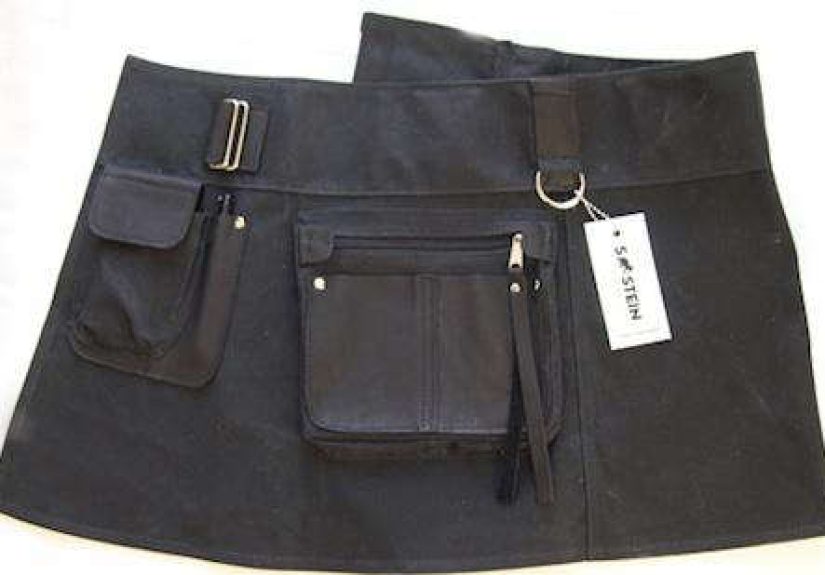
If handbags had a union, the Marfa Skirt might be their most formidable rival. Designed by Sherry Stein of S. Stein Design in Santa Fe, this clever wrap skirt-long-apron hybrid belongs to that rare category of fashion that can actually do something. It is stylish without being precious, practical without looking like it wandered off a hardware store shelf, and rugged enough to suggest that its owner may, at any moment, organize pencils, prune rosemary, and head to a gallery opening before dinner.
That combination is exactly what makes the piece so memorable. The Marfa Skirt is not just another “interesting accessory” floating around the design internet. It is a distilled expression of several worlds at once: Santa Fe craft, industrial design discipline, workwear utility, and the stripped-down, high-desert cool that the name “Marfa” instantly evokes. In a market full of clothes that barely survive a washing machine, this one was clearly designed for a real life with keys, phones, tools, notes, errands, and the occasional small emergency.
And that is the real charm. The Marfa Skirt does not scream for attention. It quietly solves problems. It lets you carry what you need, move how you want, and look like a person with excellent taste and suspiciously good pocket management. In other words, it is the sort of design object that makes you wonder why more clothing is not built this smartly.
What the Marfa Skirt Actually Is
At its core, the Marfa Skirt is a wrap-style utility piece designed to be worn over leggings, tights, jeans, or other basics. It blurs the line between skirt, apron, tool belt, and small portable command center. That hybrid identity is not a gimmick; it is the whole point. The design gives the wearer freedom to move while providing storage that would normally be outsourced to a handbag, tote, or overstuffed coat pocket.
The original product description emphasized hands-free use in the studio or on the street, and that phrase captures the appeal beautifully. This is a garment meant for people who are doing things. Not posing near things. Doing things. The large zip pocket can accommodate everyday essentials, while smaller pouches and compartments create a place for the little objects that usually vanish into the dark dimension known as “the bottom of the bag.”
Functionally, the Marfa Skirt feels almost architectural. Every pocket and hardware detail seems to justify its existence. Nothing looks decorative just for the sake of decoration. Even the wrap construction feels intentional, offering adjustability and ease without losing structure. It is a design that respects the wearer’s body and the wearer’s schedule. That is surprisingly rare.
Built for Real Life, Not Runway Acrobatics
One reason the Marfa Skirt still sounds fresh is that it was never chasing fast-moving trends in the first place. A trend says, “Look at me.” Utility design says, “Here, this will help.” The Marfa Skirt belongs firmly to the second camp. Its appeal lies in what it allows: fewer things in your hands, less fumbling for essentials, and more movement through the day.
That practical spirit does not make it boring. Quite the opposite. Good utility has a quiet glamour of its own. There is something deeply satisfying about a piece of clothing that thinks ahead for you. When a skirt can hold your phone, keys, notebook, and a couple of tools while still looking sharp, it stops being just an outfit and becomes a strategy.
Who Is Sherry Stein, and Why Her Background Matters
The Marfa Skirt makes more sense when you understand Sherry Stein’s design history. Stein is not a designer who arrived at functional fashion by accident. Her career includes apparel, accessories, footwear, and industrial design, with experience spanning major performance and lifestyle brands. That background matters because the Marfa Skirt does not read like a stylist’s fantasy of utility. It reads like something built by a designer who understands how people actually wear, carry, move, and repeat those actions all day long.
Before building her Santa Fe-based S. Stein line, Stein worked across different sectors of design and developed a reputation for sturdy, purpose-driven pieces. Her workbags and accessories were inspired by older utilitarian forms: military bags, doctor’s satchels, mailbags, bricklayers’ bags, and other hardworking objects from the early and mid-20th century. That influence can be felt in the Marfa Skirt. It borrows the honesty of work gear but refines it through proportion, material choice, and styling.
That is what separates the piece from costume. It does not romanticize labor from a safe distance. It studies real working objects and reinterprets them for contemporary life. Stein’s industrial design training also helps explain the disciplined restraint. The Marfa Skirt is attractive because it is resolved. There is no visual clutter, no excess flourish, no unnecessary fuss. It knows what it is doing.
Why Santa Fe Is the Perfect Home for This Design
Santa Fe has long been a city where art, craft, landscape, and daily life overlap in unusually direct ways. It is not a place where design feels sealed off in a showroom. It is woven into architecture, markets, studios, galleries, and the rhythm of the high desert itself. A piece like the Marfa Skirt feels native to that environment because it reflects the same values: material honesty, handwork, practicality, and beauty that does not need to shout.
Santa Fe’s creative culture also resists the flatness of disposable design. This is a city associated with artists, makers, folk traditions, and a deep respect for objects that carry texture, history, and evidence of use. In that context, a wrap skirt made from waxed canvas, leather, and substantial hardware does not feel eccentric. It feels right at home.
The Santa Fe connection matters for another reason: the city encourages hybridity. A person can move from studio to café to gallery to grocery run without changing identities, and the Marfa Skirt seems built for exactly that sort of fluid day. It is not precious enough for “fashion only” and not utilitarian enough to look one-note. It occupies the in-between space beautifully, which is where many people actually live.
Why the Name “Marfa” Feels Exactly Right
Even if you encountered the garment without any backstory, the name would do a lot of work. Marfa, Texas, carries a powerful visual and cultural mythology in American design: expansive desert landscapes, Donald Judd, permanent installations, spare architecture, earthy materials, and a coolness that is more cerebral than flashy. To call a piece the Marfa Skirt is to suggest minimalism with grit, style with landscape in the background, and usefulness stripped down to essentials.
That does not mean the skirt is an art theory seminar you can wear. Thankfully. But the name frames the object in a smart way. Marfa has become shorthand for a certain kind of desert modernism, one where objects are expected to earn their place. The Marfa Skirt feels aligned with that sensibility. Its lines are clean, its materials are honest, and its purpose is clear.
There is also a Western practicality to the name that helps. Marfa is not only an art destination; it is part of a larger West Texas environment shaped by weather, distance, work, and a respect for objects that last. The skirt reflects that spirit. It looks as if it could handle dust, repetition, and a long day without losing its nerve.
Materials That Tell the Whole Story
A big part of the Marfa Skirt’s appeal lies in its materials. Waxed canvas and leather are not random luxury signifiers tossed on for visual drama. They are functional materials with proven histories. Waxed canvas offers water resistance, abrasion resistance, and the sort of aging that tends to improve rather than disappoint. Leather adds structure, durability, and a little tactile richness. Together, they create an object that feels grounded, substantial, and made to live a life.
In today’s market, where many garments are designed to look good for six photos and one disappointing season, this material palette feels refreshing. It suggests repair, longevity, and patina. The skirt is not trying to remain frozen in pristine perfection. It is the kind of piece that should get better with wear, gathering creases, softness, and character over time. Fashion likes to talk about “investment pieces,” but this one actually understands the assignment.
The hardware matters too. Strong zippers, metal rings, and sturdy closures are not tiny technical footnotes here; they are central to the experience. Utility designs fail quickly when the hardware is flimsy. The Marfa Skirt avoids that trap by treating construction as part of the aesthetic. You do not merely see the durability. You feel it in the confidence of the piece.
How to Wear the Marfa Skirt Without Looking Like You’re Headlining a Pottery Workshop
Let us be honest: utility fashion can go sideways fast. One wrong move and you look less “design-savvy desert creative” and more “I accidentally put on my gardening belt for brunch.” The Marfa Skirt works best when the rest of the outfit stays simple. Think fitted tee, soft sweater, crisp button-down, slim jeans, boots, clogs, or minimal sneakers. The skirt is the statement, so the rest should cooperate politely.
Layering is where it shines. Over dark denim and a white shirt, it feels graphic and modern. Over leggings with boots and a cropped jacket, it becomes more rugged and directional. In a studio setting, it looks perfectly natural with a worn-in knit and sleeves pushed up. In a city setting, the same piece can read as avant-garde workwear when paired with clean basics and a restrained palette.
The secret is balance. Because the skirt has visible structure, pockets, and hardware, it likes companions that are quieter. It does not need fringe, twenty bracelets, or a hat with opinions. Let the materials do the talking. They are very good at it.
Why the Marfa Skirt Still Feels Relevant
The fashion world periodically rediscovers cargo pockets, workwear, utility pants, and “functional dressing” as though these concepts just floated down from the heavens last Tuesday. The Marfa Skirt feels ahead of that cycle because it was built around real function from the start. It was not borrowing utility as an aesthetic effect. It was designed to be useful, and that authenticity gives it staying power.
It also fits neatly into today’s interest in smaller wardrobes, better materials, and objects with a point of view. People increasingly want clothing that earns space in their closet. They want durability, craft, and transparency. A piece like the Marfa Skirt answers those desires in a surprisingly elegant way. It is distinctive, but not costume-like. It is practical, but not dull. It has personality, but not chaos.
Most importantly, it reminds us that fashion can be intelligent. Not just beautiful. Not just trendy. Intelligent. The Marfa Skirt solves a problem while creating an identity. It offers freedom without sloppiness and style without fragility. That is a rare equation, and it is why the design remains so compelling.
A 500-Word Experience-Inspired Reflection on the Marfa Skirt
Imagine starting the day in Santa Fe with the kind of cold, bright morning that makes the sky look freshly polished. You pull on jeans, a soft black turtleneck, boots that have seen a few good years, and then fasten the Marfa Skirt over everything. Immediately, the outfit changes mood. You are no longer merely dressed; you are equipped. Phone in one pocket, keys clipped in place, pen tucked where it belongs, notebook close at hand. It is a small transformation, but it changes the rhythm of the day.
At the coffee shop, you do not perform the usual bag excavation ritual. No shoulder slipping, no frantic one-handed digging, no mysterious disappearance of the lip balm into another dimension. Everything has a place. The skirt makes you feel oddly competent, like someone who alphabetizes spices for fun and somehow still gets invited to parties.
Later, walking through galleries or studio spaces, the piece begins to show its real personality. It belongs in environments where objects matter. You notice how the waxed canvas catches light differently from ordinary cotton, how the leather adds weight and calm, how the hardware gives the whole design a kind of low, reassuring gravity. Nothing jingles unnecessarily. Nothing flaps around. It just works.
There is also something quietly psychological about wearing a piece this functional. It encourages a more active relationship with your clothes. You move differently because the garment is prepared to move with you. You stand differently because the structure gives the outfit intention. Even simple tasks, like taking notes at a design market or carrying a few small purchases, feel easier because the skirt behaves almost like a portable workstation.
By afternoon, when the weather shifts and the desert starts doing its daily magic trick, the Marfa Skirt feels even more appropriate. A gust of wind, a bit of dust, an unexpected stop, a longer walk than planned: none of it seems to bother the piece. In fact, this is when it feels most alive. The materials are not delicate. They seem to welcome real conditions. That, more than anything, creates emotional loyalty. People become attached to objects that are not constantly asking to be protected.
By evening, the surprise is that the skirt still looks good. Not “held together surprisingly well” good. Actually good. Better, perhaps, because it now has the slight rumple and lived-in ease that utility clothing needs in order to look convincing. Paired with a heavier knit, silver jewelry, or a tailored jacket, it can shift into dinner mode without trying too hard. The day remains visible in the piece, and that visibility is part of the charm.
That is probably the best way to describe the experience of the Marfa Skirt: it helps close the gap between dressing and living. It does not ask you to preserve yourself for the sake of the outfit. It joins you. It carries things, adapts, softens, and settles into the day alongside you. In an era of disposable fashion and overly curated appearances, that kind of partnership feels almost radical. And yes, a little fabulous.