Table of Contents >> Show >> Hide
- What Makes a Pork Recipe Healthy and Filling?
- 1) Garlic-Herb Pork Tenderloin with Roasted Vegetables and Quinoa
- 2) Skillet Pork Chops with Apples, Onions, and Cabbage
- 3) Ginger-Sesame Pork Lo Mein That Beats Takeout on a Weeknight
- 4) Slow-Cooker Cilantro-Lime Pork Bowls
- 5) Southern Pork Tenderloin Salad with Corn and Black-Eyed Peas
- 6) Dijon Pork Chops with Apple-Fennel Slaw
- 7) Roast Pork Loin with Carrots, Chickpeas, and Dried Cranberries
- 8) Air-Fryer Pork Cutlets with Warm Brussels Sprout Slaw
- Smart Tips for Making Healthy Pork Recipes Taste Better
- Why Healthy Pork Dinners Deserve a Spot in Your Rotation
- Real-Life Experiences With Healthy Pork Recipes That Still Feel Comforting
- Conclusion
If you grew up believing that “healthy pork dinner” meant one lonely chop, one steamed carrot, and a deep emotional sigh, good news: we are officially retiring that sad little myth. Pork can absolutely fit into a balanced, satisfying meal when you start with leaner cuts, cook them smartly, and pile on the kind of sides that make dinner feel generous instead of punitive.
That is the real trick. Healthy pork recipes are not about turning dinner into a lecture. They are about choosing cuts like tenderloin, loin, or sirloin, using flavorful techniques that do not rely on half a stick of butter, and pairing the meat with vegetables, beans, fruit, and whole grains so the plate feels complete. In other words, dinner should still taste like dinner, not like a compromise wearing sneakers.
Below, you will find eight healthy pork recipes that are still hearty enough to satisfy. Each one is built for real life: weeknights, hungry families, meal prep Sundays, and those evenings when you want something warm and comforting but do not want your kitchen to smell like a county fair. These ideas are easy to adapt, rich in flavor, and designed to help you enjoy pork in a lighter, smarter way without losing the cozy factor.
What Makes a Pork Recipe Healthy and Filling?
A healthy pork dinner usually starts with the cut. Pork tenderloin is the overachiever of the group: lean, quick-cooking, and tender enough to feel slightly fancy even when you are wearing slippers. Pork loin and sirloin chops are also strong choices when you want something substantial without wandering too far into heavy territory.
Next comes the method. Roasting, grilling, sautéing, braising, and air-frying help build flavor without drowning everything in grease. Then comes the supporting cast: roasted vegetables, crisp slaws, whole grains, beans, sweet potatoes, apples, cabbage, greens, herbs, and bright sauces that wake up the whole plate. Suddenly, you have a meal that feels comforting and balanced at the same time.
Healthy also does not mean skimpy. The best hearty pork recipes include texture and contrast: crunchy vegetables, creamy beans, chewy grains, sweet fruit, sharp mustard, tangy yogurt, smoky spices, or fresh citrus. That combination helps a moderate portion of pork feel more satisfying, which is exactly what we want.
1) Garlic-Herb Pork Tenderloin with Roasted Vegetables and Quinoa
This is the weeknight hero meal: simple enough for a Tuesday, impressive enough that people may assume you planned ahead. Rub pork tenderloin with garlic, rosemary, black pepper, a little Dijon, and olive oil. Roast it on the same sheet pan as carrots, broccoli, red onion, and chunks of zucchini until everything is tender and lightly caramelized.
Why it works
The pork stays juicy, the vegetables add bulk and color, and the quinoa makes the meal feel complete. Quinoa also gives you that lovely “I ate a real dinner” feeling that salad alone sometimes cannot deliver.
How to keep it healthy
Use just enough oil to coat the vegetables, not enough to start a slip-and-slide. Finish the pan with lemon juice and parsley instead of a heavy cream sauce. Serve sliced pork over quinoa and spoon the roasted vegetables all around it. It looks cheerful, tastes savory, and reheats beautifully for lunch the next day.
2) Skillet Pork Chops with Apples, Onions, and Cabbage
If fall and comfort food had a very practical child, this would be it. Start with boneless loin chops or trimmed sirloin chops. Sear them in a hot skillet, then set them aside while apples, onions, and shredded cabbage soften in the same pan. Add a splash of apple cider vinegar, a little grainy mustard, and a pinch of thyme, then return the chops to finish cooking.
Why it works
You get sweet, savory, tangy, and hearty in one skillet. The apples bring natural sweetness, the cabbage adds fiber and substance, and the onions turn silky and rich without needing much fat.
How to keep it healthy
Skip breading and deep frying. Let the skillet do the work. If you want even more heft, serve the chops with a scoop of farro or brown rice. This dish feels like comfort food with a sensible haircut.
3) Ginger-Sesame Pork Lo Mein That Beats Takeout on a Weeknight
Yes, a noodle dish can still count as a healthy pork recipe when the balance is right. Slice pork loin thinly and stir-fry it with garlic, ginger, mushrooms, snow peas, bell peppers, and shredded carrots. Toss everything with whole-wheat spaghetti or lo mein noodles and a lighter sauce made from reduced-sodium soy sauce, rice vinegar, sesame oil, and a touch of honey.
Why it works
This meal is hearty, fast, and wildly customizable. The noodles make it satisfying, while the extra vegetables keep it from becoming a giant beige event.
How to keep it healthy
Use more vegetables than noodles. That one move changes the whole nutritional mood of the dish. Keep the sauce punchy rather than sugary, and finish with scallions and sesame seeds for flavor without excess heaviness. It scratches the takeout itch without leaving you wondering why your shirt suddenly feels judgmental.
4) Slow-Cooker Cilantro-Lime Pork Bowls
When you want dinner to cook itself while you pretend to be very organized, this recipe is your friend. Use a lean pork loin roast or trimmed shoulder in moderation, season it with cumin, oregano, garlic, lime juice, and salsa verde, then cook until tender enough to shred. Serve it in bowls with brown rice, black beans, romaine, avocado, radishes, and a spoonful of plain Greek yogurt.
Why it works
The slow cooker develops deep flavor, and the bowl format lets everyone build a meal that feels personal. Also, bowls automatically make dinner feel modern, even if you are eating them while standing over the counter.
How to keep it healthy
Go easy on cheese and sour cream, and let citrus, herbs, beans, and crunchy vegetables do more of the heavy lifting. This is especially great for meal prep because the pork can be repurposed into tacos, salads, wraps, or grain bowls.
5) Southern Pork Tenderloin Salad with Corn and Black-Eyed Peas
People hear “salad” and panic, but this one has enough personality to calm everyone down. Roast or grill pork tenderloin with smoked paprika, garlic powder, and black pepper. Slice it thin and layer it over romaine or mixed greens with grilled corn, black-eyed peas, cherry tomatoes, cucumber, red onion, and a light buttermilk-herb dressing or vinaigrette.
Why it works
The pork provides satisfying protein, the peas add staying power, and the corn gives sweetness and a little Southern charm. It is crisp, colorful, and hearty without becoming a fork-and-knife endurance test.
How to keep it healthy
Think of the dressing as an accessory, not a swimming pool. Add a few toasted pecans if you want crunch, but keep the balance focused on vegetables and lean pork. This is one of the best healthy pork meals for warmer weather when you want substance without a nap.
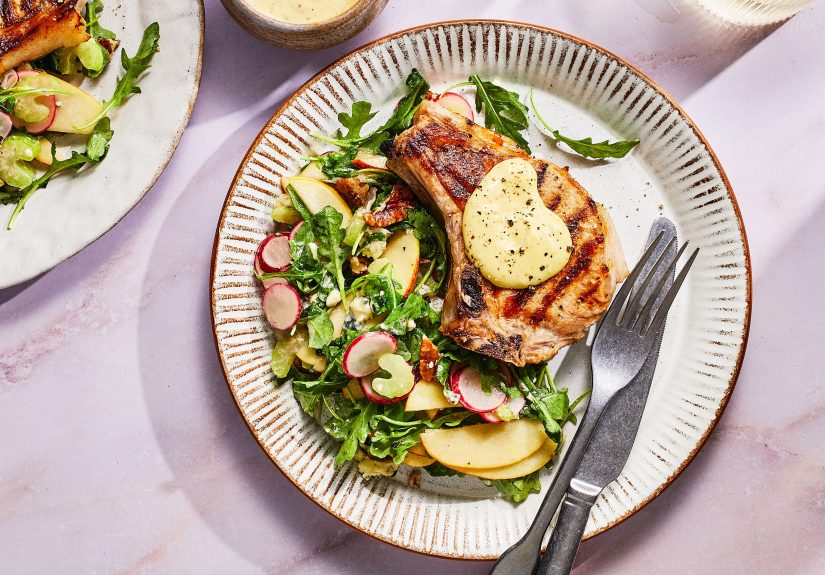
6) Dijon Pork Chops with Apple-Fennel Slaw
Here is a lighter dinner that still feels restaurant-ish in the best way. Brush trimmed pork chops with Dijon mustard, garlic, and a little olive oil, then roast or pan-sear until golden. Serve with a crunchy slaw made from fennel, apple, cabbage, lemon juice, and yogurt or a mustardy vinaigrette.
Why it works
The pork is savory and warm; the slaw is cold, crisp, and bright. That contrast makes the whole meal feel bigger and more interesting than the ingredient list suggests.
How to keep it healthy
Use the slaw to replace heavier starches on nights when you want something lighter, or pair it with roasted baby potatoes if you need a more substantial plate. Either way, the apple and fennel bring freshness that flatters pork beautifully.
7) Roast Pork Loin with Carrots, Chickpeas, and Dried Cranberries
This is the “Sunday dinner, but make it sensible” recipe. Season a pork loin roast with garlic, thyme, coriander, and pepper. Roast it over a pan of carrots, shallots, and chickpeas. Near the end, stir in dried cranberries or chopped fresh apples for a little pop of sweetness.
Why it works
You get a classic roast dinner feel, but the chickpeas add fiber and extra protein while the vegetables make the meal more balanced. The cranberries or apples keep the dish from tasting one-note.
How to keep it healthy
Trim visible fat before cooking, use broth or a splash of cider instead of lots of butter, and carve the pork into moderate slices. This is one of those hearty pork recipes that feels festive enough for guests but easy enough for leftovers all week.
8) Air-Fryer Pork Cutlets with Warm Brussels Sprout Slaw
Sometimes you just want something crispy. Fair. The air fryer lets you have that satisfying crunch without a dramatic amount of oil. Pound lean pork cutlets thin, coat them lightly in whole-wheat breadcrumbs or crushed high-fiber crackers, and air-fry until golden. Serve with a warm slaw of shredded Brussels sprouts, carrots, and red onion tossed with lemon and a tiny drizzle of maple-mustard dressing.
Why it works
You get that breaded-cutlet satisfaction, but the overall meal still feels fresh and balanced. The slaw has bite, the pork has crunch, and dinner feels far more exciting than “healthy” usually sounds on a Wednesday.
How to keep it healthy
Keep the coating light, not thick enough to qualify as an outer shell. Add roasted sweet potato wedges if you want a little extra comfort on the plate. This is also a good gateway meal for picky eaters who claim they do not enjoy vegetables and then mysteriously finish all the slaw.
Smart Tips for Making Healthy Pork Recipes Taste Better
First, do not overcook the pork. That is the grand tragedy behind many disappointing dinners. A properly cooked tenderloin or chop is juicy, flavorful, and miles more appealing than a dry piece of meat that tastes like it is punishing you for something. Let the pork rest before slicing so the juices stay where they belong.
Second, lean on bold flavors. Mustard, garlic, lime, rosemary, thyme, smoked paprika, cumin, ginger, fennel, apples, cabbage, vinegar, yogurt sauces, and fresh herbs all pair wonderfully with pork. You do not need a lake of cream or sugar to make it memorable.
Third, build a balanced plate. Pair pork with roasted vegetables, greens, beans, sweet potatoes, brown rice, quinoa, farro, or barley. The result is a meal that feels grounded, satisfying, and far less likely to send you rummaging for snacks one hour later.
Why Healthy Pork Dinners Deserve a Spot in Your Rotation
Healthy pork recipes earn their keep because they do two useful things at once: they satisfy like comfort food and they adapt like meal prep food. You can roast one tenderloin and stretch it across salads, grain bowls, wraps, and noodle dishes. You can make a pork bowl one night and turn the leftovers into tacos the next. That flexibility matters when real life gets loud.
Just as important, pork plays nicely with a huge range of flavors. It works with apples and mustard, soy and ginger, cilantro and lime, rosemary and garlic, cabbage and fennel, cranberries and chickpeas. In other words, it is not boring. It is simply waiting for you to stop treating it like a one-note protein and start giving it better supporting actors.
Real-Life Experiences With Healthy Pork Recipes That Still Feel Comforting
One reason these meals work so well in real kitchens is that they do not ask you to become a different person. You do not need to wake up tomorrow as someone who hand-harvests microgreens and lovingly labels glass jars of ancient grains. You just need a practical plan, a good cut of pork, and a few ingredients that pull their weight.
For busy families, pork tenderloin is often the easiest entry point. It cooks fast, slices neatly, and tends to disappear without much argument from the people at the table. That matters. A healthy recipe is only successful if people actually want to eat it. Many home cooks find that once they switch from heavier pork dinners to leaner tenderloin or loin-based meals, the table still feels happy, but the meal itself feels lighter and more balanced.
There is also a psychological benefit to these recipes. A big skillet of pork chops with cabbage and apples feels warm and cozy. A grain bowl with slow-cooked cilantro-lime pork feels generous. A roast pork loin with carrots and chickpeas looks like company food. None of those meals scream “diet dinner,” which is probably why they keep showing up in regular rotation. They satisfy the emotional side of dinner as much as the physical one.
Meal preppers like pork for another reason: leftovers tend to be useful instead of depressing. Sliced pork tenderloin can become tomorrow’s salad topper, sandwich filling, wrap ingredient, or rice bowl protein. Shredded pork works in tacos, stuffed sweet potatoes, or soups. That kind of versatility saves money, reduces waste, and makes weekday lunches feel less like a sad desk duty sentence.
Another common experience is discovering that vegetables stop feeling like an obligation when they are built into the recipe instead of served as a guilt-driven side dish. Roasted carrots under a pork loin roast soak up flavor. Cabbage cooked with apples and onions becomes silky and sweet. Brussels sprouts in a warm slaw suddenly feel much more interesting than plain steamed vegetables on a bare plate. When the vegetables are part of the main event, people tend to eat them with a lot less complaining.
There is also something deeply satisfying about how these meals balance comfort and control. You can enjoy the richness of pork without turning every dinner into a heavy, restaurant-style splurge. You can have crisp cutlets, savory chops, or a slow-cooked bowl and still feel like you made a smart decision. That middle ground is where many of the best home-cooked meals live.
In the end, the biggest experience most people report is simple: healthy pork recipes are much more enjoyable than expected. They are flavorful, adaptable, family-friendly, and filling enough to prevent the late-night snack parade. And once you realize that “healthy” and “hearty” can share the same plate without fighting, pork becomes a lot more exciting to cook.
Conclusion
The best healthy pork recipes do not strip away everything fun about dinner. They keep the savory satisfaction, then add smarter cuts, better balance, brighter produce, and lighter techniques. That is how you end up with meals that feel nourishing and comforting at the same time. Whether you lean toward roasted tenderloin, skillet chops, noodle bowls, or slow-cooker favorites, these eight ideas prove that pork can absolutely be part of a wholesome dinner rotation without becoming bland, dry, or joyless.