Table of Contents >> Show >> Hide
- What “coastal” really means (and why it can get expensive fast)
- Tip 1: Pick a “Sand + Sky” color plan before you buy anything
- Tip 2: Spend on the “big calm” pieces, not the tiny “cute” pieces
- Tip 3: Thrift the “weathered charm” (because new weathered looks… suspicious)
- Tip 4: Layer natural textures like you’re building a beach picnic (minus the sand in your snacks)
- Tip 5: Make coastal art for almost free (yes, you’re allowed)
- Tip 6: Use the “one nautical nod” rule (to avoid accidental gift-shop energy)
- Tip 7: Shop smarter: off-season, “high-low,” and multipurpose pieces
- Room-by-room coastal decor on a budget: a quick cheat sheet
- Common budget traps (and how to dodge them)
- Conclusion: Coastal, calm, and comfortably within budget
- Bonus: 5 real-life experiences styling coastal decor on a budget (what actually worked)
- SEO Tags
Want your home to feel like a breezy weekend getaway… without spending like you own beachfront property?
Good news: beach and coastal decor on a budget isn’t about buying a cart full of seashells and calling it a day.
It’s about color, light, texture, and restraintplus a few clever swaps that make a room feel coastal
even if the closest water is your neighbor’s kiddie pool.
Below are seven practical, wallet-friendly tips to nail that relaxed coastal style (the kind that feels fresh and
grown-up, not like a souvenir shop). Each tip includes specific examples and “do-this-not-that” guidance so you can
make smart purchasesand avoid the classic mistake of buying ten small decor items when what you really needed was
one good rug.
What “coastal” really means (and why it can get expensive fast)
Coastal style works because it mimics the shoreline: soft neutrals (sand), airy blues and greens (sky and sea),
sun-washed woods, and natural textures (seagrass, jute, linen, rattan). The pricey part happens when people try to
“theme” the room instead of building the feeling. That’s how you end up with an anchor pillow, a “Life’s a Beach”
sign, and the creeping suspicion your living room is about to start selling saltwater taffy.
Budget coastal decorating is simpler: choose a calm base, add texture, and pick a few coastal cues that look
collected over time. Think “effortless,” not “gift shop.”
Tip 1: Pick a “Sand + Sky” color plan before you buy anything
If you only do one thing, do this: lock in a color plan. Coastal rooms look cohesive because they repeat a few
shadesmostly warm whites and sandy neutralsthen add controlled pops of blue/green.
Budget-friendly moves
- Choose one warm white for walls or large surfaces (or keep your existing neutral and work with it).
- Add 1–2 accent colors (powder blue, sea-glass green, soft navy) through inexpensive textiles.
- Repeat the accent color 2–3 times in a room (pillow + art + vase) so it looks intentional.
Specific example
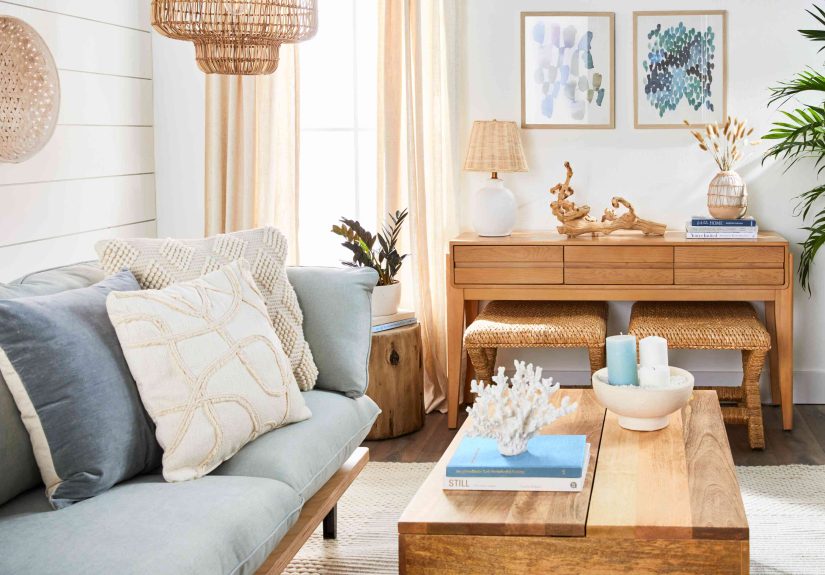
Living room on a budget: keep walls a warm white or creamy off-white, then use a pair of blue throw pillows, a
striped throw blanket, and one piece of ocean-inspired art (not literalabstract blues work beautifully).
Finish with light wood or whitewashed accessories.
Why it saves money: When your palette is tight, you stop impulse-buying random “beachy” objects that
don’t match anything you already own.
Tip 2: Spend on the “big calm” pieces, not the tiny “cute” pieces
Coastal spaces feel serene because the big elements are simple: a neutral rug, light curtains, comfortable seating,
uncluttered surfaces. Tiny decor is where budgets go to dieslowlyone $14.99 “nautical” trinket at a time.
Prioritize these high-impact budget upgrades
- Curtains: hang them high and wide to make the room feel taller and airier.
- Rug: choose natural textures (jute/sisal look) or a low-pile neutral you can layer.
- Throw pillows: buy inserts once; swap covers seasonally for a coastal refresh.
Budget example
Instead of buying 8 small tabletop items, put that money toward:
two curtain panels + a woven basket + two pillow covers. Your room will look finished, not fussy.
Tip 3: Thrift the “weathered charm” (because new weathered looks… suspicious)
Coastal decor loves patina: worn woods, imperfect ceramics, baskets that look like they’ve lived a life.
Guess what? Thrift stores, estate sales, and Facebook Marketplace are basically patina headquarters.
What to hunt for secondhand
- Light wood furniture: side tables, stools, benches (even if they need sanding).
- Wicker/rattan: chairs, baskets, trays, headboards (clean them wellworth it).
- Frames and mirrors: easy to repaint or leave as-is for a collected look.
- Ceramics: simple vases, bowls, pitchers in white, cream, or muted blue.
Quick upgrade trick
If a thrifted piece is the wrong color, give it a soft whitewash (diluted paint + wipe back) or a light
sanding to brighten it. You’ll get that sun-faded coastal vibe without paying “artisan weathered finish” prices.
Tip 4: Layer natural textures like you’re building a beach picnic (minus the sand in your snacks)
Coastal style isn’t just blue and whiteit’s texture. Natural fibers add warmth and make a neutral palette feel
intentional instead of “I forgot to decorate.”
Affordable coastal textures to add
- Seagrass/jute/sisal: rugs, baskets, planters, or simple placemats.
- Linen/cotton: slipcovers, pillow covers, throw blankets, relaxed bedding.
- Light wood: trays, cutting boards, stools, picture frames.
- Glass: clear vases, bottles, hurricane candle holders (instant “sunlight bouncing” effect).
Specific example
Dining area refresh: a woven runner, a glass vase with greenery, and a seagrass basket under the console table.
That’s it. No anchors required.
Pro tip: Mix textures in threessomething woven, something soft (linen/cotton), something smooth (glass/ceramic).
It reads designer-y, even if your “designer” is you, holding a coupon.
Tip 5: Make coastal art for almost free (yes, you’re allowed)
Wall art is where coastal rooms either look elevated or like a themed restaurant. The budget win?
Coastal art can be incredibly simple: airy photography, abstract blues, vintage maps, or line drawingsframed well.
Three easy DIY coastal art ideas
-
Printable + thrift frame: Use public-domain coastal photography or minimal abstract prints and frame them.
Matching frames make it look curated. -
“Ocean wash” abstract: Paint diluted blues/greens in soft horizontal strokes on canvas or heavy paper.
It’s forgiving. If it looks weird, call it “movement.” -
Textural art: Stretch linen over a canvas frame and staple it tight. Add a simple wooden frame.
Instant coastal, zero seashells.
Styling rule
Choose art that suggests the coast (light, color, calm) rather than literally showing a cartoon crab in sunglasses.
Unless you truly love that crab. In that case, I respect your crab journey.
Tip 6: Use the “one nautical nod” rule (to avoid accidental gift-shop energy)
Coastal decor and nautical decor are cousins, not twins. Nautical can be fun, but too much turns your home into a
ship-themed escape room. The fix is simple: allow yourself one obvious nautical element per room.
Examples of one “nautical nod”
- A subtle stripe (like ticking or cabana stripes) on a pillow or rug
- A single brass porthole-style mirror
- One piece of rope detail (lamp base, basket handle, or curtain tie)
What to skip (unless your house is actually a boat)
- Multiple anchor motifs
- Big “beach sayings” signs
- Too many tiny seashell accessories scattered everywhere
Why this works: Coastal style reads sophisticated when it’s inspired by naturenot when it’s a
literal costume.
Tip 7: Shop smarter: off-season, “high-low,” and multipurpose pieces
The fastest way to blow your budget is buying everything at once at peak season. The fastest way to look like you
hired help? Mix a few nicer-looking basics with budget findsand buy certain items at the right time.
Smart budget strategies
- Buy off-season: late summer and early fall often bring markdowns on outdoor/coastal accessories.
- Go “high-low”: spend a bit more on a rug or lighting; save on baskets, frames, and pillow covers.
- Choose multipurpose pieces: an oversized basket is storage + decor; a tray is styling + organization.
- Use “dupes” thoughtfully: look for simple shapes (ceramic vases, woven pendants) without paying luxury markups.
Specific example
If you can only upgrade one “fancy” item, choose lighting. A woven pendant or a warm-toned lamp instantly
adds coastal texture and makes even budget furniture look intentional.
Room-by-room coastal decor on a budget: a quick cheat sheet
Living room
- Neutral base (sofa or slipcover look) + 2–3 blue accents
- Woven basket for blankets + one large piece of art
- Natural fiber rug (or layered look)
Bedroom
- Crisp white bedding + linen throw
- Rattan/wicker accent (lamp, headboard, or basket)
- Simple bedside styling: a book, a small vase, a candle
Bathroom
- White towels + one sea-glass color accent (soap dispenser, tray)
- Woven storage + framed minimalist print
- Skip shell soap dishes unless they’re subtle and chic
Common budget traps (and how to dodge them)
- Trap: Buying lots of small decor. Fix: Upgrade textiles and one statement piece first.
- Trap: Too much navy everywhere. Fix: Keep navy as an accent, not the whole personality.
- Trap: Matching sets. Fix: Mix materialswood, woven, linen, ceramicfor a collected look.
- Trap: Over-cluttering surfaces. Fix: Leave negative space so the room feels airy.
Conclusion: Coastal, calm, and comfortably within budget
The secret to budget beach decor isn’t finding the cheapest “coastal” section in a store. It’s creating the coastal
feeling through light + a soothing palette + natural texture, then adding a few well-chosen details.
If your room feels airy, layered, and uncluttered, you’ve done iteven if you’re 800 miles from the ocean.
Start small: choose your “sand + sky” palette, thrift one piece with character, add a woven texture, and edit the
clutter. Your home will feel like a coastal escapewithout requiring a coastal-sized bank account.
Bonus: 5 real-life experiences styling coastal decor on a budget (what actually worked)
1) The “one paint sample” confidence boost. One weekend I watched a friend agonize over coastal paint colors
like she was naming a royal baby. We finally picked one warm white for the main walls and a soft, dusty blue for
a single accent (just one wall). The wild part? That tiny commitment made everything else easier. Suddenly she
wasn’t buying random “beach stuff.” She was shopping for a room with a plan. The budget win was real: paint cost
less than a single large piece of wall art, but it changed the entire mood.
2) Thrift-store baskets are the unsung heroes of coastal style. Coastal rooms look expensive because they’re tidy.
But “tidy” isn’t a personality traitit’s storage. We found two oversized woven baskets secondhand, cleaned them,
and used them for throw blankets and kids’ toys. The living room instantly looked more “coastal cottage” and less
“we live here with our stuff.” Bonus: baskets add that dune-grass texture that coastal design loves, and they’re
functional enough to justify the purchase without guilt.
3) The jute rug lesson: coastal texture is great… until a smoothie happens. Natural fiber rugs look perfect in a coastal
spacewarm, sandy, relaxed. But if your house is high-traffic (pets, kids, or adults who carry coffee like an
Olympic sport), you need a plan. The workaround that saved the budget: choose a jute-look rug that’s easier to
clean, or layer a washable rug over a natural-fiber base in the messiest zones. That way you keep the coastal
texture without the constant fear that your floor is one accident away from becoming “abstract stain art.”
4) Coastal art doesn’t have to be “beach art.” A renter friend wanted coastal style but couldn’t renovate.
We used thrifted frames and printed a set of minimalist ocean-toned abstractssoft blue washes, sandy neutrals,
and a couple of black-and-white shoreline photos. Hung together in a tight grid, it looked intentional and
expensive. The key was repeating colors from the room (the “sand + sky” plan again) and keeping frames consistent.
The whole wall cost less than one oversized retail canvas, and it looked way more personal.
5) The biggest upgrade was editing, not shopping. This is the least glamorous tip, but it’s the most effective:
coastal rooms breathe. We cleared off crowded surfaces, kept only a few larger objects (a tray, a vase, a stack of
books), and left empty space on purpose. It felt “designer” immediatelylike the room had a calm heartbeat. And
it cost exactly $0, which is my favorite price point. If you’re stuck, try removing half the decor from a room.
If it looks better, congratulations: you just achieved coastal style with the power of restraint.