Table of Contents >> Show >> Hide
- Tip 1: Start With the Right Tree, Not Just the Prettiest One
- Tip 2: Choose a Container That Works as Hard as Your Tree
- Tip 3: Use the Right Potting Mix, Not Backyard Soil
- Tip 4: Get Serious About Sun, Water, and Feeding
- Tip 5: Prune for Size, Structure, and Better Fruit
- Tip 6: Plan for Pollination, Weather, and Winter Before Problems Start
- Common Mistakes to Avoid
- Final Thoughts
- Experience: What Growing Fruit Trees in Containers Taught Me
- Conclusion
- SEO Tags
If you have a patio, balcony, porch, driveway, or one stubborn sunny corner that looks like it has big gardening dreams, you can grow fruit trees in containers. Yes, really. You do not need a sprawling orchard, a tractor, or the patience of a monk. You just need the right tree, the right pot, and a willingness to pay slightly more attention than you would to a cactus.
Container fruit growing is one of the smartest ways to enjoy homegrown harvests in a small space. It lets you control soil conditions, move plants when weather turns rude, and keep trees at a size that does not require a ladder and a pep talk. But it also comes with rules. A fruit tree in a pot is not “low maintenance.” It is more like a roommate who loves sunshine, hates wet feet, and expects snacks on schedule.
Below are six practical, real-world tips to help you grow healthy, productive fruit trees in containers without turning your patio into a plant emergency room.
Tip 1: Start With the Right Tree, Not Just the Prettiest One
The biggest mistake beginners make is buying a fruit tree because the tag shows glossy fruit and a happy family. Charming? Absolutely. Helpful? Not always.
For container gardening, the best choices are dwarf, semi-dwarf, columnar, or naturally compact varieties. Fruit trees grafted onto dwarfing rootstocks stay smaller and are easier to manage. That matters because a container limits root space, and a tree that wants to become a backyard giant will not suddenly decide to respect your patio boundaries.
Best fruit trees for containers
Some of the most reliable options include:
- Dwarf citrus such as lemon, lime, kumquat, or calamondin
- Fig trees
- Columnar or dwarf apples
- Dwarf peaches and nectarines
- Some compact cherries
- Blueberries, which are technically shrubs but perform beautifully in containers
Apples can work very well in containers, especially when grown on very dwarfing rootstocks. Citrus is another favorite because many dwarf citrus varieties are self-fertile and adapt well to pot culture. Blueberries are excellent too because containers make it easier to control the acidic soil they crave.
What to check before buying
- Whether the tree is labeled dwarf, patio, columnar, or container-friendly
- Its mature height and spread
- Whether it is self-pollinating or needs a partner
- Whether it matches your climate and chill-hour conditions
Think of this step as online dating for gardeners. Ignore the flashy photos. Read the details. Compatibility matters.
Tip 2: Choose a Container That Works as Hard as Your Tree
A tiny pot and a fruit tree are a bad match. The tree will dry out too quickly, become root-bound faster, and spend the season acting personally offended.
The ideal container is large, sturdy, weather-resistant, and has excellent drainage. Your tree needs enough room for roots to develop, enough weight to avoid tipping, and enough drainage holes to keep soggy soil from causing root rot.
What kind of container is best?
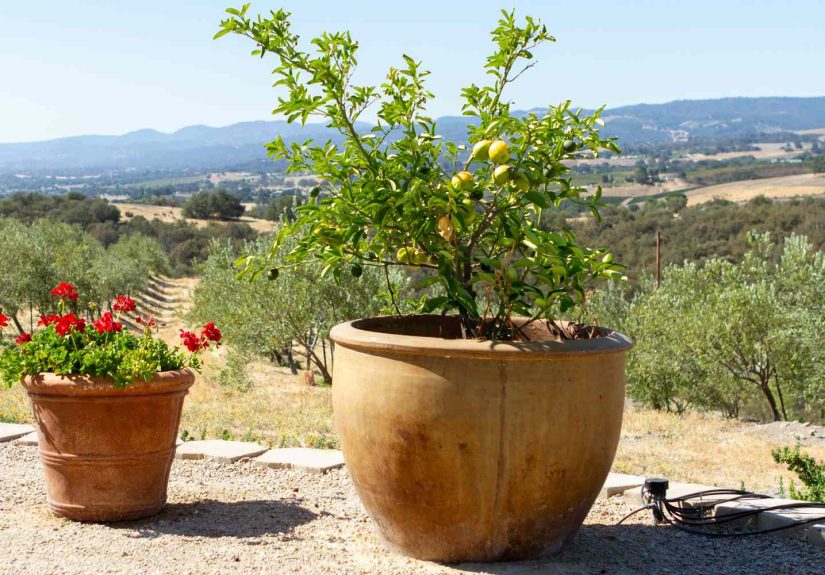
Wood, resin, and heavy-duty plastic are usually great choices. They balance durability with practicality, especially if you need to move the tree during winter or extreme weather. Unglazed ceramic can look gorgeous, but in cold climates it may crack if left outside through freezing weather. Dark containers can also heat up fast in summer and stress roots, especially in full sun.
General sizing guide
- Young dwarf trees can start in smaller nursery pots, then move up gradually
- Many fruit trees eventually need a container in the 15- to 25-gallon range
- Some mature container citrus may need pots 18 to 36 inches wide
- Blueberries often do well in large, deep pots, and mature plants appreciate extra root room
Do not jump from a tiny nursery pot to something comically enormous unless the plant is ready. Oversized containers can stay too wet for too long. Instead, size up as the tree grows.
One more thing: place the pot where you ultimately want it before you fill it. A large container planted with moist potting mix is less “weekend project” and more “accidental strength competition.”
Tip 3: Use the Right Potting Mix, Not Backyard Soil
If you remember only one sentence from this article, let it be this: do not fill containers with garden soil.
Backyard soil compacts in pots, drains poorly, and can suffocate roots. Fruit trees in containers need a high-quality potting mix that drains well but still holds enough moisture to support steady growth.
What your mix should do
- Drain quickly
- Hold moisture evenly
- Provide good aeration
- Support root development without becoming dense and muddy
For most fruit trees, a premium potting mix designed for containers works well. Citrus benefits from a fast-draining mix, often one labeled for citrus, cactus, or succulents. Blueberries are the special divas of the group: they prefer acidic growing media and often do best in mixes containing ingredients such as peat moss, pine bark, or other acid-friendly components.
Planting basics
When planting, keep the crown of the tree slightly above the soil line and leave a little space between the top of the mix and the rim of the pot. That gap makes watering easier and keeps water from sloshing everywhere except where it is needed.
Over time, potting mix breaks down. That means drainage gets worse and roots get crowded. Refreshing the mix or repotting every few years keeps your tree from living in what is essentially old, compacted sponge cake.
Tip 4: Get Serious About Sun, Water, and Feeding
Fruit trees are not shy about their needs. If they could text you, they would mostly send three messages: “More sun,” “Water me,” and “What’s for dinner?”
Sunlight matters more than optimism
Most container fruit trees need full sun, which usually means at least 6 to 8 hours a day, and many apples and citrus perform best with around 8 hours or more. A tree in too much shade may grow leaves just fine, then reward you with little fruit, poor color, or flowers that seem to disappear into the void.
Patios and balconies can create microclimates, so watch the light throughout the day. A spot that looks sunny at breakfast may be gloomy by lunch.
Watering in containers is a different game
Fruit trees in pots dry out faster than in-ground trees, especially in summer, wind, or hot weather. That means regular watering is essential. In peak heat, some container plants may need water daily. But frequent watering does not mean constant sogginess. Roots still need air.
The goal is deep, thorough watering, then letting the top portion of the potting mix dry slightly before watering again. If leaves yellow, curl oddly, or wilt despite moist soil, overwatering may be the culprit. If the tree droops and the mix feels dry below the surface, it is asking for a drink.
Feeding matters because pots are a closed system
In the ground, roots can roam for nutrients. In a container, they are stuck with what you provide. Use a balanced fertilizer during the growing season, but do not go wild. Too much nitrogen can push leafy growth at the expense of flowers and fruit.
Citrus usually appreciates regular feeding and often benefits from fertilizers higher in nitrogen. Many gardeners use slow-release fertilizers, liquid feeds, or products specifically labeled for citrus. In general, fertilize while the tree is actively growing and ease off by early fall so it can harden off before colder weather.
Tip 5: Prune for Size, Structure, and Better Fruit
Pruning can feel intimidating because it involves cutting pieces off something you paid for. But with fruit trees in containers, pruning is not optional. It is one of the main reasons your tree stays healthy, manageable, and productive.
Why pruning matters in containers
- Keeps the tree at a practical size
- Improves light penetration
- Encourages air circulation
- Reduces disease pressure
- Makes harvesting easier
- Helps direct the tree’s energy into strong fruiting wood
For many home fruit trees, annual pruning during dormancy is the main event. Light summer pruning can also help control excessive growth, especially if your tree is trying to become the mayor of the patio.
Simple pruning rules for beginners
- Remove dead, damaged, or crossing branches
- Maintain an open shape so light reaches the center
- Cut back vigorous upright shoots when needed
- Keep the overall height within easy reach
Dwarf apple trees on very dwarfing rootstocks often need staking or support, even in containers. That is not a sign of failure. It is part of the design.
Also, do not let a young tree carry more fruit than it can handle. Thinning fruit can improve size and reduce branch stress. It feels harsh for about 12 seconds, and then you remember you are raising quality, not chaos.
Tip 6: Plan for Pollination, Weather, and Winter Before Problems Start
Container fruit growing gets much easier when you stop reacting and start planning ahead. Many fruiting issues are not mysterious. They are usually tied to pollination, weather stress, or winter root damage.
Pollination can make or break your harvest
Many apples and pears need a different compatible variety nearby for good fruit set. Some may need even more careful pollination planning. By contrast, many dwarf citrus types are self-fertile, which makes them excellent for small spaces.
Blueberries may produce some fruit on their own, but yields often improve when another compatible variety blooms nearby. So if you have room for two pots instead of one, your future self may receive a better harvest and fewer disappointments.
Weather hits containers harder
In-ground roots are insulated by soil. Container roots are much more exposed to heat and cold. That means summer heat can bake roots faster, and winter cold can damage them more easily.
In hot weather, avoid letting containers overheat. Light-colored pots, mulch on top of the potting mix, and smart placement can help. In winter, cold-hardy fruit in containers often needs protection even if the same plant could survive outdoors in the ground.
Winter survival tips
- Move containers to a protected outdoor location when possible
- Insulate pots with leaves, mulch, or straw around the sides
- Use larger containers for better root protection
- Keep the potting mix from becoming bone dry during winter
- Bring tender citrus indoors before damaging cold arrives
Cold-hardy trees still need dormancy, so they should not automatically come into a warm living room for the winter. Citrus is different: it often needs a bright, protected indoor or sheltered space when temperatures plunge.
Common Mistakes to Avoid
- Choosing a full-size tree for a small pot
- Using garden soil instead of potting mix
- Skipping drainage holes
- Assuming one watering schedule fits all weather
- Ignoring pollination requirements
- Overfertilizing for lush leaves but poor fruit
- Forgetting winter root protection
- Letting the tree stay root-bound for too long
Final Thoughts
Growing fruit trees in containers is one of those gardening projects that looks adorable on social media and then turns out to require actual strategy. The good news is that it absolutely works when you set your tree up for success.
Choose a compact variety. Give it a container with drainage and enough room to grow. Use the right potting mix. Keep up with sun, water, and fertilizer. Prune with confidence. Plan ahead for pollination and winter. Do those six things, and your little potted orchard can become both productive and ridiculously satisfying.
There is something special about picking a lemon from a patio tree or grabbing a homegrown fig steps from your back door. It feels slightly glamorous, slightly practical, and very rewarding. Not bad for a plant living in a pot.
Experience: What Growing Fruit Trees in Containers Taught Me
The first thing container fruit growing taught me is that the pot matters almost as much as the plant. Early on, I made the classic beginner mistake of choosing containers based on looks alone. They were beautiful, dramatic, and completely impractical. One was too shallow, another heated up like a cast-iron skillet in summer, and one became so heavy after watering that moving it felt like training for an event nobody asked me to join. Once I switched to sturdier, better-sized containers with reliable drainage, the trees noticeably improved. They looked less stressed, watered more evenly, and stopped acting like every afternoon was a personal crisis.
I also learned that fruit trees in containers force you to become a better observer. In a garden bed, a plant can hide problems for a while. In a pot, not so much. If the tree is unhappy, it tells you quickly. Leaves curl. Growth slows. Fruit drops. The upside is that you get faster feedback. After one season, I could tell the difference between a thirsty tree and an overwatered one just by the way the leaves looked in the morning. That kind of attention changes how you garden. You stop guessing and start noticing patterns.
Another lesson was that “small tree” does not mean “no pruning required.” I used to think dwarf trees were basically self-managing miracles. They are not. They are more like talented overachievers who still need direction. Once I got comfortable with light annual pruning, the trees became easier to shape, easier to harvest, and much healthier overall. The fruit was better too. There is a surprising amount of satisfaction in trimming a tree with purpose and seeing it respond the next season.
Pollination was another humbling experience. One year, a tree bloomed beautifully and then produced almost nothing. I had flowers, optimism, and absolutely no meaningful harvest. That was when I paid closer attention to whether a tree was self-fertile or needed a pollination partner. It turns out blossoms alone are not a guarantee of success. Since then, I have treated pollination like part of the planting plan, not a fun little surprise to investigate later.
Perhaps the biggest lesson, though, is that container fruit growing makes gardening feel personal in the best way. You are not managing a giant orchard. You are caring for a few individual plants up close. You notice the first flower buds, the first tiny fruit, the change in leaf color, the way one tree loves heat and another prefers a gentler spot. The whole process becomes more intimate and more rewarding. Even small harvests feel huge because they are tied to daily attention and small decisions that added up over time.
If you are thinking about trying fruit trees in containers, my honest advice is simple: start with one or two good varieties, keep expectations realistic, and treat the learning curve as part of the fun. Some seasons will be fantastic. Some will be educational. Both count.
Conclusion
Container-grown fruit trees are proof that you do not need a full orchard to enjoy homegrown harvests. With the right variety, pot, potting mix, and care routine, even a modest outdoor space can produce impressive fruit. Start smart, stay consistent, and your patio can become the most delicious part of your home.