Table of Contents >> Show >> Hide
- Why a Tenant Complaint Letter Matters
- 1. Start With Clear Facts, Not Steam Coming Out of Your Ears
- 2. Tie the Complaint to the Lease, Property Rules, or Tenant Rights
- 3. Ask for a Specific Solution and Give a Reasonable Deadline
- 4. Support the Letter With Evidence and a Real Paper Trail
- 5. End Professionally, Even if You Are Absolutely Done With This Situation
- Common Mistakes to Avoid in a Landlord Complaint Letter
- A Simple Structure You Can Follow
- Real-World Experiences Tenants Learn From
- Conclusion
- SEO Tags
If you have ever stared at a leaking ceiling, a broken heater, a neighbor who thinks midnight is karaoke hour, or a landlord who treats your voicemail like abstract art, you already know one thing: a tenant complaint letter matters. A lot. It is not just a polite note. It is a written record, a timeline, and sometimes the first serious step toward getting repairs made, stopping lease violations, protecting your security deposit, or defending your tenant rights.
The good news is that writing a strong tenant complaint letter is not about sounding like a lawyer in a courtroom drama. It is about sounding clear, organized, and impossible to misunderstand. The best complaint letters are calm, factual, and specific. They make it easy for a landlord or property manager to understand the issue, see what action is requested, and realize you are keeping a paper trail. In other words, your letter should sound less like a meltdown and more like a person who has receipts.
In this guide, you will learn five effective ways to write a tenant complaint letter, plus practical examples, mistakes to avoid, and real-world lessons tenants often learn the hard way. Whether you are dealing with repairs, noise, unauthorized entry, health and safety concerns, harassment, or a lease dispute, these strategies can help you write a complaint letter that is firm, professional, and much harder to ignore.
Why a Tenant Complaint Letter Matters
A tenant complaint letter does three jobs at once. First, it notifies the landlord of the problem in a formal way. Second, it creates documentation showing when you reported the issue. Third, it shows that you tried to solve the problem reasonably before taking further action.
That last point matters more than people think. In many landlord-tenant disputes, the winner is not the person who was the angriest. It is the person who can show dates, facts, prior notice, photos, copies of messages, and a clear request for action. A good complaint letter helps build that record.
It also helps keep the situation from spiraling. Instead of sending six emotional texts and one all-caps email written at 1:14 a.m., you send one organized letter that says exactly what happened, what you want fixed, and when you expect a response. Beautiful. Efficient. Slightly intimidating in the best possible way.
1. Start With Clear Facts, Not Steam Coming Out of Your Ears
The first and most important rule of writing a complaint letter to a landlord is simple: be factual. Your letter should read like a timeline, not a revenge monologue.
What to include at the top
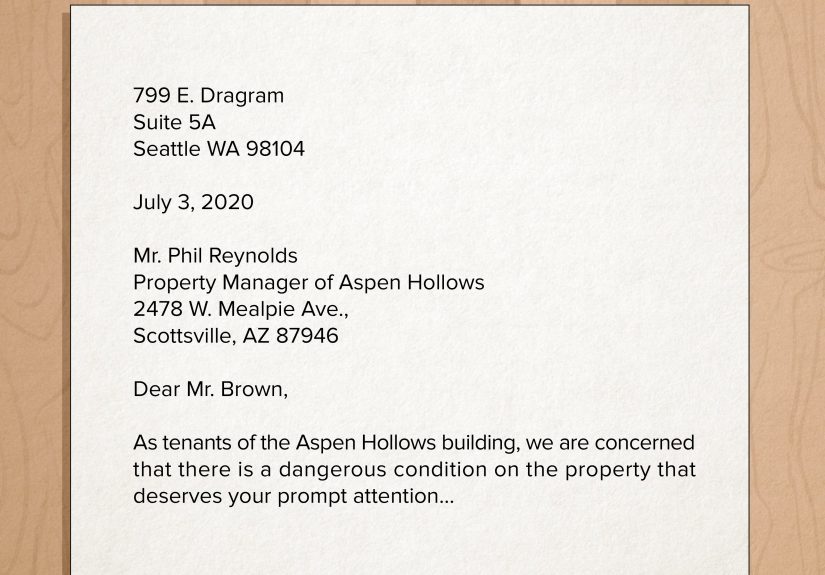
Open with the basic identifying information so there is no confusion about who you are and which rental unit is involved. Include your full name, rental address, apartment number if applicable, the date, and the landlord or property manager’s name and address. A strong opening also includes a direct subject line, such as Complaint Regarding Unrepaired Water Leak in Unit 3B or Formal Noise Complaint Regarding Repeated Lease Violations.
Describe the problem with specifics
Now explain the issue in plain English. Stick to objective details:
- What is the problem?
- When did it start?
- How often has it happened?
- How is it affecting your use of the unit?
- When did you first report it?
For example, instead of writing, “The apartment is disgusting and nobody cares,” write something like: “On March 3, 2026, I noticed water leaking from the ceiling above the kitchen sink. I reported the issue by phone the same day and again by email on March 5, 2026. The leak has continued and has now caused water damage to the ceiling and cabinet area.”
See the difference? One version sounds upset. The other sounds useful. Landlords, managers, inspectors, and judges tend to love useful.
Do not overdramatize
Even if the situation is genuinely awful, avoid exaggeration. Do not say the apartment is “unlivable” unless it truly is. Do not say the landlord “never responds” if they replied once two weeks ago with a useless thumbs-up emoji. A complaint letter is strongest when every sentence is accurate and defensible.
2. Tie the Complaint to the Lease, Property Rules, or Tenant Rights
Your letter becomes much stronger when you connect the problem to something concrete: the lease, building rules, habitability standards, privacy rights, or tenant protections under local law. You do not need to write like a law professor. You just need to show that the complaint is not random.
Use the lease when you can
If your lease says the landlord is responsible for maintenance, pest control, heating, plumbing, security, or common-area upkeep, mention that. If the building has rules about quiet hours, smoking, parking, or guest conduct, mention those too.
For example: “Section 8 of my lease states that management is responsible for maintaining plumbing and water-related systems in working order.” Or: “The building’s quiet-hours policy prohibits excessive noise after 10:00 p.m., but the disturbance from Unit 4C has continued on multiple nights.”
Focus on the effect of the problem
It helps to explain how the issue affects your living conditions. Is the lack of heat making the apartment unsafe? Is repeated unauthorized entry interfering with your privacy? Is ongoing mold, pest activity, or a sewage smell affecting health and safety? Is noise preventing normal use and quiet enjoyment of the apartment?
This is where your letter begins to sound serious without sounding theatrical. You are not merely annoyed. You are documenting that the condition is interfering with your right to safely and reasonably use the rental home you pay for.
Be careful with legal language
You can say things like “this issue affects habitability,” “this appears to violate the lease,” or “this interferes with my quiet enjoyment of the unit.” That is fine. But avoid stuffing the letter with legal buzzwords you do not understand. A complaint letter is not improved by sounding like you swallowed a law dictionary whole.
3. Ask for a Specific Solution and Give a Reasonable Deadline
Many weak tenant complaint letters make one big mistake: they describe the problem but never clearly say what they want. Do not assume the landlord will guess correctly. Spell it out.
Request a concrete action
Your complaint should include a direct request. Examples include:
- Repair the leak and inspect the wall for moisture damage
- Restore heat and hot water
- Address repeated pest activity with professional treatment
- Investigate and stop repeated lease violations by another tenant
- Provide proper notice before entering the unit
- Explain security deposit deductions in writing
The more specific the request, the better. “Please fix this” is not terrible, but “Please repair the bathroom exhaust fan and confirm the repair date in writing” is much better.
Set a reasonable deadline
Deadlines matter because they move your letter from “general complaining” into “formal request.” The deadline should fit the urgency of the issue. A broken front door lock or no heat in winter deserves a very fast response. A minor non-emergency repair can allow more time.
Good wording sounds like this: “Please respond in writing within five business days” or “Please complete the repair by March 22, 2026, or provide a written update and repair schedule.” That is firm, fair, and hard to misread.
Mention next steps without sounding threatening
You can also say what you plan to do if the problem is not addressed. Keep it professional. For example: “If this matter is not resolved, I may need to contact the local housing inspector, tenant hotline, or other appropriate agency.”
Notice what this does not say. It does not say, “Fix this by Friday or prepare to meet my wrath.” Very tempting. Not effective.
4. Support the Letter With Evidence and a Real Paper Trail
If your complaint letter is the backbone of your case, your documentation is the muscle. A strong tenant complaint letter should reference evidence and preserve a record of communication.
Attach or mention supporting documents
Depending on the issue, that may include:
- Photos of damage, mold, pests, leaks, or unsafe conditions
- Videos showing noise, flooding, or appliance failure
- Copies of previous emails, texts, or maintenance requests
- Notes from phone calls, including dates and times
- Receipts for temporary repairs or related expenses
- Witness statements from neighbors or roommates if relevant
You do not need to attach your entire life story. Just include what supports the complaint. Think quality over quantity. Two clear photos and a timeline usually beat seventeen blurry screenshots and a paragraph that says, “Look, it was a whole thing.”
Keep copies of everything
This cannot be overstated. Keep a copy of the letter. Keep proof of delivery. Save emails. Screenshot online maintenance requests. If you hand-deliver the letter, note when and to whom you gave it. If you mail it, keep mailing records. If you send an email, save the sent version and any reply.
A paper trail protects you if the landlord later claims they never knew about the problem. Funny how that happens right after they definitely knew about the problem.
Organize your evidence by date
One of the smartest things a tenant can do is keep a simple chronology. For example:
- March 3: Leak discovered
- March 3: Reported by phone
- March 5: Follow-up email sent
- March 8: No response
- March 10: Complaint letter mailed
That kind of timeline makes your position much stronger if you ever need to talk to code enforcement, a housing agency, a tenant advocate, or a court.
5. End Professionally, Even if You Are Absolutely Done With This Situation
The ending of your tenant complaint letter should be polite, firm, and future-focused. This is not the place to unload. It is the place to lock in your request and preserve your credibility.
Use a calm closing
A good closing paragraph might say:
I would appreciate your prompt attention to this matter. Please confirm in writing that you received this letter and let me know the date when the issue will be addressed. I hope we can resolve this quickly and professionally.
That language works because it is reasonable. It shows you are trying to solve the problem, not pick a fight. If the matter later escalates, that professionalism helps you.
Sign the letter clearly
Include your full name, address, phone number, and email. If multiple tenants in the unit are affected, it can help to have everyone sign. That is especially useful when the complaint involves building-wide issues, repeated noise, shared maintenance failures, or harassment that affects more than one resident.
Know when to send a second letter
If the landlord ignores the first complaint, send a second, more formal follow-up letter. Refer back to the first letter, restate the issue, note the lack of response, and repeat your request with a new deadline. At that point, your tone can become more formal without becoming hostile. Think “official,” not “villain origin story.”
Common Mistakes to Avoid in a Landlord Complaint Letter
- Being vague: “Things are bad” is not enough. Be specific.
- Being emotional instead of factual: Frustration is understandable, but clarity wins.
- Making legal threats too early: Mention next steps calmly; do not lead with threats.
- Failing to request action: Always say what you want done and by when.
- Not keeping copies: A letter you cannot prove you sent is much less useful.
- Ignoring local law: State and city rules vary, especially for repairs, notice, entry, rent withholding, and retaliation.
A Simple Structure You Can Follow
If you want a reliable format, use this order:
- Who you are and where you live
- What the problem is
- When it started and how often it has happened
- When you previously reported it
- How it affects your use of the property
- What action you want taken
- Your deadline for response or repair
- Your note that you are keeping records and may escalate if needed
That structure works for nearly every type of rental complaint, including repair requests, security concerns, lease violations, noise complaints, pest problems, mold concerns, privacy issues, or security deposit disputes.
Real-World Experiences Tenants Learn From
One of the most common experiences tenants report is that the first complaint is often too casual. They mention a leak in person, send a quick text about the broken stove, or tell the property office that the hallway lock is not working. Then nothing happens. Weeks later, when the problem gets worse, they realize there is almost no formal record. That is why a written tenant complaint letter matters so much. It turns a passing conversation into a documented notice.
Another common lesson involves noise complaints. Tenants often assume a landlord will automatically handle a noisy neighbor after one complaint. In reality, management usually wants specifics: dates, times, unit numbers, the type of disturbance, and how often it occurs. Tenants who keep a short noise log and include that information in the complaint letter usually get better results than tenants who simply say, “My neighbors are loud all the time.” Details give the landlord something they can investigate and act on.
Repair disputes create another pattern. Many tenants wait too long to escalate because they are trying to be patient. Patience is great. Endless patience with a ceiling leak is not. Small problems become expensive problems. A loose window turns into water intrusion. A plumbing drip becomes mold. A broken exterior light becomes a safety issue. Experienced tenants often learn that a calm, timely complaint letter is not rude. It is responsible.
Security deposit problems also teach hard lessons. Tenants move out, expect a full refund, and then receive a surprise list of charges that looks like the apartment hosted a tornado convention. The tenants who do best in those disputes are usually the ones who documented the condition of the unit before move-in, during the tenancy, and at move-out. If you ever need to complain about unfair deductions, a written letter backed by photos, inspection notes, and lease terms is far more persuasive than memory alone.
Unauthorized entry is another issue where experience changes how tenants write. At first, many renters keep the tone too soft: “Hi, just wondering if maybe next time I could get more notice?” After repeated entries, they realize the letter needs to be more direct: state the dates of entry, explain that proper notice is required except in emergencies, and request written confirmation that future entries will follow the rules. Professional does not mean passive.
Tenants dealing with possible discrimination or repeated retaliation often learn the value of precision. Instead of making a broad accusation with no structure, strong letters describe what happened, when it happened, who was involved, and why the conduct appears unequal, retaliatory, or improper. That level of detail can matter if the complaint later goes to a housing agency, fair housing office, legal aid group, or court.
The biggest real-world lesson is this: the best tenant complaint letter is rarely the angriest one. It is the one that reads like a person who is organized, credible, and prepared to follow through. A good letter does not just express frustration. It creates leverage. And in rental disputes, leverage is often what finally gets the repair made, the behavior stopped, or the response you should have gotten in the first place.
Conclusion
Writing a tenant complaint letter is not about sounding dramatic or intimidating. It is about being clear, factual, and strategic. Start with the facts. Tie the complaint to the lease or tenant rights. Ask for a specific solution. Back everything up with evidence. Then end professionally and keep the record. Those five steps can turn a frustrating rental problem into a documented issue that is much harder to dismiss.
Whether you are writing a repair request letter, a noise complaint letter, a complaint letter to a landlord about unsafe conditions, or a more formal rental complaint letter about repeated violations, the goal is the same: communicate clearly and protect yourself. A well-written letter may solve the issue on its own. And if it does not, it puts you in a much stronger position for whatever comes next.