Table of Contents >> Show >> Hide
- 47 Movie Tropes And Moments That Make Female Characters Feel Fake
- Why These Female Character Clichés Keep Showing Up
- When Movies Get Women Right, They Usually Do One Simple Thing
- The Real Reason These Tropes Are So Infuriating
- 500 More Words on the Experience of Watching These Tropes Over and Over
- Conclusion
Let’s be clear right from the jump: women are not unrealistic. Movie writing about women often is. That distinction matters, because some of the most annoying moments in film history weren’t “female behavior” at all. They were screenwriter fever dreams, studio shortcuts, and old Hollywood habits wearing a fresh coat of lip gloss.
For decades, movies have served up unrealistic female characters who somehow wake up flawless, run from explosions in absurd shoes, forgive terrible men by the third act, and exist mainly to decorate a story that belongs to somebody else. Sometimes the result is funny. Sometimes it is eye-roll worthy. And sometimes it is so wildly out of touch that you want to pause the movie and ask, “Did an actual human woman read this script before cameras rolled?”
This list dives into the most infuriating movie tropes about women, from the “cool girl” fantasy to the makeover cliché to the emotionally supportive girlfriend who has no hobbies, no boundaries, and apparently no rent to pay. Some are sexist movie tropes that have been hanging around since black-and-white cinema. Others are newer, shinier versions of the same old nonsense. Either way, they deserve a dramatic exit.
47 Movie Tropes And Moments That Make Female Characters Feel Fake
- The woman who wakes up camera-ready. Not a crease on the face, not a strand out of place, and somehow a full face of mascara before coffee.
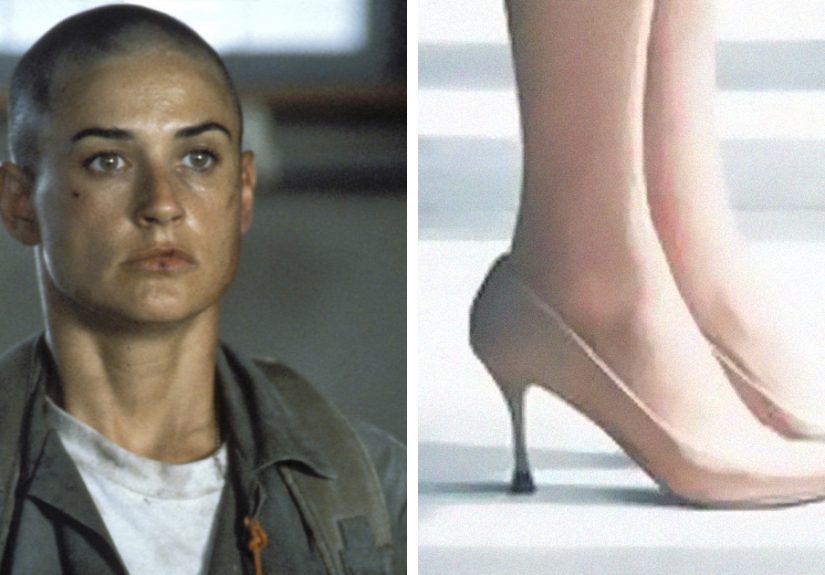
- The high-heel sprinter. She can outrun dinosaurs, assassins, and the collapse of civilization in shoes that would destroy a normal ankle in eight seconds.
- The “she doesn’t know she’s beautiful” beauty. Usually played by one of the most conventionally attractive people alive, as if the audience forgot how mirrors work.
- The cool girl who loves everything men love. Beer, burgers, football, zero emotional needs, and no complaints. Convenient.
- The woman who exists to fix a broken man. Her job is not to live; it is to perform unpaid emotional rehab.
- The makeover that turns a “plain” girl into a goddess. Translation: remove glasses, shake out hair, cue pop music, pretend we learned something profound.
- The female boss who must be icy to be credible. Movies love suggesting competence in women requires frostbite.
- The mom with no inner life. She has children, snacks, concern, and apparently no past, ambition, friends, or private thoughts.
- The girlfriend with no purpose beyond support. She appears when the hero is sad, disappears when plot happens, then returns for a kiss.
- The “nagging wife” who is secretly right. She warns him not to do the dumb thing, he does it anyway, chaos follows, and the movie still acts like she was the problem.
- The woman who falls for a man who barely meets the minimum requirements for sentience. He is rude, selfish, emotionally unavailable, but hey, the soundtrack says love.
- The female scientist dressed for a nightclub. Hollywood remains deeply committed to the idea that advanced physics requires contouring.
- The action heroine who is “strong” but not written like a person. She can punch through drywall but is given no humor, messiness, fear, contradiction, or texture.
- The dead woman who exists to motivate a man. If her primary narrative contribution is dying so he can feel things, the trope alarm is blaring.
- The woman who forgives betrayal at record speed. Lies, cheating, manipulation, public humiliation, and then one speech in the rain wraps it all up.
- The female rival who hates another woman for no reason. Because heaven forbid two women in the same zip code have a conversation that is not territorial.
- The woman who says “I’m fine” when no one is fine. Used less as realism and more as lazy shorthand for “we didn’t want to write dialogue.”
- The love interest who instantly likes the guy because he is persistent. In real life, relentless pursuit is not always charming. Sometimes it is a reason to change your route home.
- The “not like other girls” girl. A favorite trick for flattering one female character by insulting all the others.
- The quirky woman with no interior logic. She sings in grocery stores, owns vintage boots, says random things about birds, and exists mainly to revive a dull man’s soul.
- The trauma-free sexualization of teenage girls. Movies often frame this as normal, harmless, or even empowering without questioning who the framing serves.
- The woman who can fight five grown men without ever sweating. Action fantasy is fine; zero physical consequence is where it gets cartoonish.
- The female character whose clothes get less practical as the danger rises. Apocalypse? Here is a crop top. Alien invasion? Time for leather pants.
- The woman who is magically excellent at caregiving. Babies, wounded strangers, unstable men, all handled with effortless saint energy.
- The woman who knows the hero better than she knows herself. She can identify his pain, destiny, and childhood wound in one glance, yet her own arc is basically vapor.
- The impossible work-life balance queen. She runs a company, parents perfectly, looks immaculate, and still has time for meaningful flirting in artisanal kitchens.
- The female villain who is punished for ambition. Men get to be driven. Women get coded as monstrous for wanting power too visibly.
- The “crazy ex-girlfriend” with no perspective. She is rarely written as a real person reacting to bad treatment; she is just a human warning label.
- The woman whose jealousy is framed as comedy. Territorial behavior gets played for laughs until it lands squarely in manipulative territory.
- The one woman on the team. Token representation is not depth. It is just loneliness with better lighting.
- The instant mother bond. She meets one child and immediately unlocks supernatural maternal wisdom.
- The makeover of personality, not just appearance. Apparently straightening someone’s hair also updates her confidence, social status, and moral worth.
- The woman who abandons her dream for romance. The career in Paris never survives the airport confession.
- The woman who is “too much” until a man validates her. Loud, brilliant, weird, or intense women often get narratively punished until male approval arrives like a permission slip.
- The female detective who is brilliant but doomed to romantic chaos. Why do so many movies assume competence in women must be balanced by personal disaster?
- The woman who changes everything but learns nothing. She affects the plot, yet the script never lets her own consciousness deepen.
- The saintly wife of the morally compromised man. She exists to embody purity, patience, and impossible levels of tolerance.
- The woman who can read another woman in one savage glance. Films love implying women are naturally engaged in a permanent psychic pageant of competition.
- The “born yesterday” fantasy woman. She is naive, dazzling, sexually available, and conveniently inexperienced enough to admire a mediocre man.
- The heroine who must still be sexy while suffering. Even grief, combat, and survival are expected to remain visually flattering.
- The woman whose pain is aestheticized. Her sadness is beautifully lit, tastefully costumed, and suspiciously designed for somebody else’s gaze.
- The female friendship that gets sidelined for romance. Two women finally click, and the movie immediately herds one toward a kiss scene with an underwritten guy.
- The “girl power” moment with no real substance. A slow-motion team-up is fun, but one glossy shot cannot replace meaningful writing.
- The woman who never talks about money, logistics, or basic reality. Rent, childcare, healthcare, groceries, commuting: movie women often live in a practical vacuum.
- The wife who somehow tolerates everything for the plot. Emotional neglect, danger, lies, obsession, secrecy, all absorbed because the screenplay needs her to hold.
- The female lead whose body is treated like public property. Camera angles, jokes, comments, and story beats all quietly suggest she is being displayed before she is being developed.
- The ending that calls all of this empowerment. Sometimes a movie hands a woman a sword, a quip, and a glossy close-up and expects applause for progress.
Why These Female Character Clichés Keep Showing Up
These unrealistic female characters do not appear because writers hate women in some cartoon-villain way. More often, they show up because cliché is efficient. A trope is a shortcut. It tells the audience, “You’ve seen this before, so we don’t have to build it from scratch.” The problem is that the shortcut usually cuts right through character depth.
That is how we end up with female stereotypes in film that feel instantly familiar and instantly annoying: the nag, the muse, the dead wife, the cool girl, the uptight boss, the sexy genius, the nurturing mother, the unstable ex. They are easy to recognize because Hollywood has repeated them like a favorite recipe it refuses to update.
There is also the issue of visual storytelling. Women in movies are often treated as things to be looked at before they are treated as people to be understood. That is why costume, camera angle, and body language can feel strangely disconnected from the reality of a scene. A male character gets to be rumpled, exhausted, dirty, weird, unlikable, aging, or average. A female character is still expected to look deliberately arranged, even while surviving a catastrophe that would make any normal person resemble a haunted gym towel.
When Movies Get Women Right, They Usually Do One Simple Thing
The best female characters do not feel “strong” because they can win a fistfight or deliver a devastating one-liner in slow motion. They feel real because they are specific. They want things. They contradict themselves. They make bad calls, funny calls, selfish calls, brave calls, and occasionally absolutely ridiculous calls. In other words, they get to be human.
Good writing gives women the full emotional menu. They can be competent without being cold, vulnerable without being helpless, attractive without being ornamental, maternal without disappearing into motherhood, and ambitious without being punished by the script like they committed a felony at a networking event.
That is why audiences respond so strongly when a movie offers an actually layered woman instead of a female character cliché. Viewers can feel the difference immediately. The dialogue sounds less synthetic. The choices feel less engineered. And the story stops treating womanhood like a decorative subplot.
The Real Reason These Tropes Are So Infuriating
Bad movie tropes about women are not just annoying because they are repetitive. They are annoying because they shrink the imaginable size of women’s lives. They suggest that a woman’s value lies in desirability, emotional labor, sacrifice, or support. Even when the packaging changes, the old message often survives.
And that is why these moments linger. Viewers are not merely reacting to one bad rom-com scene or one ridiculous action sequence. They are reacting to accumulation. To a lifetime of seeing women written as rewards, symbols, complications, lessons, or accessories instead of fully formed protagonists with their own gravity.
So yes, laugh at the high heels during the chase scene. Mock the “plain girl” who is secretly a supermodel in a messy bun. Roll your eyes at the airport confession that derails a woman’s entire future. But also notice the larger pattern. Because once you see how often movies flatten women into fantasy, it becomes impossible to unsee it.
500 More Words on the Experience of Watching These Tropes Over and Over
Part of what makes these tropes so exhausting is the experience of recognizing them before they fully happen. A woman walks on screen, the camera starts at her legs, the music does that little “you should be impressed now” thing, and your brain is already five steps ahead. You know she is either the love interest, the obstacle, the “difficult” career woman who must soften, or the supposedly intimidating woman who will be revealed as secretly lonely because movies still struggle to imagine female solitude as anything other than a cry for romantic rescue.
That viewing experience can be weirdly deflating. You may start a movie wanting to be surprised, only to realize the script is assembling a female character from spare parts it found in an old studio closet. Here are the heels. Here is the witty hostility that will become desire. Here is the dead mother. Here is the vulnerable confession. Here is the scene where she explains the male lead to himself better than any therapist ever could. By the time the third act arrives, the movie feels less like storytelling and more like a magic trick you have seen performed badly at three different birthday parties.
There is also the frustration of rewatching older movies you once loved and suddenly noticing how unfairly the women were written. The glamorous wife has no believable reaction to chaos. The female colleague is framed as “difficult” for wanting basic respect. The ex-girlfriend is treated like a punchline because she remembers what the hero did. The shock is not always that the writing is sexist in a loud way. Often it is that the writing is small. It gives women less room, less strangeness, less selfishness, less humor, less moral range. The men get character. The women get functions.
And yet, the opposite experience is why this conversation matters. When a movie finally writes women as full people, audiences feel it immediately. The theater gets sharper. The scenes land harder. The jokes feel truer. Female friendship scenes suddenly have energy. A mother sounds like an adult instead of a moral proverb. A heroine can be brave and wrong in the same breath. A female villain can want power without the movie turning her into a warning label for ambition. Those moments are satisfying precisely because they feel observed rather than assembled.
Maybe that is the core issue with unrealistic women in movies: viewers are tired of assembly-line femininity. They want women on screen who resemble life in all its contradiction. Women who are messy, strategic, funny, tired, horny, brilliant, petty, generous, avoidant, loving, furious, inconsistent, and memorable for reasons beyond whether the camera thinks they are hot enough. The most infuriating tropes flatten all that complexity into a neat little box. The best films smash the box and let the character breathe.
Conclusion
Hollywood has made progress, but the most annoying female movie tropes are still hanging around like party guests who missed three obvious cues to leave. The good news is that audiences are sharper than ever. They can spot a hollow “girl power” moment, a lazy makeover arc, or an underwritten love interest from a mile away. And the more viewers demand better, the harder it becomes for studios to keep recycling outdated ideas about women.
In the end, the problem is not that movies feature women who are difficult, glamorous, emotional, ambitious, nurturing, chaotic, or powerful. The problem is when those qualities are reduced to stereotypes instead of developed into character. Write women like people, and the story gets better. Keep writing them like tropes, and audiences will keep bringing the side-eye.