Table of Contents >> Show >> Hide
- Why These Before-and-After Photos Are So Weirdly Powerful
- What Good Posture Actually Looks Like
- What Bad Posture Usually Looks Like in These Photos
- What These Photos Really Reveal About the Body
- Good Posture Is Helpful, but It Is Not a Personality Trait
- How to Improve Posture Without Turning Into a Human Coat Rack
- When Posture Photos Are Not Enough
- Why the “After” Photo Feels So Satisfying
- Experiences People Commonly Have When They Start Fixing Their Posture
- Conclusion
Note: This article discusses posture-comparison photography in a strictly educational, non-explicit way.
There are few things on the internet more revealing than a side-by-side posture photo. Not because it is scandalous, but because it is honest. Strip away bulky jackets, strategic posing, and the magical camouflage powers of “I swear I’m standing normal,” and the body tells the truth. A forward head suddenly looks very forward. Rounded shoulders stop pretending they are just “relaxed.” A tucked pelvis, a rib flare, a swayback stance, locked knees, a chest collapse, or an exaggerated arch all show up like surprise guests at a family barbecue.
That is exactly why galleries built around before-and-after posture photos grab people so fast. They make alignment visible. They show how a few inches of change can completely alter the way someone looks, moves, and often feels. And in a world where many of us spend more time looking down at phones than at sunsets, that matters.
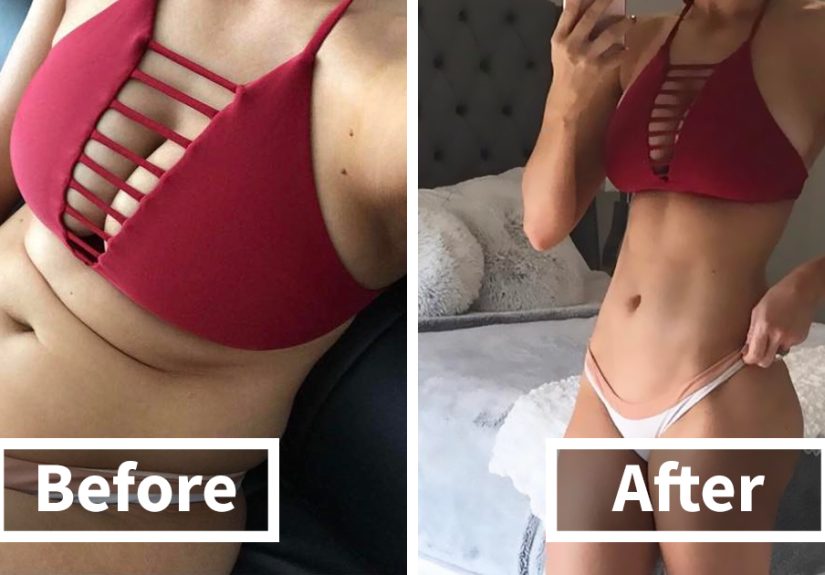
This is the real story behind a headline like 32 Nude Before-and-After Photos – Good Posture Vs. Bad Posture. The fascination is not nudity. It is anatomy. It is the jaw-dropping difference between a body stacked efficiently and a body fighting gravity like it lost a bet.
Why These Before-and-After Photos Are So Weirdly Powerful
Posture photos work because they remove distractions. Clothing can hide shoulder rotation, pelvic position, rib placement, and spinal habits. Bare-skin comparison images, when used appropriately and non-explicitly, show the body’s lines more clearly. That makes the “before” and “after” effect look dramatic even when the change is simple: chin pulled back a little, shoulders opened, weight distributed more evenly, knees unlocked, ribs settled, pelvis returned to neutral.
The visual impact is huge because posture is a full-body chain reaction. Your head is not freelancing up there. If it drifts forward, your neck works harder. If your shoulders round, your upper back often follows. If your pelvis tips too far forward or backward, your lower back and hips usually join the party. Suddenly, one tiny habit becomes a group project.
That is why posture photos can look almost unbelievable. The same person can appear tired in one frame and athletic in the next. Slumped in one shot, balanced in the other. Older in one image, more energetic in the next. It is not wizardry. It is alignment.
What Good Posture Actually Looks Like
Good posture is not military stiffness. It is not sucking in your stomach until you forget how to breathe. It is not walking around like a decorative lamp. Good posture is simply organized posture: the body arranged so muscles and joints do not have to waste effort fighting bad mechanics all day.
Standing posture
In a solid standing position, the natural curves of the spine are present but not exaggerated. Your head sits over your shoulders. Your shoulders rest over your hips. Your ribs are not flaring forward like they are trying to leave first. Your knees are soft instead of locked. Your weight is shared evenly through your feet. If you looked from the side, the whole body would appear more stacked than slumped.
Sitting posture
Seated posture is the modern battlefield. Ideally, your back is supported, feet are flat on the floor, knees are roughly level with or slightly lower than your hips, and your screen is high enough that your neck does not spend the afternoon bowing to the laptop gods. Your elbows should rest comfortably near your sides, and your wrists should not be bent into origami.
That sounds simple, but most of us sit like exhausted shrimp by 2 p.m. Which brings us to the less glamorous side of the comparison photo.
What Bad Posture Usually Looks Like in These Photos
“Bad posture” is a casual term, not a moral failing. Nobody gets extra character points for slouching. But there are some very common patterns that show up again and again in before-and-after posture galleries.
Forward head posture
This is the classic screen-era move. The chin juts forward, the neck cranes, and the upper shoulders get drafted into a job they never applied for. In photos, it can make the upper body look compressed and tired. In real life, it may contribute to neck tension, stiffness, or headaches for some people.
Rounded shoulders
Rounded shoulders often travel with long hours of sitting, typing, scrolling, driving, and carrying stress like it is a designer handbag. In pictures, they make the chest look collapsed and the upper back look overly curved. They can also change arm mechanics and make the whole body seem less balanced.
Excessive lower-back arch or pelvic tilt
Some people stand with the pelvis tilted too far forward, which can create an exaggerated low-back arch and a “ribs up, hips down” look. Others do the opposite and flatten themselves into a tucked-under stance. Neither extreme is ideal. Before-and-after posture images often show how bringing the pelvis closer to neutral immediately improves the line of the torso.
Locked knees and collapsed balance
Many people think standing straight means jamming the knees back and hanging on the joints. It does not. That position may make the body look rigid and unstable at the same time, which is honestly an annoying combo. Better posture usually looks softer, steadier, and more natural.
What These Photos Really Reveal About the Body
The biggest lesson from posture comparisons is that the body is adaptive. It reflects habits. Sit long enough in a head-forward position, and that shape starts to feel normal. Stand with most of your weight on one leg, and asymmetry begins to look like your personal brand. Carry stress in your shoulders, and eventually your body acts like shrugging is the default operating system.
But the reverse is also true. When people learn where neutral actually is, their photos often improve fast. Sometimes the “after” shot is not proof of a permanent transformation. Sometimes it is proof of awareness. That still matters. You cannot change what you cannot feel.
And yes, posture can affect more than appearance. Better alignment may reduce unnecessary strain, improve balance, make breathing feel easier, and help movement look cleaner during exercise and daily life. At the same time, posture is not the sole cause of every ache, pain, headache, or bad mood. Bodies are more complicated than one viral image. That is why the best posture advice is practical, not preachy.
Good Posture Is Helpful, but It Is Not a Personality Trait
Let’s retire one very tired idea: that people with “perfect posture” are somehow more disciplined, more confident, or morally superior. That is nonsense wrapped in a yoga mat.
Posture is influenced by daily routine, fitness level, work setup, old injuries, pain, muscle weakness, fatigue, stress, joint mobility, and sometimes structural issues that cannot be fixed by a cheerful reminder to “sit up straight.” Some people slump because they are deconditioned. Some because they are stiff. Some because their desk is terrible. Some because they are on hour six of work and their spine has filed a quiet complaint.
The point of these before-and-after photos should not be body shaming. It should be body literacy. The goal is to help people notice patterns, not panic over them.
How to Improve Posture Without Turning Into a Human Coat Rack
1. Fix your environment first
If your workstation is a neck trap, your body will adapt to the trap. Raise the screen if it is too low. Choose a chair that supports your spine. Keep your feet planted. Bring your keyboard and mouse close enough that your shoulders can stay relaxed. A bad setup can undo a lot of good intentions in about fourteen minutes.
2. Move before your body turns into office furniture
One of the smartest posture strategies is not a stretch. It is a break. Get up regularly. Walk. Reset. Reach overhead. Roll the shoulders. Shift positions. Prolonged stillness is often the real villain. Even a well-arranged body will complain if you freeze it in place for hours.
3. Strengthen the muscles that help you stay organized
Posture is not just about stretching what feels tight. It is also about strengthening what is underused. That often includes the upper back, glutes, deep core, and the muscles that help control shoulder blades and support spinal alignment. Rows, wall slides, bridges, dead bugs, bird dogs, and simple isometric holds are not glamorous, but neither is neck pain.
4. Open what has gotten stiff
If your chest is tight, your shoulders may keep drifting forward. If your hips are stiff, your pelvis and low back may compensate. Gentle mobility work for the chest, thoracic spine, hip flexors, and hamstrings can help, especially when paired with strengthening. Stretching alone is rarely the full answer, but it is often a helpful chapter.
5. Stop trying to “stand straight” and start trying to stack
The cue that helps many people is not “chest up.” It is “stack your ribs over your pelvis and let your head float over your shoulders.” That creates length without stiffness. Think tall, not tense. Elegant, not overcorrected. Less toy soldier, more functional human.
6. Check your sleeping position too
Posture does not clock out when you do. Sleeping face-down with your neck twisted like a mystery novel can leave you cranky before coffee. Side sleeping with a pillow between the knees or back sleeping with support under the knees often feels friendlier to the back and neck than stomach sleeping.
When Posture Photos Are Not Enough
Sometimes posture work is useful self-care. Sometimes it is not enough. If pain is severe, keeps getting worse, follows an injury, spreads down the leg, or comes with weakness, numbness, tingling, or changes in bowel or bladder control, it is time to talk with a clinician. Not every problem labeled “bad posture” is actually a posture problem. Some things deserve more than a foam roller and optimism.
Why the “After” Photo Feels So Satisfying
The magic of a good after-photo is not just that the body looks better aligned. It is that the person often looks more comfortable in their own frame. The neck seems less burdened. The chest looks less collapsed. The stance appears more grounded. Even the face can read differently when the head is no longer pitched forward like it is chasing a notification.
That is why these images resonate. They are not really about vanity. They are about possibility. They whisper, “Hey, your body may not be broken. It may just need a better map.”
Experiences People Commonly Have When They Start Fixing Their Posture
The first experience many people report is surprise. They assume “good posture” will feel instantly natural, and then they stand in better alignment for ten seconds and think, This feels fake. Who is this person? Why are my ribs behaving? That reaction is normal. When your body has spent months or years living in one pattern, a healthier position can feel strangely unfamiliar even if it is biomechanically better.
The second common experience is mild fatigue in unexpected places. People start noticing muscles around the mid-back, lower abdomen, glutes, and shoulder blades waking up like employees called back after a long holiday. That does not mean posture is making things worse. It often means underused muscles are finally joining the meeting.
Another frequent experience is realizing how much posture changes throughout the day. Someone may stand beautifully in the morning, then become a folded lawn chair by late afternoon. This is not failure. It is information. It shows that endurance, stress, screen time, and work habits matter just as much as body awareness. Posture is less like a one-time correction and more like brushing your teeth. Annoying? Sometimes. Worth it? Also yes.
Many people also notice breathing changes. When the chest is less collapsed and the ribs are better stacked, deep breaths can feel easier and less forced. Others say walking feels smoother, workouts feel more controlled, or they stop dumping all their weight into one hip while standing in line. Some become newly aware of how often they crane toward a laptop or drop their head toward a phone. Once you see it, you really cannot unsee it. Your devices become little posture confession booths.
There is often an emotional side too. Better posture does not solve life, pay bills, or answer awkward texts. But it can make people feel more composed. Not performative. Just steadier. More present. More like they are inhabiting their body instead of borrowing it from a tired raccoon.
And then there is the mirror moment. After a few weeks of improved setup, movement breaks, strengthening, and awareness, people sometimes catch their reflection and notice they simply look different. Not thinner. Not magically transformed. Just more open. The neck looks longer. The shoulders sit better. The torso seems more organized. Clothes hang differently. Photos look better without trying so hard. It is one of the rare upgrades in life that can be both subtle and dramatic.
Of course, not every experience is instant or cinematic. Some people need physical therapy. Some need better pain management. Some need gradual conditioning because the body is deconditioned or recovering from injury. Some will always have structural quirks that make “perfect posture” unrealistic. That is fine. The win is not perfection. The win is function.
In the end, the most useful lesson from before-and-after posture photos is not that there is one flawless way to stand. It is that habits leave visible fingerprints on the body, and better habits often produce better comfort, better movement, and a better sense of control. Which is a pretty impressive return from something as simple as lifting your screen, moving your feet, relaxing your shoulders, and giving your spine a break from modern life’s endless invitation to fold.
Conclusion
The appeal of 32 Nude Before-and-After Photos – Good Posture Vs. Bad Posture is simple: it turns an invisible habit into a visible result. These comparison images remind us that posture is not about vanity, punishment, or pretending to be a statue. It is about how the body carries load, handles gravity, and moves through the day. Good posture will not fix every problem, but it can reduce unnecessary strain, improve how you look and feel, and help your body work with itself instead of against itself.
So if a before-and-after photo shocks you, good. That means it did its job. The body is adaptable, and small changes count. Raise the screen. Move more often. Strengthen what is sleepy. Stretch what is stubborn. Stand like a person, not a collapsed camping chair. Your spine would probably send a thank-you note if it had hands.