Table of Contents >> Show >> Hide
- Why Socially Awkward Humor Works So Well Online
- Who Is the Artist Behind the Viral Following?
- 30 Socially Awkward Situations And Funny Random Thoughts People Instantly Recognize
- Why These Little Moments Build Big Audiences
- There Is a Fine Line Between Awkwardness and Anxiety
- What Content Creators Can Learn From This Success
- Why People Keep Coming Back for More
- Extra Reflection: What It Feels Like to Live in a Socially Awkward World
- Conclusion
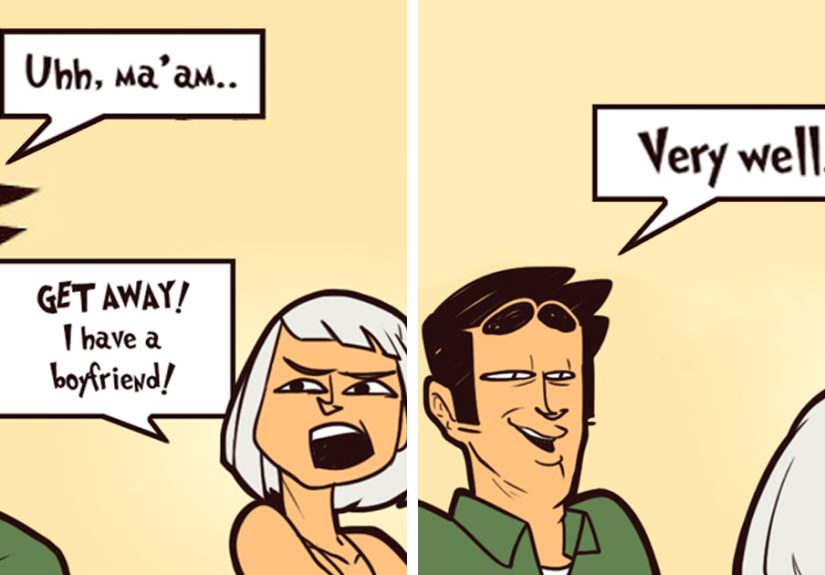
Some artists build giant audiences with polished fantasy worlds, dramatic lore, and characters who look like they haven’t ever spilled coffee on themselves in public. Then there are artists like RandoWis, who went in the opposite direction and basically said, “What if I just draw the weird little disasters happening inside all our heads?” Apparently, that worked very well.
The result was a wildly relatable brand of humor built on socially awkward situations, random thoughts, and the kind of everyday nonsense people usually keep locked away in the mental attic. You know the stuff: waving back at someone who was definitely waving at the person behind you, overthinking a text for 40 minutes, or acting totally normal after tripping in public while your soul quietly leaves your body. Those moments are small, but they are universal. That is exactly why they travel.
What made this artist stand out was not just the jokes. It was the precision. The comics captured a very specific flavor of human awkwardness: not full-on catastrophe, not deep tragedy, just that painfully familiar middle ground where everyday life becomes unintentionally hilarious. That sweet spot helped turn a comic series into a shareable internet habit and pushed the artist toward a six-figure following.
Why Socially Awkward Humor Works So Well Online
The internet loves relatability because relatability feels like recognition. A funny comic about social awkwardness does more than entertain. It tells readers, “Congratulations, you are not the only one who has ever replayed a five-second interaction like it was a courtroom transcript.” That kind of emotional accuracy earns shares faster than generic punchlines ever will.
Awkward humor also works because it lowers the stakes. These comics are about embarrassment, confusion, self-consciousness, and oddball internal monologues, but they present them in a light, playful way. Instead of turning discomfort into drama, they turn it into a wink. The reader is not being judged. The reader is being invited into the joke. That is an important difference.
And then there is the secret sauce: imperfection. Online audiences say they want polished content, but what they really respond to is human texture. A comic that admits we are weird, clumsy, insecure, and occasionally powered by nonsense is instantly more lovable than one pretending everyone has perfect timing and flawless confidence. Awkwardness, when handled well, is not a weakness. It is a shortcut to connection.
Who Is the Artist Behind the Viral Following?
RandoWis built a following by turning ordinary discomfort into comedy. His style leaned into expressive faces, quick setups, and punchlines rooted in behavior people recognized immediately. The appeal was not that the situations were rare. It was the opposite. They were so common that readers felt a little attacked, then laughed anyway.
That is a big part of why the work spread. The comics did not require a huge setup, niche knowledge, or a 12-part explanation thread. You could glance at one panel sequence and instantly think, “Oh no. This is me.” On social media, that reaction is gold. It creates comments, tags, saves, reposts, and the most powerful engagement signal of all: people sending the comic to a friend with the message, “This is literally you.”
30 Socially Awkward Situations And Funny Random Thoughts People Instantly Recognize
Across viral awkward-comedy comics like these, the magic usually comes from moments that feel painfully familiar. Here are 30 types of socially awkward situations and funny random thoughts that explain why this style of humor took off.
- The accidental wave-back. You wave. They were greeting someone behind you. Your hand is now a public monument to false confidence.
- Rehearsing your coffee order like it is a Broadway audition. Then the barista asks one unexpected question and your brain files for bankruptcy.
- Walking the same direction as a stranger for too long. Suddenly it feels like you are both in a low-budget buddy movie nobody asked for.
- Laughing one second too late. Not because the joke was bad, but because your brain was buffering.
- Saying “you too” at the wrong time. “Enjoy your meal.” “You too.” Great. Excellent. Strong finish.
- Practicing an argument in the shower. You win every time. In real life, you say, “Yeah, okay, sure.”
- Making eye contact with someone while chewing. A deeply humbling experience for all involved.
- Opening a message, panicking, and not replying for three business days. Not because you are rude. Because words are hard and now time has made it weird.
- Trying to leave a conversation gracefully. The “well…” has been deployed, but no one respects it.
- Tripping in public and pretending nothing happened. Meanwhile your body and dignity are no longer on speaking terms.
- Forgetting someone’s name while talking to them. A classic horror story with no jump scare, just sustained internal screaming.
- Overanalyzing a period in a text. Is it normal punctuation or the end of a friendship? The brain would like to assume doom.
- Hearing your own voice in a recording. Who is that? Why do they sound like that? Have I always been this person?
- Joining a group conversation at the wrong moment. You enter with confidence and immediately realize the topic is emotional, specific, or both.
- Walking into a room and forgetting why. Your mission has been erased. The room wins.
- Trying to look casual while waiting. Lean on wall? Check phone? Exist naturally? Absolutely not.
- The forced-small-talk elevator ride. A tiny moving box where weather becomes the only safe topic left.
- Seeing someone you know from a distance. Do you wave now, later, never, or move to another country?
- Answering “what’s up?” too honestly. The question was social wallpaper. You accidentally handed over an emotional essay.
- Getting stuck in a mutual sidestep dance. Left. Right. Left again. Congratulations, you have choreographed embarrassment.
- Thinking of the perfect comeback six hours later. The spirit is sharp. The timing is a disaster.
- Pretending you understood instructions. You nodded bravely and retained absolutely nothing.
- Smiling at the wrong time in a serious conversation. Not because anything is funny. Because your face has betrayed you.
- Sending a risky joke and staring at the phone. It has been 19 seconds. It feels like wartime.
- Getting introduced to someone twice. You must now perform surprise, warmth, and selective amnesia.
- Trying not to look awkward while taking candid photos. Nothing says “natural moment” like three minutes of rigid panic.
- The random 2 a.m. memory attack. Your brain selects an embarrassing moment from 2014 and says, “Let us revisit.”
- Laughing because you are nervous. Which is fantastic until the situation is not laugh-shaped.
- Checking whether a door says push or pull after already failing once. A humbling battle against architecture.
- Overthinking a simple greeting. “Hey” seems too casual, “hello” seems too formal, and now it is too late to be a person.
Why These Little Moments Build Big Audiences
These situations are funny because they are tiny social failures with low real-world consequences and high emotional familiarity. Nobody is getting seriously hurt. No one is the villain. The joke lives in recognition. Readers see themselves, their friends, their siblings, their coworkers, and probably that one person who somehow makes every cashier interaction sound like a hostage negotiation.
That kind of content is made for sharing. It works across cultures, age groups, and platforms because it does not depend on insider jargon or trending drama. It depends on recognizable behavior. A good awkward comic is almost translation-proof. It can move from a website to Instagram to group chats because the emotional beat lands fast.
It also creates community. Fans gather around relatable comics for the same reason people tell embarrassing stories at dinner: laughter makes discomfort easier to hold. When a creator can repeatedly package those moments with warmth instead of cruelty, followers do not just consume the content. They identify with it. That is how a comic artist stops being “someone who posts funny drawings” and becomes “the person who understands my weird little brain.”
There Is a Fine Line Between Awkwardness and Anxiety
One reason these comics resonate is that they capture ordinary social discomfort without turning it into a lecture. That said, it is worth separating everyday awkwardness from something more serious. Plenty of people feel clumsy in conversations, replay mistakes, or dread embarrassing moments. That is part of being human. It does not automatically mean someone has social anxiety.
The healthiest awkward humor does not mock people for struggling. It simply recognizes that social life is messy. It says: humans are weird, our brains are dramatic, and sometimes we all act like we were dropped into a scene without a script. That honesty helps the humor feel comforting rather than cruel.
What Content Creators Can Learn From This Success
1. Specific beats broad every time
“Awkward situations” is a broad idea. “Realizing you are still wearing your indoor slippers in public” is a shareable one. Specificity is what turns a feeling into a punchline.
2. Relatable does not mean boring
People often confuse everyday content with dull content. In reality, ordinary moments become memorable when observed closely. A sharp creator does not need explosions. A missed handshake will do.
3. Expressive storytelling matters
Even simple comics live or die by timing, facial expression, and pacing. The writing carries the joke, but the reaction shot often seals it.
4. Authenticity still wins
Audiences can tell when a creator is mining real behavior rather than manufacturing fake relatability in a lab. The best awkward humor feels noticed, not fabricated.
Why People Keep Coming Back for More
A single awkward comic might get a laugh. A whole body of work built around awkward human behavior becomes something else: a mirror. That is why artists like RandoWis gain loyal followers instead of one-hit viral attention. Readers do not just want one joke. They want the next moment that will expose them with uncomfortable accuracy.
There is also a relief factor. Modern life is crowded with performance. Be confident. Be polished. Be productive. Answer quickly. Look chill. Sound smart. Awkward humor pokes a hole in all of that. It reminds people that behind every curated profile is a person who has absolutely walked into a glass door, sent a typo to the wrong person, or replayed a conversation from lunch like it was a failed diplomatic summit.
Extra Reflection: What It Feels Like to Live in a Socially Awkward World
What makes socially awkward comedy so enduring is that it is not really about embarrassment. It is about self-awareness. Most awkward people are not clueless. Quite the opposite. They are often hyper-aware of how they sound, how they stand, where they put their hands, whether that joke landed, whether that silence lasted too long, and whether the cashier now thinks they are strange because they said “thanks” twice. The awkward brain is not empty. It is overcrowded.
That is why these comics hit so hard. They dramatize the invisible commentary happening under ordinary social life. On the outside, someone is just standing in line. On the inside, they are trying to calculate whether eye contact should happen now, later, or never. On the outside, someone receives a text and waits a minute before responding. On the inside, they are drafting six versions, deleting five, and wondering whether one exclamation point seems friendly or emotionally unstable.
Almost everyone has lived through these tiny spirals. You forget a name and suddenly feel like a fraud. You tell a joke that gets a polite smile and your brain starts writing a resignation letter from society. You walk away from a conversation and instantly remember the one sentence you should not have said, which would be annoying enough if your mind did not insist on replaying it during toothbrushing, commuting, and random moments of peace.
But there is something weirdly beautiful about all this too. Social awkwardness proves we care. We care how we are perceived. We care whether other people are comfortable. We care enough to cringe later, which is unpleasant, sure, but also kind of sweet in a tragic-comic way. The awkward person is often just someone trying very hard not to be a problem and somehow becoming a problem only in their own imagination.
That is where funny random thoughts come in. They break the tension. They transform spiraling into storytelling. Instead of hiding the weirdness, comics like these frame it and hang it on the wall. They say the random thought is not evidence that you are broken. It is evidence that your inner life is lively, observant, and occasionally ridiculous. Honestly, that is a lot more charming than pretending to be effortlessly smooth all the time.
In that sense, awkward comics do more than entertain. They normalize imperfection. They remind readers that being socially clumsy is not a character flaw; it is part of the great human improv routine. Nobody gets a full script. We are all ad-libbing. Some people just do it with more confidence, while the rest of us do it with finger guns, accidental oversharing, and a strong desire to disappear into nearby furniture. Either way, the show goes on.
And maybe that is the real reason this kind of artist gains followers. Not because people want perfection. Not because people need another polished persona online. But because readers are starving for recognition that feels honest and funny at the same time. A well-made awkward comic says, “Yes, being a person is absurd.” And millions of people silently respond, “Finally. Someone gets it.”
Conclusion
“30 Socially Awkward Situations And Funny Random Thoughts That Gained This Artist 100,000 Followers” is more than a catchy title. It describes a formula that works because it is built on truth. RandoWis found an audience by illustrating something the internet never gets tired of: the uncomfortable, hilarious mess of being human. The comics landed because they were precise, expressive, and deeply relatable without trying too hard to announce their relatability like a desperate party guest.
That is the big lesson here. People do not just follow funny artists. They follow artists who make them feel seen. When socially awkward situations and random inner monologues are observed with warmth, timing, and honesty, they become more than jokes. They become a shared language. And apparently, that language is worth at least 100,000 followers and probably a few thousand comments saying, “Why is this so painfully accurate?”