Table of Contents >> Show >> Hide
- Meet the Artist Behind the “Parallel Universes” Effect
- Why These Combined Photos Hit So Hard
- 30 Combined Photos That Capture Two Worlds in One Frame
- How a “Two-Photo” Collage Becomes One Story
- The Ethics Question (Because Someone Always Asks)
- Conclusion: When the Seam Becomes a Mirror
- Experiences: What It Feels Like to Sit With Two Worlds at Once (Extra )
There’s a special kind of whiplash that happens when you’re scrolling your phone in sweatpants, sipping coffee, and suddenly you’re staring at an image that feels like it has two heartbeats. One half looks like a lifestyle adbright, polished, casually expensive. The other half looks like a news alert you can’t unseesmoke, rubble, hunger, fear.
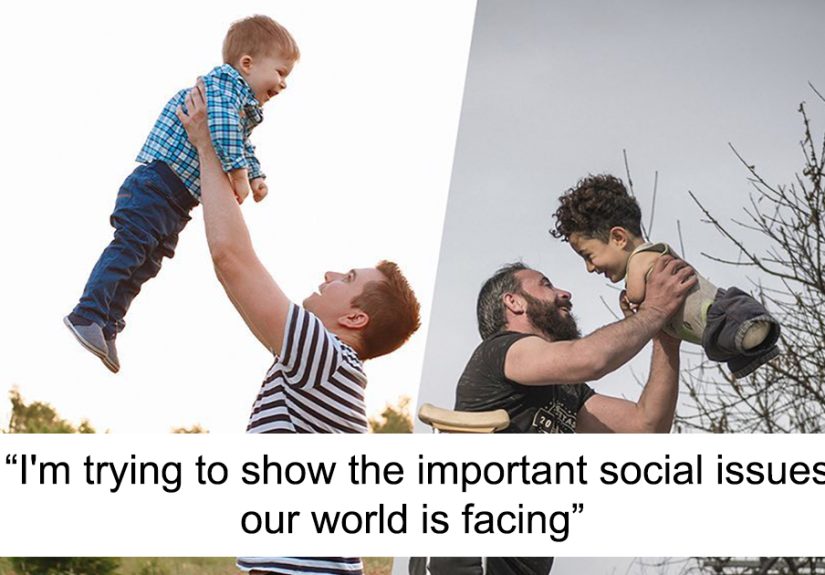
That’s the “gotcha” power of Uğur Gallenkuş’s split-photo digital collages. His work stitches together two realities into a single frame: comfort and crisis, consumerism and survival, a world of curated calm beside a world of raw consequence. It’s not subtle. It’s not meant to be. And yes, it can make you feel a little weird about complaining that your delivery app is “running late.”
Meet the Artist Behind the “Parallel Universes” Effect
Uğur Gallenkuş is an Istanbul-based digital collage artist best known for creating “split” composites that place two sharply different worlds side by sideoften pairing scenes of Western leisure and consumer culture with images of war, displacement, poverty, and environmental disaster. The concept is straightforward: two photos, one seam, a single visual punchline that isn’t funny at all. (And yet, your brain still reacts like it just got prankedbecause it did.)
Multiple profiles describe his process as a long-running personal project shared widely online, where he searches for two images with matching angles, horizons, or shapes so the “join” feels eerily natural. The more seamless the cut, the more brutal the contrast. Over time, the series expanded from war-and-peace juxtapositions to broader themes: children’s rights, refugees, climate and wildfires, and the fragile idea that “normal life” is guaranteed. His book projects have also packaged these collages into curated narratives, including editions focused on children and on war and peace.
If the phrase “two different worlds” sounds dramatic, that’s because it is. The point isn’t that one side is “real” and the other is “fake.” The point is that both are realand they can exist at the same time, on the same planet, under the same sky.
Why These Combined Photos Hit So Hard
1) They hijack your pattern-recognition
Your brain loves tidy pictures. It tries to label what it sees quickly: “beach,” “birthday,” “shopping,” “family.” Gallenkuş’s collages exploit that habit by letting you settle into one story for half a secondthen forcing you to finish the sentence with a completely different ending.
2) The seam creates one shared stage
A normal comparison (two separate images) gives you distance. A split collage removes that comfort. Now both scenes share a single “space,” so your mind automatically asks: How can these coexist? That question is the whole engine of the work.
3) The contrast is specific, not abstract
It’s not “rich vs. poor” as a statistic. It’s a bathtub with a chandelier beside a bathtub with blown-out walls. It’s a runway walk beside a refugee flight. The point lands because it’s physical, human, and immediate.
30 Combined Photos That Capture Two Worlds in One Frame
Below are 30 representative “combined photo” concepts you’ll recognize across Gallenkuş’s Parallel Universes styleeach one built on a simple idea: find two images with a similar composition, then let the meaning collide. Think of these as a guided tour through the kinds of pairings his work is known for.
- The Luxury Bathroom / The Ruined Bathroom
A sparkling bath scenetiles, lighting, calmmerged with a war-damaged room where bathing is survival, not self-care.
- The Beach Day / The Border Crossing
Sun and sand on one side; a tense crossing with bags, crowds, and uncertainty on the other. Same horizon line, opposite stakes.
- The Birthday Balloons / The Rubble
Bright balloons and party color palettes stitched into collapsed concretecelebration and devastation sharing one breath.
- The Shopping Mall / The Bombed Street
Glass storefronts and polished floors cut into shattered storefronts and dustretail therapy meets reality therapy (which is… not a thing).
- The Picnic Blanket / The Emergency Blanket
A cozy outdoor meal blended into a foil emergency wraptwo types of “blankets,” only one chosen freely.
- The Wedding Dress / The Funeral Shroud
White fabric becomes the shared visual language for two opposite milestones: celebration and grief.
- The High-End Dinner / The Empty Bowl
Plated perfection meets scarcityboth centered around a table, but only one side gets seconds.
- The Pool Float / The Flood
Floating for fun merges into floating because the street became a river. Same water, different meaning.
- The Selfie Smile / The Trauma Cry
A carefully framed grin cut into a raw expression of shocktwo “faces” the world rewards very differently.
- The Playground Slide / The Rubble Slide
Childhood play stitched into broken architecturekids still climb, but the landing is not designed.
- The Stuffed Animal / The Soldier’s Gear
A soft toy merged into hard equipmentcomfort and combat occupying one silhouette.
- The Classroom Poster / The Bullet-Holed Classroom
Learning as routine meets learning as resistancesame desks, different dangers.
- The Sports Field / The Minefield
A wide open space meant for games blended into a wide open space that threatens lifeidentical “fields,” opposite rules.
- The Fashion Catwalk / The Refugee Line
People walking in a straight line, styled or displacedmovement as performance versus movement as necessity.
- The Cute Pet Photo / The Stray Survival
Animal comfort stitched into animal hardshiphow care becomes a privilege, even in fur.
- The Cozy Nursery / The Hospital Ward
Soft colors and baby decor merged into clinical urgencytwo versions of “protecting a child.”
- The Vacation Resort / The Refugee Camp
Tents appear on both sides, but one is “glamping” and the other is “endurance.”
- The Fireworks / The Airstrike Glow
Night sky bursts overlapone side cheers, the other side runs. Same light, opposite emotion.
- The Grocery Aisle / The Aid Distribution
Orderly shelves blend into chaotic linestwo systems for getting food, one stable, one fragile.
- The Designer Handbag / The Plastic Bag
One bag signals status; the other carries everything you own. Same shape, different world.
- The Comfy Couch / The Concrete Sleep
Rest as recharge stitched into rest as exhaustionsleep doesn’t look the same when it’s not safe.
- The City Skyline / The City in Smoke
Urban pride merged into urban collapsebuildings remain, but the air tells a different story.
- The Gym Mirror / The Debris Mirror
A reflection meant for motivation cut into reflections of destructionwhat we “work on” changes when survival becomes the workout.
- The Baby Stroller / The Wheelchair Push
Caregiving tools share a frameone for convenience, one for recovery and resilience.
- The National Painting / The Burning Home
Familiar cultural imagery merged into disaster footageicons of “home” stitched to the reality of losing one.
- The Ice Cream Cone / The Bread Line
A sweet treat silhouette becomes a visual rhyme with scarcitydessert and desperation, both handheld.
- The Champagne Pop / The Water Fetch
Liquid celebration blended into liquid necessityone spills for fun, one is carried carefully.
- The Concert Crowd / The Protest Crowd
Two masses of people with raised handsone sings along, one begs to be heard.
- The Toy Store / The Child Labor Shift
Bright plastic abundance stitched into real workchildhood as a market versus childhood as a missing chapter.
- The Calm Family Photo / The Displacement Family Photo
Two groups holding each other closeone framed by comfort, one framed by uncertaintyproving love is common even when safety isn’t.
Notice the trick? The pairings aren’t random. They’re engineered around shared shapesdoorways, horizons, staircases, sidewalksso your eyes glide right over the seam. Then your conscience trips on it.
How a “Two-Photo” Collage Becomes One Story
The technical brilliance of this style isn’t about fancy effects; it’s about restraint. The collage works best when the cut feels inevitablelike the two scenes were always meant to meet. That usually requires:
- Composition matching: similar angles, vanishing points, or subject placement so the halves “lock” together.
- Lighting harmony: aligning shadows and brightness so the join doesn’t look like a cheap sticker job.
- Color discipline: subtle grading to keep the seam quiet while the meaning screams.
- A single focal path: guiding your eye from one side to the other (often through a human face, a doorway, or a road).
The goal isn’t to impress you with Photoshop wizardry. The goal is to make the contrast feel unavoidablelike you can’t pretend the other half isn’t there because, visually, it already moved into the neighborhood.
The Ethics Question (Because Someone Always Asks)
Since these collages often rely on existing photographsfrequently photojournalistic imagesthere’s an ongoing conversation in photography circles about permissions, attribution, and the ethics of remixing real suffering into new artworks. Some argue that the awareness raised can be meaningful; others worry about exploitation, credit, and compensation.
The most responsible takeaway as a viewer is simple: respect the original photographers and subjects. If you share a collage, look for credits. If the source images are credited, follow the photojournalists. Support organizations doing on-the-ground work. And let the art be a doorway into learning, not a substitute for it.
Conclusion: When the Seam Becomes a Mirror
Gallenkuş’s combined photos don’t just compare “good” and “bad.” They reveal how easily our attention gets sorted by geography, wealth, and luck. The real shock is not that suffering existswe already know that. The shock is how cleanly we can scroll past it until someone edits it into the same frame as our everyday comforts.
If these images do anything, let it be this: they make the “other world” harder to ignore. And in a time when attention is basically the currency of compassion, that’s not nothing.
Experiences: What It Feels Like to Sit With Two Worlds at Once (Extra )
Here’s the strange part about looking at a long run of combined photos: the first few feel like a slap, but the next dozen feel like a lesson. Your brain stops treating the seam as a gimmick and starts treating it like a question you can’t dodge. At first, you notice the obvious contrastluxury versus poverty, calm versus chaos. Then you start noticing the subtler stuff: posture, eye contact, the way hands hold children differently when danger is nearby, the way crowds move when they’re chasing joy versus when they’re chasing safety.
Many people describe a “double reaction” to this kind of art: one part emotional, one part uncomfortable. The emotional part is empathysometimes immediate, sometimes delayed. The uncomfortable part is recognition. Not guilt in the performative sense, but awareness in the practical sense: you realize how often your own world is built to feel complete. You have a routine, a playlist, a calendar full of normal problems (“Where did my charger go?”), and that normalcy quietly convinces you that normal is universal. A split collage breaks that illusion in a single glance.
There’s also a physical experience to ityour eyes keep bouncing across the seam. You “read” the image like a sentence with a harsh comma: you can’t finish one thought without being forced into the next. A beach umbrella becomes a makeshift shelter. A stroller becomes a wheelchair. A candlelit dinner becomes a ration line. After a while, you start carrying that seam with you outside the screen. You see it when you watch the news. You see it when you walk past overflowing store displays. You even see it in the language people usehow “crisis” is treated like a faraway genre rather than a nearby reality.
And then comes the final experience: the temptation to do nothing because it feels too big. This is where the healthiest response isn’t despairit’s direction. Pick one action that matches the emotion. If a collage about displacement hits you, learn about credible refugee support networks. If a collage about children’s safety breaks you open, support organizations focused on children’s rights, education, and medical care. If a climate-disaster pairing sticks with you, look into local resilience projects and policy efforts. Art can’t replace action, but it can be the spark that makes action feel personal instead of theoretical.
The most honest “review” of these combined photos might be this: they don’t let you stay the same viewer you were five minutes ago. Even if you close the tab, you’ve already seen two worlds share one frameand that little seam has a way of reappearing in your mind at the exact moment you’re about to complain about something small. Not to shame you, but to recalibrate you. Sometimes that’s the beginning of empathy. Sometimes it’s the beginning of responsibility. Sometimes it’s both.