Table of Contents >> Show >> Hide
Birds are the original overachievers. They can sing, hover, hunt, migrate across continents, and somehow still look camera-ready before breakfast. That is a big reason Raf Raeymaekers’ bird photography lands so well. His images do not treat birds like decorative background characters with feathers. They feel like portraits of living, calculating, dramatic little creatures with places to be and opinions to share.
In this collection of 30 captivating bird photographs, Raeymaekers turns wild birds into unforgettable subjects by focusing on what makes them irresistible in the first place: intensity, elegance, speed, color, and those tiny split seconds when instinct takes over. Some images lean into stillness. Others chase action. A few seem to wink at the viewer, as if the bird knows exactly how photogenic it is and plans to invoice the photographer later.
What makes this gallery especially compelling is that it does more than show off technical skill. It invites viewers into the private theater of bird life. You are not simply looking at feathers and wings. You are seeing timing, tension, habitat, hunger, caution, and personality. That combination is what transforms a nice wildlife shot into a memorable bird photograph.
Why Raf Raeymaekers’ Bird Photography Stands Out
Raeymaekers is widely recognized for nature photography that brings viewers unusually close to the emotional energy of wild birds. The published selections associated with his work highlight close-up views, action scenes, and birds behaving naturally rather than posing like they are waiting for a yearbook photo. That matters. The best bird photography rarely feels staged. It feels discovered.
His gallery is especially effective because it balances beauty with behavior. Pretty plumage is nice, but it only gets you so far. A truly captivating bird image adds story. A hunter locks in on prey. A kingfisher seems suspended between calculation and chaos. An owl carries the kind of stare that suggests it knows your browser history. Even smaller birds, including brilliantly colored songbirds, are framed with enough care that they feel monumental rather than miniature.
There is also a strong sense of respect in images like these. Great bird photography is never just about getting closer. It is about knowing when to wait, where to stand, how to read behavior, and how to let the subject remain wild. The result is a collection that feels intimate without becoming intrusive, dramatic without becoming gimmicky, and polished without losing the rough magic of nature.
30 Reasons These Bird Photographs Are So Captivating
- They make the eyes do the talking. Sharp eyes instantly create connection in wildlife photography, and Raeymaekers’ bird portraits understand that rule beautifully. The viewer meets the bird before noticing anything else, which is exactly why the images feel alive.
- They turn speed into suspense. Birds move fast, but the strongest photographs freeze motion at the exact point where energy becomes visible. These images often feel like they were captured one heartbeat before impact, lift-off, or escape.
- They celebrate feather texture. Fine plumage detail gives bird photography its tactile power. You can almost feel the softness of down, the structure of flight feathers, and the layered engineering that makes birds look both delicate and unstoppable.
- They show hunting as choreography. Predatory birds are not just fierce; they are precise. When a photograph catches that precision, the frame becomes less about violence and more about timing, adaptation, and survival.
- They find drama in stillness. Not every memorable bird photo needs midair action. A quiet perch, a tilted head, or a watchful pause can be every bit as gripping as a dramatic dive.
- They make kingfishers look like living gemstones. Few birds reward a photographer like a kingfisher. The color, the compact shape, and the explosive motion create a perfect storm of visual appeal, and Raeymaekers clearly knows how to use that to full effect.
- They give owls the mystery they deserve. Owls are almost unfairly photogenic. Their forward-facing eyes and still posture already feel cinematic, and careful framing makes that natural mystique even stronger.
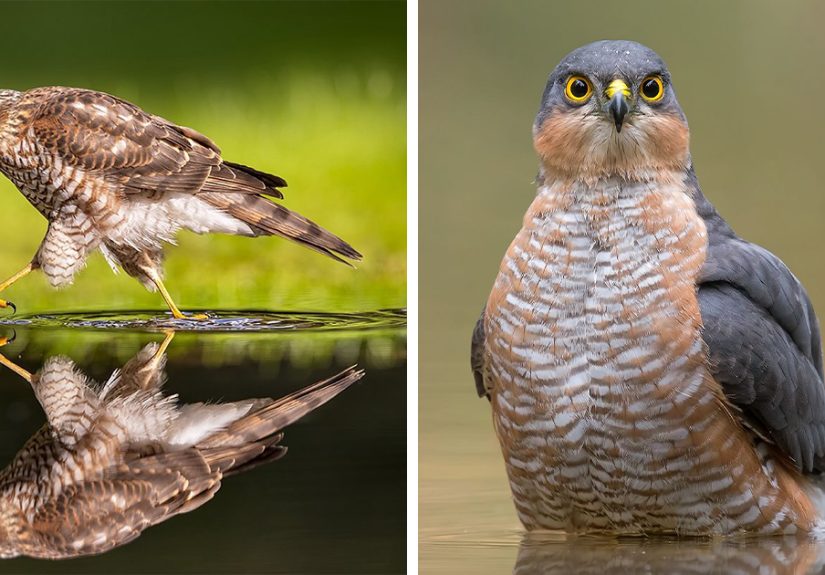
- They capture raptors as thinkers, not just predators. A sparrowhawk or other bird of prey is fascinating because it seems to be calculating every second. Great photos preserve that intelligence as much as the power.
- They use natural backgrounds well. Bird photographs often succeed or fail on what surrounds the subject. These images feel strong because the bird remains the hero, while the habitat quietly supports the mood.
- They avoid clutter. Branches, reeds, and messy backgrounds can destroy a wildlife image. When a bird is isolated cleanly, its shape becomes graphic, elegant, and far more memorable.
- They make color work harder. Bright plumage is appealing, but strong bird photography uses color for emphasis, contrast, and rhythm. Blues, rusts, golds, blacks, and whites begin to feel like design elements.
- They understand the power of posture. A bird leaning forward suggests intent. A bird puffed up suggests comfort, cold, or attitude. A bird standing tall suggests alertness. Tiny changes in posture create big emotional shifts.
- They reward patience. Anyone can snap a bird on a branch. The memorable frames are the ones that look earned, the result of waiting through empty minutes for one useful second.
- They feel curious rather than invasive. The collection gives the impression that the birds are being observed respectfully in their own world. That creates trust with the viewer and dignity for the subject.
- They let behavior shape composition. Instead of forcing every bird into the same visual formula, the best shots seem built around what the bird is actually doing. Action determines framing, not the other way around.
- They understand side light and soft light. Harsh light can flatten detail or blow out pale feathers, but softer light gives plumage depth and dimension. That is one reason these images feel rich instead of brittle.
- They make small birds look important. One of the hardest things in bird photography is giving tiny species visual authority. Raeymaekers does that by isolating them well and letting detail carry the frame.
- They create little moments of humor. Some birds naturally look grumpy, suspicious, surprised, or mildly offended. Those almost-human expressions give the gallery a touch of fun without turning it into a cartoon.
- They use negative space smartly. A bird does not always need to fill the frame. Space can suggest direction, isolation, calm, or danger, and it often makes the subject feel more cinematic.
- They preserve the wildness. These are not cute pet portraits with bonus feathers. The birds still feel untamed, alert, and independent, which is exactly what gives the photographs their edge.
- They showcase adaptation. Beaks, talons, wings, and plumage all hint at how a bird lives. The strongest images make those evolutionary tools visible without turning the photo into a textbook diagram.
- They make timing look effortless. Of course it is not effortless. That is the point. When bird photography looks natural and fluid, it usually means the photographer did a huge amount of work behind the scenes.
- They feel rooted in place. Habitat matters. Water, reeds, branches, soft fog, or open air can all shape the emotional temperature of a frame. These pictures understand that birds do not exist apart from their environments.
- They know when to freeze motion. Sometimes the perfect decision is crisp detail, especially when a moment of impact or eye contact is involved. Sharpness can turn a fast-moving bird into a sculptural subject.
- They know when motion blur would be distracting. In weaker bird photography, blur reads as a mistake. In stronger work, control is obvious. The bird is sharp where it matters most, and the image holds together.
- They frame birds as characters. The gallery feels less like a species catalog and more like a cast list. Each bird arrives with its own mood, posture, and tiny drama.
- They make familiar species feel fresh. Even bird lovers can become visually numb after seeing the same kinds of images repeated online. Fresh angles and better timing restore the sense of wonder.
- They let viewers imagine the next second. The best wildlife photos do not end at the frame. They hint at what is about to happen, which keeps the eye engaged longer.
- They blend beauty with biology. These photographs are undeniably attractive, but they also reveal how birds function. That balance makes them satisfying to both casual viewers and serious nature fans.
- They remind us that birds are endlessly interesting. That may sound obvious, but great photography can make obvious truths feel brand-new. After this collection, even a routine bird sighting feels more cinematic.
What This Gallery Teaches Us About Great Bird Photography
One of the most impressive things about a gallery like this is how clearly it reflects the fundamentals of strong bird photography. The pictures suggest patience, field awareness, and a real understanding of bird behavior. That lines up with what experienced bird and wildlife photographers regularly emphasize: light matters, anticipation matters, the eye matters, and disturbance should never be the price of a good image.
Bird photography rewards preparation more than brute force. You can own a fancy camera, a giant lens, and enough accessories to open a small electronics store, but none of that replaces fieldcraft. Photographers who study species, learn feeding habits, understand perches, and return to the same location repeatedly tend to make better pictures. Birds are creatures of rhythm. The photographer who notices those rhythms usually wins.
Technical choices matter too. Longer lenses help isolate shy subjects. Eye-level framing adds immediacy. A clean background keeps attention where it belongs. Fast action often benefits from burst shooting and autofocus that can keep up, especially for birds in flight. But technical skill alone is not what makes viewers stay. They stay for emotion, story, and character.
That is where Raeymaekers’ work feels especially successful. The images do not just say, “Look, a bird.” They say, “Look at this exact instant when the bird became unforgettable.” That is a much harder sentence to write with a camera.
The Experience Behind Bird Photography: Why These Images Feel So Real
Spend enough time around bird photography and you learn a humbling truth: birds do not care about your schedule. They do not care that you woke up at an uncivilized hour, packed snacks, checked the forecast, and carried a lens heavy enough to qualify as emotional baggage. They will appear late, leave early, hide behind reeds, land on the wrong branch, and somehow always turn their head away at the exact moment you feel most hopeful. That is part of the experience. It is also part of why a gallery like this feels so satisfying.
Bird photography is built on tiny negotiations with time. You wait in cold air while the landscape slowly brightens from gray to blue to gold. You hear movement before you see it. You try to stand still enough that the world forgets you are there. Sometimes nothing happens for an hour. Then everything happens in three seconds. A bird lands, glances up, catches the light, flexes its wings, and vanishes. If you were ready, you made an image. If not, you made a memory and a frustrated little noise that only the nearest duck heard.
That emotional rhythm is what viewers often feel, even if they have never picked up a camera. Good bird photographs carry the tension of waiting. They contain patience inside the frame. You can tell when a picture was snatched carelessly and when it was earned through attention. Raeymaekers’ bird photographs have that earned quality. They feel observed rather than collected.
There is also a special experience in seeing birds up close through photography that ordinary birdwatching cannot always provide. A camera can pause details the eye misses in real time: the tiny hook at the tip of a beak, the velvet texture of feathers around the face, the geometry of wing layers, the intensity of a fixed stare. Photography turns fleeting encounters into longer conversations. You begin by admiring color, but you end up noticing structure, behavior, and mood.
For many people, bird photography also changes the way daily life feels. Suddenly the backyard is not just a backyard. It is a stage. The pond is not just a pond. It is a hunting ground, a mirror, a runway, a border crossing, and occasionally a neighborhood argument with feathers. Common birds become more interesting once you start paying attention to how they move, where they perch, and what they do before taking flight. That shift in awareness is one of the best side effects of looking closely at galleries like this.
And then there is the emotional payoff. A strong bird image can be calming, thrilling, funny, elegant, and intense all at once. It can remind viewers that nature is not an abstract concept hidden in documentaries and national parks. It is immediate. It is agile. It is right there in the reeds, on the fence post, over the water, in the branch line, and sometimes in the freezing dawn while a patient photographer waits for one clean moment. That is the feeling Raeymaekers’ collection taps into so effectively. The photographs are beautiful, yes, but they also recreate the lived experience of watching wild birds long enough for wonder to become focus.
In the end, that may be the real magic of the gallery. It does not just show birds. It gives viewers a taste of what it means to truly notice them. And once you start noticing birds, really noticing them, ordinary walks get better, mornings feel fuller, and even the local sparrow begins to carry itself like a tiny masterpiece.
Final Thoughts
“30 Captivating Bird Photographs By Raf Raeymaekers” works because it combines artistry with avian reality. The collection is colorful without becoming sugary, dramatic without becoming overcooked, and intimate without losing respect for the wildness of its subjects. From kingfishers and owls to raptors and brilliantly colored songbirds, the images capture what bird lovers already know and what casual viewers quickly discover: birds are not background decoration. They are fast, expressive, complicated little marvels.
If you love wildlife photography, this gallery is worth your attention for the craftsmanship alone. If you simply love birds, it is worth your attention because it makes them feel even more extraordinary than they already are. That is not easy. Birds start with an unfair advantage. Raf Raeymaekers still manages to make them look new.