Table of Contents >> Show >> Hide
- Way #1: Become the Friend Who Makes Everyone Feel Interesting
- Way #2: Host a “Low-Lift Hangout” That Feels Weirdly High-End
- Way #3: Build One “Signature Skill” (Then Share It Without Showing Off)
- Putting It All Together (So You Don’t Overthink It)
- Real-World Experiences: What These 3 Ways Look Like in Daily Life
- 1) The moment you realize listening is louder than talking
- 2) The “low-lift hangout” that becomes everyone’s favorite kind of plan
- 3) The first time you share a skill and people ask, “Wait… do it again.”
- 4) The surprisingly powerful effect of appreciation
- 5) The long-game experience: you become the friend people count on
“Impress your friends” can sound like you’re about to rent a sports car, learn three guitar chords, and accidentally start a one-person talent show.
But the kind of impression that actually lasts is way simpler: make people feel good, make time together feel easy, and bring something
fun to the table (without turning it into a performance).
Below are three practical, non-cringe ways to impress your friendsthe kind that work at school, at a party, in a group chat,
or during a random “we should hang soon” moment. You’ll get specific scripts, examples, and quick upgrades you can use today.
Way #1: Become the Friend Who Makes Everyone Feel Interesting
If you want a “wow” factor that doesn’t require props, start here. People remember how you made them feel, and nothing feels better than being
genuinely heardespecially in a world where everyone is half-talking and half-scrolling.
Why this impresses people (even if they don’t say it out loud)
Great listening isn’t passive. It’s a skill that signals respect, attention, and emotional safety. When you listen well, you quietly communicate:
“You matter. I’m here. Keep going.” That message is rareand it’s magnetic.
Bonus: the “impressive” part isn’t that you talk brilliantly. It’s that you help other people talk brilliantly. That’s social
superpower energy.
The “Listen-Loop” (a simple method that works in real life)
Use this three-step loop to keep conversations flowing naturally without sounding like an interviewer or a therapist.
-
Ask one good question.
Aim for open-ended and specific: “What was the best part of that trip?” beats “Did you have fun?” -
Reflect back a detail.
“So you’re saying the hardest part was the group project, not the test.” This proves you’re tracking. -
Follow up once.
“What did you do next?” or “How did that feel?” One follow-up question can turn small talk into real talk.
Steal these question prompts (they’re easy and they work)
- “What’s something you’re into lately that you didn’t expect?” (Surprising, low-pressure, personal.)
- “What’s the best thing you’ve eaten this month?” (Everyone has an answer. Food is the universal icebreaker.)
- “What are you looking forward to?” (Instantly shifts the mood upward.)
- “What’s a tiny win you had this week?” (Helps people feel seen without forcing deep vulnerability.)
- “If today had a theme song, what would it be?” (Goofy in a good way. Great for group settings.)
How to look confident without dominating the conversation
Confidence isn’t the loudest voiceit’s the calmest attention. Here are small moves that make you come across as grounded and
socially sharp:
- Put your phone away for the first 10 minutes. If you want to stand out, be the person who isn’t “sort of” present.
- Use names in group settings. “That’s a good point, Maya.” Names feel warm and respectful.
- Give “clean compliments.” Compliment choices and effort: “Your explanation made that make sense” beats “You’re so smart.”
- Don’t “boomerang” every topic back to you. Share, surebut don’t treat every story as a trampoline to your own highlight reel.
If you do this consistently, friends will start to describe you as “easy to talk to,” “real,” and “somehow always fun to hang with.”
That’s basically the social version of a five-star review.
Way #2: Host a “Low-Lift Hangout” That Feels Weirdly High-End
Hosting sounds fancy until you remember it can be as simple as: invite people + have a plan + make them comfortable.
You don’t need a huge house, expensive decor, or a “charcuterie board shaped like a swan.” (Unless you want one. No judgment.)
The Low-Lift Hangout Formula
This is the easiest way to host without stress, awkwardness, or that moment where everyone stands around like they’re waiting for instructions.
-
Send a clear invite.
Example: “Game night Friday 7–9. Come for snacks and Mario Kart. Bring a drink if you want.” -
Pick one anchor activity.
Board game, movie, snack-making, mini-tournament, DIY craft, or “everyone bring one song.” -
Do a 5-minute welcome routine.
Greet people, show where stuff goes, point out food/drinks, and introduce anyone who doesn’t know each other. -
Keep a simple timeline.
15 minutes mingle → activity → quick snack break → last round → wrap-up. -
End with appreciation.
“Thanks for comingthis was fun. Let’s do it again.” People remember how you ended as much as how you started.
Snacks that impress without requiring a culinary degree
The secret isn’t complexity. It’s thoughtfulness and presentation. A few options:
- The “Snack Trio”: something crunchy (chips/pretzels), something fresh (fruit/veggies), something “special” (cookies, popcorn with seasoning, brownies).
- A DIY topping station: nachos, baked potatoes, tacos, toast, or even instant noodles with add-ins.
- Mocktail bar: sparkling water + juice + citrus + ice + optional fruit. Let people mix their own.
- Warm comfort item: grilled cheese, quesadillas, or a simple pasta. Warm food feels like love.
Food safety basics (quietly impressive because you’re not trying to poison anyone)
This isn’t the “fun” part, but it’s the grown-up, responsible flex that makes you a great host:
- Wash hands before and during food prepespecially after handling raw ingredients and before serving.
- Use a food thermometer for poultry and other meats if you’re cooking them.
- Follow the two-hour rule: don’t leave perishable foods sitting out for hours. Put things away promptly so everyone stays safe.
- Keep it simple if you’re unsuresnacks and baked items can be easier than complex cooking.
Etiquette micro-moves that make you look effortlessly polished
You don’t need to be formal. You just need to make people feel welcomed and included:
- Greet at the door (or the virtual “door” if it’s an online hangout).
- Introduce people with a detail: “This is Jordanhe’s the one who’s obsessed with photography.”
- Be the “spark” if the room gets quiet: start a game, ask a group question, or put on a playlist.
- Say thanks to people who came or brought somethingquick and sincere.
Hosting doesn’t impress because of perfection. It impresses because you created a space where everyone can relax. That’s rare. That’s memorable.
Way #3: Build One “Signature Skill” (Then Share It Without Showing Off)
A signature skill is one thing you can do that’s fun, useful, or entertaining. The trick is choosing something with a good
wow-to-effort ratioand presenting it like a gift, not a performance review.
Pick a skill that fits your vibe (and your life)
Choose something you’ll actually practicebecause the most impressive skill is the one you keep.
- Social skills: introducing people, leading games, keeping a group chat alive without spamming.
- Creative skills: origami, doodle portraits, quick photo edits, making simple videos.
- Practical skills: fixing a wobbly chair, organizing a study plan, making a playlist that slaps.
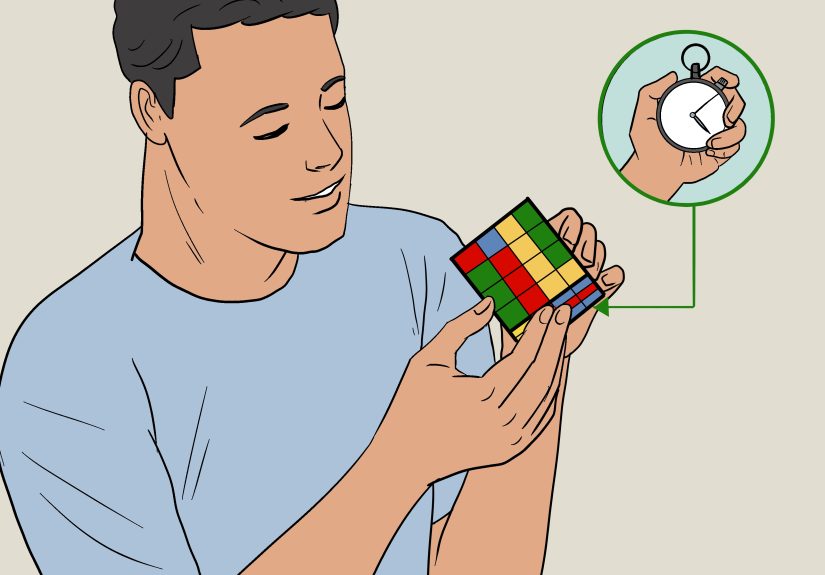
- Fun “party” skills: a beginner magic trick, juggling with soft balls/socks, solving a Rubik’s Cube, a clean card shuffle.
- Food skills: a signature dessert, a perfect grilled cheese, a legendary dip.
How to learn fast: use “growth mindset” + deliberate practice
If you’ve ever thought, “I’m just not the type of person who’s good at that,” here’s the upgrade: skills aren’t personality traits.
They’re built. A growth mindset means you treat ability as something that can improve with effort and strategy, not something you either have or don’t.
Then add deliberate practice: instead of repeating the whole skill mindlessly, you break it into parts, practice the hard part on purpose,
get feedback, and repeat. That’s how you improve faster than someone who “just wings it.”
A 20-minute practice plan (that doesn’t feel like homework)
-
Minute 1–3: Choose one micro-skill.
Example: If you’re learning a card trick, focus only on the shuffle or the revealnot the whole routine. -
Minute 4–10: Slow practice.
Go slower than feels natural. Your brain learns clean reps faster than messy speed. -
Minute 11–15: Add realism.
Practice with the distractions you’ll face later: background noise, people watching, time pressure. -
Minute 16–18: Get feedback.
Film yourself for 30 seconds or ask one person: “What part was confusing?” Feedback is a shortcut. -
Minute 19–20: End with a “win rep.”
Do one clean, confident repetition so you finish motivated, not frustrated.
How to share your skill without being “that person”
The difference between impressive and annoying is how you frame it. Try these approaches:
- Make it interactive: “Want to try this?” or “Pick any card.” People love being part of the moment.
- Make someone else the star: “You’re actually really good at thisdo it again.” That generosity is unforgettable.
- Keep it short: One trick, one song, one dish, one demo. Leave them wanting more.
- Teach the ‘easy version’: Teaching is impressive because it shows mastery and kindness at the same time.
Your signature skill doesn’t have to be legendary. It just needs to be consistent. Over time, you become “the friend who always has something fun up their sleeve.”
That reputation is basically social gold.
Putting It All Together (So You Don’t Overthink It)
If you try to impress everyone all at once, you’ll feel stiff and performative. Instead, pick one small action from each category:
- Connection: Ask one real question and follow up once.
- Experience: Make the hangout easyclear plan, welcoming vibe, simple snacks.
- Value: Share one skill in a way that includes others.
Do those three things regularly, and you won’t just “impress” your friendsyou’ll become the kind of friend people want around: present, generous, and fun.
That’s the ultimate flex.
Real-World Experiences: What These 3 Ways Look Like in Daily Life
Advice is nice, but it hits differently when you can picture it happening. Here are real-world-style experiences people commonly describe when they start using
these three “impress your friends” strategiesplus what tends to happen next.
1) The moment you realize listening is louder than talking
A lot of people think being impressive means having the funniest story or the best comeback. Then they try the Listen-Loop once and notice something wild:
the other person’s energy changes. Their shoulders relax. They start talking with more detail. They laugh more easily. It’s not because you did something flashy
it’s because you created a mini “safe zone” in the conversation. The best part? You don’t have to be extroverted to do this. Quiet confidence often lands harder
than loud confidence, because it feels steadier.
2) The “low-lift hangout” that becomes everyone’s favorite kind of plan
People often worry that hosting has to be a whole production. But when someone hosts a simple game night with a clear start time, a snack table, and one anchor
activity, friends tend to respond with relief. It feels organized without feeling strict. The vibe is: “We’re here to have fun, and nobody has to guess what to do.”
The host doesn’t have to entertain nonstopjust guide the first five minutes, then let the group carry the rest. That’s when hosting gets addictive (in a good way),
because you realize you can create a great night with minimal stress.
3) The first time you share a skill and people ask, “Wait… do it again.”
This is the signature-skill payoff. Someone learns a quick magic trick, a clean juggling pattern, a dessert recipe, or a simple photo-editing trick. They show it once,
casually, without making it a big deal. Suddenly their friends are leaning in. Not because it’s perfect, but because it’s fun and differentand it feels like you brought
something “extra” to the moment. The smartest move people learn here is to keep it short and invite others in: “Want to try?” That turns your skill into a group memory,
not a solo performance.
4) The surprisingly powerful effect of appreciation
One of the most overlooked “impressive” behaviors is simply being appreciative. People who send the quick follow-up text“That was fun, thanks for coming” or
“I loved your playlist pick”often notice that friends become more likely to say yes next time. Appreciation makes relationships feel safe and mutual. It also reduces
the invisible anxiety of, “Was I annoying? Did I say something weird? Did they even like hanging out?” When you give someone a clear positive signal, you make the whole
friendship easier to maintain.
5) The long-game experience: you become the friend people count on
Over time, these strategies compound. Listening well builds trust. Hosting builds shared memories. A signature skill builds your “fun identity.” Eventually, friends start
describing you in ways that sound simple but mean a lot: “They’re easy to be around,” “They always include people,” “They make things fun,” “They actually pay attention.”
That’s the kind of impression that doesn’t fade after a week. It becomes part of how people see you.
And here’s the best twist: once you stop trying to impress people with “big moves” and start focusing on connection, comfort, and shared fun, you’ll usually feel better too.
You’re not performingyou’re building. That’s why it works.