Table of Contents >> Show >> Hide
- Before You Start: Safety, Setup, and What Not to Do
- Way 1: Absorb Fresh Hydraulic Fluid Immediately
- Way 2: Scrub the Stain with an Asphalt-Safe Degreaser
- Way 3: Use Careful Pressure Washing for Stubborn Stains
- How to Handle Old Hydraulic Fluid Stains
- How to Dispose of Oily Absorbent and Cleanup Waste
- How to Prevent Future Hydraulic Fluid Stains
- Practical Experience: What Usually Works in the Real World
- Final Thoughts
- SEO Tags
Hydraulic fluid on asphalt is one of those home-maintenance surprises that can turn a normal Tuesday into a driveway detective story. One minute the pavement looks fine; the next, there is a shiny, slippery stain sitting there like it owns the place. Whether it came from a tractor, lift, skid steer, forklift, dump trailer, log splitter, or a vehicle with a moody hydraulic line, the important thing is simple: act quickly, clean smartly, and do not attack the asphalt like you are auditioning for a pressure-washer action movie.
The reason hydraulic fluid is tricky is that asphalt and many hydraulic fluids share a petroleum connection. Asphalt binder is oil-based, and petroleum-based hydraulic fluid can soften, stain, or weaken the surface if it sits too long. That does not mean your driveway is doomed. It means the cleanup should happen in stages: absorb what is fresh, loosen what has soaked in, rinse without spreading the mess, and dispose of oily materials responsibly.
This guide breaks the job into three practical methods: absorbing fresh hydraulic fluid, scrubbing with an asphalt-safe degreaser, and using careful pressure washing for older or stubborn stains. Think of it as a cleanup ladder. Start with the gentlest option that fits the spill, then move up only if needed. Your asphalt will appreciate the diplomacy.
Before You Start: Safety, Setup, and What Not to Do
Before cleaning hydraulic fluid from asphalt, block off the area so no one steps in it or drives through it. Hydraulic oil is slippery, and once tires roll through the stain, the spill becomes a traveling art project across the driveway. Wear gloves, old shoes, long pants, and eye protection if you will be scrubbing or pressure washing.
Keep the fluid away from storm drains, gutters, soil, lawns, and nearby waterways. If the spill is large, actively spreading, or near a drain, use absorbent socks, sand, soil berms, cardboard barriers, or commercial spill-control materials to contain it first. For major equipment leaks or business-site spills, follow local reporting rules and your spill-response plan.
Avoid these common mistakes
- Do not rinse fresh hydraulic fluid immediately. Water can spread it farther before it is absorbed.
- Do not use gasoline, diesel, brake cleaner, or harsh solvents. They may dissolve asphalt binder, increase fire risk, or create a bigger disposal problem.
- Do not use a needle-tip pressure washer nozzle. A narrow, aggressive stream can scar or loosen asphalt.
- Do not sealcoat over an oily stain. Sealcoat is not makeup for pavement. Oil can prevent proper bonding.
- Do not dump oily rinse water or absorbent into a storm drain. Collected oil and oily cleanup materials should be handled according to local waste guidance.
Way 1: Absorb Fresh Hydraulic Fluid Immediately
This is the best method when the hydraulic fluid is still wet, shiny, or pooled on the asphalt. Fresh spills are much easier to control because the oil is still sitting on or near the surface. Once it settles into the tiny texture of the pavement, cleanup becomes more like persuading a stubborn guest to leave after midnight.
Best materials for absorbing hydraulic fluid
Use an absorbent that can hold oil without turning into sludge. Good options include granular oil absorbent, clay-based cat litter, oil-only pads, absorbent socks, shop absorbent, or clean sand in a pinch. Clay-based products work well because they soak up standing fluid and can be swept away. Oil-only pads are especially useful outdoors because they target oil-based liquids rather than water.
Step-by-step fresh spill cleanup
- Stop the source. Park the leaking machine on cardboard, a drip pan, or absorbent pads if it can be moved safely.
- Contain the spill. Place absorbent around the outside edge first, then work inward. This keeps the fluid from spreading.
- Cover the stain. Pour a thick layer of granular absorbent or clay cat litter over the hydraulic fluid.
- Work it in gently. Use a broom or gloved hand tool to press the absorbent into the surface texture. Do not grind aggressively; asphalt is tough, not invincible.
- Let it sit. Give it at least several hours. For a heavy spill, leave it overnight.
- Sweep it up. Use a dustpan or shovel and place the oily absorbent in a sturdy bag or container.
- Repeat if needed. A second round of absorbent often removes the oily shine that remains after the first pass.
After the absorbent stage, the asphalt may still show a dark stain. That is normal. Absorbents remove liquid; they do not always erase discoloration. If the surface still feels slick or looks greasy, move to the degreaser method below.
Way 2: Scrub the Stain with an Asphalt-Safe Degreaser
When the hydraulic fluid has already soaked into the pavement or left a dark mark, a degreaser is usually the next move. The goal is to break the oily residue loose from the asphalt surface so it can be lifted, blotted, and rinsed away. This method works best for stains that are not deeply aged or baked in by weeks of sun.
What cleaner should you use?
Choose a biodegradable driveway cleaner, citrus-based degreaser, asphalt-safe cleaner, dish soap, or powdered laundry detergent. For small household stains, a strong dish soap can work surprisingly well. It is not glamorous, but neither is a hydraulic leak, so everyone is being practical here.
For commercial degreasers, always read the label. Some cleaners are designed for concrete, not asphalt. Concrete can tolerate products that may be too aggressive for blacktop. If the label says to test first, believe it. Pick a small, hidden spot and check whether the cleaner lightens, softens, or strips the asphalt.
Step-by-step degreaser cleanup
- Remove loose absorbent first. Sweep the area thoroughly so the cleaner can reach the stain.
- Pre-wet the surrounding asphalt. Lightly dampen the area around the stain. This helps reduce harsh cleaner marks on dry pavement.
- Apply cleaner directly to the stain. Use full-strength degreaser for heavier stains or a diluted solution for lighter marks, following the product label.
- Let it dwell. Wait about 5 to 15 minutes, but do not allow the cleaner to dry on the asphalt.
- Scrub with a stiff nylon brush. Use circular motions and moderate pressure. A wire brush may damage older asphalt, so use it only with caution.
- Blot the slurry. Before rinsing, use absorbent material, towels, or pads to pick up the oily cleaner mixture.
- Rinse carefully. Rinse with a garden hose, directing water away from drains and landscaped areas where oil could collect.
- Repeat if needed. Two lighter cleanings are usually safer than one chemical wrestling match.
Dish soap and laundry detergent method
For a smaller hydraulic fluid stain, pour dish soap directly onto the mark, add a small amount of warm water, and scrub until the area foams. Let it sit briefly, scrub again, then blot and rinse. Powdered laundry detergent can be mixed with water into a paste, spread over the stain, scrubbed, and left for 20 to 30 minutes before rinsing. Baking soda can also help as a mild abrasive and backup absorbent, though it is harder to sweep out of rough asphalt than larger granules.
The secret is not just scrubbing; it is removing the dirty mixture after scrubbing. If you break the hydraulic fluid loose and then let the oily water dry in place, the stain can reappear like a sequel nobody asked for.
Way 3: Use Careful Pressure Washing for Stubborn Stains
Pressure washing can help with older hydraulic fluid stains, especially after degreaser has loosened the residue. However, pressure washing asphalt requires restraint. A strong machine with the wrong nozzle can chew into the surface, loosen aggregate, or leave zebra stripes. Yes, the stain may disappear, but so might the top layer of your driveway. That is not a trade most people want.
When pressure washing makes sense
Use this method when the stain remains after absorption and scrubbing, the asphalt is in decent condition, and the surface is not crumbling, newly installed, or severely cracked. If the pavement is already soft, raveled, or damaged, hire a professional or consider repair instead of blasting it with water.
Pressure washing steps
- Pre-treat with degreaser. Apply an asphalt-safe degreaser and let it dwell according to the label.
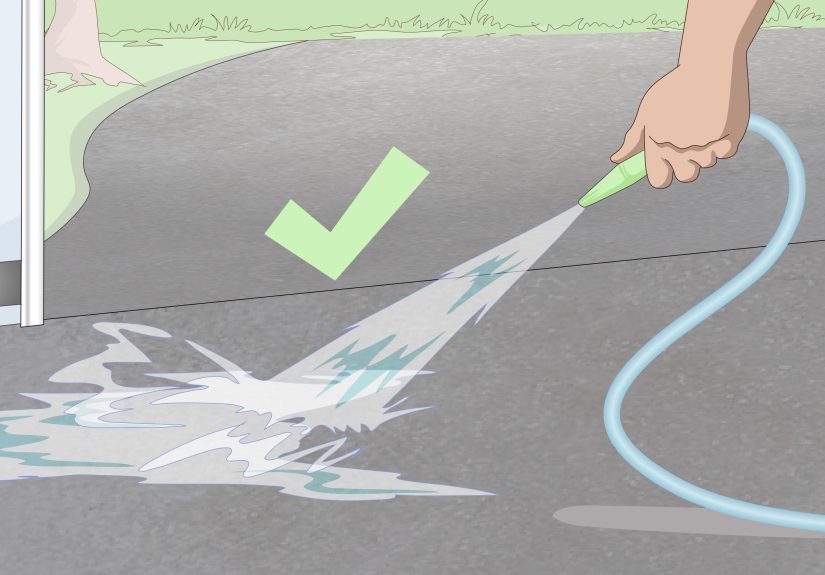
- Use a wide spray pattern. A 25-degree or 40-degree nozzle is safer than a zero-degree tip.
- Keep distance from the surface. Start farther away and move closer only if needed.
- Spray at an angle. A 45-degree approach helps move residue off the surface without drilling into the asphalt.
- Work from clean to dirty edges. Push rinse water toward a contained area, not into the street.
- Collect residue where possible. Use absorbent socks, pads, or wet-dry vacuum recovery if appropriate.
- Rinse lightly after cleaning. Remove remaining cleaner so it does not dry on the pavement.
Hot-water pressure washing or steam cleaning can be more effective than cold water because heat helps loosen oily residue. That is why professionals often have better results on large or older stains. They also use surface cleaners that spread pressure evenly instead of carving lines into the asphalt like a tiny water-powered plow.
How to Handle Old Hydraulic Fluid Stains
Old hydraulic fluid stains are harder because the fluid has had time to migrate into the asphalt binder and pavement texture. If the stain is months old, do not expect a single cleaning to make the area look brand new. The realistic goal is to remove slick residue, reduce discoloration, prevent tracking, and stop further damage.
For older stains, use a staged approach. First, apply a degreaser and scrub. Then blot the loosened residue with absorbent. Rinse lightly. Let the area dry completely. If the stain remains, repeat the process once or twice. If the asphalt feels soft, sticky, or crumbly after cleaning, the oil may have damaged the binder. In that case, cleaning alone may not be enough; patching, infrared repair, or resurfacing may be needed.
How to Dispose of Oily Absorbent and Cleanup Waste
Once absorbent, towels, pads, or rinse residue contain hydraulic fluid, treat them as oily waste. Rules vary by location and by whether the spill happened at a home, farm, construction site, or business. In general, do not toss free-flowing oily materials into ordinary trash, do not burn them, and do not pour liquid into drains. Place used absorbent in a sealed container or heavy-duty bag and check with your local waste authority, recycling center, or hazardous-waste program.
For businesses, disposal requirements may be stricter. Keep used hydraulic fluid separate from solvents, cleaners, and other chemicals unless your waste handler says otherwise. Mixing wastes can turn a simple disposal issue into a regulatory headache with paperwork, fees, and the kind of phone calls nobody enjoys.
How to Prevent Future Hydraulic Fluid Stains
Prevention is cheaper than cleanup, and it usually takes less time than one dramatic Saturday with a scrub brush. Inspect hydraulic hoses, fittings, cylinders, pumps, reservoirs, and quick-connect couplers regularly. Replace cracked hoses before they fail. Put drip pans or absorbent pads under parked equipment. Store a small spill kit near garages, sheds, trailers, and machinery storage areas.
If your asphalt is older, consider sealcoating after the surface is clean and properly repaired. Sealcoat can help resist staining and slow moisture damage, but it must be applied to clean, sound asphalt. It is a protective jacket, not a magic eraser. If hydraulic fluid is still present, sealcoat may not bond well.
Practical Experience: What Usually Works in the Real World
In real driveway and shop-yard situations, the best results usually come from patience, not panic. A fresh hydraulic fluid spill often looks worse than it is. The shiny puddle spreads fast, especially on warm asphalt, but if you surround it with absorbent right away, most of the visible mess can be controlled before it becomes a permanent stain. The first mistake many people make is grabbing the hose. It feels logical because water cleans things, right? Unfortunately, oil laughs at that plan. Water pushes the fluid outward, making a small stain wider and thinner. Now instead of one ugly spot, you have a modern art mural called “Regret in Blacktop.”
For fresh spills, granular absorbent is the most dependable tool. Cat litter can work if it is clay-based, but it is not always ideal. Some modern litters are made from paper, corn, walnut shells, silica, or lightweight materials that do not behave the same way on oil. The plain, boring clay kind is usually the useful one. It may not win any awards for fragrance technology, but it does the job. For equipment owners, keeping a bag of oil absorbent in the garage is smart. It is cheap insurance against a leaky hydraulic hose, and unlike emergency pizza, it does not expire in one evening.
For stains that have already sat for a day or two, scrubbing matters. A stiff nylon brush, a good degreaser, and multiple short rounds usually outperform one heroic round of over-cleaning. Let the cleaner dwell long enough to loosen the fluid, but do not let it dry. Dry degreaser can leave residue, and residue can attract dirt. If the asphalt starts looking gray, soft, or unusually rough, stop and rinse. That is a sign the cleaner or scrubbing may be too aggressive for the surface.
Pressure washing is the method people often want to jump to first, but it should usually be the finisher, not the opener. Used after absorbent and degreaser, it can lift remaining grime and even out the cleaned area. Used too soon or too aggressively, it can spread oily water or damage weak pavement. A wide fan tip, steady movement, and moderate distance are your friends. A zero-degree nozzle is not your friend. It is the driveway equivalent of using a chainsaw to slice a sandwich.
One more lesson from real cleanup jobs: stains fade over time after proper cleaning. Sun, rain, and normal weathering can lighten a mark that looks dramatic on day one. If the area is no longer slick, no longer transferring oil to shoes or tires, and no longer smelling oily, you may have done the important part even if a shadow remains. Asphalt is a working surface, not a marble countertop. Clean it thoroughly, protect it from repeat leaks, and save perfectionism for things that deserve it, like barbecue sauce ratios or the angle of a lawn chair.
Final Thoughts
Cleaning hydraulic fluid from asphalt is not complicated, but it rewards the right order of operations. Start by absorbing fresh fluid. Move to an asphalt-safe degreaser for residue. Use controlled pressure washing only when the stain is stubborn and the pavement can handle it. Most importantly, keep oil out of drains and dispose of used cleanup materials responsibly.
The faster you respond, the better your results will be. Hydraulic fluid may be stubborn, but with absorbent, a brush, a sensible cleaner, and a little patience, your asphalt can recover without becoming the neighborhood’s most dramatic driveway.