Table of Contents >> Show >> Hide
Moving furniture is one of those tasks that looks simple until you’re standing in the hallway, sweating in your socks, trying to convince a sofa to go through a doorway that suddenly shrank. The good news? With a little planning, the right tools, and a few pro tricks, you can move heavy furniture without wrecking your back, your floors, or your mood.
Whether you’re rearranging your living room or hauling everything to a new house, these furniture moving tips will help you work smarter, not harder.
Before You Lift a Thing
1. Make a plan (yes, on paper)
Before you start dragging dressers around like a human forklift, sketch a quick floor plan and map your route. Where is each piece going? Which doors, corners, and staircases are involved? Planning your path in advance helps you avoid awkward mid-hallway “now what?” moments and unnecessary lifting.
Bonus move: measure the elevator if you live in an apartment. That gorgeous sectional might fit in the living room but not in the lift.
2. Measure furniture, doors, and stairs
Grab a tape measure and note three dimensions for each big piece: height, width, and depth. Then measure doorways, stair width, and low ceilings or bulkheads. Compare the numbers before you move anything. This is how you find out the couch needs to go in vertically or that bookshelf needs its feet removed, before you wedge it halfway and get stuck.
3. Clear the path like you’re expecting royalty
Pick up rugs, shoes, toys, floor lamps, and anything that can trip you. Moving with your hands full means you can’t break a fall easily, so minimizing hazards is key. If possible, keep pets and small kids in a separate room during the move. They’re cute, but they’re also mobile obstacles.
4. Disassemble whenever you can
Remove table legs, take drawers out of dressers, pop the back off a reclining sofa if it’s designed to come apart. Many items are modular for a reason. Smaller, lighter pieces are easier to carry, easier to angle through tight spaces, and less likely to gouge walls or frames.
Put screws and hardware in labeled zip bags and tape the bag to the underside of the furniture or place all hardware in a single “assembly” box. Future-you will be very thankful.
5. Dress like you mean business
Wear closed-toe shoes with good traction (no flip-flops), work gloves with grip, and comfortable clothes that let you bend and lift. If you have a back or knee issue, consider a support brace. Personal protective equipment isn’t overkill when you’re walking backward with a bookcase on a staircase.
Protect Your Home and Your Furniture
6. Cover floors before the first lift
Hardwood, laminate, luxury vinyl, and tile can all scratch or crack under heavy furniture. Lay down cardboard sheets, Ram board, or moving runners in main traffic paths. On carpet, use sliders or plastic glides under legs so pieces glide instead of digging in.
Think of it as rolling out a red carpet for your furniture, except the VIP is your security deposit.
7. Wrap furniture like you’re shipping it to your future self
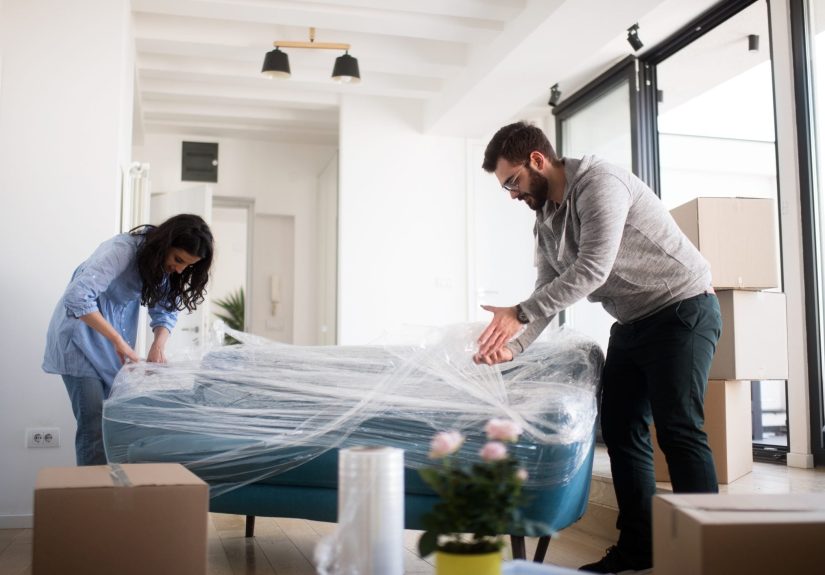
Use moving blankets, stretch wrap, or thick quilts to cover sharp corners and delicate surfaces. Wrap dining chairs, table edges, and dresser corners, then secure with tape or stretch wrap (never tape directly to finished wood). This helps prevent scratches, chips, and mystery dings that magically appear during moving day.
8. Guard walls, doors, and banisters
For tight turns, tape flattened cardboard over door trim or staircase posts. Foam pool noodles slit lengthwise make great protectors for railings and edges. If a sofa or dresser bumps into something, it’ll hit the padding firstnot your freshly painted wall.
9. Lock down drawers and doors
Drawers that fly open mid-lift are a hazard to your shins and your flooring. Take drawers out when possible. If not, use stretch wrap or straps to keep drawers and doors shut. Empty bookshelves, cabinets, and dressers before moving them; they’ll be lighter, safer, and less likely to warp.
Smart Lifting and Carrying Techniques
10. Lift with your legs, not your ego
Classic, but true: bend at the knees, keep your back straight, and hold the load close to your body. Avoid twisting while you’re holding something heavyturn with your feet instead. If a piece feels too heavy or awkward, it is too heavy or awkward. Get help or a tool instead of trying to “tough it out.” Your spine will not send a thank-you note.
11. Use the high–low method for tall pieces
For tall furniture like wardrobes, bookcases, or tall dressers, use the “high–low” carry. Tip the piece slightly so one person carries from the top while the other carries from the bottom. This balances the weight, keeps it more stable on stairs and through doorways, and gives both people better visibility.
12. Put straps, dollies, and sliders to work
Lifting straps (also called moving straps or “hump straps”) shift some of the load to your shoulders and legs and can make big pieces feel dramatically lighter. A sturdy furniture dolly is perfect for heavy, boxy items like dressers or stacked moving boxes. Just be sure your path is flat and your floor protected.
For short distances on smooth surfaces, furniture sliders under each leg let you push heavy pieces with minimal effort. They’re especially helpful if you’re moving furniture alone inside a room.
13. Slide, don’t drag, when you’re solo
If you live alone and help is scarce, you can still safely move large pieces by “sledding” them. Put a folded moving blanket or rug under one side, then tilt and slide the furniture across the floor. On carpet, use hard plastic sliders; on hard floors, use felt-side-down sliders or thick fabric to prevent scratches.
Getting Through Tight Spaces
14. Use the sofa “hook” trick
For tight doorways and corners, stand the sofa on its end so it forms an L shape. Move the bottom through first, then “hook” the top around the doorframe or corner with a slow pivot. This trick works surprisingly well for chairs and loveseats too. Go slowly and communicate so both people pivot at the same time.
15. Remove doors and hinges if you need extra inches
Sometimes, half an inch is the difference between “nope” and “it fits perfectly.” Pop interior doors off their hinges with a screwdriver or drill to gain a bit more width and prevent the door from swinging into your furniture. Store the hinges and screws in a labeled bag so reinstallation is painless later.
16. Take it slow on stairs
Stairs are where many moving-day injuries and dents happen. Move one step at a time, keeping the heavier end of the furniture on the lower side. Communicate clearly: agree on commands like “up one,” “down one,” “stop,” and “set it down.”
Use a heavy blanket under items you’re sliding up carpeted stairs, or a hand truck with a strap for appliances and very heavy piecesjust make sure you know how to control the load and never exceed the tool’s rated weight.
17. When it really won’t fit, think outside the doorway
If something truly refuses to go through a door or stairwell, step back and rethink. Could it be further disassembled? Does a window or sliding door offer a better route? For extremely tricky itemslike oversize couches in narrow apartmentsprofessional movers sometimes remove a section of railing or use specialized equipment to go through larger openings. On a DIY move, there’s no shame in calling in pros for that one nightmare piece.
Keep Moving Day Safe and (Mostly) Sane
18. Separate “indoor” and “outdoor” crews
If you’ve got friends or family helping, assign some people to stay inside and others to handle the outside hauling. This keeps dirt and grit from being tracked across your floors all day and speeds up the process. Indoor crew moves items to the door, outdoor crew loads the truck, everyone feels organized and slightly more professional.
19. Pace yourself and protect your back
Heavy lifting is a workout. Take breaks, drink water, and rotate tasks so the same person isn’t carrying the heaviest items all day. If something starts to hurt in a sharp, alarming way, stop. That’s your body saying, “We’re done here.” No piece of furniture is worth a back injury.
20. Know when to call the pros
If you’re dealing with extremely heavy items (like a piano, gun safe, or massive solid-wood armoire), awkward staircases, or a long-distance move, professional movers may actually be cheaper than a back injury, damaged flooring, or broken furniture. Many moving companies offer partial services tooyou can hire them just for the heavy stuff and handle boxes yourself.
Extra Real-World Experience: What People Learn After a Few Moves
Once you’ve moved furniture a few times, you start collecting “never again” lessons. Here are some extra, experience-based insights that don’t always make the official checklists but make a huge difference in real life.
Don’t underestimate the power of labeling
Okay, labels are more about boxes than furniture, but they matter. When you know exactly where each piece is going before you lift it, you move it once instead of three times. A simple “Living Room – TV Wall” note on a floor plan can tell everyone exactly where that heavy media console should land.
Some people even mark furniture destinations with painter’s tape on the floor. It looks a bit like a crime scene, but it prevents the “can we move it two inches left?” shuffle after you already put the piece down.
The heaviest things are not always the biggest things
Ever tried to move a small solid-wood side table that weighs more than your couch? Don’t assume something will be easy just because it’s small. Give every piece a test lift before you commit, and be ready to swap in a dolly or sliders even for compact items.
Similarly, mattresses can be awkward but not always heavy. Using a mattress sling or folding it (if the design allows) can make it much easier to steer around corners.
Communication saves both backs and friendships
Most moving-day drama doesn’t come from the weight; it comes from miscommunication. One person says “up,” the other hears “down,” and suddenly everyone’s annoyed and the dresser is sideways. Before each lift, quickly agree: who’s leading, what the route is, and what commands you’ll use.
And remember, the person walking backward usually has the worst view. They should get to be “the boss” about how fast you move and when you stop.
Small tools make a big difference
Seasoned movers swear by a tiny kit: screwdriver, Allen wrench set, utility knife, tape, and zip bags. With just those items, you can disassemble awkward legs, remove doors, cut cardboard for impromptu floor protection, and keep all your hardware organized. It fits in a single pouch but can shave hours off the job.
If your home has delicate floors, furniture pads or felt stickers under legs after you place everything are another must. They make future rearranging so much easier and protect your flooring long-term.
Next-day soreness is real, so plan for it
Even when you do everything right, your body will likely feel the move the next day. Build that into your schedule. Avoid planning anything intense for the morning after a big furniture move. Have over-the-counter pain relievers, a heating pad, and plenty of water on hand. Future-you will again be grateful.
Your future rearrange is part of today’s move
Most people tweak their layout after living in a space for a week or two. This means when you place big pieces the first time, think ahead. Leave a little gap behind media units for cables, avoid wedging dressers so tightly into corners that you can’t adjust them, and keep sliders under heavy pieces you know you’ll probably nudge later.
Good movers think not just about getting furniture into a room but also about how easy it will be to live withand occasionally rearrangethat furniture down the road.
Final Thoughts
Moving furniture will probably never be your favorite hobby, but it doesn’t have to be a miserable, injury-prone marathon. With a clear plan, basic safety habits, simple protective gear, and a few time-tested tricks like the high–low carry and the sofa hook, you can move heavy furniture efficiently while keeping your floors, walls, and sanity intact.
Treat your move like a small project: prepare, use the right tools, ask for help when you need it, and respect your limits. Your back, your home, and your future movie nights on that successfully moved sofa will all benefit.