Table of Contents >> Show >> Hide
- 1) The mission was “cross Antarctica”… but they never even got a proper start line
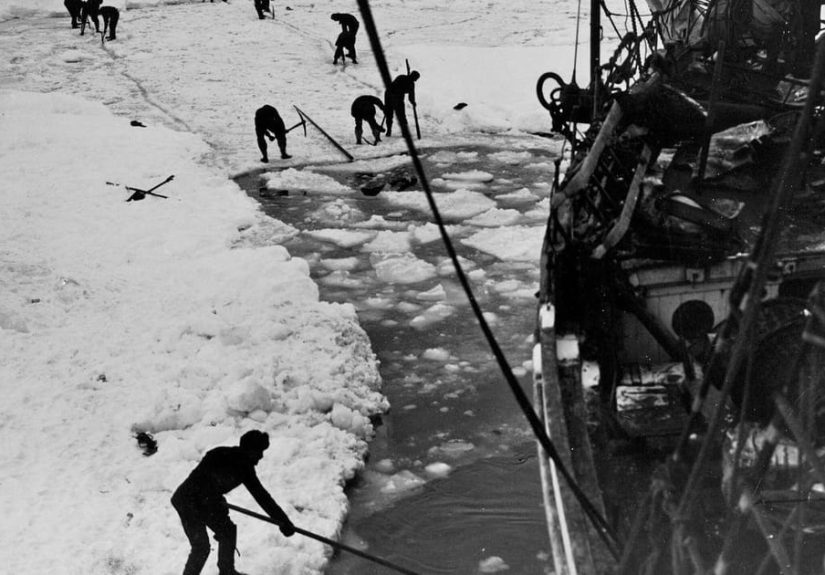
- 2) The Endurance was stuck in pack ice for monthslong enough to turn “patience” into a personality
- 3) The ship didn’t just get damagedit was crushed, then eventually sank
- 4) For months, “home” was a moving slab of ice that could crack whenever it felt like it
- 5) They hauled lifeboats across icebecause the ocean wasn’t an option yet
- 6) Food wasn’t “meals.” It was math, rationing, and whatever the environment allowed
- 7) Hard choices included killing the sled dogsand even the ship’s cat became collateral
- 8) One crew member was a stowawaywho later endured extreme frostbite and surgery in a hut
- 9) Elephant Island wasn’t “landfall.” It was “we’re alive… on the worst kind of alive”
- 10) Shackleton left most of his men behindbecause somebody had to go get help
- 11) The James Caird voyage was an open-boat crossing across some of the most violent seas on Earth
- 12) They arrived at South Georgia… on the wrong side
- 13) Rescue took multiple attemptsand when it finally happened, every Endurance man was alive
- What the Shackleton Expedition Still Teaches Us
- Experience Add-On: How People “Live” the Shackleton Story Today (Without, You Know, Actually Starving)
- Standing in front of the photographs feels like meeting the crew, not just reading about them
- Documentaries turn the expedition into a sensory lesson in discomfort
- Leadership classes use Shackleton because the story is basically a full-length stress test
- For travelers, Antarctica and South Georgia offer a “safe proximity” to the danger
- The Endurance wreck discovery adds a modern epilogue that feels almost unreal
- A practical way to “experience” Shackleton: try a micro-version of expedition discipline
- Conclusion
If you’ve ever had a “rough commute” because the coffee shop was out of oat milk, allow Ernest Shackleton’s Endurance expedition
to gently (and then not-so-gently) recalibrate your definition of hardship.
Officially called the Imperial Trans-Antarctic Expedition (1914–1917), the plan was bold: land a team on the Weddell Sea side of Antarctica,
cross the entire continent, and pop out the other side like it was a scenic weekend hike.
Instead, the expedition became one of the most famous Antarctic survival stories ever recordedbuilt from pack ice, stubborn leadership,
questionable decisions, and an astonishing amount of grit.
Below are 13 brutal facts about the Shackleton expeditionthe kind of facts that make you grateful your biggest outdoor problem is a mosquito
that really believes in itself.
1) The mission was “cross Antarctica”… but they never even got a proper start line
Shackleton’s dream was a full transcontinental crossing: from the Weddell Sea to the Ross Sea, passing near the South Pole.
The brutal twist? The Endurance became trapped before the main party could establish a land base for the crossing.
The expedition’s story is famous not because it succeeded as exploration, but because it succeeded as survival.
The brutal takeaway
When your goal evaporates, your leadership gets judged on what you do nextnot what you hoped to do.
2) The Endurance was stuck in pack ice for monthslong enough to turn “patience” into a personality
Sea ice in the Weddell Sea isn’t a polite obstacle; it’s a slow, grinding system that can trap ships like a vise.
The Endurance drifted while locked in pack ice for an extended periodday after day of watching the horizon and realizing the horizon didn’t care.
The brutal takeaway
A frozen ship isn’t just transportation failure. It’s a calendar problem, a food problem, a morale problem, and a “how do we not panic?” problem.
3) The ship didn’t just get damagedit was crushed, then eventually sank
Pack ice pressure isn’t dramatic in the moment; it’s worse. It’s relentless.
The Endurance was squeezed and splintered until the crew had to abandon it, and later it went down into the Weddell Sea.
Imagine watching your home, your supplies, your escape plan, and your sense of control disappear into freezing water.
The brutal takeaway
Once the ship was lost, the expedition stopped being “exploration” and became “organized not dying.”
4) For months, “home” was a moving slab of ice that could crack whenever it felt like it
After the ship was gone, the men camped on sea iceliving on a floating platform in a polar ocean.
The surface could shift, ridge, split, and reform. Every day required recalculating safety, shelter, and what to drag where.
The brutal takeaway
It’s hard to rest when the floor beneath you is basically an argument between physics and bad luck.
5) They hauled lifeboats across icebecause the ocean wasn’t an option yet
Lifeboats are heavy. Ice is uneven. Now combine those facts with pressure ridges, slush, wind, and exhaustion.
The crew had to move boats and supplies over harsh terrain because open water wasn’t reliably availableand waiting too long could mean being trapped again.
The brutal takeaway
You haven’t truly met teamwork until you’ve met “we drag this boat or we all lose.”
6) Food wasn’t “meals.” It was math, rationing, and whatever the environment allowed
In an Antarctic survival situation, your menu doesn’t come from preference; it comes from reality.
Rations had to be managed carefully, and the expedition relied on what could be obtained in a harsh polar ecosystem.
Hunger is bad. Hunger with uncertainty is worse.
The brutal takeaway
Scarcity changes everything: energy, mood, sleep, decision-making, and how you treat the people beside you.
7) Hard choices included killing the sled dogsand even the ship’s cat became collateral
The expedition brought dogs for hauling and companionship. But once the situation turned into prolonged castaway survival,
keeping every animal alive wasn’t feasible. The crew faced grim, practical decisions.
Even the expedition’s ship’s cat, famously known as Mrs Chippy, is remembered as part of the tragedyan emotional detail that makes the story feel
less like legend and more like real people making impossible calls.
The brutal takeaway
Survival stories aren’t heroic because they’re inspiring. They’re heroic because they’re messy.
8) One crew member was a stowawaywho later endured extreme frostbite and surgery in a hut
Perce Blackborow famously joined the Endurance as a stowaway and became part of the crew.
Later, he suffered severe frostbite, and on Elephant Island doctors performed an operation that removed the toes on one foot.
No hospital. No proper operating room. Just necessity and whatever medical skill could be applied under brutal conditions.
The brutal takeaway
In extreme cold, injuries don’t just “hurt.” They escalate. And the environment doesn’t negotiate.
9) Elephant Island wasn’t “landfall.” It was “we’re alive… on the worst kind of alive”
Eventually the crew reached Elephant Islandsolid ground, yes, but also remote, uninhabited, and not exactly on a convenient shipping route.
Think of it as upgrading from “floating ice panic” to “rocky isolation panic.”
The brutal takeaway
Safety isn’t just standing on land. Safety is being found.
10) Shackleton left most of his men behindbecause somebody had to go get help
Here’s a leadership moment that still makes people argue (in a good way): Shackleton chose to take a small team in a lifeboat to seek rescue,
leaving the rest sheltering on Elephant Island. It wasn’t abandonment. It was the only chess move left on a board made of ice.
The brutal takeaway
The harshest decisions can be the most loyalwhen they’re made to bring everyone home.
11) The James Caird voyage was an open-boat crossing across some of the most violent seas on Earth
Shackleton and five others set out in the James Caird, a small lifeboat adapted for a long voyage, aiming for South Georgia
roughly 800 miles away. The Southern Ocean is not a motivational poster; it’s a machine designed to humble human beings.
The crossing wasn’t just “cold and wet.” It was navigation under stress, constant exposure, and the kind of fatigue that makes simple tasks feel like puzzles.
The brutal takeaway
The ocean doesn’t care if you’re brave. It only cares if you’re correct.
12) They arrived at South Georgia… on the wrong side
Getting to South Georgia didn’t end the danger. Landing on the wrong side of the island meant no quick stroll to help.
Shackleton and a small party had to cross the island’s interiormountains and glaciersto reach a whaling station and organize rescue.
The brutal takeaway
Sometimes “made it” is just the beginning of a new kind of hard.
13) Rescue took multiple attemptsand when it finally happened, every Endurance man was alive
Getting back to Elephant Island was complicated by weather, ice, timing, and logistics.
Rescue wasn’t a single heroic boat arriving right on cue; it took repeated efforts.
When the final rescue succeeded, the result was staggering: every member of the Endurance crew survived.
The brutal takeaway
The Shackleton expedition is remembered because it’s an extreme case study in keeping people alive when the plan collapses.
What the Shackleton Expedition Still Teaches Us
The “Endurance expedition” isn’t famous because it discovered a new continent or planted a flag in the right spot.
It’s famous because it shows what happens when you lose your equipment, your timeline, your comfort, and your certaintyyet still refuse to lose your people.
It also gives us a more honest picture of survival: not a montage of victories, but a long string of exhausting decisions.
Shelter vs. mobility. Rations vs. morale. Risk vs. delay. And above all, the daily work of keeping a team functional when nature is actively trying to turn
you into a cautionary tale.
Experience Add-On: How People “Live” the Shackleton Story Today (Without, You Know, Actually Starving)
The Shackleton expedition has a strange modern afterlife: it’s both a gripping historical drama and a kind of emotional obstacle course people voluntarily
step intothrough museums, documentaries, leadership workshops, and even Antarctic travel. If you want to connect with the story in a way that feels real
(but still includes hot drinks and blankets), here are some of the most vivid ways people experience “13 Brutal Facts About the Shackleton Expedition” in practice.
Standing in front of the photographs feels like meeting the crew, not just reading about them
One of the most powerful experiences is encountering Frank Hurley’s expedition photographyimages that freeze (no pun intended) the human scale of the ordeal:
the ship locked in ice, men dwarfed by white space, and camp life that looks both ordinary and impossibly fragile.
In person, photographs don’t feel like “content.” They feel like evidence. You start noticing details you skim past in text: how small a tent really is,
how exposed a body looks against endless wind, how the men’s faces change as the months drag on.
People often describe this as the moment the expedition stops being a legend and starts being a room full of individualseach with a job, a mood, and a limit.
It also makes Shackleton’s leadership less abstract. You can almost see the daily negotiations: fear managed into routine, boredom managed into tasks,
conflict managed into “we’ll deal with it later because right now we need to live.”
Documentaries turn the expedition into a sensory lesson in discomfort
Reading about the Southern Ocean is one thing. Watching a boat pitch, seeing spray turn to ice, and hearing how navigation worked without modern tech is another.
Modern films and TV specials often pair the original diaries and photos with expert commentary, which helps translate old-school exploration into today’s language:
logistics, risk management, sleep deprivation, group psychology, and sheer physical endurance.
Viewers commonly walk away with an unexpected insight: the most “brutal” part isn’t a single dramatic disaster.
It’s the cumulative stressthe same cold problem every day, the same wet clothes, the same uncertainty, the same limited food, the same tiny decisions with huge consequences.
Leadership classes use Shackleton because the story is basically a full-length stress test
If you’ve ever seen “Shackleton” referenced in leadership training, here’s why it sticks: the expedition offers a real-world case where the original objective fails,
resources collapse, and the leader’s job becomes protecting people, maintaining hope without lying, and creating structure when structure is the last thing the environment provides.
In workshops, participants often replay pivotal moments: deciding when to abandon the ship, choosing who goes on the James Caird, keeping the Elephant Island group stable,
and managing morale when nobody can promise a rescue date. The story becomes personal fastbecause most of us have experienced “the plan failed” on a smaller scale:
family emergencies, sudden layoffs, project disasters, health issues. Shackleton’s world was colder and louder, but the human dynamics rhyme.
For travelers, Antarctica and South Georgia offer a “safe proximity” to the danger
Not everyone can (or should) chase the Shackleton route, but some travelers do visit parts of the broader region on expedition-style cruises.
Even seeing Antarctic landscapes from a ship can be a gut-check: the scale is overwhelming, the weather changes quickly, and the coastline looks hostile in a way
that doesn’t feel cinematicit feels indifferent.
People who visit sub-Antarctic islands often mention how quickly “romance” turns into “respect.” The wind is a physical force. The cold is immediate.
And the distances between places suddenly make sense. You realize why Elephant Island was terrifying: not because it was dramatic, but because it was isolated
beyond what most modern minds are trained to imagine.
The Endurance wreck discovery adds a modern epilogue that feels almost unreal
The story also gained a fresh wave of attention after modern explorers located the Endurance wreck on the seafloor in the Weddell Sea.
That discovery doesn’t change what the crew lived throughbut it makes the expedition feel closer.
It’s one thing to read, “the ship sank.” It’s another to know the ship still exists down there, preserved in the polar deep like a time capsule.
For many readers, this is the emotional “click.” The expedition becomes less like myth and more like a specific sequence of events that happened to real people
people who joked, argued, got scared, got sick, and kept going anyway.
A practical way to “experience” Shackleton: try a micro-version of expedition discipline
If you want a personal, grounded takeaway without booking a polar voyage, try a small experiment inspired by the expedition’s day-to-day survival mindset:
- Routine on purpose: Pick a short period (3–7 days) where you keep a simple schedulewake time, movement, meals, readingno matter what.
- Morale as a task: Do one morale-boosting thing daily that isn’t “productive” (music, journaling, calling a friend, a hobby).
- Resource awareness: Track a limited resource (time, energy, money, screen time) and make deliberate choices, not automatic ones.
It’s obviously not Antarctica. But it helps you understand the core lesson: endurance isn’t a single heroic moment.
It’s the accumulation of small, stubborn decisions that keep you and your people moving forward.
Conclusion
The Shackleton expedition remains a masterpiece of survival under pressure: a ship trapped and crushed, months on ice, a desperate journey to Elephant Island,
an 800-mile lifeboat crossing in the James Caird, and a rescue that took persistence bordering on obsession.
If these 13 brutal facts about the Shackleton expedition do anything, let them do this: remind you that humans can be unbelievably tough
and that good leadership isn’t about perfect plans. It’s about protecting people when plans stop being real.