Table of Contents >> Show >> Hide
- Why This Replit v3 Moment Feels Bigger Than One Product Launch
- What Changed: From Prompt Machine to Teammate Energy
- Why Replit v3 Was the First to Cross the Line for Many Users
- The Market Is Quietly Confirming the Same Story
- What an AI Teammate Actually Does Well
- But No, You Still Should Not Hand the Keys to the Robot and Go to Brunch
- Why Small Teams Benefit First
- The Real Realization: Teamwork Is Becoming a System Design Problem
- 500 More Words on the Experience: What It Actually Feels Like to Work With AI Agents After the Honeymoon Phase
- Conclusion
- SEO Tags
There was a time when “AI teammate” sounded like the kind of phrase invented by a venture capitalist who had consumed three cold brews and one entire buzzword deck before breakfast. Then reality showed up, wearing a hoodie and pushing code.
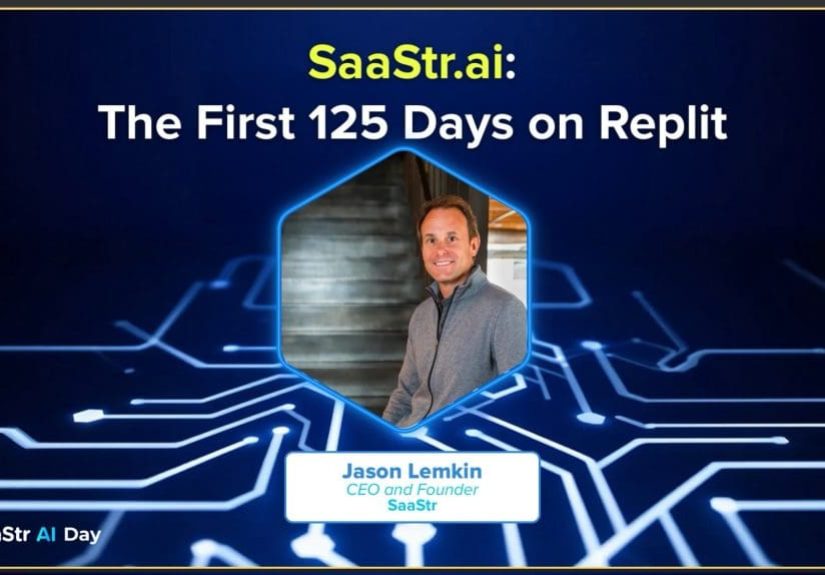
That is what makes the Replit v3 story so interesting. The headline numbers are flashy enough to stop the scroll: 125 days, 750,000 uses, and one sharp conclusion from the people doing the work: some AI agents no longer feel like tools. They feel like members of the team. Not employees with dental insurance, obviously. More like tireless, always-on collaborators that can plan, build, test, revise, and keep context without needing a coffee break or a motivational Slack emoji.
This matters because the shift from AI assistant to AI teammate is not just a product update. It is a workflow update. It changes how small teams ship, how founders allocate time, how developers think about leverage, and how businesses define productivity. Replit v3 did not invent agentic AI, but it helped make the idea feel less theoretical and more operational. Suddenly, the conversation is no longer, “Can AI write a function?” It is, “Can AI help own a meaningful slice of the build process?”
The answer, increasingly, is yes. With a few very important asterisks. More on those in a minute.
Why This Replit v3 Moment Feels Bigger Than One Product Launch
The reason this topic is resonating is simple: the software world has spent the past two years watching AI evolve from autocomplete to collaborator. Early AI coding tools were helpful, but narrow. They were fast at generating snippets, summarizing docs, and producing that one function you definitely could have written yourself if the universe had kindly given you three uninterrupted hours and a snack.
Replit v3 pushed the experience further. The value was not just code generation. It was continuity. It was task planning. It was autonomous execution. It was the sense that the agent could keep working through a goal instead of collapsing dramatically after every prompt like a Victorian poet in a rainstorm.
That is the real breakthrough. Teams do not add members because they type quickly. They add members because those people can hold context, make reasonable decisions, ask useful follow-up questions, and move work forward with limited supervision. When AI agents start doing more of that, the mental category changes. The software stops feeling like a fancy keyboard shortcut and starts feeling like operational support.
That is exactly why the Replit v3 discussion has become a useful case study for the broader rise of AI agents in the workplace. It captures the moment when many users stopped asking, “What can this tool do?” and started asking, “What work can I trust it to own?”
What Changed: From Prompt Machine to Teammate Energy
1. Persistent context beat one-off cleverness
For most teams, the biggest unlock is not raw intelligence. It is memory with direction. An AI agent becomes dramatically more useful when it understands the project, the patterns, the constraints, the architecture, the priorities, and the weird little decisions every team makes along the way. You know, the stuff that usually lives in a mix of code comments, tribal knowledge, and one brave engineer’s overworked brain.
Replit v3 felt different because it moved closer to project continuity. The interaction became less like ordering code from a vending machine and more like working with someone who already knows how your product thinks. That reduces friction in a big way. Fewer re-explanations. Fewer repetitive prompts. Fewer “No, not like that, like the other thing we did last month.”
2. Action started mattering more than suggestion
Plenty of AI tools can suggest. Fewer can act. The modern agentic wave is about systems that can take a goal, break it into tasks, use tools, evaluate outcomes, and keep going. Replit leaned into that by emphasizing testing, extended runs, planning, and automation. In practical terms, that means the agent is not just producing code and staring at you for approval like a golden retriever with a GitHub account. It is doing some of the follow-through.
3. The best agents ask better questions
Another reason agents feel like teammates is that the good ones do not just wait for perfect instructions. They narrow ambiguity. They ask whether a feature should match an existing pattern. They surface trade-offs. They help shape the work. That is a subtle but meaningful shift. Great collaboration is not just execution. It is informed back-and-forth.
In the Replit v3 conversation, this is part of what stood out: the flow. Less micromanaging. More shared momentum.
Why Replit v3 Was the First to Cross the Line for Many Users
Plenty of companies are building AI agents, and several are doing impressive work. But Replit v3 landed with unusual force because it tied autonomy to a real-world software workflow people could feel immediately.
Here is why it clicked:
- It could test what it built. That sounds obvious, but it is a huge deal. The ability to interact with an app in a browser, inspect flows, catch issues, and fix problems makes the agent more accountable to outcomes instead of outputs.
- It could work longer with less hand-holding. Long-running tasks are where teammates shine and basic tools stumble. Software projects are messy, multistep, and occasionally cursed. A system that can stay with the task is far more valuable than one that needs constant rescue.
- It could help orchestrate more work. Replit’s direction toward agents building other agents and automations pushes the conversation from “AI for coding” to “AI for workflow design.” That is a much bigger category.
- It lowered the barrier for non-experts. Replit has always had a strong bias toward making building feel accessible. That matters because the future of AI teammates is not just for elite engineers. It is for founders, operators, product managers, marketers, and anyone else with a backlog and a deadline.
In short, Replit v3 made agentic AI feel less like a demo and more like an operating model.
The Market Is Quietly Confirming the Same Story
The Replit v3 narrative is not happening in isolation. Across the U.S. tech landscape, the language around AI is changing. Microsoft is openly talking about agents as digital colleagues. McKinsey describes agentic AI as a fast-rising trend and notes that many companies are experimenting even if scaled transformation still lags. PwC reports strong executive interest, bigger budgets, and measurable productivity gains in organizations already adopting agents. Salesforce has popularized the idea of digital labor. Anthropic has published detailed lessons from building multi-agent systems for complex research. In other words, the market is not just flirting with agents. It is reorganizing around them.
Developer behavior supports the shift too. GitHub’s enterprise-focused research and the Stack Overflow Developer Survey both point in the same direction: AI coding tools are no longer edge behavior. They are mainstream. Once teams are already comfortable using AI for drafting, searching, testing, and reviewing, the leap to more autonomous agentic systems becomes much smaller.
That is why this moment feels durable. The infrastructure is improving. The interfaces are improving. The user expectations are improving. And perhaps most important, the tolerance for working alongside AI is improving. People no longer need to be convinced that AI can help. They are now trying to determine how much responsibility it can safely hold.
What an AI Teammate Actually Does Well
Let us remove the marketing glitter for a second. A true AI teammate is not magic. It is useful in very specific ways.
It compresses the boring middle
Most work is not pure strategy or pure creativity. Most work is the annoying middle: wiring things together, checking patterns, generating test cases, cleaning logic, tracing dependencies, documenting changes, preparing revisions, and doing the twenty necessary steps between idea and shipped result. AI agents are increasingly good at that zone. Which is wonderful, because that zone is where enthusiasm goes to die.
It increases parallelism
Human teams are limited by attention. An agent can investigate one bug while drafting docs, checking a workflow, reviewing a schema, and preparing a proposed fix. Anthropic’s multi-agent research work reinforces this idea: parallel agents can outperform a single-agent approach when the task benefits from coordinated exploration. In plain English, one brain is good, but a well-managed swarm can cover more ground.
It keeps momentum alive
Projects rarely fail because no one had an idea. They fail because momentum leaks out through confusion, delay, and context loss. AI agents can help preserve motion. They can pick up where work paused, summarize what changed, suggest next steps, and continue routine execution. That makes teams feel faster not only because tasks get done sooner, but because fewer tasks get stranded in the swamp of “we should come back to that.”
But No, You Still Should Not Hand the Keys to the Robot and Go to Brunch
This is the part where grown-up governance enters the room carrying a clipboard.
If AI agents are becoming part of the team, they also inherit team-level concerns: trust, security, permissions, compliance, evaluation, and accountability. NIST’s AI Risk Management Framework exists for a reason. IBM keeps stressing orchestration and safeguards. Deloitte keeps warning that agentic AI is promising, but not a silver bullet. McKinsey keeps pointing out that scaled value requires workflow redesign, not just tool deployment.
Translation: if you put an AI agent into a broken process, you do not get transformation. You get a broken process with much higher self-esteem.
The strongest teams are learning a balanced model:
- Let the agent handle repeatable, high-volume, well-bounded work.
- Keep humans responsible for judgment, exception handling, and high-stakes decisions.
- Evaluate outputs, not vibes.
- Design permissions carefully.
- Build memory and context on purpose, not by accident.
That is the real path from cool demo to reliable teammate.
Why Small Teams Benefit First
One of the most interesting side effects of the Replit v3 moment is how much it benefits small teams, solo founders, and lean operators. Big companies have resources, but they also have meetings. So many meetings. Enough meetings to make a productive AI agent consider early retirement.
Small teams move faster when they gain even one unit of serious leverage. An AI agent that can plan a feature, scaffold it, test it, revise it, and keep project context effectively acts like force multiplication. It does not replace the founder or engineer. It widens their operating bandwidth.
That matters because competitive advantage in software is shifting. It is becoming less about the sheer size of your team and more about how well your team directs systems. The winners are not merely the best coders. They are the best orchestrators. They know how to frame goals, review work, enforce standards, and convert agent output into business value.
This is one reason Replit v3 hit a nerve. It offered a glimpse of what happens when software creation becomes more agent-shaped: smaller teams can act bigger, move faster, and keep quality from collapsing under speed.
The Real Realization: Teamwork Is Becoming a System Design Problem
What the Replit v3 story reveals is not just that AI agents are getting better. It is that teamwork itself is being redesigned. “Who does the work?” is turning into “Which parts should humans own, which parts should agents run, and how should the handoffs work?”
That is a deeper change than most headlines capture. It touches org design, product velocity, software quality, and cost structure all at once. It also changes management. Leaders will need to learn how to supervise human-agent systems, not just human teams. That means defining roles, permissions, review thresholds, escalation paths, and quality expectations. In other words, being a manager is somehow becoming even more about context. What a fun surprise.
Replit v3 was not the end of that journey. It was an early proof point. A visible signal that the teammate metaphor is no longer absurd. In some environments, it is operationally accurate.
500 More Words on the Experience: What It Actually Feels Like to Work With AI Agents After the Honeymoon Phase
The most revealing part of the “125 days, 750,000 uses” conversation is not the number. It is the mood. Working with AI agents for more than a few days changes how you think about effort. At first, the experience feels like novelty. You ask for things because it is fun. You generate features because you can. You watch the machine produce something useful and feel like you have discovered a cheat code hidden in the software universe.
Then the novelty wears off, and that is where the truth begins.
Past the honeymoon phase, the useful agents are the ones that reduce cognitive drag. They remember what matters. They keep up with the project. They pick sensible defaults. They do not require you to restate your philosophy every twelve minutes. That is why some of these systems now feel like part of the team. Not because they are charming. Not because they talk like coworkers. Not because they can generate a snappy paragraph about your roadmap. They feel like teammates because they remove the friction that used to make work feel heavier than it really was.
There is also a weird emotional shift that happens. You stop treating the agent like a feature and start treating it like infrastructure. It becomes part of how work gets done. You assume it will help draft. You assume it will check. You assume it will summarize. You assume it will take the first pass. That expectation is a milestone. It means the tool has moved from optional to embedded.
But the experience is not all smooth skies and angelic commit histories. Agents still make strange calls. They still overreach. They still occasionally decide that the best solution to a small issue is to remodel the entire house and perhaps the driveway too. That means the human role becomes more editorial, more architectural, and more supervisory. You spend less time typing from scratch and more time steering, reviewing, and defining what “good” looks like.
That is not a downgrade. It is a role change.
For builders, this can be exhilarating. It means more time on product judgment, UX priorities, customer requirements, and strategic trade-offs. For managers, it means learning how to create guardrails that keep agents productive without making them useless. For founders, it means new leverage with a new responsibility: the quality of the outcome depends heavily on the clarity of the system around the agent.
So the big realization behind Replit v3 is not merely that an AI agent can code. It is that sustained collaboration with a capable agent begins to feel normal. And once that happens, the old workflow starts to look strangely manual. You do not forget how to work without agents. You just begin to wonder why you would want to, at least for the repetitive, document-heavy, coordination-heavy parts of the job.
That is when a tool becomes part of the team: when using it no longer feels special, only sensible.
Conclusion
Replit v3 did not create the AI agent era by itself, but it captured one of its clearest truths: the future of work is not just AI helping humans. It is humans and AI agents operating together inside the same workflow.
The teams that win will not be the ones who blindly automate everything. They will be the ones who figure out where autonomy helps, where oversight matters, and how to turn agentic AI into reliable output instead of expensive chaos. Replit v3 stands out because it made that future feel immediate. Not theoretical. Not someday. Not after twelve more panel discussions and a dramatic LinkedIn post.
Immediate.
And once an AI agent becomes part of the team, the question is no longer whether this shift is real. The question is how quickly everyone else catches up.