Table of Contents >> Show >> Hide
- Table of Contents
- The short version: what happened (and why it mattered)
- How their partnership became a comedy empire
- The slow drift: different goals, different “bandwidth”
- When a friendship becomes a company (and the company develops opinions)
- The casting decision that reportedly sealed the breakup
- What happened after the split
- What the split says about creative partnerships
- Experiences: what creative breakups feel like (and why this one hits)
- Conclusion
Every generation gets at least one comedy duo that feels like it’ll last foreveruntil it doesn’t. For years, Will Ferrell and Adam McKay were
Hollywood’s funniest “yes, and” machine: the kind of partnership that could turn a half-baked idea (“What if a news anchor loved his dog… a lot?”)
into a full-blown cultural quote factory.
So when news broke that the two were winding down their production partnership, it landed like a record scratch in a room full of people yelling,
“Staaaay classy!” Fans wondered: Was it money? Ego? A creative midlife crisis? Or the classic showbiz cursetoo many emails, not enough
face-to-face?
The real answer is messier (and more human) than a single headline. Their split wasn’t just one dramatic blow-up. It was a slow drift of creative
priorities, company growing pains, and then one deeply personal professional decision that reportedly turned a crack into a clean break.
The short version: what happened (and why it mattered)
Publicly, the split was framed as a professional decision: two longtime collaborators choosing to pursue separate creative paths after years of
building projects together. That’s a normal thing in Hollywoodexcept this wasn’t a casual “see you at the premiere” separation. Their partnership
was unusually intertwined: writing, directing, producing, launching platforms, staffing teams, and shaping each other’s careers.
In interviews and reporting that followed, the story became clearer: their interests had been diverging for years, and the workload of running a
production banner can feel very different depending on whether you love the producing life or just want to be in the scene making the thing.
Eventually, a high-profile casting decisionone that reportedly involved replacing Ferrell in a role he wantedbecame the moment the relationship
couldn’t shrug off.
How their partnership became a comedy empire
From sketch comedy roots to big-screen chaos
Their creative chemistry didn’t come from a studio pairing two random people in a conference room like, “Congratulations, you’re now the
‘Laugh Brothers.’” It grew through years of comedy work where speed, trust, and shared taste matter. When that kind of trust is strong, you can
take bigger swings: weirder characters, riskier jokes, bolder tone.
Over time, the partnership expanded beyond “make a funny movie” into “build a pipeline for funny.” That meant developing scripts, producing other
creators’ work, and backing projects that weren’t necessarily built around one star. In other words: they weren’t just collaborating; they were
running an ecosystem.
Funny becomes infrastructure
Think of it like this: a great comedy team can be a band. A great comedy team with a production company becomes a label. Suddenly you’re not only
making your own hitsyou’re also scouting talent, managing a roster, and trying not to accidentally become the person who says, “Let’s circle back
after the holidays,” as if that’s a neutral sentence.
That shift matters because it changes the stakes. If you’re just collaborators, you can walk away from a project. If you’re co-running a company,
you’re walking away from staff, deals, and a shared identity. That’s not “creative differences.” That’s a life re-org.
The slow drift: different goals, different “bandwidth”
One of the clearest themes in public discussion is that they didn’t want the same thing anymoreat least not at the same intensity, and not in the
same direction.
McKay’s career increasingly leaned into ambitious, issue-driven storytelling and producing a wider range of film/TV work. Ferrell’s brand, by
contrast, stayed tightly connected to comedy performance and hands-on involvement in projects he personally cared about. Neither approach is
“right.” They’re just different lifestyles. One is “build an expanding slate.” The other is “pick the things I can actually show up for.”
That difference can be subtle at first. Then it becomes practical. The more projects a production company develops, the more meetings it requires,
the more approvals it needs, the more time it steals from the thing that made the partnership fun in the first place. At a certain point, one
person hears “growth” and thinks “opportunity,” while the other hears “growth” and thinks “I’m going to end up producing a billboard I didn’t read.”
When a friendship becomes a company (and the company develops opinions)
Friendships are flexible. Companies are not. Companies have budgets, hierarchies, internal politics, and calendars that multiply like gremlins fed
after midnight.
Reporting around the split describes a long period where their production operation got biggerand with size came friction. A staff can start to
align into camps based on who they report to, whose taste they follow, and which projects they prioritize. Suddenly you’re not just disagreeing
with your friend; you’re disagreeing with a workflow.
And because this partnership was so publicbuilt on laughter, camaraderie, and mutual successthere’s extra pressure to keep things “fine.” In many
creative breakups, the most damaging moments aren’t loud arguments. They’re the quiet ones: an avoided phone call, a postponed conversation, a
decision made without the check-in that used to be automatic.
The casting decision that reportedly sealed the breakup
Why this particular role hit differently
The casting dispute that later surfaced in reporting was not a trivial “who gets the cameo” argument. It was about a central role in a major
seriesone tied to a real person and a specific vibe. In that kind of project, casting is identity. It signals tone. It signals intention. And it
can signal, intentionally or not, how much creative authority someone has.
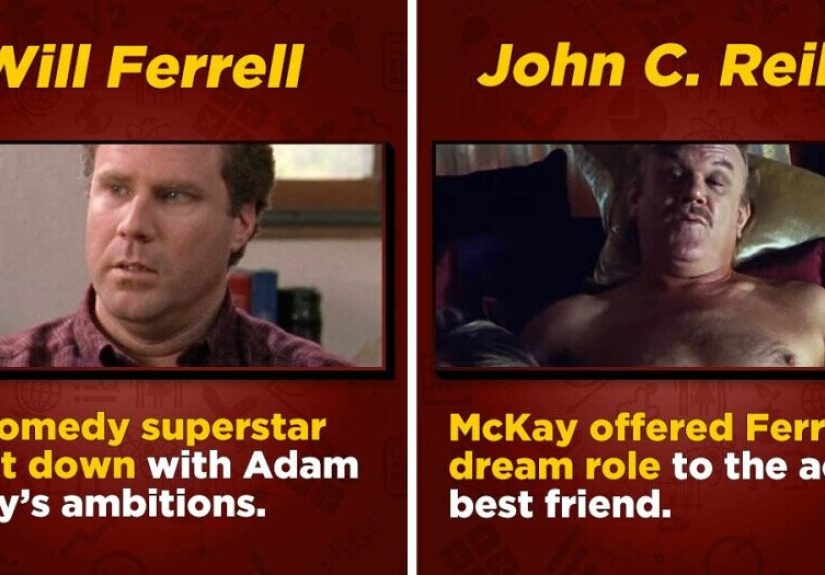
As the story has been reported, Ferrell wanted to play the role of Lakers owner Jerry Buss in a series being developed under McKay’s orbit. McKay,
aiming for a more “hyperrealistic” approach, ultimately cast John C. Reilly instead. The decision itself was one thing. The way it was handled
particularly the claim that Ferrell wasn’t told first and learned about it through Reillymade it personal.
What makes “not telling someone first” so explosive
In creative partnerships, communication isn’t just logistics. It’s respect. It’s the signal that the person still has standing in your mental
process. When someone hears about a major decision secondhandespecially one that affects them directlyit can feel like demotion.
And when the decision involves a close mutual collaborator, the emotional math gets even harder. It’s not just, “I didn’t get the role.”
It becomes, “I’m the last to know in my own circle.” Even if the choice was defensible artistically, the experience can still feel like betrayal.
From the outside, it’s tempting to reduce the situation to a meme: “Two grown men arguing over who gets to wear the vintage Lakers jacket.”
But the deeper issue is trustespecially because their partnership had operated for years on an assumption of mutual consideration.
What happened after the split
After the partnership wound down, the work didn’t stopit just reorganized. That’s often the most confusing part for fans: “If they split, why do I
still see projects connected to them?” Because a split rarely means erasing history. It means reassigning the future.
McKay moved forward with a new production setup and continued developing projects that fit his evolving interests. Ferrell continued producing and
starring in comedy-driven work, often with a team built around hands-on involvement and tighter personal creative control.
What reportedly changed most wasn’t their ability to exist in the same industry. It was the personal closenessthe casual friendship energy that
fueled their best collaborations. In other words, they didn’t just stop co-producing. They stopped being in the same creative “room,” emotionally.
What the split says about creative partnerships
1) Success amplifies small differences
When two people are building something from scratch, they make a thousand small decisions together. As success grows, those decisions become
policies, those policies become culture, and culture becomes hard to change. The tiny differences you used to laugh offhow fast you move, how you
handle conflict, how you prioritize projectsstart to matter a lot.
2) Producing is a personality test disguised as a job title
Producing can be thrilling if you love wrangling chaos into a finished product. It can also feel like death by spreadsheet if your joy comes from
writing, performing, or directing. If one partner gets energy from expanding the slate and the other gets energy from being present on set, their
calendars become a philosophical debate.
3) “It’s business” is rarely just business
Even in industries where everyone claims to be a professional, the emotional layer is always thereespecially when friendship pre-dates the money.
A casting decision can be “just casting” and still leave a bruise, because it symbolizes status, closeness, and whether you still feel seen.
Experiences: what creative breakups feel like (and why this one hits)
If you’ve ever had a work friendship that turned into a “we’re basically a package deal” partnership, this story probably feels weirdly familiar
even if your version involved a podcast, a small business, a band, a YouTube channel, or a group chat that somehow became a side hustle.
The first “experience” people tend to recognize is the slow shift from effortless collaboration to scheduled collaboration. Early on, ideas bounce
around like a pinball machine: someone says something ridiculous, the other person tops it, and suddenly you’ve got a bit. Then success arrives and
the “bit” needs approvals, budgets, and a timeline. You start hearing yourself say things like, “Let’s put it in the doc,” and you don’t even know
when you became a person who says, “Let’s put it in the doc.”
Another familiar experience is realizing you and your partner have developed different definitions of “winning.” One person sees the goal as
expanding influencemore projects, broader impact, a bigger footprint. The other sees the goal as protecting the joyfewer projects, better
involvement, less “producing for producing’s sake.” Neither person is wrong. But the day you notice you’re pulling toward different finish lines
is the day the relationship starts demanding negotiation instead of trust.
Then there’s the most painful experience: finding out important information secondhand. In a healthy partnership, the default is, “We tell each
other first.” Not because it’s policy, but because it’s instinct. When that instinct breakswhen someone makes a major decision and you hear it
from a third partyit can feel like your membership card got revoked. People often describe the sensation as less like anger and more like
embarrassment: “Wait… everyone knew before I did?” That kind of moment doesn’t just change one project. It changes how you interpret every
unanswered email before it.
There’s also the experience of watching “work tension” spill into “real life tension,” even when both people swear it won’t. Creative partners
often promise themselves they’ll keep friendship separate. But the brain doesn’t separate them cleanly. If your friend is also your partner, then
every professional disagreement carries an unspoken question: “Do you still like me?” Even when no one says it out loud, the question is there,
hovering in the room like an awkward extra.
And finally, there’s the experience that fans feelthe strange grief of realizing a beloved duo was held together by real human effort, not magic.
When a partnership ends, audiences tend to respond like they’re losing a shared language. Those movies, those sketches, those collaborations were
a kind of shorthand: you could quote a line and instantly find “your people.” The breakup doesn’t erase the work, but it changes how you watch it.
Some fans feel nostalgic; others feel protective; some get weirdly mad at a story they weren’t actually in. (Humans are complicated. Also, we love
our comfort comedies the way other people love their sports teams.)
The most relatable part of this specific split is that it seems to combine two classic breakup ingredients: a long, gradual drift… and one
crystallizing moment that made the drift impossible to ignore. That’s how many real-world partnerships end, too. Not with a single explosion, but
with a series of small “we’ll talk later” momentsuntil the day later arrives wearing a name tag and holding a casting announcement.
If there’s any comfort for fans (and for anyone who’s navigated a partnership ending), it’s this: creative work doesn’t vanish when a team
separates. The best collaborations keep their shape in culture. You can still laugh. You can still quote. You can still admire what two people
built when their timing, trust, and taste aligned.
Conclusion
So why did Will Ferrell split with Adam McKay? Because their partnership evolved from a creative duo into a full production ecosystemand over time,
their priorities and tolerance for the producing lifestyle diverged. The split was presented publicly as amicable and practical, but later reporting
and comments suggest deeper friction: internal company tensions, different creative trajectories, and a casting decision that reportedly struck at
the heart of trust.
In a way, it’s the most Hollywood story possible: two people tried very hard not to become a cliché…and then got steamrolled by the cliché anyway.
But it’s also just a very human storyabout how communication, respect, and timing can matter as much as talent when you build something together.