Table of Contents >> Show >> Hide
- Valuations Still Matter, Just Not on Your Preferred Schedule
- Why Bear Markets Break the Simple Valuation Story
- 1. The Discount Rate Suddenly Matters More Than the Spreadsheet
- 2. Earnings Estimates Are Often Way Too Optimistic at the Start
- 3. Liquidity Becomes a Bigger Driver Than Fair Value
- 4. Sentiment Can Stay Irrational for Longer Than Patience Can Stay Employed
- 5. Headline Market Valuation Can Hide Enormous Internal Damage
- When “Cheap” Turns Into a Value Trap
- What Actually Matters More in a Bear Market
- So Should Investors Ignore Valuations Entirely?
- The Smarter Bear-Market Mindset
- Experience From the Trenches: What This Feels Like in Real Life
- Conclusion
Investors love valuations for one very sensible reason: they make the stock market feel less like a casino and more like math class. Price-to-earnings ratios, price-to-sales multiples, discounted cash flow models, cyclically adjusted earnings, and all the other valuation tools promise a neat answer to a messy question: What is this thing actually worth?
Then a bear market arrives, flips the table, and reminds everyone that the market is a voting machine in the short run, a weighing machine in the long run, and occasionally a raccoon in a dumpster when panic really gets going.
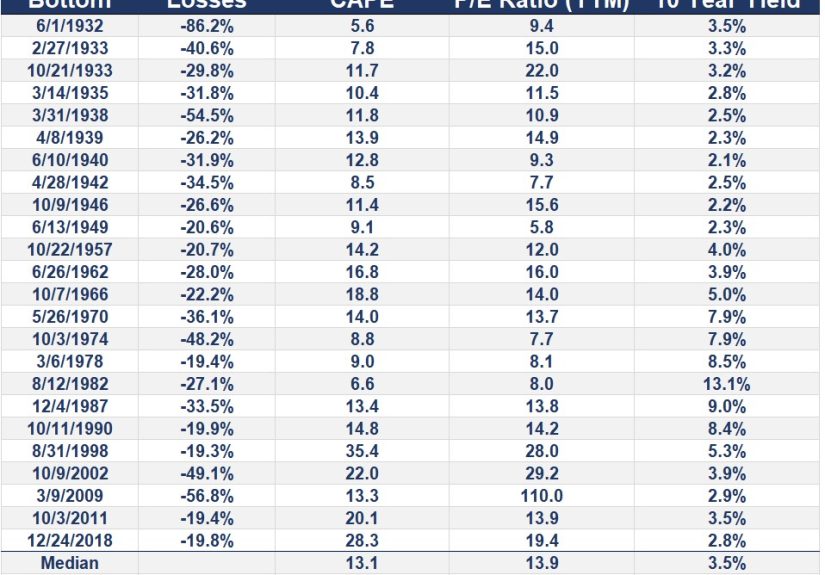
That is why valuations do not always matter in a bear market, at least not in the way investors hope. A stock can look cheap and still fall another 20%. A sector can trade below historical averages and still get crushed. A whole market can seem “fairly valued” on Monday and look wildly overpriced by Thursday if earnings expectations collapse, financing dries up, or investors suddenly decide they hate risk with the passion of a person who just opened an old leftovers container.
This does not mean valuation is useless. It means valuation is only one part of the puzzle. In bear markets, the forces that move prices are often bigger, faster, and meaner than a simple multiple. Risk premiums rise. Earnings estimates drop. Liquidity gets thin. Forced selling begins. Fear takes the wheel. And while valuations still influence long-term returns, they do not always protect investors from short-term pain.
So let’s talk about why valuations can lose their power in a bear market, what that means for investors, and how to think more clearly when everyone else is acting like the building is on fire.
Valuations Still Matter, Just Not on Your Preferred Schedule
Before we roast valuations too hard, let’s be fair. Valuation absolutely matters over time. If you buy assets when prices are high relative to earnings, cash flow, or book value, your future returns are usually more constrained. If you buy them when they are cheaper, your long-term odds improve. That much is finance’s version of vegetables being good for you: not glamorous, but generally true.
The catch is timing. Valuation tends to be more useful over a long horizon than over the next quarter or even the next year. A stock can remain overvalued far longer than skeptics expect. It can also become undervalued and stay that way while the market continues punishing it. In other words, valuation is better at whispering about the next decade than shouting about next Tuesday.
That gap between long-term usefulness and short-term helplessness is where investors get into trouble. They assume a low multiple means a near-term bottom. They treat “cheap” as if it were a hard floor. In a bear market, it rarely is.
Why Bear Markets Break the Simple Valuation Story
1. The Discount Rate Suddenly Matters More Than the Spreadsheet
A valuation model is not just about future cash flows. It is also about how aggressively those cash flows are discounted back to the present. In a bear market, investors usually demand a higher return for taking risk. That means the discount rate rises. When that happens, the present value of future earnings falls, sometimes sharply.
This is especially brutal for companies whose value depends heavily on profits expected far in the future. Growth stocks often learn this lesson the hard way. When money is cheap and optimism is high, distant profits look glamorous. When rates rise and fear spreads, those same profits suddenly look like vague promises from a friend who still owes you lunch money.
That is why seemingly reasonable valuations can keep compressing during a downturn. The market is not merely adjusting for weaker business conditions. It is repricing risk itself.
2. Earnings Estimates Are Often Way Too Optimistic at the Start
One of the biggest problems with valuation in a bear market is that the “E” in P/E is often on shaky ground. Investors may think a stock is cheap because it trades at 12 times earnings. But what if earnings are about to fall 30%? Suddenly that “cheap” stock is not trading at 12 times earnings anymore. It is trading at a multiple based on stale assumptions, outdated guidance, and last quarter’s optimism.
This happens all the time in economic slowdowns. Analysts cut forecasts. Management teams guide lower. Margins shrink. Credit losses rise. Consumers pull back. Inventories build. All the fun stuff arrives at once. By the time the market has fully digested those changes, yesterday’s bargain can look like today’s trap.
That is one reason bear markets are full of stocks that looked statistically cheap right before they got even cheaper. The valuation was not necessarily wrong. The earnings base was.
3. Liquidity Becomes a Bigger Driver Than Fair Value
In calm markets, investors like to talk about intrinsic value. In stressed markets, they start asking who is selling, who is borrowing, who needs cash, and where the bids went. That shift matters.
Bear markets often create forced sellers. Hedge funds face redemptions. Institutions rebalance. leveraged investors get margin calls. Companies facing tighter financial conditions issue warnings or raise capital on ugly terms. Households panic and sell what they can, not necessarily what they should. When this happens, prices can move well below any reasonable estimate of fair value simply because liquidity matters more than elegance.
This is why some of the best businesses in the world can still get dragged down during broad selloffs. Correlations rise. Everything gets sold. The market is no longer carefully comparing one company’s merits against another’s. It is doing triage.
4. Sentiment Can Stay Irrational for Longer Than Patience Can Stay Employed
Valuation assumes that, eventually, the market will care about business fundamentals. In a bear market, that “eventually” can feel like a geological era.
Investor psychology is powerful when losses pile up. Fear of further downside can overwhelm a good valuation case. People stop asking what a company is worth and start asking how much lower the stock can go if tomorrow’s CPI, payrolls, Fed meeting, credit event, geopolitical shock, or mystery headline goes sideways. Momentum, positioning, and sentiment take over.
This is also why bear-market rallies are so tricky. A stock may bounce hard because sentiment got too negative, not because valuation has suddenly become compelling. Then it can roll over again when macro fears return. Investors who mistake every sharp bounce for a fundamental bottom often get whipsawed like a cartoon cowboy hanging onto a mechanical bull.
5. Headline Market Valuation Can Hide Enormous Internal Damage
Another reason valuations do not always matter in a bear market is that index-level numbers can be deceiving. A cap-weighted index may look expensive, cheap, or roughly fair while masking huge differences underneath the surface. A handful of giant companies can prop up the benchmark while the average stock is already deep in drawdown territory. Or the opposite can happen: a market may look statistically cheaper because certain high-multiple names have cracked, while many cyclical businesses are still vulnerable to earnings downgrades.
In plain English, the market’s average valuation may tell you less than you think when leadership is narrow, concentration is high, and sector behavior is wildly uneven. Bear markets are messy that way. They do not distribute pain evenly, and they certainly do not hand out neat valuation labels.
When “Cheap” Turns Into a Value Trap
Bear markets are famous for producing value traps, which are stocks that look cheap for understandable reasons and then become even cheaper for even more understandable reasons.
Think about banks during the 2008 financial crisis. Many appeared inexpensive on trailing earnings or book value before the full extent of credit losses, write-downs, capital stress, and funding problems became obvious. The multiple looked low, but the balance-sheet risk was enormous. What looked like value was really unresolved danger wearing a discount sticker.
The same logic applies in other downturns. Energy stocks can look cheap before demand weakens further. Retailers can look cheap before inventories and margins implode. Highly leveraged companies can look cheap right before refinancing risk becomes the main event. In each case, valuation is not irrelevant. It is just incomplete.
The market is asking a more urgent question than “What is the normal multiple here?” It is asking, “Will the business survive this period intact, and if it does, what will normalized earnings even look like?” That is a much harder question, and it is one that a low P/E ratio cannot answer by itself.
What Actually Matters More in a Bear Market
Balance-Sheet Strength
Cash, manageable debt, refinancing flexibility, and durable free cash flow matter enormously in downturns. A strong balance sheet buys time, and time is precious when the market is repricing everything.
Earnings Resilience
Not all earnings are created equal. Companies with recurring revenue, pricing power, essential products, and disciplined cost structures usually hold up better than businesses dependent on easy credit, discretionary demand, or heroic growth assumptions.
Liquidity and Market Structure
In a stress event, the path of prices depends not only on valuation but on trading conditions, positioning, and who needs to raise cash. That is why volatility can feel detached from fundamentals, at least temporarily.
Time Horizon
If your horizon is six months, valuation may not save you. If your horizon is 10 years, starting valuation becomes much more relevant. A bear market punishes investors who confuse those two horizons.
So Should Investors Ignore Valuations Entirely?
No. That would be like hearing “seat belts do not prevent all accidents” and deciding to drive into a lake.
Valuations still matter because they shape future return potential. They help investors avoid paying absurd prices for exciting stories. They help compare one asset class with another. They can identify pockets of opportunity when panic becomes indiscriminate. And they are especially useful when paired with other clues: balance-sheet quality, earnings durability, macro context, and market breadth.
What investors should avoid is treating valuation as a magic timing tool. Cheap does not mean safe. Expensive does not mean imminent collapse. In a bear market, fundamentals, psychology, and liquidity interact in ugly ways. The better question is not “Is this stock cheap?” but “Cheap relative to what, based on which earnings, under what financial conditions, and with what risk premium?”
That question is less fun at parties, but it is far more useful.
The Smarter Bear-Market Mindset
If there is one lesson investors learn repeatedly, it is that bear markets are less about elegant theory and more about emotional survival. They test process. They punish overconfidence. They expose weak balance sheets, weak narratives, weak risk controls, and weak stomachs.
Valuation belongs in that process, but it should not dominate it. In a bear market, investors are usually better served by thinking in layers. Start with the macro backdrop. Check the direction of earnings revisions. Study debt and liquidity. Ask whether the business can absorb a longer downturn. Then consider valuation as part of the total picture.
Because when fear is spreading, the market does not reward “cheap” on principle. It rewards resilience, patience, and eventually, after all the drama burns off, the ability to distinguish between temporary markdowns and permanent damage.
That is the real reason valuations do not always matter in a bear market. They matter, just not immediately, not cleanly, and not enough to overpower every other force at work. And investors who understand that are less likely to confuse a low multiple with a low-risk opportunity.
Experience From the Trenches: What This Feels Like in Real Life
For many investors, the lived experience of a bear market is not a tidy chart or a clever valuation debate. It is more personal than that. It starts with a portfolio that looked perfectly sensible a few months ago and now feels like it was assembled by a raccoon with Wi-Fi.
At first, the drop seems manageable. People say things like, “Stocks are just correcting,” or “Now they’re finally back to fair value.” That stage still feels intellectual. Investors compare today’s multiples with five-year averages, talk about buying the dip, and reassure themselves that the market is becoming rational again.
Then the second wave hits. Earnings estimates come down. News flow gets worse. A company that looked cheap at 15 times earnings now looks less appealing because those earnings were apparently built on dreams, caffeine, and a very forgiving economic backdrop. Investors begin to realize they were not buying a bargain. They were buying a number that belonged to a different world.
This is usually the point where conviction gets tested. People who bragged about being long-term investors suddenly develop a deep spiritual interest in cash. Every rally looks like the bottom until it isn’t. Every down day feels like a fresh indictment of one’s intelligence. It becomes emotionally exhausting because the market is no longer just falling. It is arguing with you.
There is also a strange social pressure during bear markets. Someone is always declaring that valuations are screamingly attractive. Someone else is predicting an economic apocalypse before lunch. Financial television turns into a split-screen therapy session. Your smartest friend sends you a chart proving stocks are historically cheap. Your other smartest friend sends you a different chart proving they are still wildly overvalued. Both sound convincing. Neither helps you sleep.
And yet, this is where investors learn the most. They learn that a good business can still have a bad stock for a while. They learn that price and value can drift apart longer than expected. They learn that buying quality too early feels almost identical to being wrong. Most of all, they learn that valuation is a tool, not a shield.
The investors who come out of bear markets in one piece are rarely the ones who made the boldest prediction. They are usually the ones who stayed disciplined, sized risk intelligently, kept some humility, and understood that surviving the storm matters more than looking clever in the middle of it. That experience is not glamorous, but it is the kind that builds better judgment. And in the long run, judgment matters more than having the cutest spreadsheet on earth.
Conclusion
Bear markets have a nasty habit of making valuation look either useless or all-powerful, depending on which day you ask. The truth sits somewhere in the middle. Valuation remains essential for estimating long-run opportunity, but it often fails as a short-term map when fear, liquidity, earnings resets, and higher risk premiums dominate the landscape.
That is why investors should treat valuation as a compass, not a stopwatch. It can point toward better opportunities over time, but it cannot guarantee when sentiment will bottom, when earnings will stabilize, or when the market will stop acting like it found a new way to panic.
In a bear market, the winners are not always the people who spot the lowest multiple first. They are often the people who understand what kind of cheap they are looking at, how much downside the balance sheet can endure, and whether the business still deserves patience once the easy assumptions disappear.
Valuations matter. They just do not always get the final word when the bear is in the room.