Table of Contents >> Show >> Hide
- What Google Autocomplete Is (and What It Definitely Isn’t)
- The “Why Is Japan So…” Starter Pack (Your Results May Vary)
- Why Is Japan So Clean?
- Why Is Japan So Safe?
- Why Are People in Japan So Polite?
- Why Is Japan So Advanced?
- Why Is Japan So Crowded (and Also Somehow Full of Quiet Corners)?
- Why Is Japan So “Weird” (or Just… Different)?
- How to Use “Why Is Japan So…” Without Accidentally Becoming a Stereotype
- of Experiences: A Little Field Guide to Living Inside the Autocomplete Rabbit Hole
- Conclusion
Generated with GPT-5.2 Thinking
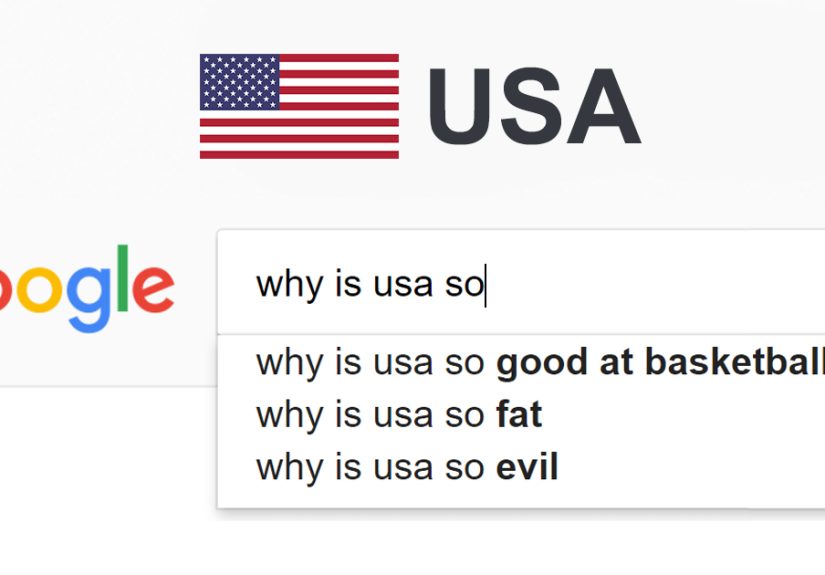
If you’ve ever started typing “Why is Japan so…” into Google, you’ve seen it: a little dropdown of half-finished thoughts, stereotypes-in-progress, and questions that sound like they were written by a curious tourist, a nervous parent, and a sleep-deprived college student… all at once. Google Autocomplete isn’t a philosopher. It’s more like the world’s most chaotic group chat, politely offering you the “most likely” next words.
But those suggestions are still usefulbecause they’re a snapshot of what people wonder about. Sometimes the questions are flattering (“Why is Japan so clean?”). Sometimes they’re blunt (“Why is Japan so weird?”). And sometimes they’re basically a travel itinerary disguised as a sentence (“Why is Japan so crowded?”).
This article is a guided tour through the big themes that pop up when people ask “Why is Japan so…,” plus the real-world context behind them. We’ll also talk about what Autocomplete is actually doing (spoiler: it’s not judging you… probably), and how to use it as a jumping-off point instead of a final verdict on a whole country.
What Google Autocomplete Is (and What It Definitely Isn’t)
Google Autocompletealso called “autocomplete predictions”tries to finish your search as you type. The goal is simple: save time and help you discover useful queries you might have meant to type anyway.
It’s built from real searches, not a committee of tiny librarians
Autocomplete predictions are generated by automated systems that look at common and trending searches that match what you’ve started typing. The suggestions can shift based on things like current trends, your language, and where you’re searching from. In other words: your dropdown is a “best guess,” not a universal truth carved into the internet’s stone tablet.
It’s filtered, moderated, and sometimes messy
Google also has policies for what shouldn’t appear in predictions (for example, certain harmful, unsafe, or policy-violating content). People can report problematic predictions, and some suggestions may be removed or change over time. Translation: if you see a suggestion that makes you go, “Yikes,” you’re not wrong to side-eye itAutocomplete reflects human behavior, and humans are… a work in progress.
The “Why Is Japan So…” Starter Pack (Your Results May Vary)
Depending on your location and what’s trending, you’ll often see variations of questions like:
- Why is Japan so clean?
- Why is Japan so safe?
- Why are people in Japan so polite?
- Why is Japan so advanced?
- Why is Japan so crowded?
- Why is Japan so strict?
- Why is Japan so different? (sometimes phrased less diplomatically)
- Why is Japan so old? (meaning: aging population)
Notice what’s happening here: these questions aren’t really about “Japan” as a single thing. They’re about systemspublic behavior, urban design, safety, education, demographics, technology, and social norms. Let’s unpack the most common themes with a little more nuance and a lot less dramatic background music.
Why Is Japan So Clean?
“Clean” is one of the most common adjectives people attach to Japanespecially travelers who come home feeling like they’ve been personally roasted by a spotless train station.
Cleanliness is taught as a daily habit, not just a weekend chore
One often-cited example is school routines. In many Japanese schools, students participate in cleaning as part of daily life at schoolsweeping, wiping, and keeping shared spaces orderly. The point isn’t “free labor”; it’s a lesson in shared responsibility: the classroom belongs to everyone, so everyone helps maintain it.
This idea shows up in adult life, too. In workplaces and public spaces, the expectation is often that you leave things the way you found themor better. It’s not that nobody ever litters; it’s that the social norm leans hard toward “don’t be the reason other people have a bad day.”
Hygiene customs reinforce the mindset
Cultural routines can also shape how people think about “clean” versus “not clean.” For example, traditional bathing culture emphasizes washing thoroughly before entering a shared bath (like an onsen). That’s a small rule with a big message: your choices affect other people, so you show respect through cleanliness.
But “clean” doesn’t mean “perfect” (and it’s not magic)
Japan still deals with waste management challenges, tourism pressure, and differences between neighborhoods and regions. Also, “clean streets” can be the result of many things working togetherpublic rules, social expectations, infrastructure, and habit. Autocomplete likes one-word answers. Reality usually needs a paragraph and a deep breath.
Why Is Japan So Safe?
People also ask about safetyand for good reason. The U.S. State Department’s travel guidance has long noted that crime against U.S. citizens in Japan is generally low, with most incidents involving disputes, petty theft, or vandalism rather than the kinds of violent crime travelers worry about most.
Multiple factors can lower crimeJapan checks several boxes
Researchers and policy analyses point to a mix of influences:
- Policing and justice systems: Some U.S.-government-hosted research highlights a highly organized police system, effective courts, and strong public cooperation as potential contributors to low crime.
- Strict gun control: Access to firearms is far more limited than in the United States, which changes the “ceiling” of what street violence often looks like.
- Social cohesion and norms: A strong emphasis on order, reputation, and not disrupting the group can reduce certain kinds of everyday crime.
- Economic and demographic context: Some U.S. think-tank commentary notes factors like lower inequality (compared with the U.S.) and demographic patterns as part of the crime story.
Safety can come with trade-offsand it’s worth saying out loud
Autocomplete’s version of the story is “Japan = safe.” The longer version includes debates about policing practices, social pressure, and how justice systems handle investigations. A country can have low crime and still have serious conversations about fairness, accountability, and civil liberties. “Safe” is not a coupon code that makes every other issue disappear.
Why Are People in Japan So Polite?
Many visitors notice the everyday manners: orderly lines, quiet trains, careful service, and a general sense that strangers aren’t trying to speedrun chaos in public.
Politeness is often a form of social engineering (in the nicest way)
In Japan, social harmony is widely valued. That can translate into indirect communication, formal etiquette in certain contexts, and a careful approach to not inconveniencing others. Think of it less as “everyone is naturally polite 24/7” and more as: the culture rewards people who keep the social gears from grinding.
Polite doesn’t always mean warmand that’s okay
Here’s where travelers sometimes get confused: politeness can look like emotional distance if you’re from a culture that equates friendliness with openness. A cashier can be extremely courteous without wanting to become your best friend. (Honestly, some of us should adopt this boundary.)
Also, Japan is not a monolith. Big cities, rural areas, tourist zones, and different generations can feel noticeably different. Autocomplete can’t fit that into a dropdown, but you can hold both truths at once: “many public interactions are very polite” and “people are still people.”
Why Is Japan So Advanced?
“Advanced” is a slippery word. Sometimes people mean technologyfast trains, robotics, electronic payment systems, and industrial manufacturing. Sometimes they mean systemspunctual transit, efficient logistics, and organized public spaces. And sometimes they just mean: “The toilet did what?”
Automation is partly a response to demographics
Japan has a rapidly aging society and a shrinking labor force. That creates strong incentives to automateespecially in manufacturing, logistics, and even aspects of caregiving. U.S. Department of Commerce resources note that Japanese companies have focused on installing automation and advanced technology in part to address a shrinking workforce.
Those same U.S. government market briefs highlight Japan’s major presence in industrial roboticsboth as a market and as a source of global manufacturing capacity. So, yes: Japan’s “robot reputation” isn’t just anime aesthetics. There are real industrial and economic drivers behind it.
Japan is investing heavily in key tech sectors
Another example: semiconductors. U.S. government commercial guides describe Japan’s funding and industrial strategy around semiconductors, reflecting a broader push to strengthen critical technologies and supply chains. Add long-standing engineering strengths and a globally integrated economy, and you get a country that’s continuously rebuilding its “advanced” edgeeven while managing serious domestic challenges.
Advanced systems still have friction
Japan also struggles with slow-to-change bureaucracy, uneven digital modernization in some sectors, and the hard math of an aging population. “Advanced” can mean “excellent at some things” and “working on others.” That’s not a contradiction. That’s adulthood.
Why Is Japan So Crowded (and Also Somehow Full of Quiet Corners)?
If your mental image of Japan is “Shibuya Crossing at rush hour,” the “crowded” question makes sense. But there’s a twist: Japan is both highly urban and dramatically aging and shrinking in many areas.
Urban concentration is the headline
Major metropolitan regionsespecially Greater Tokyoconcentrate jobs, universities, and services. U.S. policy and research organizations that study aging and urban development often point out that Japan’s demographic challenges are especially acute, with a high share of older adults and complex patterns of urban concentration.
Rural areas can be the opposite of crowded
Outside the big hubs, many towns face depopulation, school closures, and fewer services. That’s why “Japan is crowded” and “Japan is emptying out” can both be truedepending on the map you’re holding.
Why Is Japan So “Weird” (or Just… Different)?
Let’s translate this Autocomplete question into something more honest: “Why does Japan feel so unfamiliar compared to what I’m used to?”
Culture shock often happens when a country is both highly modern and deeply shaped by its own history. Japan has global pop culture exports (games, fashion, animation, design) and local social rules (quiet trains, shoe removal, gift-giving norms, formality in certain settings). When those collide with a visitor’s expectations, the brain reaches for the quickest label it has. Autocomplete loves quick labels.
A better approach is curiosity: instead of “weird,” ask “what purpose does this serve?” Quiet trains reduce friction in dense cities. Formality can make interactions smoother when you’re dealing with millions of strangers. And some things are simply preferencesno deeper meaning required. (Sometimes a dessert is just a dessert.)
How to Use “Why Is Japan So…” Without Accidentally Becoming a Stereotype
1) Treat Autocomplete like a brainstorming tool, not a conclusion
Autocomplete is a list of popular curiosities. It’s not a peer-reviewed summary of Japanese society.
2) Verify the “why” with real sources
If a suggestion points to a real patternlike low crime, aging demographics, or heavy investment in roboticslook for data, policy analysis, and reputable reporting before you repeat it as fact.
3) Replace absolutes with specifics
Instead of “Japan is clean,” try “many public spaces in major Japanese cities are notably well maintained, and school/workplace norms can reinforce shared responsibility.” It’s less punchy, yes. It’s also more accurateand accuracy ages better than hot takes.
4) Remember: “Japan” contains multitudes
Tokyo isn’t the whole country. Tourists don’t see everything locals see. And what feels “normal” depends on your baseline.
of Experiences: A Little Field Guide to Living Inside the Autocomplete Rabbit Hole
Imagine you’re planning a tripor just procrastinating like a championand you type “Why is Japan so…” into Google. The dropdown appears like a fortune-teller with Wi-Fi: clean, safe, polite, advanced, crowded. You click one, then another, and suddenly your browser has seventeen tabs open, each tab loudly insisting it has the single correct explanation for an entire nation. Congratulations: you’ve entered the Autocomplete Maze.
The funniest part is how fast those searches become real-life checklists. “Clean?” You start noticing details: how often people tidy up after themselves, how carefully shared spaces are treated, how a small act (like not talking loudly on a train) can make a packed city feel calmer. Even if you’re not in Japan, the idea sticksbecause it’s practical. It makes you wonder what would happen if your own community treated public spaces like a shared living room instead of a rental car you don’t plan to return.
“Safe?” That one shows up in behavior. You’ll hear travelers describe the confidence of walking at night without the constant shoulder-checking that many people instinctively do elsewhere. You also notice how “safety” is more than crime statsit’s lighting, transit reliability, clear rules, and the sense that public life is predictable. Predictability isn’t glamorous, but it’s comforting. It’s also the kind of thing you miss immediately when it’s gone.
“Polite?” Here’s where experience gets nuanced. Politeness often feels like a smooth surface: lines move, service is organized, people avoid creating public drama. But you may also notice that politeness doesn’t automatically equal intimacy. In some places, friendliness means chatty warmth; in others, it means making sure you never have to guess what to do next. Both are forms of kindnessjust different dialects of it.
“Advanced?” You experience it as design decisions: systems that anticipate crowds, signage that reduces confusion, technology used to remove friction from everyday life. Yet, the deeper experience is realizing that “advanced” can be driven by necessitylike an aging society needing automation and smarter infrastructure. The cool gadgets aren’t just cool; they’re solutions to real constraints.
And then there’s the last Autocomplete trap: “Why is Japan so different?” That’s the one that teaches humility. Because once you’ve used a few “different” systemswhether that’s transit etiquette, bathing norms, or the quiet choreography of shared spaceyou start to see your own habits the same way: as culture, not default reality. Autocomplete begins as curiosity about Japan. If you let it, it ends as curiosity about you.
Conclusion
Google Autocomplete can make it seem like the world is asking one giant question: “Why is Japan so…?” But the better question is: “What patterns are people noticing, and what systems or histories might explain them?”
When you move beyond the dropdown, you find a more interesting story: cleanliness tied to shared responsibility, safety shaped by law and social norms, politeness as a tool for harmony, “advanced” technology as both strength and strategy, and “crowded” cities living alongside quiet regions shaped by demographic change. Autocomplete gives you the headline. Real understanding comes from reading the articleand then, ideally, talking to humans.