Table of Contents >> Show >> Hide
- What a “Wall Mount Basin” Actually Means (and Why It’s Not Just a Trend)
- Why a Whitehaus Wall Mount Basin Stands Out
- Key Features You’ll See Across Whitehaus Wall-Mounted Basins
- Popular Whitehaus Wall Mount Basin Styles (and Where They Work Best)
- How to Choose the Right Whitehaus Wall Mount Basin
- Installation Notes: What Makes Wall-Mount Sinks Different
- Design Tips: Make Your Whitehaus Wall Mount Basin Look Intentional
- Care and Cleaning: Keep the Gloss Without the Stress
- FAQ: Whitehaus Wall Mount Basin Shopping Questions, Answered
- Conclusion: Is a Whitehaus Wall Mount Basin Worth It?
- Real-World Experiences with a Whitehaus Wall Mount Basin (What People Notice After the “New Sink Glow”)
If your bathroom feels like it’s playing a constant game of “don’t bump your hip on the vanity,” a wall-mount basin is basically the cheat code.
And if you’ve been browsing Whitehaus wall mount basin options, you’re in good companydesigners love them for their clean lines,
and homeowners love them because they make tiny bathrooms feel like they took a deep, relaxing breath.
This guide breaks down what a Whitehaus wall-hung basin really offers, how to choose the right size and faucet setup,
what to watch for during installation, and how to keep it looking sharp without turning cleaning day into an Olympic event.
What a “Wall Mount Basin” Actually Means (and Why It’s Not Just a Trend)
A wall-mount basin (also called a wall mounted bathroom sink or wall hung basin) is supported by the wall instead of
sitting on a vanity cabinet or pedestal. That does two magical things:
- Frees up floor space so the room feels bigger and is easier to mop (your future self says thank you).
- Creates a lighter, modern lookeven in traditional bathroomsbecause the sink isn’t visually “anchored” by a bulky base.
The trade-off? Wall-mount sinks demand real structural support. This isn’t the time for “I watched two videos and now I’m basically a contractor.”
(You can be a contractor. Just… a careful one.)
Why a Whitehaus Wall Mount Basin Stands Out
Whitehaus Collection is best known for classic-meets-clean styling and durable materialsespecially in their bathroom basins that often
feature glossy, easy-to-clean surfaces and thoughtfully designed shapes. In plain terms: they’re made to look good in real bathrooms,
not just in showroom lighting where everything looks like it has a personal glam squad.
Whitehaus wall-mount basins commonly appear in:
- Compact sizes for powder rooms and tight layouts
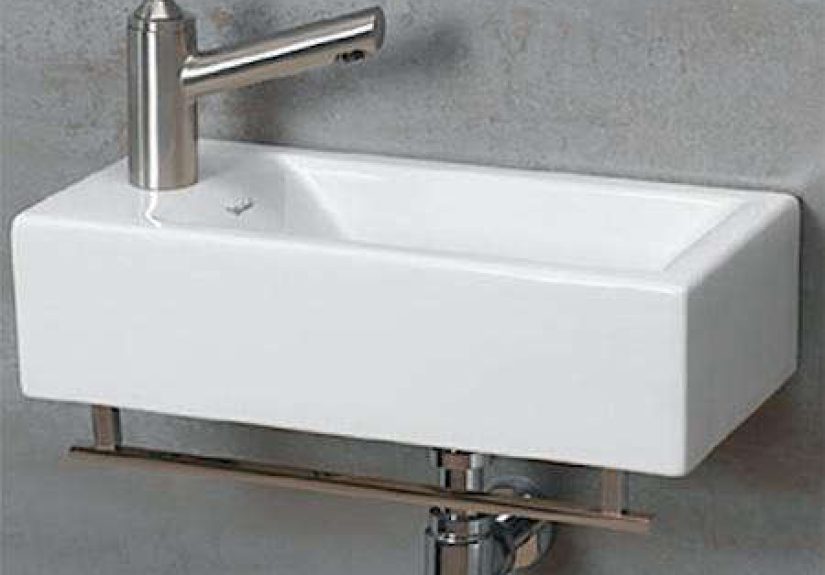
- Rectangular wall-hung basins with flexible faucet hole configurations
- Console-style wall mounts (traditional silhouettes with shelf/leg-support vibes)
- Corner wall-mount basins for ultra-efficient layouts
Key Features You’ll See Across Whitehaus Wall-Mounted Basins
1) Vitreous China That’s Built for Daily Life
Many Whitehaus wall-mount sinks are made from vitreous chinaa fired ceramic with a glass-like glaze.
Translation: it’s smooth, glossy, stain-resistant, and doesn’t cling to grime the way rougher finishes can.
If you’ve ever had to scrub a sink that somehow “absorbed” toothpaste, you’ll appreciate this.
2) Faucet Hole Options (Because Bathrooms Aren’t One-Size-Fits-All)
One of the most practical perks in the Whitehaus wall mount basin lineup is that many models come in different drilling options:
single-hole (for single-handle faucets) or widespread (typically 8″ centers).
Some designs are also intended for wall-mounted faucets, which can save counter space and make cleanup easier.
3) Overflow vs. No Overflow
Whitehaus offers both, depending on the model. An overflow can help prevent accidental flooding if someone leaves the water running.
A no-overflow basin often has a cleaner look and simpler lines, but you’ll want a drain setup that matches that design
(and you’ll want to be extra sure your household isn’t auditioning for a “How Wet Can This Get?” reality show).
4) Drain Placement and Backsplashes
You’ll see center drains and rear-center drains in the mix, plus certain basins with a low-rise backsplash.
These details affect both the look and the plumbing planespecially if you’re replacing an older sink and trying to reuse existing rough-in locations.
5) Mounting Hardware (Yes, It Matters)
Many wall-mount basins include mounting hardware, but your wall still needs proper reinforcement and alignment.
Hardware can’t compensate for drywall that’s doing its best impression of a potato chip.
Popular Whitehaus Wall Mount Basin Styles (and Where They Work Best)
Compact Basins for Powder Rooms and Guest Baths
The small wall-mount basin category is where Whitehaus shines for tight spacesthink narrow depths, tidy profiles, and layouts that keep walkways open.
These are ideal when you want a functional sink without sacrificing the room’s ability to contain an actual human being.
Look for models with compact overall dimensions, a center drain, and the faucet drilling that matches your plan (deck-mounted or wall-mounted faucet).
Rectangular Wall-Hung Basins for Everyday Bathrooms
If you want a more substantial feel (more “main bath” than “guest closet with a sink”), Whitehaus offers rectangular wall mount basins in multiple widths.
Many include an overflow and give you a choice between single-hole or widespread faucet drilling.
These are great for shared bathrooms where the sink gets daily use and you want enough room for soap, a toothbrush cup, andlet’s be honestrandom stuff.
Traditional Console-Style Wall Mount Basins
Love a classic look but still want the “floating” feel? Console-style wall mounts can give you that elegant, traditional silhouette
often with shelf supports or design elements that nod to old-school console sinks.
This style works beautifully in vintage-inspired bathrooms, transitional remodels, and homes where chrome-and-marble is basically a personality trait.
Corner Wall-Mount Basins for Maximum Space Efficiency
Corner basins are the unsung heroes of awkward layouts. If your powder room is shaped like a slice of pizza, a corner wall-mount basin can be the difference
between “charming” and “why did we do this to ourselves.”
Corner options often support single-hole or widespread faucet configurations, so you can still pick hardware that matches your aesthetic.
How to Choose the Right Whitehaus Wall Mount Basin
Step 1: Measure Like You Mean It
Measure width and depth, but also consider how the sink will feel in the room. Wall-mounted basins can make a space look bigger,
but an oversized basin in a tiny powder room can still feel like parking an SUV in a studio apartment.
Step 2: Decide on Your Faucet Strategy
- Single-hole faucet: streamlined, modern, and easy to use.
- Widespread faucet: more traditional, with separate handles and a classic look.
- Wall-mounted faucet: frees up sink deck space and can make cleaning easierjust plan plumbing behind the wall.
Step 3: Overflow or No Overflow?
If kids use the sink, or if your household has a history of leaving faucets running while “just grabbing something real quick,”
an overflow can be practical. If you love minimalist lines and you’re confident in your water discipline, no-overflow styles look sleek.
Step 4: Think About Accessibility and Clearance
Wall-mount sinks are commonly used in accessible designs because they can provide open space below for knee and toe clearance.
If accessibility is a goal, pay attention to mounting height, clearance requirements, and protecting exposed pipes
(covers or insulation can prevent contact with hot surfaces).
Installation Notes: What Makes Wall-Mount Sinks Different
A wall-mounted sink installation is all about support and alignment. The basin must be anchored properlyideally into studs
or into robust blocking installed between studs. If the studs don’t match your sink’s mounting points, you may need to open the wall.
It’s not glamorous, but it’s far better than the alternative (a sink that develops “wobble confidence issues” over time).
Quick practical checklist
- Confirm wall structure: studs, blocking, or reinforcement as needed.
- Confirm rough-in locations: drain and supply lines should align with the basin and faucet plan.
- Level matters: a slightly tilted sink will haunt you every time water pools.
- Seal smart: use appropriate sealant where the basin meets the wall to help prevent moisture intrusion.
- Know when to hire a pro: if plumbing changes are significant, a licensed plumber is worth it.
Design Tips: Make Your Whitehaus Wall Mount Basin Look Intentional
Wall-mount basins look best when the whole wall area feels considered, not accidental.
A few easy wins:
- Go bigger with the mirror to balance the visual “lightness” of the floating sink.
- Add side lighting (sconces) to reduce shadows and boost the boutique-hotel vibe.
- Use a shelf or towel bar nearby if there’s no vanity storagefunction can still be pretty.
- Choose a decorative trap or cover if plumbing will be visible (especially in powder rooms).
Care and Cleaning: Keep the Gloss Without the Stress
Vitreous china is refreshingly low-maintenance. For most households:
- Use a soft cloth or sponge with mild soap.
- Avoid harsh abrasives that can dull the finish over time.
- Rinse after using strong cleaners (especially if you have hard water).
- Check silicone/caulk lines occasionally and refresh if you see gaps.
Pro tip: If your water is mineral-heavy, a quick wipe-down after use prevents that cloudy “did my sink just age five years?” look.
FAQ: Whitehaus Wall Mount Basin Shopping Questions, Answered
Is a wall-mount basin sturdy enough for daily use?
Yeswhen installed correctly. The basin’s stability depends on proper wall reinforcement, correct anchoring, and a level install.
Wall mounts are commonly used in both residential and commercial settings for a reason.
Do I need a special drain for a no-overflow basin?
You’ll want a drain assembly compatible with a sink that has no overflow opening. Always match the drain type to the basin design
(and confirm sizing and finish).
Can I use a wall-mounted faucet with a Whitehaus wall mount basin?
Many people doespecially in compact bathrooms where counter space is precious. Just make sure your basin and faucet pairing makes sense
(spout reach, splash control, and plumbing behind the wall).
Will a wall-mount sink make a small bathroom feel bigger?
Usually, yes. The open floor space below improves sightlines and makes cleaning easier. It’s a small change that can feel like a layout upgrade.
What’s the biggest mistake people make with wall-hung basins?
Underestimating the wall support. Drywall alone is not structural supportthink studs, blocking, and proper anchors.
Conclusion: Is a Whitehaus Wall Mount Basin Worth It?
A Whitehaus wall mount basin is a strong choice when you want a cleaner visual footprint, easier floor cleaning,
and flexible design optionsfrom compact powder room basins to more substantial rectangular wall-mounted sinks.
Choose the right drilling configuration, decide whether you want an overflow, plan your plumbing, and give the wall the support it needs.
Do that, and you’ll end up with a sink that looks tailored to your spacenot like you picked it up on your way home from buying batteries.
Real-World Experiences with a Whitehaus Wall Mount Basin (What People Notice After the “New Sink Glow”)
After the install dust settles and the mirror selfies stop, the day-to-day experience is what matters. Homeowners who switch from a bulky vanity
to a wall-mounted setup often describe the same first impression: the bathroom feels more open than the square footage suggests. That “extra space”
isn’t imaginaryyour eyes can see more floor, and your feet can move more freely. In small powder rooms, that can be the difference between guests
turning around comfortably and doing the awkward “tiny bathroom shuffle” like they’re in a phone booth.
Cleaning is the other big headline. People love that you can sweep or mop under the basin without navigating vanity legs, toe-kicks, or mystery corners
where dust bunnies start paying rent. If you’ve ever tried to clean around a pedestal sink and wondered why it was designed by someone who hates elbows,
a wall-hung basin can feel like an overdue apology from the universe.
On the flip side, the lack of built-in storage is real. Some homeowners solve it with a slim wall cabinet, a floating shelf, or a towel bar with a basket.
Others embrace minimalism and discover they don’t actually need seven half-empty bottles of hand soap “in rotation.” Console-style wall mounts can bridge
the gap by giving you a more traditional presence and, in some designs, a spot to rest essentialswithout going full cabinet.
Installation experiences tend to fall into two camps: “That went smoothly” and “We learned what ‘blocking’ means today.” When the wall is properly reinforced,
the basin feels rock solid. When the wall isn’t ready, the project can expand quicklyopening drywall, adding support between studs, relocating supply lines,
and repainting. Many homeowners who hire a plumber or contractor say it was worth it for peace of mind, especially if the basin is used daily by multiple people.
Faucet choice also shapes the experience. Single-hole faucets are praised for simplicity and easy wiping around the base. Widespread setups get love for classic
style and ergonomic handle spacing, especially in traditional bathrooms. Wall-mounted faucets win points for freeing up sink deck space and making the basin look
extra cleanthough they require careful planning so the spout reach lands water in the bowl (not on your sleeve).
Finally, finishes and visibility matter. With a wall-mounted sink, plumbing can be more visible, particularly in minimalist designs. Some people choose decorative
traps or clean-looking pipe covers and end up liking the “intentional” lookalmost like a boutique hotel powder room. Others prefer to keep things visually quiet
and plan the basin height and accessories to minimize what’s in view. Either way, the consistent takeaway is this: once a wall-mount basin is installed correctly,
it tends to become one of those features people notice and complimentbecause it looks thoughtful, feels modern, and makes the room function better.