Table of Contents >> Show >> Hide
- Why Chickpeas Work So Well in Vegan Cheese Sauce
- Vegan Chickpea Cheese Sauce Ingredients
- How to Make Vegan Chickpea "Cheese" Sauce
- Flavor Variations (One Sauce, Many Personalities)
- How to Use Chickpea Cheese Sauce
- Nutrition Notes (Real Talk, Not a Lecture)
- Storage, Reheating, and Meal Prep
- FAQ: Vegan Chickpea Cheese Sauce
- Final Thoughts
- Experiences and Real-Life Ways People Actually Use This Sauce (Extra )
If you’ve ever stared into the vegan abyss of “cheese alternatives” and wondered why so many of them require
(1) a high-powered blender, (2) a second mortgage for cashews, and (3) a spiritual awakening… welcome.
This vegan chickpea “cheese” sauce is the cozy, creamy, weeknight-friendly answer. It’s savory, stretchy-ish
(depending on your starch choice), and bold enough to crash a nacho party without getting booed off the table.
Chickpeas are the secret weapon here: mild flavor, naturally creamy when blended, and sturdy enough to turn into
a sauce that clings to pasta, drizzles over broccoli, and dives confidently into a bowl of tortilla chips.
The goal isn’t to perfectly impersonate cheddar in a lineup under harsh fluorescent lighting. The goal is to make
a rich, tangy, “why is this so good?” plant-based cheese sauce that you’ll actually want to eat.
Why Chickpeas Work So Well in Vegan Cheese Sauce
Think of chickpeas as your built-in sauce thickener and bodyguard. When blended, they create a naturally creamy
base with enough starch and protein to feel substantialwithout needing heavy cream, coconut oil, or a bag of nuts.
Then we layer in “cheese vibes” using a few classic flavor tricks:
- Umami: Nutritional yeast and miso bring that savory depth you associate with aged cheese.
- Tang: Lemon juice (or vinegar) mimics the bright bite cheese has.
- Salt + spice: Salt, garlic, onion, and mustard make it taste “cheesy,” not “bean dip in disguise.”
- Texture magic: Tapioca starch adds a stretchy, melty quality; cornstarch makes it thicker and silkier.
Vegan Chickpea Cheese Sauce Ingredients
This recipe is designed to be chickpea-forward, but still flexible. Make it classic, make it spicy,
make it smokythis sauce is ready for its glow-up.
Base Ingredients
- 1 (15-ounce) can chickpeas, rinsed and drained (about 1 1/2 cups)
- 1 cup unsweetened plant milk (oat, soy, or almond work well)
- 1/2 cup nutritional yeast (the “cheesy” MVP)
- 2 tablespoons lemon juice (or 1 1/2 tablespoons apple cider vinegar)
- 1 tablespoon white miso paste (or 2 teaspoons soy sauce)
- 1 tablespoon tapioca starch (for stretchy/melty) or 1 tablespoon cornstarch (for thick/velvety)
- 1 teaspoon onion powder
- 1/2 teaspoon garlic powder
- 1/2 teaspoon smoked paprika (smoky color + depth)
- 1/2 teaspoon mustard powder (or 1 teaspoon Dijon mustard)
- 1/4 teaspoon turmeric (optional, for golden color)
- 1/2 teaspoon fine salt, plus more to taste
- Black pepper, to taste
Optional “Make It Extra” Add-Ins
- 1–2 tablespoons tahini for richness (nut-free, still fancy)
- 2–4 tablespoons pickled jalapeño brine for queso tang
- 1/4 cup chopped roasted red pepper for color and a subtle sweetness
- A pinch of cayenne if you want the sauce to have opinions
How to Make Vegan Chickpea “Cheese” Sauce
The method is simple: blend until smooth, then heat briefly to thicken and mellow
any “bean-y” notes. You’ll be done fast enough to pretend this was always the plan.
Step-by-Step Instructions
-
Rinse the chickpeas well. This helps reduce any canned flavor and keeps the sauce tasting clean.
If you’re a texture perfectionist, you can slip off some skinsbut it’s optional. -
Blend the sauce. Add chickpeas, plant milk, nutritional yeast, lemon juice, miso, starch,
spices, salt, and pepper to a blender. Blend on high until very smooththink “silky,” not “slightly gritty hummus.”
If needed, add a splash more plant milk to get things moving. -
Heat to thicken. Pour the blended mixture into a saucepan over medium heat. Whisk constantly
until it starts to bubble gently. Reduce heat and simmer 2–3 minutes, whisking, until thick and glossy.
(This step helps activate the starch and smooth the flavor.) -
Taste and tune. Add more salt for “cheese” punch, more lemon for tang, or more smoked paprika
for depth. If you want queso energy, stir in jalapeño brine or diced green chiles. -
Serve immediately as a dip, drizzle, or pasta sauce. Try not to “taste test” half the pot.
Or do. You’re in charge here.
Consistency Fixes (Because Sauce Has Mood Swings)
- Too thick? Whisk in plant milk or hot water, 1 tablespoon at a time, until pourable.
- Too thin? Simmer a few more minutes, whisking. It thickens as it cools, too.
- Grainy? Blend longer. Chickpeas need more time than you think to go fully smooth.
Flavor Variations (One Sauce, Many Personalities)
1) Chickpea Queso (Nacho Night Approved)
- Add 1/4 cup diced green chiles (drained) or 2 tablespoons chopped pickled jalapeños.
- Use jalapeño brine for extra tang.
- Finish with a pinch of cumin and a squeeze of lime.
2) “Cheddar-Style” Chickpea Cheese Sauce
- Add 1/4 cup roasted red pepper (or a small piece of cooked carrot) for color and mild sweetness.
- Increase smoked paprika slightly and add a tiny pinch of turmeric for that golden look.
- Stir in 1–2 tablespoons tahini for a richer mouthfeel.
3) Garlic-Parmesan Vibes
- Add 1 small clove garlic (or extra garlic powder).
- Add 1 tablespoon lemon zest and a pinch of Italian seasoning.
- Drizzle over roasted vegetables or use as a creamy “parm” pasta sauce.
How to Use Chickpea Cheese Sauce
This is the part where your fridge leftovers start feeling like a restaurant special.
Here are a few high-impact, low-effort ideas:
Easy Weeknight Wins
- Vegan mac and cheese: Toss with cooked elbow pasta. Add steamed broccoli or peas.
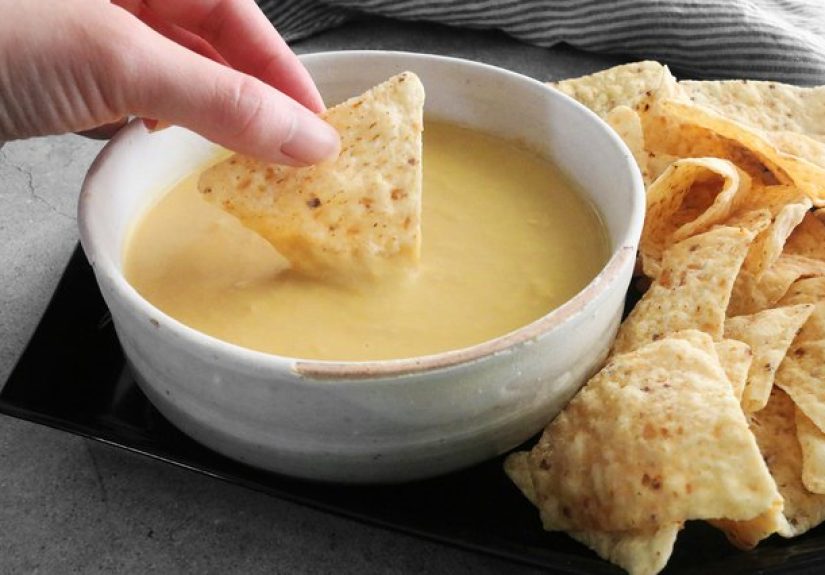
- Loaded nachos: Pour over chips, then add black beans, salsa, jalapeños, and avocado.
- Baked potato upgrade: Split a baked potato and drown it lovingly. Top with scallions.
- Broccoli “cheese” bowl: Drizzle over roasted broccoli and sprinkle smoked paprika.
- Veggie dip: Serve warm with pretzels, cauliflower florets, or sliced bell peppers.
A Specific Example: 10-Minute Nachos
- Spread tortilla chips on a sheet pan.
- Add black beans and corn (optional, but fun).
- Warm chickpea cheese sauce and drizzle generously.
- Top with salsa, jalapeños, and a mountain of chopped cilantro.
- Finish with lime juice and avocado. Eat immediately. Defend your plate.
Nutrition Notes (Real Talk, Not a Lecture)
Chickpeas bring fiber and plant protein, nutritional yeast contributes savory flavor and often comes fortified
with B vitamins, and the sauce can be made with minimal oil (or none) depending on your add-ins.
The exact nutrition depends on your plant milk and whether you add tahini or vegan butter, but the base recipe
is generally a lighter, more whole-food-friendly option than many store-bought vegan cheese sauces.
Storage, Reheating, and Meal Prep
- Refrigerator: Store in an airtight container for 4–5 days.
- Reheating: Warm on the stovetop over low heat, whisking. Add a splash of water or plant milk to loosen.
- Freezing: It can freeze, but the texture may separate slightly. Reheat and whisk/blend to bring it back.
FAQ: Vegan Chickpea Cheese Sauce
Can I use dried chickpeas instead of canned?
Yes. Cook them until very soft. You’ll want about 1 1/2 cups cooked chickpeas. A slightly softer chickpea
(not al dentethis isn’t pasta) blends smoother and makes a creamier sauce.
Is this recipe gluten-free?
It can be. Use tapioca starch or cornstarch (both gluten-free), and confirm your miso and spices
are gluten-free. Serve with gluten-free pasta or chips.
How do I make it taste more “cheesy”?
Increase salt slightly, add a bit more nutritional yeast, and don’t skip the acid (lemon or vinegar).
If you’re okay with soy, miso paste adds a fermented depth that reads “cheese” to a lot of people.
Why does my sauce taste too “bean-y”?
Rinse chickpeas thoroughly, blend longer, and simmer the sauce a few extra minutes.
Also, a touch more lemon, mustard, and smoked paprika can pull the flavor toward “savory cheese sauce”
and away from “chickpea audition tape.”
Final Thoughts
Vegan chickpea “cheese” sauce is one of those recipes that quietly improves your whole week: fast enough for
Monday, comforting enough for Friday, and versatile enough to show up in everything from nachos to casseroles.
Make a batch, keep it in the fridge, and suddenly “What’s for dinner?” becomes “How much cheese sauce is left?”
(A beautiful problem to have.)
Experiences and Real-Life Ways People Actually Use This Sauce (Extra )
The funniest thing about vegan chickpea cheese sauce isn’t how easy it isit’s how quickly it becomes the
default solution to unrelated life problems. Unexpected guests? “I’ll make nachos.” Boring steamed vegetables?
“I’ll make it a cheese bowl.” Need to convince a skeptical friend that plant-based food can be satisfying?
“I’ll make mac and cheese.” The sauce turns into a social tool, like a party trick you can eat.
In real kitchens, people tend to discover two personalities of this recipe: the “dip” version and the “meal”
version. The dip version is thicker, bolder, and usually ends up with jalapeños involvedbecause nacho night
has a way of demanding drama. The meal version is slightly looser and more balanced, the kind you toss with pasta
and suddenly everyone stops talking because they’re too busy chewing. (Silence: the highest compliment.)
For families, this sauce often becomes the gateway recipethe one that gets repeated because it checks all the
boxes: it’s quick, it doesn’t require special trips to three stores, and it feels familiar. Some people start
by serving it as a drizzle over roasted potatoes or broccoli, because it looks like classic cheese sauce and
behaves like classic cheese sauce. Then it graduates into “full responsibility” roles like casserole binder,
pasta coating, or the official dip for game night chips. It’s not trying to be artisanal cheese; it’s trying
to make Tuesday taste better. Mission accomplished.
The most common “aha” moment comes from tweaking it the second time. The first batch usually follows the recipe.
The second batch gets a personal signature: extra smoked paprika for barbecue vibes, more lemon for sharper tang,
mustard powder for a bolder bite, or a spoonful of tahini for richness. People who love spicy food stir in hot
sauce or pickled jalapeño brine and suddenly the sauce tastes like it has backstage passes. People who prefer
mild flavors often lean into roasted red pepper for sweetness and color, turning it into a friendlier, “cheddar-ish”
sauce that plays well with kids and cautious eaters.
And then there’s the serving experience: this sauce is a confidence builder. It pours like a proper sauce when
warm, thickens as it cools, and reheats with a quick whisk and a splash of liquidso it’s forgiving. It’s the
kind of recipe that lets someone feel like a kitchen wizard without actually needing wizard supplies. If you
want to level it up for company, sprinkle smoked paprika on top, add chopped scallions, or serve it alongside
a tray of roasted vegetables and toasted bread. Suddenly it looks “intentional,” like you planned this. (You did.
Totally.)