Table of Contents >> Show >> Hide
- What Gardenista Meant by “The Garden Apartment” (and Why It Still Hits)
- What Is a Garden Apartment? The Definition Depends on Your ZIP Code
- The Pros and Cons: The Honest Garden-Apartment Checklist
- Design the “Garden Apartment” FeelEven If You Don’t Have a Garden
- If Your Garden Apartment Is Actually Below (or Near) Ground Level: Bright, Dry, Safe
- A Practical Example: The “Good” Garden Apartment Setup
- Quick Wins That Make a Garden Apartment Feel Expensive (Without Actually Being Expensive)
- Conclusion: The Garden Apartment Is a Moodand You Can Build It
- Experiences Related to “Trending on Gardenista: The Garden Apartment” (Extra )
The phrase “garden apartment” has a funny way of showing up right when you’re tired of living like a houseplant yourself:
wedged into a dim corner, slowly turning toward the one decent window in the entire place.
And yet, when Gardenista spotlights “The Garden Apartment,” it’s not just about square footage or street levelit’s about a lifestyle:
greenery within reach, outdoors on your doorstep, and a home that feels alive.
Back when “Apartment Living week” rolled through the Remodelista/Gardenista universe, the theme wasn’t “buy more stuff.”
It was more practicaland honestly more comforting: a guide to reviving struggling houseplants, a lineup of self-watering planters for real life,
and a look at a small Los Angeles backyard garden that packs multiple ecosystems into one space.
In other words, the Gardenista version of a garden apartment is part design, part plant care, and part “how do we make city living feel a little more… breathable?”
What Gardenista Meant by “The Garden Apartment” (and Why It Still Hits)
The original “Trending” post framed the garden apartment as a bundle of small, smart moves: keep plants alive (or know when to let go),
make watering less of a daily soap opera, and steal ideas from gardens that know what they’re doing.
That’s the Gardenista sweet spot: design that looks effortless, supported by systems that are absolutely not.
-
Houseplant triage (the kind that saves your sanity): Plant Doctor advice emphasizes matching plants to the light and conditions you actually have,
plus diagnosing issues like overwatering, drainage problems, low light, and humidity stress before declaring a plant “beyond hope.” -
Self-watering planters for the forgetful, the busy, and the over-enthusiastic: The “10 Easy Pieces” roundup highlights reservoir and wick-based designs,
built so plants can draw water as neededhelpful when you travel or when your watering schedule is basically “whenever I panic.” -
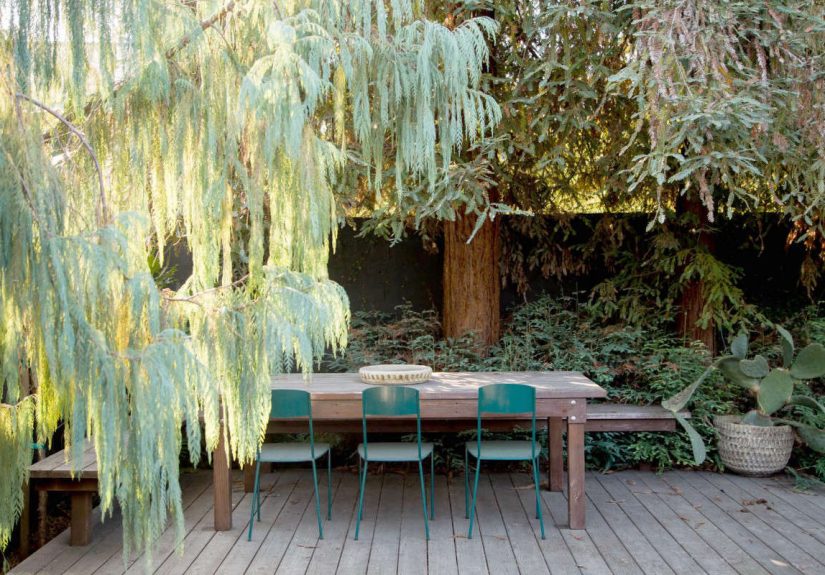
A small backyard garden that feels like a whole state: The LA garden story describes a narrative approachferns, a “redwood forest” feeling,
desert notes, and culturally familiar plants like bougainvilleaproof that even compact outdoor space can be designed with real intention.
That trioconditions, systems, narrativeis basically the blueprint for the modern garden apartment, whether you live at street level with a patio
or on the sixth floor with a brave little windowsill herb lineup.
What Is a Garden Apartment? The Definition Depends on Your ZIP Code
In U.S. real estate, “garden apartment” can mean more than one thing:
a unit at ground level (sometimes partly below grade) with access to a garden or patio,
or a “garden-style” complexlow-rise buildings arranged around landscaped paths or shared green space.
In New York City, the meaning gets even more regional: in Brooklyn, it often refers to the ground-floor brownstone unit with backyard access,
while Queens “garden apartments” can mean low-rise complexes with shared landscaped grounds.
So if you’ve ever toured a “garden apartment” expecting roses and got… a doorway two steps below the sidewalkcongratulations.
You’ve just met the most realistic version of the term.
The good news: the best garden apartments aren’t defined by how much dirt is outside.
They’re defined by how well the home connects to green space, even if that green space is a lineup of pots you love like family.
The Pros and Cons: The Honest Garden-Apartment Checklist
Why people love them
- Easy outdoor access: quick step-out for coffee, herbs, or a dog that refuses “just one more minute.”
- Private-feeling entry: many garden-level units have a separate entrance or fewer shared hallways.
- Often more affordable than higher floors: partly because of light and privacy trade-offs.
- Space that can feel house-like: especially in townhouse and low-rise formats, sometimes with storage and outdoor access.
- Pet-friendly vibes: easier in-and-out and a place for plants and people to sprawl a bit.
What to watch out for
- Less natural light: trees, overhangs, and below-grade placement can dim things fast.
- Moisture risk: ground-adjacent spaces are more vulnerable to dampness, mold, and humidity problems if ventilation and drainage aren’t handled.
- Flooding and stormwater concerns: especially in heavy rain regions or where grading/drainage is poor.
- Radon exposure can be higher on the lowest levels: radon often accumulates in rooms in contact with the ground; testing is recommended and action is advised at or above EPA’s 4 pCi/L guideline.
- Pests and privacy: more street-level traffic, more opportunities for uninvited tiny guests.
None of this is meant to scare you off. It’s meant to help you do what Gardenista does best:
make the charming thing also the sensible thing.
Design the “Garden Apartment” FeelEven If You Don’t Have a Garden
1) Create a “threshold garden” at the entry
The magic of a garden apartment often starts at the door: a small transition that tells your brain,
“We’re not just entering a unit; we’re entering a tiny ecosystem.”
If you have a patio or stoop, use two tall planters to frame the entry (instant “secret garden” energy).
If you don’t, do it indoors: a narrow plant stand, a boot tray that doubles as a drip tray, and one statement plant that feels like a greeter.
2) Pick plants for your actual light, not your fantasy light
Gardenista’s Plant Doctor advice is blunt in the nicest way: learn what a plant wants before you buy it, and don’t choose a high-sun plant
if you live in a ground-floor apartment with little light.
That’s not plant negativityit’s plant compatibility.
A practical approach:
- Low-light corners: treat them like “green accents,” not jungles. One healthy plant beats five struggling ones.
- Window-adjacent zones: this is where you place your “show-offs” (the plants that make visitors say, “Waithow?”).
- Rotate monthly: swap plants between brighter and dimmer spots so nobody slowly fades like a forgotten sitcom character.
If natural light is truly limited, Gardenista’s expert notes that artificial light can help; they cite using a brighter bulb (around 1,000 lumens or more)
and common household bulb types like LED or CFL as practical options.
The takeaway: you don’t need a spaceship grow rigyou need consistency and enough brightness to be meaningful.
3) Make watering boring (in the best way)
The “10 Easy Pieces” self-watering roundup is basically a love letter to low drama:
reservoirs, wicks, and designs that let plants sip rather than drown.
If you’re building a garden-apartment vibe, self-watering planters are less “gadget” and more “infrastructure.”
What to look for (so it’s not just a cute pot with a confusing insert):
- Visible water indicator (so you’re not playing “guess the reservoir”).
- Drainage + aeration (plants hate sitting in water; good systems allow excess water and air movement).
- Refill access that’s easy (if it’s annoying, you won’t do it).
- Right size for root growth (a too-small pot is like shoes two sizes too small: nobody thrives).
4) Steal from botanical gardenson apartment scale
You don’t need acres to borrow the principles that make public gardens feel calming and “designed.”
Think in repetition (three of the same pot looks intentional), layering (low, medium, tall),
and negative space (leave breathing room so the greenery reads as lush, not cluttered).
A simple formula that works in almost any apartment:
one “tree” plant (or tall statement plant) + two medium leafy plants + one trailing plant.
Put them in a cluster near your best light, and suddenly your living room feels like it has a pulse.
If Your Garden Apartment Is Actually Below (or Near) Ground Level: Bright, Dry, Safe
Light: make the daylight you have do more
Garden apartments often struggle with daylight. The fix is rarely one thingit’s a combination:
reflective surfaces, layered lighting, and (when possible) better openings.
Building-science pros point out that well-designed window wells can dramatically increase basement light compared to small foundation windows.
- Use mirrors strategically: place one opposite your brightest window to bounce light deeper into the room.
- Choose lighter wall colors: not because you “should,” but because it’s basically free brightness.
- Layer lighting: overhead + task + one warm lamp in a corner so the space doesn’t feel like a waiting room.
If your ceiling is low or mechanicals are exposed, finishing choices matter.
Practical basement guidance notes that options like painted exposed ceilings can feel more open, while wood planks or beadboard can add warmth and texture.
The goal: cozy, not cave.
Moisture and mold: control the conditions before you decorate
The EPA’s mold guidance is clear: moisture control is key, and drying wet materials within 24–48 hours after a leak can prevent mold in many cases.
They also recommend keeping indoor humidity under 60% (ideally 30–50%).
CDC guidance aligns closely, emphasizing humidity control (no higher than ~50%), fixing leaks, and drying quickly after floods.
Translation: buy the cute rug after you know the room can stay dry.
Dehumidifiers: the unsung hero of comfortable low-level living
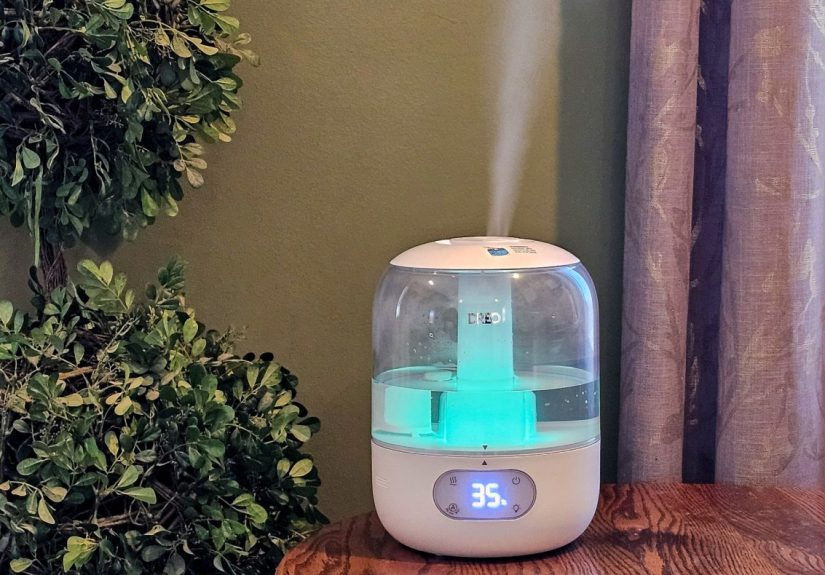
If your space trends damp, a dehumidifier is not an aesthetic choiceit’s a comfort and durability choice.
ENERGY STAR notes that certified dehumidifiers remove the same moisture using about 20% less energy than conventional models.
That matters when the unit runs often (which, in a humid climate, it will).
Radon: test low, take it seriously
Radon is an invisible gas that can accumulate in buildings, and EPA notes it’s found across the U.S.;
levels are often highest in the lowest part of a home, like basements or ground floors, which is why testing there is recommended.
HUD’s testing guidance similarly emphasizes prioritizing living spaces at or near ground level and testing on the lowest occupied floor.
If testing shows elevated levels at or above 4 pCi/L, EPA recommends taking action to reduce exposure.
Emergency egress: make sure “cozy” doesn’t mean “trapped”
If your garden apartment is partly below gradeor you’re finishing a sleeping areaemergency escape requirements matter.
A Minnesota Department of Labor & Industry fact sheet (based on IRC language) describes minimum net clear opening requirements:
5.7 sq ft (with a 5.0 sq ft exception for grade-floor/below-grade openings), minimum 24-inch clear height and 20-inch clear width,
and window sill height not more than 44 inches above the floor.
It also describes window well sizing (not less than 9 sq ft, at least 36 inches projection/width) and ladder/steps when depth exceeds 44 inches.
Building codes vary by city and state, so treat this as a reality check and a prompt to confirm your local rulesespecially if you’re renting a “garden unit”
that feels suspiciously like a converted basement.
A Practical Example: The “Good” Garden Apartment Setup
Imagine a classic brownstone garden unit:
you walk down a short set of steps, open the door, and you’re in a living room that faces a small backyard.
The best versions of this layout do three things:
- They pull daylight inward: a mirror opposite the glass door, light walls, and a clear “path” through the room so light travels.
-
They build a plant zone near the brightest opening: a narrow shelf or bench where plants get consistent light.
Self-watering planters keep the system steady when life gets chaotic. -
They treat moisture control like a baseline utility: dehumidifier if needed, quick leak response, and good airflow.
The space feels fresh, not underground.
Add one more Gardenista-inspired move: give your backyard a narrative, even if it’s tiny.
The LA garden example shows how layered plant choices can evoke distinct “zones” (fern-rich shade, desert notes, bold flowering color)
without requiring huge spacejust a clear design idea.
Quick Wins That Make a Garden Apartment Feel Expensive (Without Actually Being Expensive)
- One consistent pot style (even if the plants are all different). Repetition reads as design.
- One “anchor” plant that’s taller than everything else. Instant structure.
- A watering system you’ll follow (self-watering planters or a simple weekly routine).
- Humidity control so the apartment smells like “fresh air,” not “mystery damp.”
- Lighting in layers so evenings feel golden instead of fluorescent.
Conclusion: The Garden Apartment Is a Moodand You Can Build It
“Trending on Gardenista: The Garden Apartment” isn’t really about a specific floor in a specific building.
It’s about designing a home that has a relationship with green space: keeping plants alive with realistic care,
choosing systems that make consistency easy, and shaping even the smallest outdoor area into something intentional.
If you’re lucky enough to have a patio or backyard, treat it like a small, personal botanical garden:
repeat a few materials, layer heights, and give the space a theme.
If you don’t, you can still build the feelingone window-side plant cluster, one smart watering solution,
and one “threshold garden” moment at a time.
And if you live at or below street level, let the practical stuff lead:
manage moisture, keep humidity in check, test for radon, and make sure safety basics (like emergency egress) are realnot assumed.
Once the conditions are right, the cozy part becomes effortlessbecause it isn’t fighting the building anymore.
Experiences Related to “Trending on Gardenista: The Garden Apartment” (Extra )
If you’ve ever lived in (or visited) a true garden apartment, you know it comes with a set of oddly specific moments.
The best ones feel like a hidden perk: you’re in the city, but you can still step outside and hear birds doing their daily gossip.
The trick is learning how to lean into the charm without getting ambushed by the “ground-level realities.”
Moment #1: The Morning Doorway Reset.
There’s something deeply satisfying about opening a door and immediately seeing green.
Even a tiny patio can turn into a daily ritual: a mug of coffee, a two-minute check on new leaves,
and that small psychological upgrade of “I have outside.” People who don’t have it will pretend they don’t care.
They do.
Moment #2: The Plant Learning Curve (a.k.a. “Why are you mad?”).
Garden-apartment light can be weird: bright near the glass, dim ten steps back, and surprisingly harsh in one corner where the sun bounces off a neighboring wall.
The first season usually involves a few false startsplants that looked confident at the nursery suddenly acting dramatic at home.
That’s where the Gardenista approach helps: stop guessing, look at conditions, and choose plants that actually match your space.
When you finally find the right combo, it feels less like “decor” and more like your apartment has a heartbeat.
Moment #3: The “I’m Away” Stress Test.
Leaving town is when houseplants reveal whether your setup is a system or a vibe.
If watering is manual and emotional (“I’ll just give it a little extra!”), you come back to chaos.
If watering is boring and consistenthello, self-watering plantersyou come back to normal life.
That’s the underrated luxury: not needing a plant-sitter negotiation like you’re arranging childcare.
Moment #4: The Rain Reality Check.
Garden apartments teach you to respect water.
A heavy storm can be totally fine… until it isn’t.
People who love their garden units usually develop a calm, grown-up habit of checking window wells, watching for damp corners,
and keeping airflow moving.
It’s not paranoiait’s maintenance, like charging your phone before it dies.
Once you’ve had one “why does this rug smell like a basement?” incident, you become a moisture-control philosopher.
Moment #5: The Golden Hour Payoff.
The very thing that can make garden apartments trickylightalso makes them magical when you design for it.
Add layered lamps, bounce daylight with a mirror, and suddenly late afternoon feels cinematic.
It’s the cozy version of “I live in a design magazine,” except you’re also wearing sweatpants and arguing with your basil.
Moment #6: The Backyard Micro-Party.
Garden apartments are secretly made for small gatherings.
A couple of chairs, a string of soft lights, and a pot of herbs you can actually snip fromsuddenly your place becomes the default hangout.
You don’t need a huge garden. You need a space that feels cared for.
People can tell.
Moment #7: The “This Feels Like Home” Surprise.
The best garden apartments have a house-like rhythm: you arrive, you step down (or step out), you transition into your own calm zone.
That sense of a “threshold” is powerful.
It’s why this trend still resonatesbecause in a world of busy, bright, loud everything,
a little patch of green within reach feels like a small, daily miracle you can actually afford.