Table of Contents >> Show >> Hide
- Why a Mini Pub Works So Well in a Garden
- The Big Picture Plan: From Blank Garden Corner to Mini Pub
- The Structure: Build It Like a Shed, Finish It Like a Pub
- The “Pub Features” That Make It Feel Legit
- Comfort and Safety: The Unsexy Stuff That Makes It Actually Usable
- Design Details That Make It “Stunning” Instead of “Storage”
- How They Stock It: Pub Energy Without Overcomplication
- Common Mistakes (And How This Couple Avoided Them)
- Hosting in a Garden Pub: The Mini Pub Playbook
- of Real-World Mini Pub Experience (The Stuff You Learn After the First Party)
- Conclusion: A Tiny Pub, A Big Backyard Upgrade
- SEO Tags
Somewhere between “we should mow the lawn” and “let’s host everyone we’ve ever met,” a certain kind of backyard dream is born:
a tiny pub tucked into the garden. Not a full-blown outdoor kitchen that requires a second mortgage and a structural engineer on speed dialmore like
a cozy, clever, weather-smart mini pub where friends gather, music drifts out the door, and the garden finally gets the social life it deserves.
The best part? You don’t need a castle, a sprawling estate, or a lucky leprechaun contractor. You need a plan, a solid shed build (or a shed makeover),
and the willingness to take the phrase “happy hour” literallybecause you’ll be building it by the hour, one satisfying step at a time.
Why a Mini Pub Works So Well in a Garden
A mini pub is basically the ultimate “third place” that happens to live 30 feet from your back door. It’s part hangout, part hosting hub, part
escape pod. And because it’s small, every choice mattersin a good way. You can design it to feel intentional, not accidental, like a garden feature
that just happens to serve drinks, snacks, mocktails, and good conversation.
It’s not just a barit’s a vibe
A garden pub feels different from a basement bar. Natural light, plants, string lights, and open-air flow turn a simple shed into an outdoor
entertaining space. Even when it’s closed up, it still looks charminglike a tiny clubhouse for grown-ups (and yes, it can be 100% family-friendly,
stocked with sodas, hot cocoa fixings, and snack trays when kids are around).
It solves a very real hosting problem
If you’ve ever hosted and spent the whole night running inside for ice, cups, napkins, or “the good tongs,” you already understand the magic of a
backyard bar shed: it keeps the party outside. A service window, a counter, and smart storage mean you’re present for your guests instead of
disappearing into the kitchen every six minutes like a confused magician.
The Big Picture Plan: From Blank Garden Corner to Mini Pub
The couple behind this mini pub idea started where most good projects begin: with a rough sketch and a realistic look at their yard.
Not every garden corner is pub-ready. The goal is to build something that feels inviting, lasts through weather, and doesn’t create water problems
or neighbor drama.
Step 1: Pick the right spot (your future self will thank you)
- Stay high and dry: Avoid low spots where water collects after rain.
- Think access: You’ll carry materials in and party supplies out. A clear path matters.
- Respect setbacks: Local rules often require minimum distances from property lines and other structures.
- Use the garden’s “natural stage”: A backdrop of shrubs, fencing, or a pergola makes the pub feel intentional.
Step 2: Decide what “mini pub” means for you
“Mini pub” can be anything from a tiny cocktail shed with a serving hatch to a fully insulated hangout with seating, a mini fridge, and a small
countertop. Before you buy anything, decide how you want to use it:
- Quick-serve mode: Service window + bar counter + storage (great for summer gatherings).
- Hangout mode: Seating for 2–6, shelves, music, games, a cozy interior.
- All-season mode: Insulation, safe heating/cooling, weatherproof doors, and proper ventilation.
Step 3: Choose build vs. convert
Many backyard pubs start as sheds. You can build from scratch, assemble a kit, or convert an existing shed. Converting is often faster, but only if
the base structure is sound. If the shed is sagging, leaking, or sitting on a questionable “foundation” made of hope and uneven bricks,
fix the basics first.
The Structure: Build It Like a Shed, Finish It Like a Pub
Here’s the secret sauce: the best garden pubs are built with shed-level practicality and finished with room-level comfort.
That means a stable foundation, square framing, weather-tight roofing, and materials chosen for outdoor exposure.
Foundation options that won’t ruin your weekend (or your floor)
The foundation is where “cute idea” becomes “lasting project.” A mini pub needs a level, stable base that keeps water away from the framing and floor.
Common options include:
- Gravel base: A well-prepped gravel pad drains well and supports many shed-style builds.
- Concrete slab: Durable and stable, especially for larger sheds or heavier finishes.
- Blocks/pavers on compacted gravel: A flexible approach if you need an on-grade solution.
- Piers below frost line: Often used in colder climates to help reduce seasonal shifting.
Whichever you choose, the non-negotiable is level. If you build a pub on an unlevel base, every door will stick, every shelf will look crooked,
and your drink will slowly migrate to the “low side” like it’s trying to escape.
Framing and weatherproofing: small building, big expectations
Even a compact pub shed needs proper framing and a roof that can handle the local climate. Focus on:
- Square walls: Easier door/window installs, better sealing, fewer future headaches.
- Roof durability: Use appropriate roofing and underlayment for your pitch and weather exposure.
- Water management: Overhangs, drip edges, and gutters (if needed) help keep the structure dry.
- Exterior finishes: Siding and trim that stand up to moisture, sun, and temperature swings.
The “Pub Features” That Make It Feel Legit
This is where the couple’s mini pub goes from “shed with snacks” to “stunning garden hangout.”
The goal isn’t to cram in everythingit’s to choose a few signature features that make it feel like a real pub.
1) The serving window (a.k.a. the crowd magnet)
A serving hatch or large window is the mini pub’s superpower. It creates indoor-outdoor flow, makes the pub feel social,
and gives you a natural “bar front” where guests gather. Add a simple counter outside, and suddenly your garden has a destination.
2) A bar counter designed for actual use
The best counters are durable, easy to wipe down, and sized for real life. Consider:
- Depth: Enough for drinks plus elbows (people love elbows).
- Height: Comfortable for standing guests or bar stools.
- Finish: Sealed wood, composite, tile, or another surface that doesn’t panic when it sees condensation.
3) Storage that keeps the party outside
Inside the mini pub, storage is your quiet hero. Think shelves for cups and pitchers, drawers for openers and napkins,
bins for snacks, and a dedicated spot for “the ice situation.” If you want a more elevated feel, use labeled containers and matching glassware.
If you want a more realistic feel, embrace one “junk drawer” and call it tradition.
4) Lighting that flatters everyone (and everything)
Overhead lighting is useful. Warm accent lighting is what makes it magical. Combine:
- Task lighting: So you can actually see what you’re pouring (or serving).
- Ambient lighting: String lights, sconces, or warm LEDs for cozy pub energy.
- Exterior lighting: Path lights or a lantern near the door so guests don’t wander into a shrub.
5) Sound and entertainment (keep it simple)
A small speaker setup, a radio, or a tucked-away Bluetooth speaker can do plenty. Some people add a tiny TV for games,
but the garden pub sweet spot is usually “music + conversation” rather than “everyone silently watching a screen.”
Comfort and Safety: The Unsexy Stuff That Makes It Actually Usable
A mini pub is most fun when it’s comfortableand safe. Since this is a backyard structure, your priorities should be moisture control,
ventilation, and responsible electrical planning (which often means hiring a licensed electrician, especially for new circuits).
Insulation and airflow (a.k.a. how to avoid the “damp clubhouse” effect)
If you want your mini pub to be usable beyond perfect spring evenings, insulation and ventilation matter. Roof insulation in particular
can be tricky, and the best approach depends on climate and roof design. The goal is to reduce heat gain/loss while managing moisture so you don’t
create condensation problems inside your walls or ceiling.
- Seal gaps: Air leaks make spaces uncomfortable and can contribute to moisture issues.
- Vent appropriately: Some roofs use venting channels; others use unvented assemblies designed to control moisture.
- Choose durable interior finishes: Materials that handle humidity changes without warping or growing fuzzy surprises.
Electrical: do it right or don’t do it at all
A mini pub can work without electricity (lanterns, coolers, battery lights). But if you want outlets, lighting, or a mini fridge,
treat electrical as a professional job unless you’re fully qualified and permitted to do it yourself. Many areas require permits and inspections,
and safe wiring practices protect your home, your guests, and your investment.
Heating/cooling: optional, but powerful
Small spaces heat up and cool down fast. If you want all-season use, consider safe, code-appropriate options like an efficient space heater
(used responsibly), a fan for airflow, or a mini-split system if you’re going bigger. Always keep clearances and ventilation requirements in mind.
Design Details That Make It “Stunning” Instead of “Storage”
The couple’s mini pub feels special because it’s styled like a destination, not a utility box. Here are the upgrades that deliver the biggest
visual payoff for a garden bar shed:
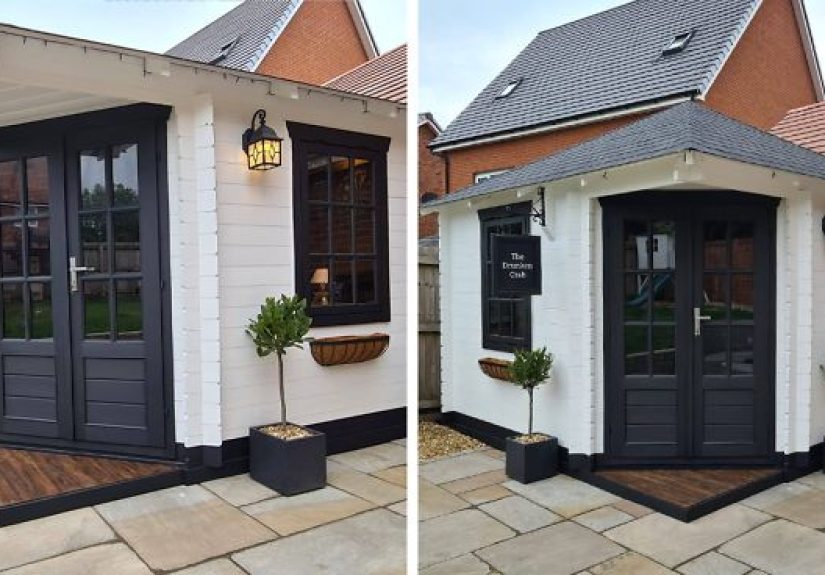
Exterior charm
- A real door: A door with windows or decorative hardware instantly elevates the look.
- Paint with purpose: Deep green, navy, charcoal, or classic white can blend with the garden beautifully.
- Planters and trellises: Climbing plants and layered greenery make the pub feel “grown in.”
- Signage: A cheeky pub name sign adds personality without trying too hard.
Interior warmth
- Wood accents: A wood bar top, shelves, or trim creates instant pub coziness.
- Open shelving: Glassware and bottles (or mocktail syrups) become decor.
- Small seating: A bench with cushions or two stools makes it feel like a real room.
- Games: Cards, darts (used safely), or a compact board game shelf encourages lingering.
Garden integration
The “stunning” effect comes from making the mini pub feel like part of the landscape. Surround it with gravel or pavers, add a small patio area,
and create a simple border of plants. Even a tiny pergola or an overhead string-light line can define the space as an outdoor room.
How They Stock It: Pub Energy Without Overcomplication
A mini pub doesn’t need a full cocktail lab. The smartest setups are simple, organized, and flexible. A practical starter kit:
- Drink options: A mix of sodas, sparkling water, lemonade, and adult beverages for adult-only gatherings.
- Mocktail basics: Citrus, ginger beer, flavored syrups, fresh herbs (your garden can help here), and fun garnishes.
- Snack shelf: Nuts, chips, crackers, and a backup stash of “emergency chocolate.”
- Tools: Bottle opener, corkscrew, pitcher, tongs, napkins, and a small cutting board.
- Ice plan: Cooler, ice bucket, or a small freezer if you have power.
The couple’s rule of thumb: if it requires a 12-step process, it’s not a backyard pubit’s a hobby. Keep it easy so you can enjoy your guests.
Common Mistakes (And How This Couple Avoided Them)
Mistake #1: Treating it like decor instead of a building
A mini pub is adorable, but it still needs shed-grade construction: level base, sound framing, weather protection, and materials that can handle
outdoor life. Build it right, then decorate.
Mistake #2: Ignoring local rules
Setbacks, permits, electrical requirements, and inspections vary widely. The couple approached their mini pub like an accessory structure,
not a garden ornament, and that mindset saved them from expensive do-overs.
Mistake #3: Skipping ventilation
Small structures can trap heat and moisture. Venting and smart insulation choices help keep it comfortable and protect finishes.
A pub that smells “mysteriously damp” is not the kind of authenticity anyone wants.
Mistake #4: Building the interior before the exterior is truly weather-tight
Fancy shelves and cute wall panels don’t matter if the roof leaks. The couple prioritized the shell first, then finished the inside.
It’s less exciting… until you realize you’re not replacing waterlogged decor later.
Hosting in a Garden Pub: The Mini Pub Playbook
Once the build is done, the fun begins. The couple found that their mini pub changed how they used their yard:
more casual gatherings, more weeknight “pop outside for 20 minutes,” more celebrations that felt effortless.
Simple hosting wins
- Create a self-serve station: Label cups, set out napkins, and keep a small trash bin nearby.
- Use zones: Pub window for serving, a seating area, and a separate spot for food.
- Plan for weather: Keep a bin with blankets, umbrellas, or a pop-up canopy if needed.
- Mind the neighbors: Music volume and lighting angles matter more than you think.
of Real-World Mini Pub Experience (The Stuff You Learn After the First Party)
The first time you host in your garden pub, you’ll discover a universal truth: guests behave differently when there’s a tiny building involved.
People love a destination. They’ll wander over like it’s a miniature landmark on a hiking trail, peer inside, smile, and immediately ask,
“Okay, what’s this place called?” (If you don’t name it, someone else will, and it will probably be something like “Gary’s Hut of Mystery.”)
You’ll also learn that the serving window is basically a social magnet with its own gravity. Even if you set up chairs and tables elsewhere,
folks will gather at the counter to chat. That’s not a bugit’s the whole point. One practical trick: keep the “fast stuff” closest to the window
(cups, napkins, bottle opener, sparkling water, simple mixers) so you’re not doing a constant interior shuffle while everyone watches you
like you’re auditioning for a cooking show.
Weather teaches lessons quickly, too. On warm days, the pub can heat up faster than you expect, especially if the sun hits the wall for hours.
A small fan and good airflow can turn “cozy” into “comfortable” in minutes. On cool evenings, people will happily linger if you have
a basket of blankets and warm lighting. The vibe matters more than the temperaturealthough nobody wants to sip anything while shivering
like a cartoon character.
Storage becomes your silent MVP. After a few gatherings, you’ll develop a “pub kit” you can restock in five minutes:
extra trash bags, paper towels, a lighter or matches (for outdoor candles), a spare phone charger, and a backup playlist.
You’ll also discover that ice is either a perfectly managed resource or an absolute gremlin that disappears instantly.
If you don’t have a freezer, consider an insulated cooler that lives in the pub, plus a designated “ice scoop” so no one uses a cup as a shovel.
Yes, this happens. Repeatedly. Across all of human history.
The garden itself becomes part of the experience. Guests will lean into the settingsnipping a mint leaf for a mocktail, admiring the planters,
or hovering under string lights like they’re in a movie montage. That’s when you realize your mini pub isn’t just about drinks.
It’s about creating a little moment of escape that happens to be in your own yard.
Finally, the best “experience upgrade” isn’t expensive: it’s routine. The couple found that even on non-hosting days, they used the pub as a
personal reset buttonmorning coffee in the garden, a quiet playlist after work, a small space to read while the sun goes down.
The mini pub worked because it wasn’t saved for special occasions. It became part of daily life, which is the real secret behind any great
outdoor living space.
Conclusion: A Tiny Pub, A Big Backyard Upgrade
A stunning mini pub in a garden is one of those projects that looks like pure fun (and it is), but it succeeds because it’s built on real,
practical fundamentals: smart placement, stable foundation, weather-tight construction, and comfort details like lighting and ventilation.
Once those pieces are in place, the pub becomes the easiest place to gatheran outdoor room with personality, purpose, and just enough charm to
make any evening feel like an event.
Whether you build from scratch, convert a shed, or start with a kit, the best version is the one you’ll actually use. Keep it simple, build it
solid, and let the garden do the decorating. Your future guests will “just stop by for one,” andmysteriouslystay for three hours.