Table of Contents >> Show >> Hide
- What Happened (and Why People Called It “Combat in Space”)
- How a Missile Gets to “Space” Without Going to Space
- Meet the Arrow System: Israel’s High-Altitude Shield
- Why This Was Such a Big Deal (Even If It Lasted Seconds)
- Was the Incoming Missile Actually “In Orbit”?
- Is “Combat in Space” Legal Under Space Treaties?
- What This Tells Us About Modern Missile Defense
- Key Takeaways (No Rocket Science Degree Required)
- Conclusion
“Space battle” sounds like laser cannons, dramatic music, and someone shouting, “Evasive maneuvers!”
In real life, it looked more like radars, math, and a split-second collision happening so high above Earth
that people argued whether it technically counted as space.
In late October and early November 2023, Israel’s Arrow missile-defense system was used against a real,
hostile ballistic missile threat launched from Yemen. The intercept happened at extremely high altitudehigh enough
that multiple reports described it as the first combat action to occur “in space.” No sci-fi dogfight. Just a
very modern milestone: midcourse missile defense moving from test ranges into real-world conflict.
What Happened (and Why People Called It “Combat in Space”)
Ballistic missiles don’t fly like airplanes. They launch upward, arc through the upper atmosphere,
and often coast through the thin edge of near-space before dropping back down toward a target.
That “coast” portioncalled the midcourse phasecan happen above commonly cited space boundaries.
On October 31, 2023, Israel reported intercepting an incoming ballistic missile as part of a multi-weapon
attack attributed to Yemen’s Houthi forces. A little over a week later, on November 9, Israel announced
the first operational intercept by Arrow-3its exo-atmospheric (outside-the-atmosphere) interceptoragainst a
missile threat in the Red Sea region.
Why the “first combat in space” label? Because some reporting placed the intercept altitude above the
threshold often used to define space (and because Arrow-3 is specifically designed to engage targets during
the space-flight portion of a ballistic missile’s trajectory). In plain English: the warhead was high enough
that it wasn’t really “in the sky” anymore… but it also wasn’t calmly orbiting like a satellite. It was
briefly passing through the neighborhood of space at terrifying speed.
How a Missile Gets to “Space” Without Going to Space
Here’s the part people don’t always realize: you can have “space altitude” without “space mission.”
A ballistic missile’s path is typically described in phases:
- Boost phase: the rocket engines burn and the missile climbs rapidly.
- Midcourse phase: the payload coasts on a ballistic arc, often at very high altitude.
- Terminal phase: the warhead reenters thicker atmosphere and descends toward the target.
The midcourse phase is where “space-ish” things happen. The air is extremely thin; aerodynamic control is limited;
and interceptors rely on sensors, guidance, and physics rather than “turning” like an aircraft.
It’s also the phase where a defender may prefer to interceptbecause stopping a warhead before reentry can reduce
risk to people on the ground.
So Where Does Space Start, Exactly?
If you ask five space policy experts where space begins, you may get six answers and one annoyed sigh.
Two common reference points show up in discussions:
- The Kármán line (~100 km / ~62 miles): widely used internationally as a conventional boundary.
- 50 miles (~80 km): a boundary used in some U.S. military and aviation contexts.
The key idea is that there’s no magical “ding!” moment where atmosphere ends and space begins. It’s a gradient.
But when an intercept is reported at altitudes on the order of ~100 km or higher, it’s understandable why headlines
start tossing around the phrase “in space.”
Meet the Arrow System: Israel’s High-Altitude Shield
Israel’s air defense network is often described as layereddifferent systems for different threats, ranges, and altitudes.
Arrow sits at the upper tier, focused on ballistic missiles.
Arrow-2 vs. Arrow-3: Same Family, Different Job
Think of Arrow-2 and Arrow-3 as siblings with different strengths:
-
Arrow-2 is generally described as engaging ballistic threats in the upper atmosphere
(and has been used operationally before in unusual scenarios). -
Arrow-3 is designed for exo-atmospheric interceptionhitting targets in space during
midcourse, before they reenter the atmosphere.
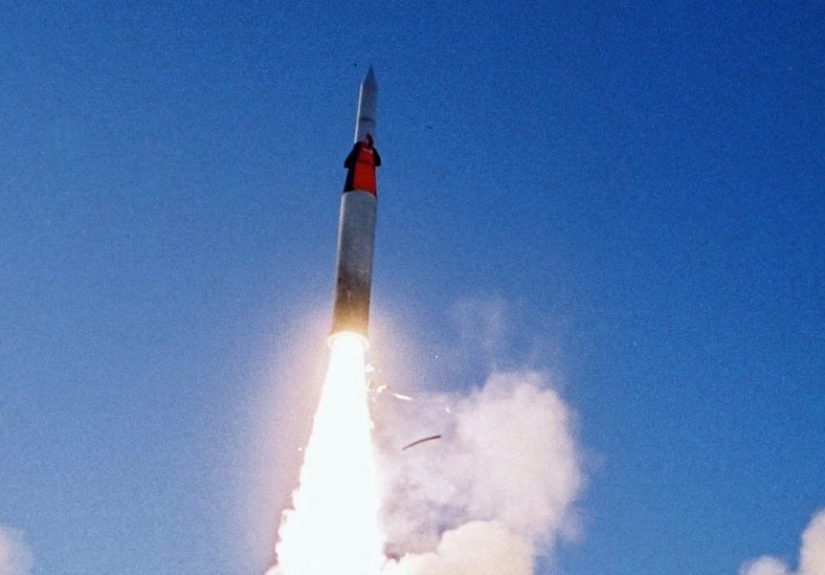
Arrow-3 is co-developed and co-produced with U.S. participation, and it’s frequently described as a hit-to-kill interceptor:
it destroys the target by slamming into it rather than detonating a large explosive near it.
Hit-to-Kill: The Least Romantic Physics Lesson Ever (and Also the Most Important)
Hit-to-kill is exactly what it sounds like: the interceptor collides with the incoming warhead at enormous closing speeds.
No Hollywood fireball requiredjust kinetic energy doing what kinetic energy does.
The upside: precision and the potential to reduce debris compared with certain explosive alternatives.
The challenge: it’s like hitting a bullet with a bullet… while both bullets are doing homework in orbit-adjacent conditions.
Why This Was Such a Big Deal (Even If It Lasted Seconds)
Missile defense has intercepted targets in space during tests for decades. What made this moment different was the
operational context: it wasn’t a choreographed test with predictable conditions. It was a real-world attempt to stop a
hostile ballistic missile in flight.
That matters for at least five reasons:
- It proves a capability under pressure. Combat use forces timelines, uncertainty, and “no do-overs.”
-
It shifts the mental map of escalation. If intercepts occur at space-like altitudes, future conflicts may
increasingly involve the space domaineven without satellites being targeted. - It changes warning and response concepts. Midcourse engagement demands early detection, tracking, and rapid decisions.
-
It affects alliance planning. Systems like Arrow-3 are discussed beyond Israel, including export and integration
conversations in allied defense planning. -
It adds urgency to space norms. If more intercepts happen at high altitude, countries may push harder on “rules of the road”
for what’s acceptable above the atmosphere.
In short: it’s not that a new war started in orbit. It’s that a real-world battle used a part of the flight path that
overlaps with how humans define “space.”
Was the Incoming Missile Actually “In Orbit”?
Not in the satellite sense. A ballistic missile’s warhead can reach altitudes associated with space without achieving
stable orbital velocity. It’s on a suborbital arc: up, over, downfast.
Some headlines use phrases like “low Earth orbit” because the altitudes overlap with where satellites can exist. But a
ballistic warhead is not leisurely circling Earth taking selfies. It’s passing through that altitude range briefly as part
of its trajectory.
This distinction matters because “space combat” in public conversation can sound like anti-satellite warfare. While there are
connections (high-altitude interceptors can resemble counterspace capabilities), a midcourse missile intercept is not automatically
the same thing as attacking a satellite.
Is “Combat in Space” Legal Under Space Treaties?
Space law is famous for being both foundational and frustratingly incompletelike a group project where the intro is great,
but nobody finished the conclusion.
The Outer Space Treaty (1967) is widely understood to ban placing nuclear weapons or other weapons of mass destruction in orbit
or stationing them in outer space. It is less explicit about conventional weapons and doesn’t read like a detailed manual for
modern missile defense scenarios.
In general, a defensive intercept of a missile warhead at very high altitude does not automatically imply a treaty violation.
But the bigger issue isn’t just legalityit’s precedent. Once “space-like” intercepts become normal, political pressure grows
to clarify boundaries, responsibilities, and acceptable behavior.
What This Tells Us About Modern Missile Defense
This event sits at the intersection of three trends:
- More long-range threats: even regional conflicts can feature weapons with long reach and high arcs.
- Higher-altitude defense: interceptors are being designed to engage earlier, higher, and farther away.
- Space as a security domain: nations increasingly view space systemsand space-adjacent operationsas part of defense planning.
For everyday readers, the takeaway isn’t “we’re living in a space opera now.” It’s that the boundary between atmospheric defense
and space policy is getting blurrier, faster than most international rulebooks can keep up.
Key Takeaways (No Rocket Science Degree Required)
- A ballistic missile can travel through extremely high altitudes during its midcourse phasesometimes above commonly used “space” boundaries.
- Arrow-3 is designed to intercept ballistic missiles outside the atmosphere using hit-to-kill technology.
- The October–November 2023 intercepts marked a shift from testing to real-world, operational high-altitude interception.
- “First combat in space” is partly a technical claim and partly a boundary-definition debatebut it signals a real strategic change.
Conclusion
The first widely reported “combat in space” wasn’t a dogfight between spacecraft. It was a missile-defense intercept at the
edge of Earth’s atmospherewhere definitions get fuzzy and the physics get unforgiving.
And that’s exactly why it matters. This wasn’t just a tactical success story. It was a preview of how future conflicts may
reach higher altitudes, require faster decisions, and collideliterallywith the way we govern the space domain.
Extra: of Experiences Related to the First Combat in Space
If you want to understand why this moment felt historic to so many people, try experiencing it from the human sidebecause “space combat”
is still run by humans sitting in rooms with fluorescent lights, not astronauts in capes.
Experience #1: The air defense crew. Imagine the shift starting like any other: screens, checklists, routine alerts that
might be noise. Then a track appears that’s not noise. The timeline compresses. The decision is binary and expensive: do you commit an
interceptor now, or wait for more confirmation? Waiting can be wisdom. Waiting can also be regret. There’s a strange calm in these rooms
because panic is useless; what matters is procedure, training, and trust in the system. The “space” part doesn’t feel like space to them.
It feels like math that has consequences.
Experience #2: The civilians who never see the intercept. For people on the ground, the first “space battle” might register
as a phone alert, a distant siren, or a social media rumor that something is incoming. If the intercept happens far away and high up, there
may be no visible flash, no loud boomjust the aftertaste of adrenaline and the weird feeling that something enormous happened out of sight.
It’s an odd modern reality: your life can be protected by a collision you will never witness.
Experience #3: The engineers who built the capability. For the people who spent years on propulsion, seekers, radars, and
guidance logic, an operational intercept is not a “wow” momentit’s a “please work exactly as designed” moment. Tests are controlled.
Combat isn’t. Real-world variables don’t politely RSVP. The experience is equal parts pride and dread: pride that the system performed,
dread that it had to.
Experience #4: The policy folks reading the headline. Analysts and diplomats look at the same event and see a different
kind of impact: precedent. If intercepts happen at altitudes associated with space, then words like “militarization,” “norms,” and
“escalation” stop being abstract. They start sounding like scheduling problems with real budgets attached. The experience here is less
adrenaline and more long-term uneasebecause once a new category of “normal” exists, it tends to spread.
Experience #5: The rest of us trying to process it. Most people will never need to know what an exo-atmospheric intercept
is. But moments like this remind us that “space” isn’t only about exploration anymore. It’s also a geography of risk and protection.
The weirdest experience might be this: realizing that the edge of spacesomething you once imagined as quiet, distant, and peacefulcan be
crossed by a weapon in minutes, and defended by a faster weapon in even fewer.
That’s why the phrase “first combat in space” sticks. Not because it’s perfect science-fiction branding (it isn’t), but because it captures
a shift: defense decisions, deterrence signals, and real-world conflict now sometimes happen where the atmosphere fades out and the policy
debates get louder.