Table of Contents >> Show >> Hide
- How we tested personal blenders (and what we cared about)
- Winners at a glance
- Best Overall Personal Blender: NutriBullet Pro 900
- Best for Smoothies + Presets: Ninja Nutri-Blender Pro with Auto-iQ (BN401)
- Best “Push-to-Blend” Simplicity: Ninja Nutri-Blender Plus (BN301)
- Best Upgrade Pick: NutriBullet Ultra
- Best Budget Personal Blender: Hamilton Beach Personal Blender
- Best for Small-Batch Sauces + Sleek Design: Zwilling Enfinigy Personal Blender
- Best Cordless/On-the-Go: Ninja Blast Max (cordless)
- What to look for in the best personal blender
- FAQ: Personal blender questions people actually ask
- Real-life experiences from the personal blender trenches (500-ish words of truth)
- Bottom line
Personal blenders are the unsung heroes of busy mornings: they’re small, fast, and they don’t demand that you commit to washing a pitcher the size of a fishbowl. But not all single-serve blenders are created equal. Some turn frozen fruit into velvet. Others turn it into “crunchy surprise.” So we pulled together the most consistently top-rated models, ran the same real-world recipes through them, and crowned winners you can actually live with.
If you’re shopping for the best personal blender for smoothies, protein shakes, sauces, or quick meal prep, this guide breaks down what matters: blending power, cup design, ease of cleaning, portability, and the little annoyances that separate “everyday essential” from “back of the cabinet exile.”
How we tested personal blenders (and what we cared about)
We built our test plan around the stuff people actually blend every weeknot fantasy blender scenarios like “grinding an entire tree into pesto.” Each blender ran through a set of repeatable tasks inspired by common test-kitchen protocols:
Our core blend tests
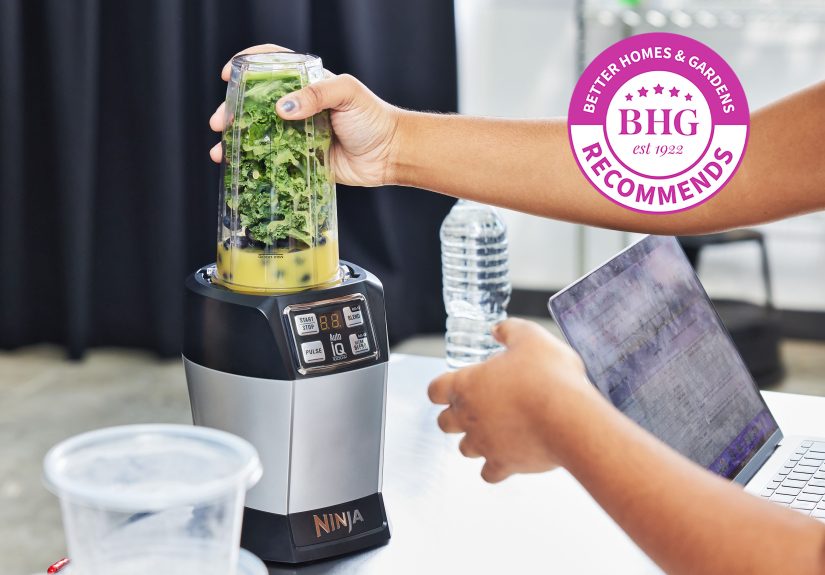
- Green smoothie test: orange juice + kale + blueberries + ice (to see how well it handles fibrous greens, skins, and ice).
- Thick shake test: banana + oat milk + peanut butter + date + protein powder (to stress thick, sticky ingredients that love to clump).
- Ice-only test: a short, controlled crush (to check whether blades stall, skip, or produce consistent texture).
- Small-batch sauce test: pesto or a dressing-style blend (to see if it emulsifies smoothly or leaves gritty bits behind).
- Leak + travel test: to-go lids got tipped, jostled, and “oops’d” on purpose.
Our scoring (a.k.a. why some blenders made us sigh)
- Texture: smooth enough to sip through a straw without chewing.
- Consistency: not just “good once,” but repeatably good.
- Ease of use: fewer steps, fewer parts, fewer opportunities to forget a gasket.
- Cleaning: especially under-blade crevices (the blender equivalent of a car-seat french fry).
- Noise + vibration: we didn’t demand silence, but we did reward “less like a lawnmower.”
- Value: performance per dollar, including useful accessories.
Winners at a glance
- Best Overall Personal Blender: NutriBullet Pro 900
- Best for Smoothies + Presets: Ninja Nutri-Blender Pro with Auto-iQ (BN401)
- Best “Push-to-Blend” Simplicity: Ninja Nutri-Blender Plus (BN301)
- Best Upgrade Pick (Silky Results): NutriBullet Ultra
- Best Budget Personal Blender: Hamilton Beach Personal Blender (Blend-and-Go style)
- Best for Small-Batch Sauces + Sleek Design: Zwilling Enfinigy Personal Blender
- Best Cordless/On-the-Go: Ninja Blast Max (cordless)
Best Overall Personal Blender: NutriBullet Pro 900
If personal blenders had a “most likely to be used daily” yearbook superlative, the NutriBullet Pro 900 would win with a smug little grin. It consistently lands at (or near) the top across major testing outlets because it nails the basics: strong blending, simple operation, and cups that actually work as to-go containers.
Why it won
- Sweet spot power: Enough muscle to break down frozen fruit and leafy greens without making you babysit the blend.
- Simple “twist-and-go” workflow: No menu-diving. You lock the cup in and blend.
- Great everyday texture: Our green smoothie came out creamy with minimal leaf confetti, and the thick shake didn’t stall out.
- Accessories are practical: Multiple cups and drink lids make it easy to blend, cap, and leave the house.
Who should buy it
You make smoothies, shakes, or blended breakfasts several times a week and want something powerful but not fussy. This is also a strong pick if you prefer a single serve blender that can handle frozen ingredients reliably.
Who should skip it
If you want true variable speeds, timed programs, or hands-free presets, you may prefer a model with dedicated controls. Also, like many bullet-style blenders, cleaning under the blade assembly can take an extra minute of attention.
Best for Smoothies + Presets: Ninja Nutri-Blender Pro with Auto-iQ (BN401)
The Ninja BN401 is for people who want a personal blender to feel a little more “appliance-y” (in a good way). Instead of relying purely on your timing instincts, you get preset programs that pulse, blend, and pause in patterns designed to produce smoother results. It’s also a favorite for single-serve smoothies and protein shakes thanks to its high peak power and purpose-built blade assembly.
Why it won this category
- Auto-iQ takes guesswork out: Helpful when you’re blending half-awake at 6:30 a.m.
- Strong performance on tough ingredients: Frozen fruit and ice blended down quickly, and greens were handled better than most.
- Good “set it and walk away” feel: Presets keep blends more consistent from one day to the next.
Best use cases
Daily smoothies, protein shakes, and icy drinksespecially when you want consistency without manual pulsing. If your smoothies usually include frozen pineapple, spinach, ice, or nut butter, this is a high-confidence pick.
Best “Push-to-Blend” Simplicity: Ninja Nutri-Blender Plus (BN301)
Some blenders are complicated. The Ninja BN301 is not one of them. You press down to blend. You stop pressing to stop blending. That’s it. And somehow, it still delivers excellent results. This model shines when you want control without a control panelespecially for people who like to “watch the vortex” and stop when it looks right.
What stood out in our tests
- Excellent ice + frozen fruit handling for the size: Our icy green smoothie hit a smooth, drinkable texture quickly.
- Direct control: Great for micro-adjusting thickness (you’re basically the timer).
- To-go friendly: Blend in the cup, swap the blade for a lid, and you’re out the door.
If you want something that feels intuitive in five seconds flat, this is the “no-buttons, no drama” winner.
Best Upgrade Pick: NutriBullet Ultra
The NutriBullet Ultra is what happens when a personal blender decides it wants to act like a premium countertop modelwithout growing into one. It’s known for producing noticeably silky smoothies and handling thick blends better than many single-serve competitors. If you regularly blend dense recipes (think hummus, thick protein shakes, or smoothie bowls), this is the upgrade that makes your spoon stop hitting gritty bits.
Why it’s worth the jump
- Excellent texture on thick blends: Peanut butter + date + protein powder came out smoother and more uniform.
- Premium user experience: More refined controls and build details than the basic “twist-and-go” models.
- Great for people who hate “chunk regret”: Especially with fibrous greens and frozen fruit.
If you’re currently blending on a basic model and keep thinking, “Why is my smoothie crunchy?”this is the fix.
Best Budget Personal Blender: Hamilton Beach Personal Blender
Not everyone needs a high-powered blender cannon for breakfast. If your go-to blends are softer fruits, protein powder, milk, or a banana that’s already halfway to being banana bread, the Hamilton Beach style personal blender is a smart budget pick. It’s inexpensive, compact, and the blend-and-go jar is convenient for quick shakes.
What it’s best at
- Simple shakes: protein powder + milk + peanut butter + soft fruit.
- Space-saving: great for dorms, tiny kitchens, and “my counter is a parking lot” homes.
- Low commitment: a great entry-level option if you’re not sure you’re a smoothie person yet.
Reality check
Budget personal blenders can struggle with large frozen chunks and heavy ice loads. If your recipes are mostly frozen fruit and greens, you’ll likely be happier with a more powerful NutriBullet or Ninja.
Best for Small-Batch Sauces + Sleek Design: Zwilling Enfinigy Personal Blender
The Zwilling Enfinigy feels like a personal blender that went to design school and came back with a capsule wardrobe. It’s compact, stylish, and surprisingly capable on smoothies and small-batch saucesespecially when your goal is “smooth and emulsified,” not “chunky and rustic.”
Why we like it
- Excellent for pesto, dressings, and sauces: Great when you’re blending smaller quantities and want better control.
- Multiple modes: Helpful when you want a quick pulse vs. a longer smoothie-style blend.
- Great for single servings: The cup size is ideal for one person (or two small smoothies, if you’re willing to share).
If your personal blender is as much about weekday cooking as it is about smoothies, this one feels thoughtfully built for both.
Best Cordless/On-the-Go: Ninja Blast Max (cordless)
Cordless blenders are tricky: you want portability, but batteries don’t love crushing ice like a countertop motor does. The Ninja Blast Max earns its spot by making the on-the-go experience genuinely usefulblend at home, toss it in a bag, and (if separation happens) re-blend later without needing an outlet.
What it’s great for
- Gym and commute smoothies: especially lighter blends like fruit + yogurt + liquid.
- Re-blending later: helpful for protein shakes that separate after 30 minutes.
- Quick clean-ups: a short soap-and-water blend helps between deeper washes.
Portable blender expectations (keep them realistic)
Cordless models are best for drinks, not for serious frozen blending or thick nut-butter-heavy recipes. If you want “Vitamix vibes,” choose a plug-in personal blender with higher power.
What to look for in the best personal blender
Power (and why “peak watts” can be misleading)
You’ll see brands advertise “peak watts” a lot. In practical terms, higher power often helps with ice and frozen fruit, but design matters too: cup shape, blade geometry, and how well ingredients circulate can beat raw wattage in real kitchens. If you frequently blend greens and frozen fruit, aim for a higher-powered plug-in model.
Cup size and daily usability
Most personal blender cups land around 16–24 ounces. Bigger isn’t always better: very large cups can be awkward in car cup holders, and smaller cups can force you to blend in batches. Choose the cup size that matches how you actually drink smoothies.
Cleaning and the “under-blade” problem
Many personal blenders have one annoying truth: the underside of the blade assembly can trap gunk. Look for designs that disassemble easily, and consider whether most parts are dishwasher-safe. A blender you dread cleaning is a blender you won’t use.
Safety and recalls (yes, this matters)
Before buying any portable blenderespecially cordless modelscheck current safety notices. For example, the BlendJet 2 had a major recall, and official guidance has changed over time. In general: avoid buying recalled models secondhand, don’t ignore recall updates, and use reputable retailers.
FAQ: Personal blender questions people actually ask
Can a personal blender crush ice?
Many canespecially higher-powered plug-in models. If you want consistent, fine ice texture for frozen drinks, the NutriBullet Pro 900 and Ninja single-serve models tend to do best. Cordless blenders vary widely.
Can I make hummus, pesto, or dressing in a personal blender?
Yes, but pick the right tool. For thick blends like hummus, a stronger motor and better circulation help. For pesto and dressing, smaller cups can actually be an advantage because they keep ingredients close to the blades.
Why does my smoothie come out chunky?
Common culprits: not enough liquid, adding ice first, overfilling the cup, or using huge frozen chunks. Try this order: liquid first, then soft ingredients, then frozen last. If it still struggles, you may need more power.
Real-life experiences from the personal blender trenches (500-ish words of truth)
Here’s the funny thing about personal blenders: the moment you buy one, you become a person who has opinions about banana ripeness. Not “green vs. yellow,” but “yellow with freckles, because I’m civilized” versus “brown and mushy, because I have deadlines and no time for shame.”
In real life, the best personal blender isn’t the one with the flashiest specsit’s the one you’ll use when you’re running late. That’s why blend-and-go cups are such a big deal. When the cup is the cup, you skip the pour, skip the extra dish, and skip the part where you stare into the sink like it personally betrayed you.
Our favorite weekday workflow looks like this: pour liquid first (almond milk, oat milk, whatever you’re currently loyal to), then add spinach or kale (don’t worry, fruit covers a multitude of leafy sins), then the soft stuff (banana, yogurt), and finally frozen fruit and ice. That order matters more than people think. Put ice on the blades first and you’ll get that tragic “blade tunnel” where everything spins but nothing blendslike a treadmill for blueberries.
Personal blenders also have a weird emotional benefit: they turn “I guess I’ll eat something” into “I made a thing.” Even a basic protein shake feels like a tiny life upgrade when it’s smooth, cold, and you didn’t have to wash a giant pitcher. And yes, a powerful single-serve blender can absolutely become the gateway into sauces and dressings. Once you realize you can make pesto in under a minute, store-bought jars start feeling… suspicious.
The biggest lifestyle lesson? Cleaning friction is real. If a blade assembly is a pain to scrub, you’ll start negotiating with yourself: “I’ll rinse it later,” you’ll say, like a liar. The better move is to clean it immediately after blending. A quick rinse right away prevents the peanut butter from turning into cement. For deeper cleaning, a drop of dish soap + warm water, blend for a few seconds, rinse, then actually disassemble and wash properly when you have time. It’s not glamorous, but neither is discovering dried smoothie funk the next morning.
And finally: personal blenders are loud. Some are less loud, but none are whisper-quiet. The trick is timing. If your household sleeps late, blend away. If you’re the early bird in a house full of night owls, consider pre-portioning ingredients the night before so you can blend quickly and be done before anyone wakes up and files a noise complaint. A great blender won’t fix your schedule, but it can make breakfast fast enough that you stop skipping it.
Bottom line
If you want one pick that works for most people, the NutriBullet Pro 900 is the safest bet: strong performance, easy operation, and consistently smooth results. If you want presets and power, go Ninja BN401. If you want maximum simplicity, the Ninja BN301 is a joy. And if you want upgrade-level smoothness for thick blends, the NutriBullet Ultra earns its keep.