Table of Contents >> Show >> Hide
- 1) The “Quaker Gun” Bluff: When a Log Pretended to Be Artillery
- 2) The Fake Trees of World War I: When a Tree Started Watching You Back
- 3) D-Day’s Phantom Army: Inflatable Tanks, Fake Radio, and a Whole Lot of Acting
- 4) Operation Mincemeat: A Paperwork Prank So Convincing It Rewrote Enemy Plans
- 5) Operation Cornflakes: The OSS Basically Prank-Mailed Propaganda
- So… Why Do “Pranks” Even Happen in Wars?
- Extra: of “Experience” With the Spirit of Wartime Pranks
- Conclusion
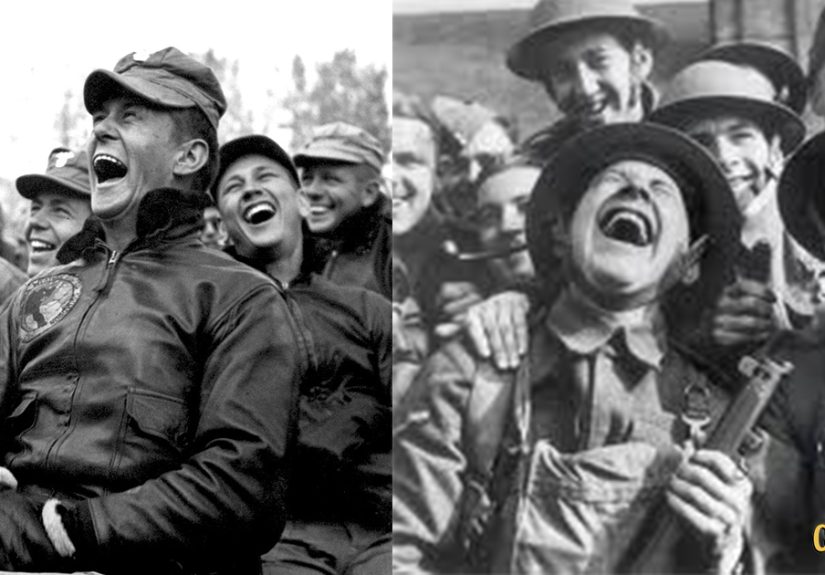
War is terrible. Full stop. But humans are weird little creatures, and even in the middle of history’s most serious moments,
someone inevitably thinks, “Okay… but what if we trick them with something incredibly dumb?”
This isn’t a “war is fun” story (it isn’t). It’s a “humans will use humor, creativity, and sometimes pure theatrical nonsense
to survive and outthink each other” storyoften through pranks that were basically military-grade practical jokes. Some were
small bluffs. Some were giant productions with props, scripts, and their own special effects departments.
Below are five of the goofiest real wartime pranksmeaning deceptions so odd, so clever, or so absurdly committed that they read
like a comedy sketch… except they were meant to save lives, protect troops, or confuse an enemy at a critical moment.
1) The “Quaker Gun” Bluff: When a Log Pretended to Be Artillery
If you’ve ever put a traffic cone on a chair to “reserve” a parking spot, congratulationsyou understand the spirit of the Quaker gun.
A “Quaker gun” wasn’t a weapon at all. It was the military equivalent of a cardboard cutout: a log, shaped and positioned to look
like a cannon from a distance. The name nods to the Quakers’ traditional opposition to violenceso a “Quaker gun” is a cannon that
refuses to be a cannon.
The goofiest example: the Revolutionary War-era surrender that happened without a shot
One famous American example comes from the Revolutionary War in the Carolinas. In December 1780, Lt. Col. William Washington (yes,
George’s cousin) needed artillery he didn’t have to pressure Loyalists fortified at Rugeley’s Mill. So he and his men made a pine log
look like a cannonthen acted like it was game over for anyone in range.
The performance worked. The Loyalists surrendered, largely because nobody wants to gamble on whether the “cannon” is real when it’s
pointed at you and the people holding it look confident. It’s a prank with big “I totally meant to do that” energyexcept it also shows
how bluffing can replace bloodshed when it convinces the other side to stand down.
Why it worked (and why it’s hilarious)
- Visibility beats reality: In tense situations, what you think is happening can matter more than what’s true.
- Confidence is contagious: A bold bluff can make the other side assume you have more power than you do.
- It’s literally a log: Like, a tree. Trying its best.
2) The Fake Trees of World War I: When a Tree Started Watching You Back
World War I trench warfare turned “peeking over the edge” into a truly bad idea. So both sides got inventive: they built
fake “trees” that were actually armored observation posts. Picture a hollow metal trunk, carefully painted and textured to
match the dead trees already scattered across the battlefield.
The prank part: the midnight tree swap
The wildest detail is how these trees could be deployed. In some cases, soldiers would study a real tree out in no-man’s-land,
build a near-perfect copy behind the lines, and thenunder cover of darknessreplace the original with the fake. In daylight,
the enemy sees “the same tree,” while someone inside quietly observes movement and relays information.
It’s a prank in the purest sense: you change one “background object” in the environment and suddenly it’s part of the plot.
It’s also the kind of plan that sounds impossible until you realize wartime engineering has never met a ridiculous challenge it didn’t want to date.
Why it mattered
Camouflage trees weren’t just cleverthey were a response to a battlefield where visibility could decide everything. If you can see
without being seen, you can plan, warn, and sometimes prevent disasters. Still, it’s hard not to marvel at the sheer audacity of
turning a tree into a spy.
3) D-Day’s Phantom Army: Inflatable Tanks, Fake Radio, and a Whole Lot of Acting
If you could time-travel to 1944 and tell Allied planners, “Hey, your big secret plan depends partly on inflatable equipment and scripted
radio chatter,” they’d probably nod and say, “Correct. Also, try not to step on the rubber Sherman.”
In the lead-up to D-Day, the Allies ran a massive deception effort meant to convince Germany the main invasion would strike somewhere
other than Normandy. The plan relied on many moving partsdummy equipment, fake administrative signals, misleading intelligence “leaks,”
and the careful use of double agents.
The phantom star of the show: a fake army with a famous “commander”
One especially bold tactic was building the illusion of a large force positioned to attack the Pas-de-Calais. To sell the story, the deception
needed credible “proof”: believable communications traffic, visible signs of preparations, and leadership that looked authentic from afar.
The deception leaned on the reputation of Gen. George S. Pattonhis public association with the notional force helped make the story feel
real to German planners who expected a commander of his stature to lead the main blow.
The goofiest part: the props department was real
This wasn’t just paperwork. The Allies used decoy equipmentthink dummy tanks, fake landing craft, and staged activityto create a battlefield
“set.” Meanwhile, radio operators generated plausible traffic to mimic real units. Some accounts even describe highly structured procedures for
“acting” like a unit that didn’t exist: routines, movements, and signals designed to look normal to an enemy watching from a distance.
And then there was America’s own specialized deception talent: the U.S. Army’s “Ghost Army,” a unit that combined visual decoys with sound and
radio trickery to simulate forces far larger than reality. If war ever had a traveling theater troupe with inflatable props, this was it.
Why it’s a prank (and why it’s genius)
- It’s performance art with stakes: props + sound design + messaging, built for one audience: the enemy.
- It weaponized assumptions: “Of course that famous general leads the real invasion.” That assumption becomes leverage.
- It’s absurdly committed: nobody half-inflates a tank. You go full balloon animal or you go home.
4) Operation Mincemeat: A Paperwork Prank So Convincing It Rewrote Enemy Plans
Some wartime pranks are louddecoys, fake units, sonic trickery. Operation Mincemeat was quiet and painstaking, like a prank pulled by someone
who color-codes their calendar and alphabetizes their spice rack.
In 1943, Allied planners wanted to mislead Nazi Germany about where an invasion would land. The plan: deliver false “top secret” documents
to German intelligence in a way that felt like an accident, not a setup. The operation famously involved creating a convincing fictional identity
around the documentsdown to the kind of small personal details that make a story feel lived-in.
Why it’s goofiest (without being goofy)
The weirdness isn’t slapstick; it’s the extreme commitment to realism. The plot depended on making the false information feel like a natural leak,
complete with plausible relationships, believable correspondence, and the kind of “paper trail clutter” that screams authenticity to anyone trained
to spot forgeries. The result was a deception that multiple historians describe as remarkably successful in misleading enemy decision-making.
Think of it as the ultimate “fake email chain”except built from physical artifacts and designed to be irresistible to enemy intelligence officers.
It’s not “ha-ha” funny, but it is undeniably “how did this possibly work?” funny.
5) Operation Cornflakes: The OSS Basically Prank-Mailed Propaganda
If Operation Mincemeat was meticulous, Operation Cornflakes was mischievous. Late in World War II, the U.S. Office of Strategic Services (OSS)
ran a psychological operation aimed at getting anti-Nazi material into German homes in a way that would actually be readbefore authorities could
intercept it.
The trick: make the enemy’s postal service do the delivery for you
The core idea was audacious: after bombing disrupted rail lines and mail transport, operatives would drop bags of fake “official” mail into the
wreckage area. The hope was that German postal workers, gathering scattered mail during cleanup, would unknowingly pick up the counterfeit bags
and route them along with legitimate correspondencedelivering propaganda as if it were ordinary mail.
It’s the kind of plan that sounds like it was invented during a late-night “what if…” brainstorming session. Yet it was real enough to be documented
by historians and intelligence-adjacent archives, and it reflects how psychological warfare sometimes leaned on surreal creativity.
Why it’s peak wartime prank energy
- It hijacks routine: people trust the mail. That trust is the doorway.
- It’s low-tech chaos: envelopes, bags, bureaucracyturned into a Trojan horse.
- It’s absurdly clever: getting your message delivered by the system you’re trying to undermine is next-level irony.
So… Why Do “Pranks” Even Happen in Wars?
Calling these “pranks” doesn’t mean they were harmless jokes. They were deceptionssometimes strategic, sometimes tacticalused to protect troops,
misdirect attacks, or disrupt enemy planning. Still, they share prank DNA: they rely on expectation, misdirection, and the human tendency to believe
what looks familiar.
There’s also a psychological layer. In extreme stress, humor and creativity can be coping tools. And on a practical level, deception is often about
saving lives by preventing direct confrontation. A log cannon that convinces an enemy to surrender can spare casualties. A decoy army that delays
reinforcements can give real forces time to move.
The uncomfortable truth is that war forces innovationsometimes brilliant, sometimes bizarre. And once you’re already inventing new ways to survive,
the line between “strategy” and “the world’s most serious prank” can get surprisingly thin.
Extra: of “Experience” With the Spirit of Wartime Pranks
You don’t have to be on a battlefield to recognize the feeling behind these stories: that jittery mix of fear, adrenaline, and the desperate need
to believe you still have choices. In normal life, a prank is a way to break tensionsomeone jumps out from behind a door, everyone yells, and then
the world snaps back into place. In wartime, the world doesn’t snap back. So people reach for the next best thing: control, even if it’s made of
rubber, plywood, and confidence.
Imagine being a young soldier tasked with inflating a dummy tank. You’re not “fighting” in the movie sense. You’re hauling canvas, checking seams,
and positioning the thing so it looks believable from far away. You might joke that you’re in the “Balloon Division,” but you also know the point:
if the enemy focuses on your fake tank, they’re not focusing on someone real. The humor isn’t denying the dangerit’s a way to keep your brain from
melting under it.
Or picture the mindset behind a Quaker gun bluff. You’re standing there thinking, “We don’t have the equipment we need.” That’s the moment when panic
usually wins. But instead, someone says, “What if we make them think we have it?” That’s a mental shift from helplessness to creativity.
It’s also the same logic that shows up in everyday life: when you can’t overpower a problem, you outsmart it. You change the frame.
The fake trees have their own kind of eerie humor. A tree is supposed to be the most neutral object imaginable. It’s background. It’s scenery. But in
these stories, “scenery” becomes surveillance. That’s both clever and unsettlingand it teaches a simple lesson about human perception: we stop noticing
what we assume is harmless. In ordinary life, that might be why you miss the “exit” sign in a crowded hallway. In war, that assumption can be exploited
at terrifying scale.
Even the paper-based operationsMincemeat and Cornflakesfeel oddly familiar in a modern way. They’re basically about storytelling and distribution.
They ask: What message will people believe? What channel will carry it? What details make something feel real? You can see the same mechanics in marketing,
rumors, and viral postsexcept in wartime, the consequences are enormous. That’s why these “pranks” are worth remembering: they’re extreme examples of how
minds can be guided by expectations, and how small detailsan identity, a routine, a piece of “official” mailcan steer big decisions.
The takeaway isn’t “war is funny.” It’s that humans, even in the worst conditions, still invent. Still improvise. Still reach for a moment of levity or
cleverness that says, “We’re not just targetswe’re thinkers.” And sometimes, that thinking looks like a log pretending to be a cannon. History is wild.
Conclusion
The goofiest wartime pranks weren’t jokes for laughsthey were deceptions built from human psychology: what we expect to see, what we fear, and what we
assume is real. From a “cannon” made of wood, to trees that secretly watched enemy lines, to entire armies made of sound effects and inflatable props,
these stories show how creativity can become a tool for survival.
If there’s any “comfort” in reading them, it’s this: even in history’s darkest chapters, people still used imaginationnot to pretend the horror wasn’t
there, but to find ways to protect each other and outmaneuver destruction.