Table of Contents >> Show >> Hide
- Why the Current Pricing Model Feels Weird
- What You’re Really Paying For (And Why It Costs More Than You Think)
- So Why Charge More? Because It Fixes the Incentives
- The Obvious Pushback: “But We’re Already Paying Too Much!”
- Specific Examples of How Pricing Is Already Moving
- A Simple Framework: Price vs. Value vs. Behavior
- What a “Better” Streaming World Could Look Like
- So… Should Streaming Services Charge More?
- of Real-World Experiences With Streaming “Value”
For years, streaming services trained us to believe that “all the entertainment in the world” should cost about the same as
two fancy coffees. We got used to the miracle: brand-new movies, prestige TV, live sports add-ons, kids shows on demand,
documentaries for every niche hobby, and an endless back catalogdelivered instantly, in 4K, with downloads, profiles, and
autoplay that politely asks, “Are you still watching?” (It knows. It always knows.)
Here’s the uncomfortable truth: streaming has probably been underpriced relative to the value people actually get out of it.
And if you want streaming to stay goodreliably good, not “one good show a year and then 14 reality spin-offs” goodthen
streaming services should charge more. Not in a cartoon-villain way. In a “let’s make the business sustainable and the product
better” way.
Why the Current Pricing Model Feels Weird
The modern streaming era was built on a simple strategy: grow subscribers first, figure out profits later. That’s not unique to
streamingtech companies have used the playbook for decades. The problem is that entertainment isn’t software in the classic sense.
Content costs don’t behave like “write code once, sell forever.” Shows expire, audiences move on, tastes change, and the next hit
costs real money to create.
When services keep monthly prices low while competing in an arms race for content, something has to give. Usually, it’s one of these:
fewer risks, smaller creative budgets, more ads, more bundling complexity, more price tiers, more “exclusive” content that disappears
later, or a slow drift toward the cable bundle we were all so excited to escape.
Underpricing Creates a Hidden Tax: Confusion
If you’ve ever tried to help a family member sign up for the “right” plan, you know the struggle: ad-supported vs. ad-free,
standard vs. premium, mobile-only, add-ons for sports, add-ons for no ads (on top of ads?), and the eternal question:
“Does this include that one show everyone is talking about?”
Low sticker prices don’t always mean low total cost. Many households rotate subscriptions, stack multiple services at once, and pay
for months they barely use. In practice, a “cheap” streaming ecosystem can be surprisingly expensivejust less obvious than a single
cable bill.
What You’re Really Paying For (And Why It Costs More Than You Think)
Streaming looks like a simple product: press play, enjoy. Under the hood, it’s an expensive machine that runs on three big cost buckets:
content, technology, and customer acquisition.
1) Content: The Engine That Never Stops
A great library isn’t a one-time purchase. Streaming services license shows, fund originals, pay talent, build production pipelines,
and compete for sports rights and blockbuster films. Even when a platform owns a studio, “internal” productions still cost cash.
The balance sheet doesn’t accept “but it’s our own movie” as payment.
And unlike many products, content value decays fast. Last year’s buzz becomes next year’s “I’ll watch it someday,” which is the
entertainment equivalent of putting vegetables in the crisper drawer.
2) Technology: The Part Everyone Forgets
Global streaming means massive infrastructure: servers, content delivery networks, apps across dozens of devices, accessibility features,
security, payments, recommendation engines, and customer support. Viewers expect it to “just work” on a phone from 2019, a brand-new TV,
and a laptop with 37 browser extensions.
3) Subscriber Growth: The Expensive Hobby
Getting subscribers costs moneymarketing, promotions, partnerships, free trials (or pseudo trials), and churn management. If people cancel
after one season of a hit show, the service must constantly replace them. In streaming, churn is the monster under the bed, and it’s hungry.
So Why Charge More? Because It Fixes the Incentives
When prices are closer to the true cost of delivering value, companies can focus less on frantic subscriber growth and more on retention,
quality, and a calmer release strategy. Higher prices also encourage services to compete on real differentiation, not just “we have content”
(because everyone has content now).
Better Content Mix, Not Just More Content
The golden age of streaming sometimes turned into the beige age of streaming: too many shows, not enough time, and a creeping suspicion
that half the catalog is there to make the other half look better by comparison.
Charging more can support a shift from quantity to qualityfewer expensive swings, but more consistent batting averages. You don’t need
1,000 new titles a month. You need a reason to keep paying next month.
Less Reliance on Ads and Data-Driven Clutter
Ad-supported tiers can be a great optionespecially for price-sensitive viewers. But if the primary business model becomes “make up for
low subscription prices with advertising,” user experience changes. You get more interruptions, more aggressive upsells, and more pressure
to optimize for minutes watched rather than long-term satisfaction.
When subscription revenue is healthier, platforms have more flexibility to keep ads reasonable, invest in accessibility, and improve
the product instead of constantly redesigning the menu so you accidentally click on something you didn’t mean to.
The Obvious Pushback: “But We’re Already Paying Too Much!”
Fair. Subscription fatigue is real. Many households feel like they’re back to juggling a bundlejust with more passwords and less customer
service music.
But this is exactly why “charge more” needs a companion idea: charge more, but make the value clearer. Higher prices
only work if streaming companies stop trying to be everything to everyone all at once.
What “Charge More” Should Actually Mean
- Fewer confusing tiers: One or two simple plans beats a flowchart.
- More transparent bundling: If services bundle, the bundle should be a genuine discount, not a scavenger hunt.
- Stronger libraries that don’t vanish: If a show leaves, communicate it clearly and early.
- Better annual plans: Reward commitment with meaningful savings.
- Fair household rules: Make sharing policies understandable and consistent, not a surprise audit.
In other words: raise the price, then behave like a premium product. People will pay more for something that feels stable, intentional,
and worth keeping.
Specific Examples of How Pricing Is Already Moving
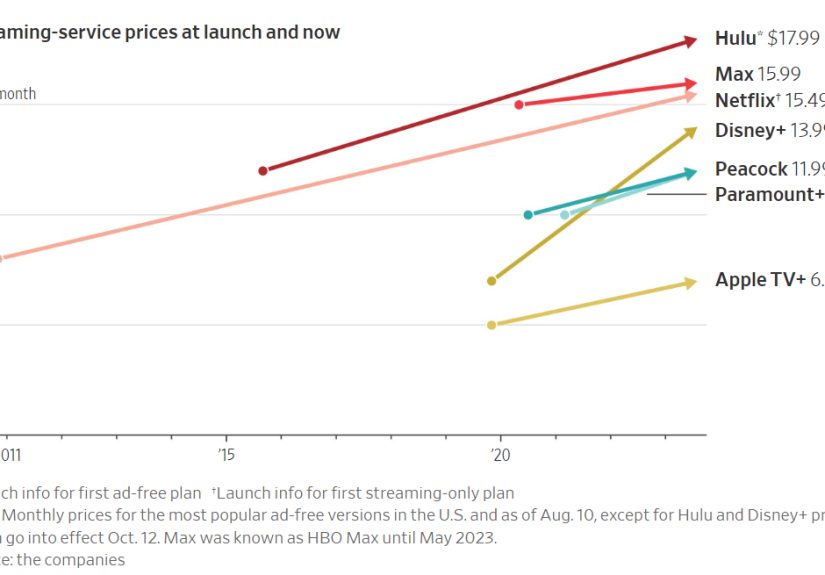
We’ve already watched the industry drift toward higher prices and more segmentation. Many major platforms introduced ad-supported tiers,
raised ad-free prices, tightened password sharing rules, and leaned into bundles with sister services or telecom partnerships. The direction
is clear: streaming is shifting from “growth at any cost” to “profitability and retention.”
That shift is not inherently bad. It’s what happens when a market matures. Early adopters get amazing deals; later, the business has to
stand on its own.
The Cable Comparison (And Why It’s Not the Same)
The fear is that streaming becomes cable 2.0. But streaming still has advantages cable never mastered:
on-demand viewing, better personalization, easier cancellation, and the ability to mix-and-match. The goal isn’t to recreate cable.
The goal is to price streaming like what it actually is: a premium entertainment utility.
A Simple Framework: Price vs. Value vs. Behavior
Here’s a wealth-of-common-sense way to think about it: your streaming budget is a behavioral problem, not just a pricing problem.
If you subscribe to five services year-round but only truly watch two, the issue isn’t that the services cost money. The issue is that you’re
paying for optional things by default.
Try the “Core + Rotation” Approach
Keep one or two services as your core (the ones you use weekly). Rotate everything else. Watch a season, cancel, move on.
Streaming companies don’t love this, but it’s rational consumer behaviorand it’s exactly why platforms need higher prices and stronger retention
strategies.
Why Higher Prices Might Help Consumers, Too
This sounds backwards, but hear it out: when services are priced too low, they compete by flooding the zone with content and promotions.
That encourages binge-and-cancel habits, which encourages more “must-watch” gimmicks, which encourages more fragmentation. A slightly higher,
more stable price can push platforms to focus on ongoing value instead of constant hype cycles.
What a “Better” Streaming World Could Look Like
Imagine a streaming ecosystem where:
- Each major service has a clear identity (not “we have everything”).
- Pricing is simple and transparent.
- Ad tiers exist, but they’re not unbearable.
- Bundles reduce cost and friction instead of increasing confusion.
- Libraries are curated, not cluttered.
- Platforms invest in reliability and user experience, not just headline content.
That world probably costs a bit more per monthbut it may feel less wasteful overall because you’re paying for fewer services that you actually
keep and use.
So… Should Streaming Services Charge More?
Yeswith conditions. “Charge more” works only if platforms earn it: better consistency, clearer value, fewer dark patterns, and less chaos.
If higher prices simply fund more mediocrity and more fragmentation, consumers will respond the same way they always do: cancel, rotate, pirate,
or go outside (briefly) until the next hit show drops.
Streaming started as a bargain because it needed to change behavior. It succeeded. Now the industry is learning the other half of the lesson:
sustainable businesses require sustainable pricing. You can’t run the world’s biggest entertainment library on vibes and intro offers.
of Real-World Experiences With Streaming “Value”
If you want to understand why “streaming should charge more” is even a conversation, look at how people actually behave at home. In a lot of
households, streaming subscriptions aren’t purchased like deliberate monthly bills. They’re collected like free tote bags at a conference:
you get one because it’s there, then you forget you have it until you trip over it later.
One common experience is the “hit show tax.” A buzzy series drops, everyone at work (or online) is talking about it, and suddenly you’re paying
for a service you hadn’t opened in months. You promise yourself you’ll cancel after the finale. Then the algorithm suggests three other shows,
and the next thing you know you’ve been subscribed for half a year while mostly rewatching the same comfort sitcom you already own on DVD
(somewhere in a box labeled “cables”).
Another real pattern is the “family plan drift.” A household starts with one subscription and gradually adds profiles for kids, a spouse,
a sibling, maybe a parent. Everyone watches different things at different times. It feels like the subscription is “earning its keep,” but
usage is often uneven. One person is a daily viewer; another watches two weekends a year. When services enforce clearer household rules, it can
feel annoying, but it also forces an honest inventory: who is actually using what? That’s uncomfortable, like checking your bank statement
after a month of “just little purchases.”
People also experience streaming quality differently depending on life stage. If you’re a parent and the kids watch the same educational show
every morning, a subscription is practically a utility. If you’re a student with a busy schedule, you may subscribe for one specific title,
watch it in two nights, and cancel. If you’re a sports fan, you might pay extra for add-ons and still discover half the games you want are on
a different service. That’s not just a pricing issueit’s a packaging issue. Higher prices can be justified when packaging becomes clearer
and less fragmented.
Finally, there’s the “choice fatigue” experience: you open a service, scroll for ten minutes, and close it. Paradoxically, a giant library can
reduce satisfaction. This is where charging more could actually improve the productif it funds better curation, smarter discovery tools, and
a library that feels intentionally built instead of endlessly accumulated. Most people don’t want infinite content. They want the right content
at the right time without needing a part-time job in scrolling.
In real life, the best streaming months are the ones where you forget the price because the service is consistently useful. The worst months are
the ones where you remember the price because you’re paying for the idea of entertainment, not the reality of watching it. If charging more helps
companies build services that are easier to keepand easier to quit when you’re donethat’s a trade-off many viewers would accept.