Table of Contents >> Show >> Hide
- The “OMG” Staircase Formula: Contrast, Continuity, Comfort, Code
- Start Here: A 10-Minute Staircase Safety Scan
- Design Upgrades That Turn “Ho-Hum” Into “OMG”
- Budget Reality Check: What Staircase Upgrades Tend to Cost
- A Simple “Do This, Not That” Plan for a Staircase Makeover
- Common “Why Is This Happening?” Staircase Problems (and Fixes)
- Conclusion: Your Staircase Deserves Main-Character Energy
- of Real-World Staircase Makeover Experiences
Every home has at least one “background character.” You know the type: it shows up in every daily scene,
does a ton of work, and gets exactly zero applause. In many houses, that character is the staircase.
It’s a high-traffic hallway that happens to be verticalcollecting scuffs, creaks, fingerprints, and
the emotional baggage of every rushed Monday morning.
The good news: a staircase makeover is one of the most satisfying home upgrades because it changes how
your whole entry and main living space feels. The better news: you don’t have to rebuild anything
to get that “OMG” moment. With smart paint choices, lighting, a runner (real or faux), and a few
safety-first upgrades, you can turn “meh” into “wow” faster than you can say “Why didn’t we do this sooner?”
The “OMG” Staircase Formula: Contrast, Continuity, Comfort, Code
The most jaw-dropping stair transformations have four things in common:
- Contrast: Light/dark, matte/gloss, wood/paint, or pattern/solidsomething that adds visual pop.
- Continuity: The staircase ties into nearby flooring, wall color, trim, or hardware so it looks intentional.
- Comfort: Underfoot traction, hand support, and lighting that makes nighttime trips feel less like an obstacle course.
- Code awareness: Even cosmetic updates shouldn’t sabotage safety essentials like handrails and tread edges.
Start Here: A 10-Minute Staircase Safety Scan
Before you pick a paint swatch or fall in love with a runner pattern, take ten minutes to walk your stairs like a home inspector
(but with better shoes and fewer frowns). You’re looking for the stuff that can quietly ruin both your makeover and your day.
1) Traction and slip risks
Smooth, glossy treads can turn into a skating rinkespecially with socks, pets, or kids doing their best impression of a tornado.
If you’re painting, choose a finish meant for floors and consider adding a runner or stair treads. If you’re staining, plan for
a protective topcoat and a traction strategy (runner, treads, or a non-slip finish).
2) Handrail confidence
A staircase can be “pretty” and still feel unsafe if there’s nothing reliable to grab. Check whether your handrail is solid,
comfortable to grip, and mounted at a sensible height. If you’re updating the railing or balusters, this is where “design” meets
“don’t mess around.”
3) Tread edges (nosings) and visibility
The front edge of each step takes the most abuseand it’s what your foot finds first. Worn edges, chipped paint, or low contrast
between treads and risers can make stairs feel steeper than they are. This is a perfect place for subtle contrast: a slightly darker
tread, a crisp white riser, or a runner that frames the edges.
4) Lighting and shadows
Stair lighting is a makeover multiplier. It’s also a safety upgrade. If your stairwell has dramatic shadows, one overhead fixture
might not be enough. Sconces, step lights, or low-profile LEDs can make the whole space feel more expensiveeven if your budget is
firmly in the “IKEA candle section” range.
Design Upgrades That Turn “Ho-Hum” Into “OMG”
Now we get to the fun part: the upgrades that make people stop mid-step and say, “Wait… your stairs look amazing.”
Pick one “hero” change and one or two supporting changes. That’s how you avoid a staircase that looks like a craft store exploded.
Paint: The Cheapest Drama You Can Buy
Painting is the quickest way to modernize dated wood tones, cover scuffs, and create contrast. For maximum impact, consider:
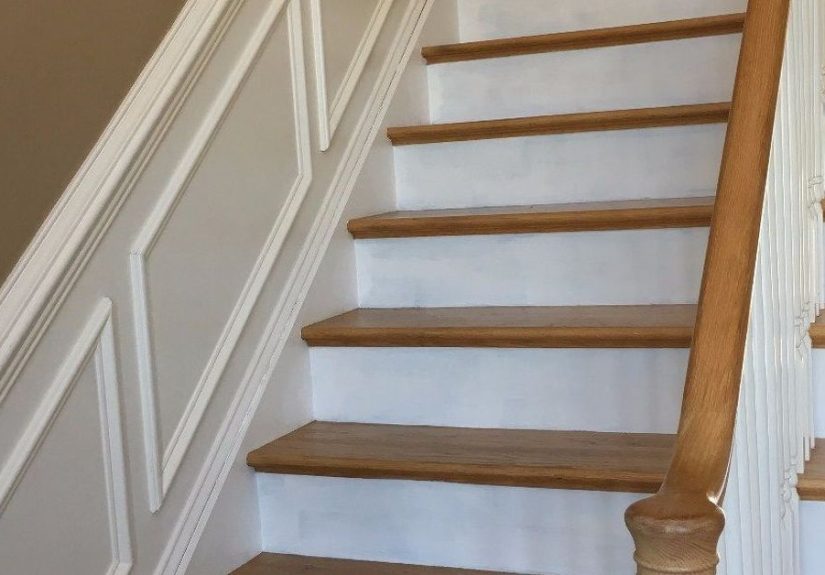
- Classic contrast: dark (or natural) treads with bright risers.
- Moody modern: deep charcoal or near-black on treads and railings for a boutique-hotel vibe.
- Patterned risers: stencils, stripes, or a subtle geometric design that reads “designer” from the foyer.
- Color story: a gradient or tonal shift that leads the eye upward without screaming for attention.
Pro tip: keep the wild side on the risers, not the treads. Treads take the beatingrisers get the compliments.
Runner Magic: Soft, Stylish, and Shockingly Transformative
A stair runner is like a tailored suit for your staircase. It adds texture, softens sound, improves traction, and instantly looks
“finished.” If you want the “OMG” reaction without a full remodel, this is your move.
Runner options come in three main flavors:
- Custom runner: gorgeous, pricey, and perfect if you want exact sizing and premium materials.
- DIY runner installation: more affordable, still high impact, and totally weekend-doable with the right prep.
- Faux runner (painted): a budget-friendly illusion that can look surprisingly upscale if you tape carefully and keep lines crisp.
If you’re installing a runner yourself, the “secret” is tension and alignment: keep it centered, keep it taut, and fasten securely.
If your staircase is a main feature of your entry, consider stair rods for a more classic, intentional look.
Railings and Balusters: Small Changes, Big Payoff
If your staircase has “builder basic” vibes, it’s often because the railing system blends into the backgroundor looks tired.
You don’t necessarily need new parts to get a new look:
- Paint the handrail: black or deep bronze reads modern and hides daily grime like a champ.
- Brighten the trim: crisp white stringers and newel posts can make the whole staircase feel cleaner and taller.
- Swap hardware: updated brackets, caps, or newel toppers are small upgrades with disproportionate impact.
- Refresh the profile: if a rail is bulky or awkward to grip, replacing the handrail alone can improve comfort and safety.
Think of railings like eyebrows: you don’t notice them until they’re wrong… and then you can’t unsee it.
Wall Treatment: Give the Staircase a Backdrop Worth Climbing
A staircase doesn’t exist in isolation. The walls beside it are basically a runway backdropso make them work.
Options that consistently look polished:
- Board-and-batten or wainscoting: adds architectural character and protects walls from scuffs.
- Gallery wall: family photos, prints, or a themed collection (travel, botanicals, black-and-white portraits).
- Wallpaper on the stair wall: instant personalityespecially in a narrow stairwell where pattern feels intentional, not overwhelming.
- Color-drenching: painting the stair wall and trim the same shade for a dramatic, designer look.
Lighting: The Upgrade That Makes Everything Look More Expensive
If your staircase feels like a dark tunnel, no amount of paint will fix the vibe. Lighting will.
Consider:
- Sconces: soft, even light that reduces harsh shadows on steps.
- Step lights: subtle illumination along the wall or near the baseboard.
- LED strip lighting: tucked under the handrail or along the stair stringer for a modern glow.
- Statement fixture: a pendant or chandelier that turns the stairwell into a focal point.
Budget Reality Check: What Staircase Upgrades Tend to Cost
Staircase makeovers come in tiers. Here’s a practical way to think about it (and avoid the classic “how did we spend that much?” moment).
Tier 1: Weekend Refresh (usually the most satisfying per dollar)
- Deep clean + patch dings + caulk seams
- Paint risers and trim
- Upgrade stair wall (paint or gallery wall)
- Add non-slip treads or a small runner
Tier 2: The “It Looks Like a New House” Upgrade
- Paint or refinish treads
- Install a runner
- Paint/refresh railing and balusters
- Improve lighting (fixture + better bulb temperature + additional light points)
Tier 3: Full Staircase Renovation
- Replace treads/risers or reconfigure layout
- New railing system
- Structural repairs, squeak fixes, leveling
- Permits/pro work where needed
Even if you’re staying mostly cosmetic, it helps to know typical pricing benchmarks: painting a staircase (when hired out) and carpeting
stairs are often quoted as separate line items, and labor can vary by region and stair complexity.
A Simple “Do This, Not That” Plan for a Staircase Makeover
Do this: Choose one hero element
A hero element is the thing people remember. Examples:
a bold runner, dramatic black railing, patterned risers, or a statement pendant.
Everything else should support itnot compete with it.
Not that: Combine three loud ideas
Rainbow risers + patterned runner + gallery wall + neon lighting is… a lot.
Unless you’re decorating a funhouse (and charging admission), pick a lane.
Do this: Prep like you mean it
The most common staircase makeover failure isn’t color. It’s prep. Stairs get constant friction, which means:
sand glossy surfaces, clean thoroughly, prime when needed, and respect dry/cure times. If the can says “dry in hours,”
remember it’s not always “ready for stomping in hours.”
Not that: Use wall paint on treads and hope for the best
Treads are floors. Treat them like floors. Choose durable products designed for high traffic and consider a protective topcoat
if the system you’re using calls for it.
Common “Why Is This Happening?” Staircase Problems (and Fixes)
Problem: Squeaks that get louder after the makeover
Paint and runners can make you notice squeaks more, not less. If you can access the underside, you can often tighten things up.
If you can’t, focus on stabilizing what you can (secure loose trim, address obvious movement) and use a runner to dampen sound.
Problem: Chips on painted treads
Chips usually come from skipping primer on a slick surface, insufficient sanding, or not allowing enough cure time.
The fix is annoying but effective: touch up, protect, and (if it keeps happening) recoat with a more durable system.
Problem: The runner looks crooked
Stairs are rarely perfectly symmetricalso you can’t rely on walls. Center your runner based on the stair width, not the surrounding trim,
and measure at multiple points. A chalk line and patience beat eyeballing every time.
Conclusion: Your Staircase Deserves Main-Character Energy
A staircase makeover isn’t just about pretty steps. It’s about changing the mood of your home’s most traveled “hallway,” improving safety,
and creating a design moment that feels intentional. Whether you go bold with a runner, dramatic with paint, elevated with lighting, or
polished with updated railings, the secret is balance: one standout choice, supported by cohesive details, finished with smart prep.
Because the truth is… you use your stairs every day. They might as well be gorgeous while they’re carrying you through life.
of Real-World Staircase Makeover Experiences
If you ask homeowners what surprised them most about taking a staircase from ho-hum to OMG, you’ll hear a consistent theme:
stairs are a small area with a big personalityand they’re less forgiving than walls. People often start the project thinking,
“It’s just paint,” and end it thinking, “Wow, I have a whole new respect for floors.” The first “aha” moment is usually prep.
On a wall, you can sometimes get away with a quick wipe-down. On stairs, every speck of dust, every glossy spot, and every tiny bump
has a way of announcing itself the second sunlight hits the treads.
Another common experience: the staircase becomes a design decision-maker for the rest of the entryway. Once the stairs look sharp,
mismatched light fixtures, tired trim paint, or scuffed baseboards suddenly feel louder. Many DIYers end up doing a “bonus round”
(touching up hallway paint, swapping a bulb temperature, adding a simple runner, or upgrading a handrail bracket) because the staircase
makeover raises the barin a good way. It’s not mission creep; it’s your house saying, “Oh, we’re doing nice things now.”
Runners, in particular, tend to deliver the biggest emotional payoff. Homeowners often report that the staircase immediately feels quieter
and more comfortable, especially in homes with pets or kids who treat stairs like a racetrack. A runner also makes small imperfections feel
less noticeable. If the treads aren’t perfectly uniform or the wood grain has seen better decades, a runner adds a forgiving layer of style.
People who choose a painted faux runner say the same thing: the impact is hugebut precision matters. Straight tape lines, consistent spacing,
and patience during the “don’t touch it yet” drying phase separate “handmade charm” from “why does my runner have elbows?”
There’s also the “lighting revelation.” Many homeowners don’t realize how shadowy their stairs are until they repaint or add contrast.
Suddenly, the darkest corner looks darker. Adding a sconce, a brighter fixture, or subtle step lighting can feel like an entirely separate
renovation. It’s one of those upgrades that makes guests say, “Your house feels so welcoming,” even if they can’t name exactly why.
Finally, the most satisfying experience people describe is the moment the staircase stops feeling like a utility zone and starts feeling like
part of the home’s personality. A gallery wall turns the climb into a mini story. A bold rail color adds confidence. A runner adds warmth.
And once it’s done, there’s a tiny, ridiculous joy in walking past the stairs and thinking, “Yep. Those are my stairs. And they look
incredible.” That’s the real “OMG”not just the look, but the feeling that your everyday space got an upgrade in both style and livability.