Table of Contents >> Show >> Hide
- What Is Sikes Dwarf Hydrangea Quercifolia?
- Why Gardeners Love Sikes Dwarf Oakleaf Hydrangea
- Key Features at a Glance
- How to Grow Sikes Dwarf Hydrangea Quercifolia Successfully
- Pruning Sikes Dwarf Oakleaf Hydrangea
- Landscape Uses for Sikes Dwarf Hydrangea Quercifolia
- Common Problems and How to Avoid Them
- Sikes Dwarf vs. Other Compact Oakleaf Hydrangeas
- FAQ: Quick Answers for Home Gardeners
- 500+ Words of Real-World Experience Notes with Sikes Dwarf Hydrangea Quercifolia
- Conclusion
If full-size oakleaf hydrangeas are the dramatic lead singers of the shrub border, Sikes Dwarf is the talented acoustic version: smaller, easier to place, and still impossible to ignore when it starts performing. Known botanically as Hydrangea quercifolia ‘Sike’s Dwarf’ (you may also see it written as “Sikes Dwarf”), this compact oakleaf hydrangea brings the same four-season charm as its bigger relativeswhite cone flowers, rich fall foliage, and peeling barkwithout taking over your walkway like an enthusiastic golden retriever.
This guide covers what makes Sikes Dwarf hydrangea quercifolia special, how to grow it successfully, how to use it in landscape design, and what real gardeners tend to experience after the honeymoon phase (spoiler: it’s still a very good relationship). Whether you’re gardening in a small yard, building a woodland border, or hunting for a foundation shrub with serious seasonal personality, this dwarf oakleaf hydrangea deserves a look.
What Is Sikes Dwarf Hydrangea Quercifolia?
Sikes Dwarf is a compact cultivar of the North American native Hydrangea quercifolia, commonly called oakleaf hydrangea. The species is native to the southeastern United States and is prized for its oak-shaped leaves, cone-shaped flower panicles, and strong seasonal color changes. “Quercifolia” literally refers to the oak-like foliage (a botanical way of saying, “Yep, the leaves really do look like oak leaves”).
What sets this cultivar apart is scale and habit. While many oakleaf hydrangeas mature into broad shrubs, Sikes Dwarf stays much more manageable, making it a favorite for smaller landscapes, patio-adjacent beds, and gardeners who like their plants impressivebut not bossy.
Common Names and Naming Notes
- Sikes Dwarf oakleaf hydrangea
- Sike’s Dwarf oakleaf hydrangea (apostrophe version is common in plant databases)
- Hydrangea quercifolia ‘Sike’s Dwarf’
In retail listings and garden articles, spelling may vary slightly. For practical purposes, these names refer to the same compact oakleaf hydrangea cultivar.
Why Gardeners Love Sikes Dwarf Oakleaf Hydrangea
1) Compact Size That Actually Fits Real Yards
One of the biggest selling points of Sikes Dwarf hydrangea is its smaller mature size. Instead of growing into a large 6- to 8-foot shrub like many standard oakleaf hydrangeas, Sikes Dwarf typically stays in the compact range, making it far easier to place near entryways, foundation beds, small borders, and seating areas.
Translation: you won’t plant it “just a little too close” and regret it in three years.
2) Four-Season Interest
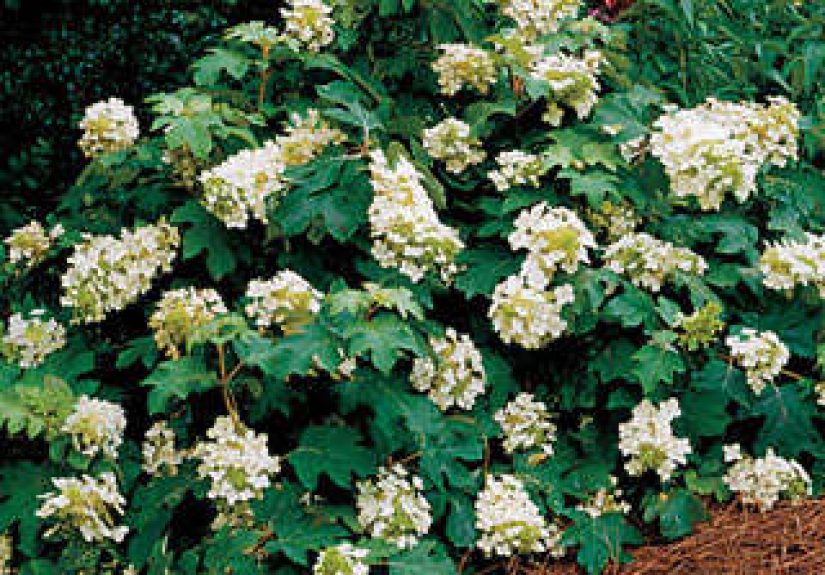
This shrub is not a one-season wonder. In late spring to summer, it produces cone-shaped white flower clusters that gradually age to pink and then tan-brown. In fall, the foliage develops rich tones of bronze, maroon, purple, and red. In winter, the exfoliating bark adds texture and color after the leaves drop.
If your garden tends to look sleepy outside peak bloom season, Sikes Dwarf helps keep the scene interesting for much longer.
3) Native Plant Appeal
Because it comes from a native species, oakleaf hydrangea fits beautifully into woodland-inspired and ecological landscapes. The fertile flowers can attract pollinators, while the shrub’s dense structure adds habitat value and layered texture in native-style plantings.
4) Better Proportions for Containers and Tight Spaces
Not every oakleaf hydrangea is happy in a container long-term, but compact selections like Sikes Dwarf are more realistic candidates for large plantersespecially where ground space is limited. It also works well as a “bridge plant” between tiny perennials and larger shrubs, helping a border feel intentional rather than crowded.
Key Features at a Glance
- Botanical name: Hydrangea quercifolia ‘Sike’s Dwarf’
- Plant type: Deciduous flowering shrub
- Growth habit: Compact, mounded to upright-mounded
- Mature size: Generally compact; often listed around 2–4 ft tall and 3–4 ft wide depending on conditions
- Flower color: White aging to pink/tan
- Bloom form: Cone-shaped panicles
- Bloom season: Late spring into summer
- Fall color: Bronze, maroon, purple, red tones
- Hardiness: Commonly listed in USDA Zones 5–9
- Light: Full sun to part shade (best performance usually with morning sun and afternoon shade in hotter areas)
How to Grow Sikes Dwarf Hydrangea Quercifolia Successfully
Light Requirements
Like many oakleaf hydrangeas, Sikes Dwarf is flexible, but “flexible” is not the same as “thrilled everywhere.” In cooler climates, it can handle more sun. In hot Southern climates, it performs best with morning sun and afternoon shade or filtered light. Too much harsh midday sun can scorch leaves, while too much shade can reduce flowering and weaken fall color.
Think of it as a shrub that enjoys sunlight but not being interrogated by it.
Soil and Drainage
The sweet spot is moist, well-drained, organically rich soil. Oakleaf hydrangeas generally appreciate consistent moisture, especially while establishing, but they do not want soggy conditions or chronically wet roots. Good drainage is non-negotiable.
Mulching is especially helpful because oakleaf hydrangeas have relatively shallow root systems. A layer of organic mulch helps regulate soil temperature, reduce moisture loss, and cut down on weed competition.
Watering
Newly planted shrubs need regular deep watering until established. Once rooted in, oakleaf hydrangeas become more tolerant of short dry periods than some other hydrangea types, but they still look and bloom best with even moisture. During long summer dry spells, don’t make the plant “prove how tough it is.” Water it well.
Fertilizing
In reasonably fertile garden soil, Sikes Dwarf often needs very little feeding. A light application of a balanced slow-release fertilizer in spring (or compost plus mulch) is usually plenty. Overfertilizing can push leafy growth at the expense of flowers and may make stems floppier.
In short: feed it like a good houseguest, not like you’re training it for a shrub bodybuilding competition.
Planting Time
Spring and fall are typically the best planting windows. These cooler seasons give the root system time to establish before severe summer heat or winter cold stress arrives. Avoid planting during extreme heat if possible.
Pruning Sikes Dwarf Oakleaf Hydrangea
Know This First: It Blooms on Old Wood
This is the most important pruning rule. Sikes Dwarf oakleaf hydrangea blooms on old wood, meaning next season’s flower buds are formed on growth produced the previous year. If you prune hard in late fall, winter, or early spring, you may accidentally remove the flower buds and then spend summer staring at a healthy shrub with zero blooms.
Best Time to Prune
If pruning is needed, do it right after flowering. In many landscapes, minimal pruning is best. Remove dead, damaged, or winter-killed wood in spring once the plant starts leafing out, and lightly shape only when necessary.
What to Prune
- Dead or broken stems
- Winter-damaged tips
- Occasional older stems to improve shape or airflow
- Spent blooms (optionalmany gardeners leave them for winter interest)
If you like the dried flower heads and peeling bark look in winter (many people do), leave the structure alone and prune later.
Landscape Uses for Sikes Dwarf Hydrangea Quercifolia
Small-Space Specimen
Sikes Dwarf shines as a specimen in smaller beds where a full-size oakleaf hydrangea would dominate the entire scene. Place it where you can enjoy the flower panicles up close and appreciate the foliage color change in fall.
Foundation Planting
Its compact size and low-maintenance nature make it an excellent foundation shrub. It offers a softer, more natural look than highly clipped shrubs and provides multi-season interest without constant shearing.
Woodland Border and Native Plant Gardens
Because the species is native to southeastern woodlands and stream-bank habitats, Sikes Dwarf feels right at home in layered plantings with other partial-shade shrubs and perennials. It pairs well with ferns, hellebores, hostas, sweetspire, and other plants that enjoy similar moisture and light levels.
Massing and Low Informal Hedge
Want a softer shrub edge instead of a rigid line? Plant multiple Sikes Dwarf hydrangeas in a staggered grouping. The effect is natural, textural, and seasonally dynamicwithout becoming a giant wall of green.
Large Containers
While in-ground planting is often easiest long-term, Sikes Dwarf can work in a generously sized container with excellent drainage. Use a quality potting mix, water consistently, and protect roots from severe winter exposure if you garden in colder parts of its hardiness range.
Common Problems and How to Avoid Them
Few or No Flowers
Usually caused by one (or more) of the following:
- Pruning at the wrong time (buds removed)
- Too much shade
- Winter bud damage in colder zones
- Late spring freezes after buds begin to develop
If your plant looks healthy but refuses to bloom, don’t panic. Review pruning timing and sunlight first.
Leaf Scorch
In hotter climates, too much direct afternoon sun can burn the foliage. Move new plantings to a site with filtered light or more afternoon protection if this becomes a recurring issue.
Powdery Mildew or Leaf Spot
Oakleaf hydrangeas can develop foliar issues in humid conditions, especially with poor airflow and overhead watering. Improve spacing, avoid wetting the leaves late in the day, and remove badly infected foliage if needed.
Winter Dieback
In colder parts of Zone 5, flower buds and stem tips may be damaged in severe winters. A sheltered site, winter mulch, and wind protection can help improve reliability.
Sikes Dwarf vs. Other Compact Oakleaf Hydrangeas
Sikes Dwarf vs. Pee Wee
Both are popular compact oakleaf hydrangea selections. Pee Wee is often listed as compact, but in many gardens it still grows larger than people expect. Sikes Dwarf is typically chosen when a truly smaller footprint is the priority.
Sikes Dwarf and the “Munchkin” Connection
If you’ve browsed oakleaf hydrangea cultivars, you’ve probably seen ‘Munchkin’. Several U.S. horticulture sources note that Munchkin is a seedling/offspring derived from Sikes Dwarf, which helps explain why Sikes Dwarf is such an important compact parent in oakleaf hydrangea breeding discussions. In other words, Sikes Dwarf didn’t just perform well in gardensit also helped shape later compact cultivars.
FAQ: Quick Answers for Home Gardeners
Is Sikes Dwarf hydrangea good for beginners?
Yes. If you can match the right light and drainage, it’s one of the more forgiving hydrangea choicesespecially compared with types that need more specific pruning or bloom-color expectations.
Can I grow it in full sun?
Sometimes, depending on climate. In cooler regions, yes with good moisture. In hot climates, give it afternoon shade to protect foliage quality.
Does soil pH change the flower color?
No. Unlike some bigleaf hydrangeas, oakleaf hydrangea flower color does not dramatically shift to blue or pink based on soil pH adjustments.
Is it deer-proof?
Nothing is truly deer-proof in a hungry neighborhood, but oakleaf hydrangeas are often described as more deer-resistant than some other hydrangea types.
Can it spread?
Oakleaf hydrangeas can produce suckers over time, but Sikes Dwarf is often noted for less frequent suckering than the species, which is one reason it behaves so well in tighter spaces.
500+ Words of Real-World Experience Notes with Sikes Dwarf Hydrangea Quercifolia
One of the most useful things about Sikes Dwarf hydrangea quercifolia is that it tends to reward realistic gardening habits. In practical garden settings, people often report that the first year is more about root establishment than fireworks. The shrub may bloom lightly or not at all, especially if it was planted late, moved from a nursery pot during hot weather, or placed in a site that gets more afternoon sun than expected. Then, in years two and three, it usually “clicks” and starts to look like the plant on the tag.
A common experience is underestimating width. Gardeners hear “dwarf” and imagine a tiny, slow, ultra-neat shrub. Sikes Dwarf is compact for an oakleaf hydrangea, but it still has a natural, broad, woody shape. People who leave breathing room around it tend to be happier than those who tuck it tightly between a walkway and a boxwood hedge. This is a shrub that looks best when it has space to arch a little and do its own thing.
Another real-world lesson is light balance. In hotter climates, many gardeners start with too much sun because they want better flowering. The result can be scorched leaves by midsummer and a plant that looks tired exactly when guests come over. The sweet spot is often bright morning sun with protection later in the day. Once gardeners move a plant (or plant the next one) in filtered light, the foliage usually looks richer and the shrub holds its composure through summer heat.
Watering habits also matter more than fertilizer in most landscapes. Gardeners frequently report better results from consistent moisture and mulch than from adding extra plant food. A well-mulched Sikes Dwarf with steady watering usually develops stronger growth and better flower production than a heavily fertilized plant in dry soil. This is one of those shrubs that quietly proves the point that good soil management beats “miracle” products.
Pruning is where many owners accidentally sabotage blooms. A very normal experience goes like this: the plant looks messy in winter, the gardener trims it neatly in late winter, spring growth looks great, and then summer arrives with few flowers. Once they learn that oakleaf hydrangeas bloom on old wood, the problem is solved. After that, most people prune much less and start enjoying the dried flower heads and peeling bark as part of the winter display.
In design terms, Sikes Dwarf often ends up being more versatile than expected. Gardeners use it near patios, in foundation beds, along shaded fences, and in woodland edges where larger hydrangeas would overwhelm the space. It also plays well with ferns, hostas, hellebores, and other shade-tolerant companions because its coarse leaves and cone blooms provide strong contrast without looking stiff. When fall color arrives, it can suddenly become the star of the whole bed.
Finally, the long-term experience many gardeners mention is appreciation. Sikes Dwarf is not always the flashiest plant in a one-gallon pot at the garden center, but after a few seasons it becomes the shrub people point to and say, “What is that?” It earns its keep in every season, doesn’t demand constant trimming, and offers a rare combination of native character, compact size, and ornamental value. In a world full of high-maintenance garden drama, that’s a pretty excellent personality trait.
Conclusion
Sikes Dwarf oakleaf hydrangea is one of those plants that solves several garden problems at once: it offers the beauty and seasonal drama of oakleaf hydrangea in a smaller, more usable size. For gardeners who want a dwarf oakleaf hydrangea with native roots, attractive flowers, strong fall color, and winter bark interest, it’s a smart, stylish choice.
Give it good drainage, the right amount of sun, and patience during establishment, and it will repay you with years of low-drama, high-impact performance. That’s the kind of garden math everyone can appreciate.