Table of Contents >> Show >> Hide
- Why Would Russia Use Trained Military Dolphins?
- Sevastopol: The Harbor at the Center of the Dolphin Story
- How Military Dolphins Fit Into Russia’s Black Sea Defenses
- Ukraine’s Drone War Changed the Black Sea
- Are the Dolphins Actually “Fighting” Ukraine?
- The Long History of Military Marine Mammals
- Why Dolphins Are So Effective Underwater
- What This Says About Russia’s Black Sea Fleet
- The Environmental Cost in the Black Sea
- What Readers Should Take Away
- Experience-Based Reflection: Watching the Dolphin Story Change How People Understand the War
- Conclusion
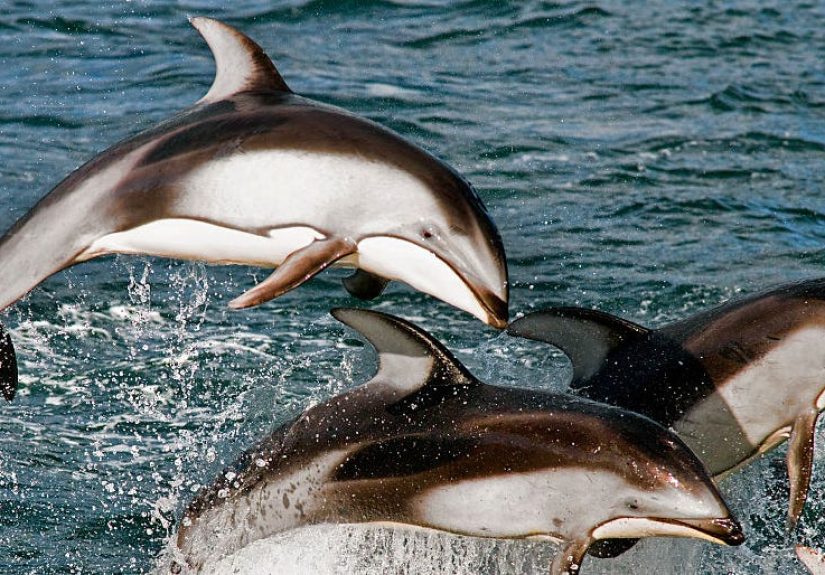
At first glance, the phrase “military dolphins” sounds like something cooked up by a screenwriter after too much coffee and one extremely confident documentary binge. Yet the story is real: during the Russia-Ukraine war, trained dolphins have reportedly become part of Russia’s layered defense system around key naval bases in occupied Crimea. In the Black Sea, where drones, missiles, submarines, sabotage fears, and old-fashioned naval paranoia all swirl together, even bottlenose dolphins have been pulled into the conflict.
The core claim is not that dolphins are running the war like tiny admirals with flippers. The more realistic picture is stranger and more practical: Russia appears to have deployed trained marine mammals near Sevastopol, the historic home of the Black Sea Fleet, to help detect underwater threats such as divers or suspicious objects. Satellite imagery and defense analysis have repeatedly pointed to dolphin pens near harbor entrances, especially after Russia’s full-scale invasion of Ukraine began in February 2022.
That makes the story important for two reasons. First, it shows how nervous Russia has become about protecting its Black Sea Fleet from unconventional Ukrainian attacks. Second, it reminds us that modern war is not only fought with tanks, jets, and drones. Sometimes it reaches into the animal kingdom, grabs one of the ocean’s smartest mammals, and says, “Congratulations, you work security now.”
Why Would Russia Use Trained Military Dolphins?
Dolphins have natural abilities that make them unusually useful in underwater security. They are fast, agile, highly trainable, and excellent at using echolocation to detect objects in murky water. A harbor entrance is a difficult environment for humans and machines alike: currents shift, visibility can be poor, and threats may approach quietly beneath the surface. Dolphins, however, are built for this world. They do not need headlights, scuba gear, or a pep talk.
Military marine mammal programs have historically focused on jobs such as detecting mines, locating lost equipment, identifying suspicious swimmers, and helping guard ships or ports. The United States Navy has long operated a Marine Mammal Program using bottlenose dolphins and California sea lions for underwater detection and recovery tasks. Russia’s program has its own Soviet-era roots, especially around the Black Sea and Crimea.
In the context of Ukraine, the likely purpose is defensive. Sevastopol is not just another port; it is one of the most strategically important naval hubs in the region. Russia’s Black Sea Fleet has used ships and submarines to project power, support operations, and launch long-range attacks. For Ukraine, those vessels are valuable targets. For Russia, protecting them has become a daily headache with barnacles.
Sevastopol: The Harbor at the Center of the Dolphin Story
Reports based on satellite imagery showed two dolphin pens placed near the entrance to Sevastopol harbor around the time Russia launched its full-scale invasion of Ukraine in 2022. Their location mattered. Positioned near the harbor mouth, the pens suggested a mission tied to base defense rather than ordinary animal housing or tourism. The dolphins were likely intended to help detect underwater intruders before they could threaten ships, piers, or sensitive naval infrastructure.
Sevastopol has been a major Black Sea naval base for generations. After Russia seized and annexed Crimea in 2014, it also took control of facilities connected to Ukraine’s earlier dolphin program. That history makes the 2022 reports less surprising. Russia did not suddenly wake up one morning and invent the idea of a dolphin sentry. The infrastructure, tradition, and strategic incentive were already there.
What changed after 2022 was the urgency. Ukraine’s navy was heavily outmatched in conventional terms, but Kyiv increasingly turned the Black Sea into a testing ground for asymmetric warfare. Sea drones, missiles, special operations, and long-range strikes put pressure on Russian naval assets. In response, Russia layered defenses around ports: booms, nets, patrols, electronic systems, barriers, and, yes, trained dolphins. It is basically a security onion, except one layer squeaks.
How Military Dolphins Fit Into Russia’s Black Sea Defenses
Military dolphins are not magic. They do not replace sonar, patrol boats, divers, barriers, radar, or intelligence. Instead, they add a living detection layer to a larger defensive system. Their value is greatest in close-in harbor security, especially against underwater threats that are hard to spot from the surface.
A trained dolphin might alert handlers to an unusual object, detect a diver, or help mark a suspicious location. In theory, that gives human operators more time to respond. In practice, the details are closely guarded, and many claims about military dolphins drift quickly from fact into folklore. The safest conclusion is this: Russia appears to see them as useful enough to keep deploying them around high-value naval facilities.
That fact alone is revealing. When a navy invests in dolphins, floating barriers, camouflage, and other port defenses, it is signaling concern. Russia’s Black Sea Fleet has suffered repeated pressure from Ukraine’s unconventional maritime campaign. Even when ships are not sunk, the need to shelter them, move them, or defend them more heavily changes how the fleet operates. A warship stuck behind layers of harbor protection is safer than one at sea, but it is also less useful.
Ukraine’s Drone War Changed the Black Sea
The dolphin story cannot be understood without Ukraine’s naval drone campaign. Ukraine does not have a traditional fleet that can match Russia ship for ship. Instead, it has leaned into innovation: uncrewed surface vessels, underwater systems, missile strikes, and daring operations that have forced Russia to rethink how it protects ports and ships.
Repeated Ukrainian attacks around Sevastopol and other Black Sea locations have made the region one of the most interesting laboratories of modern naval warfare. Small, relatively inexpensive systems have challenged large, expensive vessels. Ports that once looked secure suddenly needed new barriers and watch systems. Russia’s defenses have adapted, but Ukraine’s methods have adapted too. The Black Sea has become a chessboard where some pieces have propellers, some have wings, and apparently some have dorsal fins.
This is why trained military dolphins matter beyond the novelty. They are a symptom of a bigger shift. Russia’s use of marine mammals suggests that old-school harbor defense has returned with new urgency. In an era of drones and satellite imagery, even a Cold War-style dolphin program can become relevant again if commanders fear underwater infiltration or sabotage.
Are the Dolphins Actually “Fighting” Ukraine?
The phrase “using dolphins against Ukraine” can sound dramatic, as if dolphins are charging into battle like aquatic cavalry. The reality is likely more restrained. These animals are probably being used for detection and base protection, not offensive combat in the Hollywood sense. Their role is closer to that of trained guard animals or specialized detection partners.
Still, the phrase is not entirely wrong. If dolphins help Russia protect warships that are part of its military campaign, then they are being used within the war effort. Their job may be defensive, but it supports a military objective. That is why the topic raises ethical questions. Animals do not choose sides. They do not understand geopolitics, treaties, annexation, or the strategic value of Sevastopol. They respond to training, reward, routine, and handlers.
So when we talk about military dolphins, we are really talking about humans using animal intelligence for human conflict. The dolphins may be skilled, but they are not policymakers. They are not patriots. They are not volunteers. They are living creatures placed into a dangerous human-made situation because their natural abilities are useful.
The Long History of Military Marine Mammals
Military interest in marine mammals is not new. During the Cold War, both the United States and the Soviet Union explored ways to use dolphins and other animals for underwater missions. The ocean is a difficult place for technology: saltwater corrodes, signals degrade, visibility drops, and pressure increases with depth. Animals that evolved in that environment can sometimes do things machines struggle to do reliably.
The U.S. Navy’s Marine Mammal Program is the most publicly documented example. It trains dolphins and sea lions for tasks such as mine detection, object recovery, and swimmer defense. The program has often emphasized that animals are not trained for suicide missions and are cared for by veterinary and training teams. Russia’s program is less transparent, which leaves more room for speculation.
After the Soviet Union collapsed, some of the Black Sea dolphin program’s legacy passed through Ukraine. Following Russia’s takeover of Crimea in 2014, that history became tangled with the broader political and military struggle over the peninsula. In that sense, today’s military dolphin story is not an isolated curiosity. It is another strange thread in the long rope connecting Crimea, naval power, and Russia’s war against Ukraine.
Why Dolphins Are So Effective Underwater
Dolphins are impressive because they combine speed, intelligence, hearing, and echolocation. Echolocation allows them to send out clicks and interpret returning sound waves, helping them identify objects in the water. In a cluttered harbor, that can be extremely valuable. A diver, a mine-like object, or a piece of equipment may be difficult for humans to spot, but a dolphin’s sensory system is designed for underwater awareness.
They are also trainable. Dolphins can learn complex behaviors through reward-based systems, recognize cues, and work with handlers. This makes them attractive for missions where the goal is not brute force but detection and communication. A dolphin does not need to understand the politics of the mission; it only needs to perform the trained behavior and return for a reward.
That is also where the ethical discomfort begins. Their intelligence makes them useful, but it also makes their use in war more troubling. The smarter the animal, the harder it is to treat it like ordinary equipment. A mine detector made of metal can be stored, upgraded, or scrapped. A dolphin is a social mammal with needs, stress responses, and a life beyond its military function.
What This Says About Russia’s Black Sea Fleet
Russia’s reported use and expansion of dolphin pens should be read as part of a larger defensive posture. The Black Sea Fleet has faced growing vulnerability since 2022. Ukrainian strikes and drone operations have damaged Russian confidence and forced changes in how Moscow uses its naval assets. Some vessels have been moved, defenses have been strengthened, and ports have become increasingly fortified.
In military terms, dolphins are not the headline weapon. They are a supporting detail. But details often reveal strategy. If Russia is placing animals at harbor entrances, increasing pens, and combining them with physical barriers, it suggests fear of underwater attack. That fear is rational. Ukraine has shown a talent for turning the Black Sea into an arena where Russia’s size advantage does not always translate into safety.
The broader lesson is that modern naval warfare is becoming more layered, more automated, and more unpredictable. A port defense system may now include satellite surveillance, electronic monitoring, floating barriers, patrol boats, divers, drone countermeasures, and marine mammals. Somewhere in a command briefing, a serious officer may have had to say, “Add more dolphins,” and everyone just nodded. War has a way of making the surreal sound administrative.
The Environmental Cost in the Black Sea
The trained dolphins are only one part of a much darker marine story. The war has placed enormous stress on the Black Sea ecosystem. Explosions, ship traffic, sonar, pollution, oil spills, debris, and military activity all affect marine life. Dolphins and porpoises rely heavily on sound to navigate and hunt, so underwater noise can be especially disruptive.
Scientists and environmental groups have raised concerns about dolphin deaths and strandings in the Black Sea since the war began. The exact causes can be difficult to prove in an active war zone, where researchers cannot freely collect data. Still, the pattern is alarming. Even animals not directly trained or deployed by militaries may suffer from the noise, contamination, and chaos of conflict.
This creates a grim contrast. Some dolphins may be trained to protect military assets, while wild dolphins in the same broader region face the consequences of war. In both cases, the animals are caught in a conflict they did not create. The Black Sea becomes not just a battlefield for states but a dangerous habitat for creatures that only want to swim, hunt, communicate, and avoid becoming part of a defense analysis PowerPoint.
What Readers Should Take Away
The story of Russia’s trained military dolphins is easy to laugh at because it sounds absurd. But underneath the weirdness is a serious lesson about modern war. When a conflict becomes intense enough, every advantage is considered. Old programs are revived. Harbors become fortresses. Animals become assets. Satellite images become evidence. And the line between science fiction and defense policy gets thinner than a pier rope.
For Ukraine, Russia’s reliance on layered harbor defenses is a sign that pressure in the Black Sea has worked. For Russia, dolphins may offer one more way to protect vulnerable naval infrastructure. For everyone else, the story is a reminder that war spreads into unexpected places. It does not stop at city streets, trenches, or missile ranges. It reaches ports, ecosystems, laboratories, training pens, and the lives of animals that have no concept of national borders.
The military dolphin may be a small character in the enormous story of Russia’s war against Ukraine, but it is a memorable one. It captures the strange mix of high technology, Cold War legacy, biological intelligence, and battlefield improvisation that defines the Black Sea conflict. Also, let’s admit it: if a war story includes satellite imagery, naval drones, occupied Crimea, and dolphins on harbor duty, history has officially stopped asking permission to be weird.
Experience-Based Reflection: Watching the Dolphin Story Change How People Understand the War
For many readers, the first experience of encountering this story is disbelief. “Military dolphins?” feels like a headline designed to test whether you are paying attention. It has the same energy as a trivia question that escaped from a naval museum. But the deeper you look, the more the story becomes a doorway into understanding the Black Sea war itself.
Imagine following the conflict from afar. One day the headlines are about missiles, tanks, and front lines. The next day, the conversation shifts to drone boats slipping across dark water toward Russian ships. Then comes satellite imagery of harbor defenses. Then come the dolphins. At that point, the reader’s experience changes from simple shock to recognition: this is not just a land war. It is also a maritime contest full of improvisation, adaptation, and anxiety.
The dolphin story also changes how people think about security. On land, we understand guard dogs, checkpoints, cameras, fences, and patrols. Underwater security is harder to picture. There are no streetlights under the harbor surface. There are currents, shadows, noise, and limited visibility. When people learn that dolphins can detect underwater objects better than many tools in certain conditions, the idea becomes less ridiculous. It still sounds unusual, but it begins to make operational sense.
There is also an emotional experience attached to the topic. Dolphins are widely seen as intelligent, playful, and social animals. People associate them with ocean parks, wildlife documentaries, rescue stories, and the occasional cheerful squeak that seems suspiciously like judgment. Seeing them connected to war creates discomfort. It forces readers to ask whether human conflict has limits. If even dolphins can be drafted into harbor defense, what part of the natural world remains untouched?
That discomfort is useful. It keeps the topic from becoming a joke. Yes, the phrase “combat dolphins” is strange enough to make the internet sit up straight. But the ethical question is serious. These animals are not choosing a mission. They are trained into one. Whether they are treated well or poorly, their role exists because humans found a way to convert natural ability into military value.
For analysts and casual readers alike, the experience of studying this story is a lesson in humility. Modern war rarely looks exactly like the old textbooks. A smaller country can challenge a larger navy with drones. A major fleet can retreat behind barriers. A harbor can become a layered defensive puzzle. A dolphin pen can become a clue visible from space.
In the end, Russia’s trained military dolphins are not the main force shaping the war in Ukraine. They are not deciding battles or replacing ships. But they are a powerful symbol of how wide the conflict has become. They show how Russia is trying to protect its Black Sea assets, how Ukraine’s pressure has forced adaptation, and how the consequences of war ripple into the marine world. The experience of reading about them begins with surprise, moves through curiosity, and ends with a heavier realization: in war, even the ocean’s most intelligent swimmers may be pulled into human fear.
Conclusion
Russia’s reported use of trained military dolphins against Ukraine is one of the strangest but most revealing stories of the Black Sea conflict. It combines satellite intelligence, Cold War history, naval defense, animal behavior, and the pressure Ukraine has placed on Russia’s fleet. The dolphins are not cartoon warriors. They are likely part of a harbor protection system designed to detect underwater threats near critical Russian naval bases in occupied Crimea.
For SEO readers, defense watchers, and anyone who enjoys history with a side of “wait, that’s real?”, the topic matters because it shows how war adapts. Russia is defending ports with every layer it can assemble. Ukraine is forcing that adaptation through unconventional maritime pressure. And the Black Sea, once discussed mostly in terms of ships and geography, is now also a stage for drones, barriers, satellites, and trained marine mammals.
The story may sound bizarre, but it points to a sober truth: modern conflict reaches farther than most people imagine. It enters ecosystems, reshapes military doctrine, and turns even dolphins into strategic footnotes. That is not funny, exactly. But it is unforgettable.