Table of Contents >> Show >> Hide
- What Is a Retirement Letter?
- Why a Good Retirement Letter Matters
- What to Include in a Retirement Letter
- Retirement Letter Template
- Retirement Letter Examples
- Writing Tips for a Strong Retirement Letter
- Mistakes to Avoid
- Before You Send Your Retirement Letter
- Real-World Experiences and Lessons From Retirement Letter Moments
- Conclusion
- SEO Tags
Retirement is one of life’s rare mic-drop moments. You spend years building a career, learning the ropes, surviving meetings that should have been emails, and collecting enough office stories to fill a small memoir. Then one day, it’s time to write the letter that officially closes the chapter. That letter may be short, but it carries real weight.
A strong retirement letter does three things at once: it formally announces your departure, protects your professionalism, and leaves your employer with a clear plan for what happens next. In other words, it is part business document, part farewell, and part final handshake. The good news? You do not need to sound like a robot in a blazer to get it right.
In this guide, you will find a practical retirement letter template, several retirement letter examples, and simple writing tips that make the process easier. Whether you want something formal, warm, brief, or email-friendly, this article will help you write a retirement notice letter that is clear, respectful, and genuinely human.
What Is a Retirement Letter?
A retirement letter is a formal written notice that tells your employer you plan to retire on a specific date. It functions much like a resignation letter, but the tone is usually a little more reflective. Instead of saying, “I’m leaving for another opportunity,” you are saying, “I’m closing out this career chapter and moving into the next phase of life.”
That distinction matters. A retirement resignation letter is not just paperwork. It becomes part of your employment record, helps HR process your departure, and gives your manager time to plan for coverage, hiring, training, and handoff. It also helps preserve relationships. If you have spent ten, twenty, or thirty years with an organization, your final letter should not read like you are canceling a gym membership.
At its best, a retirement letter is clear about logistics and gracious about the people involved. It confirms your final date, expresses appreciation, and offers support during the transition. Simple? Yes. Important? Also yes.
Why a Good Retirement Letter Matters
Some people assume a quick verbal conversation is enough. It is not. A formal letter gives everyone something concrete to work from. Your boss knows your intended last day. HR knows when to begin offboarding steps. Payroll and benefits teams know when to prepare final paperwork. And you have a written record of what you communicated.
More than that, your retirement letter sets the tone for your exit. A thoughtful note can leave a strong final impression. It tells your employer that you respect the organization, value the relationships you built, and want to leave responsibly. That matters whether you plan to disappear into a lakeside fishing chair or return later as a consultant, part-time mentor, or friendly legend who still gets invited to the holiday party.
What to Include in a Retirement Letter
If you are staring at a blank page and wondering what belongs in a retirement letter, start with the essentials. Most effective letters include the following:
1. A clear statement of retirement
Do not bury the main point under three paragraphs of nostalgia. State upfront that you are retiring and include the effective date. Managers appreciate clarity more than suspense.
2. Your final working day
This is the most important detail in the letter. Use a specific date, not “at the end of next month” or “soonish.” Precision avoids confusion.
3. Gratitude
Thank your employer for the opportunity, growth, support, or relationships you gained during your time there. Even if the job was not perfect, your letter should stay positive and professional.
4. A transition offer
Offer to help with the handoff of responsibilities. You do not need to promise superhuman heroics, but it is thoughtful to mention training, documentation, or availability during your remaining time.
5. A professional closing
End with warmth and courtesy. A brief closing line and a standard sign-off work well.
6. Optional personal touches
If appropriate, you can mention a meaningful memory, a highlight of your career, or optimism about retirement. Just keep it balanced. This is still a business letter, not your acceptance speech at the Career Oscars.
Retirement Letter Template
Use this retirement letter template when you want a solid, professional starting point:
This template works because it covers the essentials without wandering into unnecessary detail. It is clean, polite, and effective.
Retirement Letter Examples
Templates are helpful, but examples make the process feel real. Here are several retirement letter examples you can adapt based on your situation.
Example 1: Traditional and Formal Retirement Letter
Example 2: Warm and Personal Retirement Letter
Example 3: Short Retirement Letter
Example 4: Retirement Email Version
Writing Tips for a Strong Retirement Letter
Be direct early
Your reader should know the purpose of the letter within the first sentence or two. This is not the place for a dramatic twist ending.
Keep it professional
Even if you are close with your boss, your retirement letter should still sound polished. Warmth is welcome. Slang, oversharing, and emotional detours are usually not.
Use a respectful tone
Retirement letters work best when they sound gracious rather than overly casual. You can be friendly without being fluffy.
Do not overexplain
You do not need a ten-line defense of why you are retiring. A brief statement is enough. Your retirement is a decision, not a courtroom case.
Match your company’s process
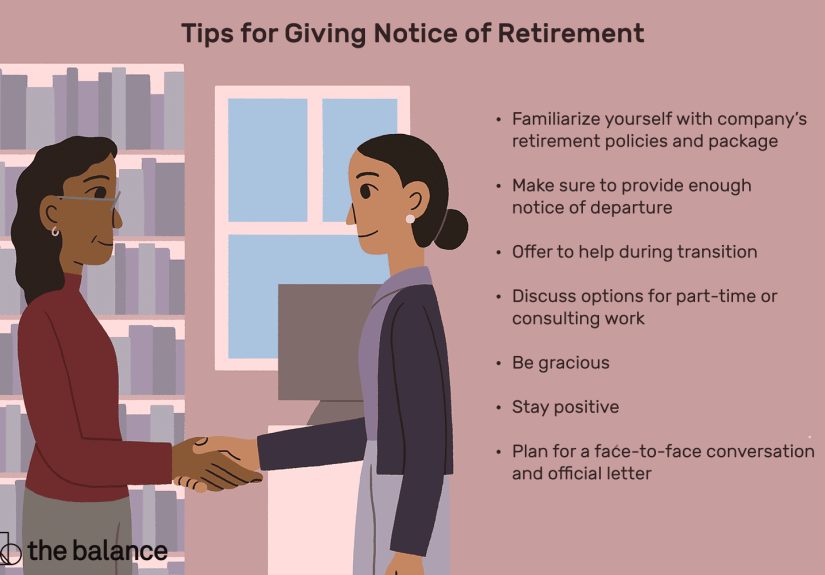
Some employers want a printed letter, some accept email, and some route separation paperwork through HR systems. Before sending your letter, check company policy or ask HR how retirement notices are usually handled.
Give reasonable notice
Many workplaces expect at least two weeks of notice, while long-tenured employees or exempt roles may provide closer to a month. The best approach is to review your policy, then give as much notice as is practical and professionally appropriate.
Offer transition help
Even one line about helping with a handoff can strengthen your letter. It shows professionalism and consideration.
Proofread like it matters
Because it does. Triple-check the retirement date, names, and job title. Accidentally retiring on the wrong date is a bold move, but not the kind most people are aiming for.
Mistakes to Avoid
1. Being vague
Always include a clear effective date. Ambiguity creates stress for everyone.
2. Turning the letter into a complaint file
If you have unresolved frustrations, your retirement letter is not the place to unload them. Save constructive feedback for an exit conversation if needed.
3. Including too much personal detail
You can mention that you are looking forward to the next chapter, but you do not need to explain your entire retirement itinerary down to the Tuesday pickleball schedule.
4. Forgetting the transition
Even a brief mention of handoff support makes your letter stronger.
5. Sending it before you are ready
Before submitting your retirement notice letter, think through timing, benefits, leave balances, reimbursements, and any conversations you should have with your manager or HR first.
Before You Send Your Retirement Letter
Take one final pause before pressing send. Confirm your last day, check internal procedures, and think through the practical side of leaving. That may include unused leave, benefits paperwork, retirement accounts, expense reimbursements, and any employee equipment or access that needs to be returned. None of this has to appear in your letter, but it should absolutely be on your radar.
It is also wise to speak with your manager before your formal letter lands in their inbox, especially if you have worked together for a long time. A respectful conversation first, followed by a clear written letter, usually creates the smoothest exit.
Real-World Experiences and Lessons From Retirement Letter Moments
Retirement letters may be short, but the experiences around them are rarely small. In real workplaces, the letter often becomes the emotional bridge between a working identity and a new season of life. Many retirees say the hardest part is not writing the sentence, “I am retiring effective June 30.” The hard part is realizing that one sentence represents decades of routine, purpose, and relationships.
For some people, writing the letter brings relief. They have planned carefully, chosen a date, talked it through with family, and are more than ready to swap calendar invites for gardening gloves, volunteer work, travel plans, or slower mornings with actual breakfast instead of commuter coffee. In those cases, the retirement letter feels like a clean and confident next step.
For others, the experience is more complicated. Even people who are financially prepared can feel emotionally wobbly. Work often provides structure, status, community, and identity. That is why many retirement letters sound both grateful and slightly bittersweet. A person may be thrilled to retire and still feel a little strange about no longer being the go-to manager, the veteran teacher, the steady nurse, or the office problem-solver who can find a missing file in under 14 seconds.
Another common experience is the timing question. Some workers give generous notice because they want to help train a replacement and leave things in good shape. Others keep the timeline tighter because they want to avoid awkwardness, shifting expectations, or being treated like they are already halfway out the door. Neither instinct is irrational. The right decision usually depends on your organization, your role, and your level of trust in the workplace culture.
There is also the surprisingly human question of tone. People often ask whether their retirement letter should be purely formal or more personal. In practice, the best letters usually sit in the middle. They are clear enough for HR, respectful enough for leadership, and warm enough to sound like they were written by a real person rather than generated by a machine with perfect grammar and no life experience.
Many retirees later say they were glad they kept the letter simple. They handled the logistics in writing and saved the deeper reflections for farewell conversations, team lunches, or a goodbye email to coworkers. That division works well. The retirement letter handles the official record; the personal memories can live elsewhere.
One more pattern shows up again and again: people who think beyond the letter tend to feel better about the transition. The strongest exits usually happen when retirees have a loose plan for what comes next. That plan does not need to be dramatic. It might mean part-time consulting, mentoring, learning a skill, volunteering, traveling, or simply rebuilding daily life around family and health. The point is not to make retirement busy for the sake of being busy. The point is to move toward something, not just away from a job.
That is why a retirement letter matters more than its length suggests. It is a practical document, yes, but it is also a small ceremonial act. It says, “I contributed here. I am leaving with intention. And I am ready for what is next.” That is a pretty powerful message for one page of writing.
Conclusion
A great retirement letter is not complicated. It is clear, respectful, and thoughtfully timed. It tells your employer when you are leaving, thanks them for the opportunity, and makes the transition easier for everyone involved. Whether you choose a traditional template, a warmer personal note, or a concise email format, the same principle applies: say what matters, keep it professional, and leave with grace.
If you remember nothing else, remember this: clarity first, gratitude second, drama never. Your retirement letter should reflect the career you built and the professionalism you want to be remembered for. After that, you are free to enjoy the next chapter, whether it includes travel, hobbies, consulting, grandkids, woodworking, or the deeply underrated joy of not checking your inbox before 8 a.m.