Table of Contents >> Show >> Hide
- What Are Plyo Pushups?
- Muscles Worked During Plyo Pushups
- Key Benefits of Plyo Pushups
- Who Should Try Plyo Pushups?
- Who Should Avoid Plyo Pushups?
- How to Do Plyo Pushups Correctly
- Common Mistakes to Avoid
- Best Plyo Pushup Variations
- How Many Plyo Pushups Should You Do?
- Sample Plyo Pushup Workout
- Safety Tips for Better Results
- Experience Notes: What Plyo Pushups Feel Like in Real Training
- Conclusion
Plyo pushups are what happens when the classic pushup drinks an espresso, puts on sneakers, and decides to become more athletic. Instead of pressing up slowly and stopping at the top, you push explosively enough for your hands to leave the floor. That tiny moment of airtime is the whole point: it trains your upper body to produce force quickly.
Also called plyometric pushups, explosive pushups, or clap pushups, this move is not just a gym-party trick. When performed correctly, it can improve upper-body power, chest strength, triceps drive, shoulder stability, core control, and athletic explosiveness. It is popular among athletes, martial artists, basketball players, football players, fitness enthusiasts, and anyone who wants a pushup variation that feels less “basic exercise” and more “superhero training montage.”
That said, plyo pushups are advanced. They reward good technique and punish sloppy form. Before adding them to your workout, you should already be comfortable performing controlled standard pushups with a straight body line, stable shoulders, and no dramatic hip sagging. Your lower back should not be doing an impression of a hammock.
What Are Plyo Pushups?
A plyo pushup is an explosive version of a standard pushup. You begin in a high-plank position, lower your chest toward the floor, then press up with enough force that your hands briefly lift off the ground. Some people simply pop their hands up. Others clap midair. Advanced athletes may use boxes, medicine balls, depth-drop variations, or lateral movements.
The word “plyo” comes from plyometric training, a method built around quick, powerful movements. Plyometrics are designed to improve the connection between strength and speed. In other words, they help you use the strength you already have more explosively. For the lower body, that might mean jump squats or box jumps. For the upper body, plyo pushups are one of the most accessible options because they require no equipment, only floor space and a healthy respect for gravity.
Muscles Worked During Plyo Pushups
Plyo pushups mainly target the same muscles as regular pushups, but with a much faster and more powerful contraction. The primary muscles include the pectoralis major, triceps brachii, and anterior deltoids. These muscles help you push your body away from the floor.
Your serratus anterior also works hard to stabilize the shoulder blades, while your core muscles keep your torso from collapsing. The glutes and quadriceps help maintain a strong plank position. A good plyo pushup is not just an arm exercise. It is a full-body tension exercise with a dramatic upper-body finish.
Key Benefits of Plyo Pushups
1. They Build Explosive Upper-Body Power
Regular pushups build strength and endurance. Plyo pushups train power, which is strength expressed quickly. That matters in sports and real-life movements where you need to react fast, push forcefully, or transfer energy through your upper body. Think throwing, blocking, punching, sprint starts, wrestling, rebounding, or pushing yourself off the ground after a fall.
2. They Train Fast-Twitch Muscle Fibers
Fast-twitch muscle fibers are involved in quick, forceful movements. Plyo pushups challenge these fibers because you must generate a strong burst of force in a short time. This makes the exercise useful for athletes and experienced lifters who want more speed and snap in their pressing movements.
3. They Improve Chest, Shoulder, and Triceps Strength
Because plyo pushups are demanding, they can help strengthen the chest, shoulders, and triceps when programmed wisely. The explosive press requires your upper-body muscles to fire aggressively, while the landing phase forces them to absorb impact and stabilize your body.
4. They Improve Core Stability
If your core relaxes during a plyo pushup, your body will tell on you immediately. Your hips may drop, your lower back may arch, or your landing may feel wobbly. Keeping a straight line from head to heels teaches your abs, glutes, and deep stabilizers to work together under pressure.
5. They Add Cardio Intensity Without Equipment
Do a few sets of plyo pushups and your heart rate will likely rise. Because the movement is explosive and full-body, it can add a conditioning effect to strength workouts, circuit training, or high-intensity sessions. No treadmill required. No machine required. No waiting behind someone texting on the bench press.
6. They Make Workouts More Fun
There is something satisfying about leaving the floor during a pushup. Plyo pushups add variety and challenge to a routine that may otherwise feel repetitive. That fun factor matters because the best workout is not only effective; it is one you actually want to repeat.
Who Should Try Plyo Pushups?
Plyo pushups are best for intermediate to advanced exercisers who can already perform standard pushups with excellent form. As a practical benchmark, you should be able to complete at least 10 to 15 controlled pushups without sagging, shrugging, flaring your elbows wildly, or holding your breath like you are opening a jar of pickles from 1998.
This exercise may be especially useful for athletes, martial artists, military-style fitness trainees, CrossFit-style exercisers, and people training for upper-body power. Beginners should first master wall pushups, incline pushups, knee pushups, and standard pushups before trying explosive versions.
Who Should Avoid Plyo Pushups?
Skip or modify plyo pushups if you currently have wrist pain, elbow pain, shoulder pain, chest pain, recent upper-body injury, poor pushup form, or a condition that makes high-impact exercise unsafe. If you are returning from injury, work with a qualified fitness professional or physical therapist before adding explosive pressing movements.
Plyo pushups also may not be the best choice when you are exhausted. Fatigue can ruin landing mechanics. When your body stops absorbing the landing smoothly, your joints may take more stress than they should. Quality beats quantity every time.
How to Do Plyo Pushups Correctly
Step 1: Start in a Strong High Plank
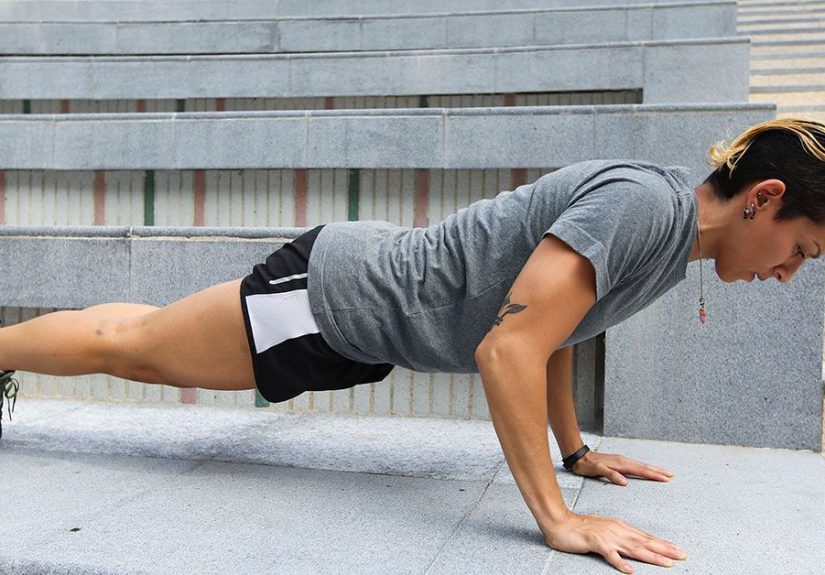
Place your hands slightly wider than shoulder-width apart. Spread your fingers and press through the whole palm. Keep your feet together or hip-width apart. Brace your abs, squeeze your glutes lightly, and create a straight line from your head to your heels.
Step 2: Lower With Control
Bend your elbows and lower your chest toward the floor. Keep your elbows around a 30- to 45-degree angle from your torso instead of letting them flare directly out to the sides. Your head should stay neutral, not reaching forward like a turtle checking the weather.
Step 3: Explode Upward
Push the floor away as hard and fast as you can. Your hands should leave the floor briefly. You do not need to clap at first. A small hand lift is enough if it is controlled and powerful.
Step 4: Land Softly
Land with slightly bent elbows, not locked arms. Absorb the impact through your chest, shoulders, triceps, and core. Your body should remain aligned. If your hips hit the floor first, the rep is over and your form has filed a complaint.
Step 5: Reset or Continue
Beginners to plyo work should reset between reps. More advanced exercisers can perform continuous reps, but only while landing cleanly. Stop the set before your form breaks down.
Common Mistakes to Avoid
Landing With Locked Elbows
Locked elbows turn a powerful exercise into a joint-stress festival. Keep a slight bend when your hands return to the floor so your muscles absorb the landing.
Letting the Hips Sag
If your hips drop, your core is not doing its job. Brace before every rep and imagine your body moving as one solid plank.
Trying to Clap Too Soon
Clap pushups look cool, but the clap is optional. The goal is explosive force and safe landing mechanics, not auditioning for a fitness circus.
Doing Too Many Reps
Plyo pushups are power training, not a 100-rep punishment challenge. Keep reps low and crisp. Once your speed slows down, the set has done its job.
Skipping the Warmup
Your wrists, shoulders, elbows, chest, and core need preparation. A few minutes of mobility and easier pushup variations can make the movement feel smoother and safer.
Best Plyo Pushup Variations
1. Incline Plyo Pushup
Place your hands on a bench, box, or sturdy countertop. Perform the same explosive pushup motion, letting your hands leave the surface slightly. This reduces the amount of body weight you must press and is a great first step toward floor plyo pushups.
2. Knee Plyo Pushup
Start from your knees instead of your toes. Keep your body straight from shoulders to knees. Lower under control, then push explosively. This variation is easier, but still trains speed and power.
3. Hand-Release Explosive Pushup
Lower all the way to the floor, briefly lift your hands, place them back down, and push up fast. This teaches force production from a dead stop and removes the bounce from the bottom.
4. No-Clap Plyo Pushup
This is the standard beginner plyo version. Push hard enough for your hands to leave the ground, then land softly. No clap, no drama, no unnecessary midair panic.
5. Clap Pushup
Once you can comfortably get enough airtime, clap your hands once before landing. Keep the clap quick and close to your chest so you can return your hands safely.
6. Wide Plyo Pushup
Set your hands slightly wider than usual to emphasize the chest. Be careful not to go excessively wide, as that may increase shoulder stress for some people.
7. Close-Grip Plyo Pushup
Bring your hands closer together to challenge the triceps more. This is advanced because the narrower base can make the explosive phase and landing less forgiving.
8. Lateral Plyo Pushup
Push explosively and shift your hands slightly to one side as you land. On the next rep, move back the other way. This variation adds coordination and side-to-side control.
9. Depth Plyo Pushup
Place each hand on a low platform, drop your hands to the floor, absorb the landing, and explode back up. This is highly advanced and should only be used by athletes with excellent strength, control, and coaching.
How Many Plyo Pushups Should You Do?
For most people, 3 to 5 sets of 3 to 6 reps is plenty. Rest 60 to 120 seconds between sets so each rep stays explosive. If your goal is power, avoid turning plyo pushups into a long endurance set. Power training works best when reps are fast, clean, and intentional.
A smart weekly plan is to perform plyo pushups one or two times per week, with at least 48 hours between intense upper-body plyometric sessions. You can place them near the beginning of your workout after a warmup, before heavy pressing or high-rep fatigue work.
Sample Plyo Pushup Workout
Beginner Power Prep
Warm up with arm circles, wrist rocks, scapular pushups, and 2 sets of incline pushups. Then perform 4 sets of 4 incline plyo pushups, resting 90 seconds between sets. Finish with controlled standard pushups and light shoulder mobility.
Intermediate Upper-Body Power
After warming up, perform 5 sets of 3 to 5 floor plyo pushups. Rest 90 to 120 seconds between sets. Follow with dumbbell rows, regular pushups, planks, and band pull-aparts to balance pushing and pulling muscles.
Athletic Circuit
Try 3 rounds of 5 plyo pushups, 8 medicine ball slams, 10 jump squats, and 20 seconds of mountain climbers. Rest as needed. Keep the plyo pushups crisp; if they become sloppy, switch to standard pushups.
Safety Tips for Better Results
Warm up thoroughly before plyo pushups. Start with easier progressions. Land softly. Keep reps low. Rest enough between sets. Train on a stable, non-slip surface. Avoid plyo pushups when your wrists or shoulders feel irritated. And remember: pain is not “weakness leaving the body.” Pain is usually your body sending an email with the subject line “Please stop.”
Balance your training with pulling exercises such as rows, pull-aparts, face pulls, and pullups. Too much pushing without enough pulling can contribute to cranky shoulders and poor posture. A well-rounded program makes plyo pushups more effective and more sustainable.
Experience Notes: What Plyo Pushups Feel Like in Real Training
The first time many people try plyo pushups, they expect the hard part to be the push. Surprisingly, the landing often teaches the bigger lesson. A regular pushup lets you move at your own speed. A plyo pushup asks a sharper question: can you create force, leave the floor, return under control, and still keep your body organized? That is why even strong people sometimes find the exercise humbling.
A common experience is starting with too much ambition. Someone sees a clap pushup online, drops to the floor, launches upward, claps late, and lands like a folding chair. The smarter path is less glamorous but far more effective: start with incline plyo pushups. A bench or countertop reduces the load, gives you more confidence, and helps you learn the rhythm of lowering, exploding, and landing softly. Once the movement feels smooth, lowering the incline becomes a natural progression.
Another useful lesson is that plyo pushups improve when you stop chasing fatigue. Many gym exercises feel productive when they burn. Plyo pushups are different. The best reps feel fast, springy, and controlled. When the hands barely leave the floor, the elbows start landing stiff, or the body line begins to wiggle, the set is done. Stopping early can feel strange at first, especially if you are used to grinding. But power training is about high-quality output, not surviving a dramatic fitness meltdown.
People also notice that plyo pushups reveal weak links. If the wrists are stiff, the landing feels harsh. If the core is lazy, the hips sag. If the shoulders lack stability, the body shifts from side to side. These are not failures; they are useful signals. Adding wrist mobility, planks, scapular pushups, rows, and slower tempo pushups can make the explosive version cleaner and safer.
In sports training, plyo pushups often feel most valuable when paired with other movements. For example, a basketball player may use them to build upper-body pop for contact and passing. A martial artist may use them to train sharper pressing power. A recreational lifter may use them before bench pressing to wake up the nervous system. In each case, the exercise works best when it has a purpose. Randomly throwing clap pushups into a workout just because they look cool is like adding hot sauce to coffee: memorable, yes, but not always wise.
Over time, the biggest benefit may be confidence. There is a special satisfaction in pressing so powerfully that your hands leave the ground. It makes the standard pushup feel more athletic and gives your training a playful edge. As long as you respect progression, recovery, and form, plyo pushups can become a powerful tool in your routinenot an everyday requirement, but a high-energy upgrade when your body is ready for it.
Conclusion
Plyo pushups are an advanced pushup variation that can build explosive upper-body power, improve fast-twitch muscle activation, strengthen the chest and triceps, and add serious energy to your workouts. The key is progression. Master regular pushups first, begin with easier variations, keep reps low, and focus on soft landings.
Used wisely, plyo pushups are more than a flashy move. They are a practical way to train power, coordination, athleticism, and body control. Used carelessly, they are a quick way to make your wrists and shoulders send strongly worded complaints. Respect the movement, and it will reward you.