Table of Contents >> Show >> Hide
- What’s being proposed (and what it’s not)
- Quick refresher: space and time were already weird
- The “fragments of energy” idea in plain English
- Where it gets bold: rewriting the rulebook for motion
- Two famous tests: Mercury and bending starlight
- Why some scientists find this kind of reframing attractive
- Healthy skepticism: what would it take to be more than a clever story?
- Zooming out: it’s not the only “space-time shakeup” in the air
- So… did space and time just get “upended”?
- Experiences that make “space and time” feel less abstract (500-word add-on)
If you’ve ever stared at the ceiling at 2:00 a.m. and thought, “So… what even is space-time?”
congratulations: you’re already spiritually aligned with modern physics. The difference is that physicists
take that same existential itch and respond by inventing new mathsometimes elegant, sometimes spicy,
sometimes both.
One recent, headline-friendly proposal argues that the universe may not be built from “particles” and
“waves” the way we casually talk about them. Instead, it reframes the basics as fragments of energy
that flow through space and timelike reality is less a collection of tiny marbles and more a ceaseless
choreography of moving energy. The headline says it “upends space and time.” The fine print says:
“Hold my calculator.”
What’s being proposed (and what it’s not)
Let’s start with the responsible version: this isn’t a confirmed rewrite of physics, and it doesn’t “replace”
Einstein in the way a new phone replaces your old one. It’s a theoretical reframing that aims to
describe motion, gravity, and matter using a different set of primitives.
The core claim is simple to say and hard to fully digest: matter is fundamentally made of fragments of energy
rather than particles or waves. In this view, energy isn’t just something particles “have” or waves “carry.”
Energy is the main charactereverything else is the supporting cast.
The authors argue that if you treat the building blocks this way, you can reproduce classic gravitational results
that helped validate general relativitysuch as Mercury’s orbital precession and the bending of light
near massive objectswithout leaning on the usual “spacetime curvature” story in quite the same way.
Quick refresher: space and time were already weird
Relativity’s plot twist
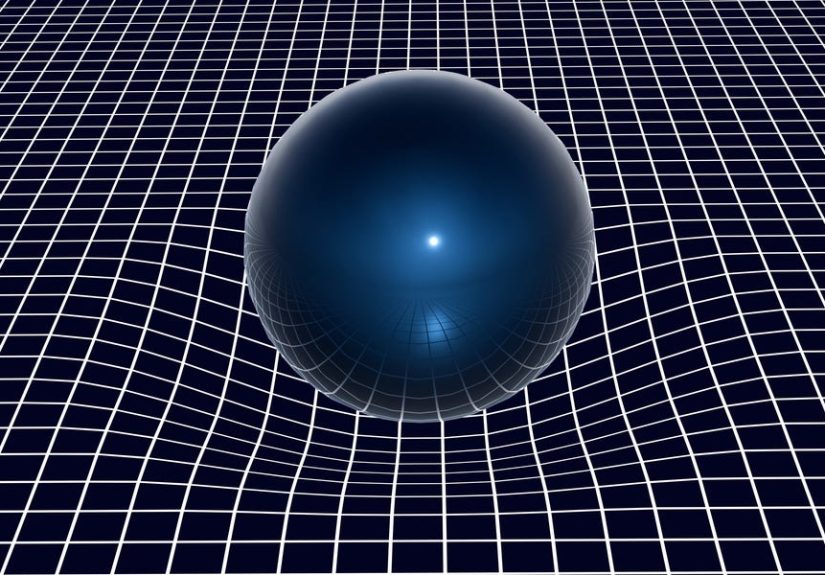
Einstein’s general relativity swapped out the old idea of gravity as an invisible pulling force and replaced it with
geometry: mass-energy affects the shape of spacetime, and objects move along the “straightest possible” paths within
that curved geometry. That’s why light bends near massive objects (gravitational lensing) and why Mercury’s orbit
precesses slightly more than Newtonian gravity predicts.
- Light bending: Massive objects distort spacetime, so light’s path curves as it passes byan effect used all over astronomy.
- Mercury’s orbit: Mercury’s perihelion advances in a way that famously matched relativity’s predictions and became a key early test.
Quantum’s plot twist (because physics loves plot twists)
Quantum mechanics then adds another layer of “excuse me, what?” At small scales, things can show wave-like behavior
(interference patterns) and particle-like behavior (localized detections), depending on how you measure them.
That wave–particle duality is real, testable, and deeply inconvenient for anyone trying to keep a tidy worldview.
So when someone says, “Maybe it’s not particles or wavesmaybe it’s energy fragments,” they’re stepping into a debate
that already has decades of philosophical baggage and a whole suitcase of equations.
The “fragments of energy” idea in plain English
Imagine you’re watching a stadium wave. If you freeze the video, you can point to “a wave” moving through the crowd.
But the wave isn’t a separate objectit’s a pattern of energy and motion distributed among people. In a similar spirit,
this theory treats what we call “particles” and “waves” as expressions of localized, moving energy that can be compact
in one sense and spread out in another.
A “fragment” here doesn’t necessarily mean a tiny hard bead. Think more like a coherent packeta concentrated region
of energy with a trajectory, capable of interacting with other energy packets. It’s trying to unify the intuition
of particles (localized “this-ness”) with the intuition of waves (distributed “everywhere-ness”) under one umbrella:
energy that flows.
If that sounds a little like how physicists already talk about fieldswhere particles are excitations of underlying
quantum fieldsyou’re not wrong to notice the family resemblance. What’s different is the authors’ attempt to build
a more unified mechanics-and-gravity framework around that “energy fragment” primitive, and to rewrite the motion laws
accordingly.
Where it gets bold: rewriting the rulebook for motion
Classic Newtonian mechanics is built on a sturdy sentence: Force equals mass times acceleration.
General relativity rewrites gravity as geometry, but Newton’s second law still echoes through how we do everyday physics.
In the “fragments of energy” approach, the fundamental entity isn’t a point-like particle. So the authors propose
a different motion lawone that relates something like an “action force” to the curvature of a path through spacetime.
In other words, motion becomes less about pushing a bead along a track and more about how an energy fragment follows
and responds to curvature-like features of spacetime trajectories.
A useful analogy: if Newton is “how hard you push a shopping cart determines how it speeds up,” this reframing wants to be
“how the path bends determines how the energy flow changes.” That’s not a perfect translation, but it captures the vibe:
motion as geometry + energy flow, not just “forces acting on particles.”
Two famous tests: Mercury and bending starlight
The reason Mercury and light-bending show up in so many gravity conversations is that they’re historically important
and mathematically unforgiving. If your theory can match those results, it earns at least a seat at the discussion table
(not the thronejust the table).
Example 1: Mercury’s orbital precession
Mercury’s orbit is slightly “rotating” over time: the point of closest approach to the Sun shifts. Newtonian gravity explains
most of that precession, but not all. General relativity accounts for the leftover discrepancy as a result of spacetime curvature
near a massive body.
The fragments-of-energy approach claims it can reproduce the same observed behavior by modeling the Sun and Mercury as energy fragments
interacting through the theory’s flow-based rulesaiming to recover the known precession without relying on the standard narrative in
the usual way.
Example 2: Light bending near massive objects
Light doesn’t have rest mass, yet it still bends near massive bodies. In general relativity, this happens because light follows
geodesicsstraightest-possible linesin curved spacetime. The new approach argues it can also recover equivalent bending behavior
in its framework, again using energy fragments and their motion principles.
That’s the “casually upends” part: it doesn’t deny the observed phenomena. It claims you can get to the same destination using a different map.
Why some scientists find this kind of reframing attractive
Even if a new theory doesn’t become The One True Theory™, it can still be valuable if it:
- Unifies concepts: reducing the number of “primitive” assumptions can clarify what’s fundamental versus what’s derived.
- Suggests new calculations: alternative formulations sometimes make certain problems easier to compute or approximate.
- Generates testable predictions: the gold standardsomething you can measure that differs from existing models.
- Reveals hidden connections: linking Newton-style intuition with Einstein-style geometry can expose new bridges between frameworks.
There’s also a human factor: physics progresses partly through new metaphors. Sometimes the right metaphor unlocks new math.
Sometimes it just makes a great conference argument. Both have their place.
Healthy skepticism: what would it take to be more than a clever story?
Modern physics isn’t short on bold ideas. The difference between “interesting” and “revolutionary” is usually:
Does it predict something new, and does nature agree?
Matching Mercury and light bending is impressive, but general relativity has passed a lot of tests:
gravitational waves, precision timing effects used in satellite navigation, frame-dragging measurements, black hole imaging,
and more. Any challengeror alternative formulationhas to either match all of that or clearly specify where it differs.
The most convincing next steps for any spacetime-rethinking proposal typically include:
- Distinct predictions: outcomes that diverge from general relativity (even slightly) in a measurable regime.
- Clear domains of validity: where it should work best (cosmic scales, strong gravity, quantum scales, etc.).
- Compatibility with quantum theory: because gravity and quantum mechanics still don’t merge cleanly in a single framework.
Until then, the safest stance is: intriguing proposal, not settled physics.
Zooming out: it’s not the only “space-time shakeup” in the air
The fragments-of-energy idea is one way to tweak the foundations. Other recent proposals and ongoing research programs
tackle the same mysterywhat space and time really arefrom very different angles.
Emergent spacetime
A popular line of thought in theoretical physics is that spacetime might be emergentnot fundamental, but arising from
deeper quantum/informational structure, the way “temperature” emerges from many molecules rather than existing as a tiny object on its own.
In this view, “space” and “time” are macroscopic descriptions of more basic relationships.
Three-dimensional time proposals
Another attention-grabbing recent framework argues that time could have three dimensions, with space emerging as a secondary effect.
This is far from mainstream consensus, but it’s an example of how wide the conceptual search has become: when you can’t reconcile gravity and
quantum theory cleanly, some researchers try altering the geometry of time itself (while still enforcing causality in the math).
Notice the common theme: whether it’s “energy fragments” or “extra time dimensions,” the goal is similarfind a more fundamental starting point
that makes both gravity and quantum behavior look less like rival siblings and more like parts of one family tree.
So… did space and time just get “upended”?
In the strict scientific sense? Not yet. Space and time are still doing their usual thing: clocks tick, planets orbit, light bends, and physicists
argue politely (and sometimes not politely) in journals.
But in the cultural sensethe “wait, we can even think about it that way?” senseyes, a little. The value here is the shift in perspective:
instead of asking whether reality is made of particles or waves, it asks whether the more honest base layer is flowing energy
and the geometry of its paths through spacetime.
It’s a reminder that physics is not just a pile of facts. It’s also a craft: choosing the right primitives, the right language, and the right equations
to describe what the universe does when no one is looking.
Experiences that make “space and time” feel less abstract (500-word add-on)
You don’t need a particle accelerator to have a personal relationship with space and time. You’ve had one your whole lifesometimes against your will.
Think about how time behaves during a boring lecture versus a great movie. The clock hands move at the same rate, but your brain is running two different
operating systems: “minutes are heavy” and “minutes are feather-light.” That’s not relativity in the Einstein sense, but it’s a daily reminder that
time is both a physical quantity and a lived experience.
Now add technology. Your phone’s GPS works partly because engineers account for tiny timing differences between clocks on satellites and clocks on Earth.
If you’ve ever trusted a map app to get you somewhere on time, you’ve benefited from the fact that space and time are not independent, and that gravity
and motion affect how clocks behave. It’s mind-bending to realize that “spacetime” isn’t just a poetic phraseit’s baked into the tools you use to find
a coffee shop.
Even the simple act of watching light travel is a space-time lesson. When you look at the Sun, you’re seeing it as it was minutes ago. When you look at
distant stars, you’re looking into the past by years, centuries, or more. That’s not a metaphor; it’s the consequence of a cosmic speed limit. The universe
is constantly showing you time-delayed versions of itself, like reality is streaming with unavoidable lag.
If the “fragments of energy” idea resonates, it might be because you already intuitively understand “flow.” You’ve seen traffic behave like a fluid: a single
tap on the brakes can ripple backward as a wave of slowing cars. Nothing “material” is traveling backwardjust a pattern of energy, motion, and information.
In that sense, thinking of fundamental physics as flows and fragments isn’t as alien as it sounds. It’s an attempt to take that everyday pattern-thinking and
apply it to the universe’s deepest layer.
And then there are the moments when space itself feels different: walking into a cathedral, standing on a mountain ridge, or stepping off a plane into a new
city where everything looks familiar but slightly shifted. Your body experiences space as volume, distance, and orientationyet physics treats it as geometry
that can stretch, bend, and warp. The emotional punch of “big spaces” is your nervous system reacting to scale; the scientific punchline is that scale can
become dynamic in gravity-heavy regions.
The point of these experiences isn’t to prove a new theory. It’s to show why headlines about “upending space and time” stick in our brains. We already sense,
on some level, that time is slippery and space is strange. The theories are the formal attempt to explain that strangeness with equationsso that, one day, the
universe stops feeling like a magic trick and starts feeling like a readable (if extremely complicated) instruction manual.