Table of Contents >> Show >> Hide
- Why a Shade Garden Is Worth Loving
- Planning the Space Before Dragging Tires Across the Yard
- Using Old Doors in a Shade Garden
- Using Old Tires as Garden Planters
- Best Shade Plants for a Garden With Recycled Decor
- Design Ideas: Making Tires and Doors Look Intentional
- Practical Maintenance Tips
- Common Mistakes to Avoid
- My Experience: What This Shade Garden Taught Me
- Conclusion
Every garden has a personality. Some gardens are polished, symmetrical, and behave like they have a trust fund. Mine? Mine is a shade garden with old tires, weathered doors, stubborn hostas, and a DIY spirit that says, “Why buy a fancy planter when the garage already has one judging me from the corner?”
This is the story of turning a neglected shady corner into a cozy, creative garden space using repurposed materials, a little common sense, and plenty of inspiration from Hometalk-style DIY projects. A shade garden does not have to be dull, dark, or dramatic in the “nothing will ever grow here” way. With the right plants, smart drainage, safe reuse practices, and a playful eye for design, even old tires and old doors can become part of a charming backyard retreat.
Think of this project as cottage garden meets salvage yard, but in a good way. Old doors add height, structure, and mystery. Old tires can become bold planters or decorative borders when used carefully. Shade-loving plants bring texture, movement, and cool green calm. Together, they create a space that feels collected, personal, and wonderfully imperfect.
Why a Shade Garden Is Worth Loving
Shade gardens are often treated like the leftovers of landscaping. The sunny spots get tomatoes, roses, and applause. The shady side yard gets a shrug and maybe a forgotten bag of mulch. But shade can be a gift. It creates a cooler microclimate, softens harsh outdoor spaces, and offers a peaceful place to relax during hot afternoons.
The trick is to stop fighting the shade. A shady garden is not a failed sunny garden. It is its own kind of beauty. Instead of chasing big sun-loving blooms, focus on foliage, texture, contrast, and layers. Hostas, ferns, coral bells, astilbe, lungwort, wild ginger, foamflower, and shade-tolerant groundcovers can make a low-light space feel lush and intentional.
Shade also gives recycled garden decor a natural stage. A weathered door looks more romantic leaning against a mossy fence than it ever did hiding in a storage shed. A painted tire planter tucked among hostas can feel whimsical instead of random. In a shade garden, character counts.
Planning the Space Before Dragging Tires Across the Yard
Before placing old tires and doors in the garden, study the site. Shade is not one-size-fits-all. Full shade, part shade, dappled shade, and dry shade all behave differently. A spot under a maple tree may be darker and drier than an area beside a north-facing fence. A corner that gets morning sun may support more plant variety than a space that never sees direct light.
Walk through the area at different times of day. Notice where the light lands, where rainwater collects, and where the soil stays dry. This step is not glamorous, but it prevents the classic beginner mistake of planting moisture-loving ferns in a dusty root zone and then wondering why they look personally offended.
Check the Soil
Most shade plants prefer soil that holds moisture without becoming soggy. Add compost to improve soil texture, but avoid burying plant crowns too deeply. If your soil is heavy clay, loosen it and improve drainage. If it is sandy, compost helps it retain moisture. Mulch can help keep roots cool, but keep it pulled slightly away from plant crowns and stems to reduce rot issues.
Create a Simple Layout
A good shade garden layout uses layers. Place taller plants or vertical decor at the back, medium plants in the middle, and low groundcovers along the edges. Old doors work beautifully as backdrops, privacy screens, faux gates, or trellises. Tire planters can be used as focal points, but use them sparingly. One painted tire planter says “creative garden feature.” Twelve tires in a row may say “discount obstacle course.”
Using Old Doors in a Shade Garden
Old doors are garden magic. They bring instant architecture to a flat space. A door can suggest an entrance, even if it opens to absolutely nowhere. And honestly, a door to nowhere may be exactly the kind of drama a shade garden needs.
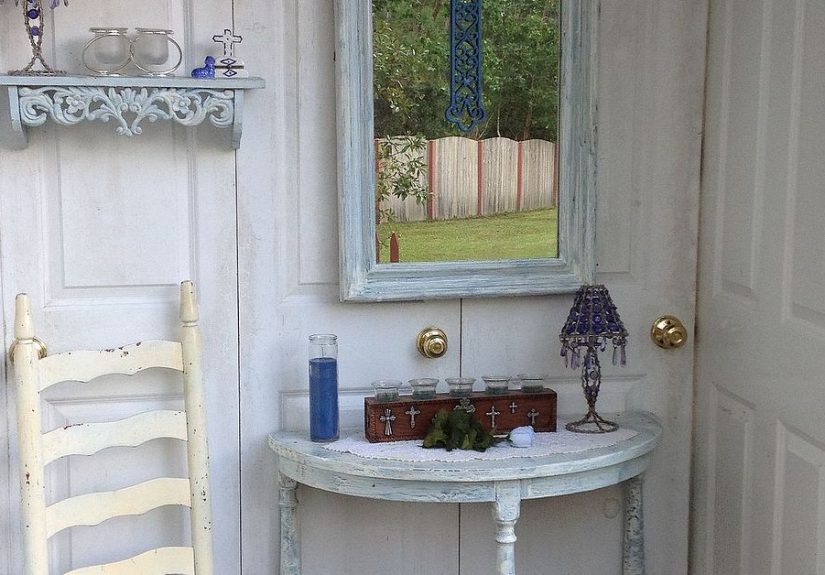
There are several ways to use old doors outdoors. You can mount one on a fence as a decorative panel, secure two doors together to create a screen, use a glass-paneled door as a garden accent, or turn a sturdy door into a trellis for shade-tolerant climbing plants in brighter part-shade areas. A door can also become the back of a potting bench, a vertical planter, or a rustic photo-worthy feature behind hostas and ferns.
How to Prepare an Old Door for Outdoor Use
Start by checking the condition of the door. Solid wood doors usually hold up better outdoors than hollow-core interior doors. Remove loose paint, sand rough edges, and seal the wood with an exterior-grade finish. If the door has old peeling paint and may be very old, use caution. Older painted surfaces can contain lead, so avoid sanding suspicious paint without proper precautions.
Secure the door well. A door leaning casually against a fence may look charming until a windy day turns it into a flying rectangle of regret. Attach it to posts, a fence, or a sturdy frame. If it stands alone, anchor it properly in the ground. Garden decor should be whimsical, not airborne.
Using Old Tires as Garden Planters
Old tires are popular in DIY garden projects because they are tough, widely available, and easy to paint. They can become raised planters, decorative rings, stacked containers, or playful focal points. In a shade garden, a tire planter can add color where flowers may be limited.
However, old tires should be used thoughtfully. They can collect standing water, which may attract mosquitoes. They may also raise concerns for edible gardening, especially when used for growing vegetables or herbs. For that reason, the safest approach is to use tire planters for ornamental plants, not food crops, and to make drainage a top priority.
How to Make a Tire Planter Safer and More Useful
First, clean the tire thoroughly. Scrub away dirt and debris, then let it dry. Drill drainage holes if the tire will hold soil directly. If you are stacking tires, make sure water cannot pool between layers. Place the tire on a surface where excess water can escape.
Next, paint the exterior with an outdoor paint suitable for rubber or flexible surfaces. Lighter colors can brighten a shady corner and help the tire look more like decor than a leftover from a pit stop. Soft greens, warm whites, muted blues, terracotta, or cheerful yellow can work beautifully among foliage plants.
Fill the tire with quality potting mix rather than dense garden soil. Container plants need a mix that drains well while still holding some moisture. Add plants that tolerate shade and container life, such as small hostas, coleus, impatiens, begonias, caladiums, heuchera, creeping Jenny in part shade, or shade-tolerant annuals. Water regularly, because containers can dry faster than in-ground beds, even in shade.
Best Shade Plants for a Garden With Recycled Decor
The best plants for a shade garden are not just survivors. They should earn their keep with texture, color, shape, or seasonal interest. Since old doors and tires already add strong visual elements, the plants should soften the scene and make everything feel intentional.
Hostas
Hostas are the reliable stars of many shade gardens. They come in sizes ranging from tiny edging plants to giant leafy sculptures. Blue-green hostas look calm and elegant near rustic wood, while variegated varieties can brighten dark corners. Plant them in groups for impact, and give them enough room to mature.
Ferns
Ferns bring movement and softness. Their feathery fronds contrast beautifully with the round shape of tire planters and the straight lines of old doors. Japanese painted fern, lady fern, ostrich fern, and autumn fern can all add different colors and textures. Match the fern to your soil moisture and climate.
Heuchera
Heuchera, also known as coral bells, is a foliage champion. Its leaves can be burgundy, caramel, lime, purple, silver, or nearly black. Use heuchera near painted tire planters to repeat or contrast colors. It is one of those plants that quietly makes a garden look designed, even when the gardener is still wearing mismatched gloves.
Astilbe
Astilbe adds feathery flowers in pink, white, red, or lavender. It prefers consistent moisture, so it works best in shade beds that do not dry out completely. Plant astilbe near hostas for a classic combination of bold leaves and airy blooms.
Groundcovers
Shade-tolerant groundcovers help tie the garden together. Options may include sweet woodruff, foamflower, wild ginger, ajuga, lungwort, barrenwort, or creeping lilyturf, depending on your region. Always check local guidance because some groundcovers can spread aggressively in certain areas.
Design Ideas: Making Tires and Doors Look Intentional
The secret to upcycled garden decor is repetition. If you use one old object, it may look abandoned. If you repeat color, texture, or shape, it starts to look like design. For example, paint two tire planters the same soft blue as an old door. Or let the door remain weathered and choose plants with silver, blue-green, and burgundy foliage to echo its aged character.
Try placing an old door at the back of a shade bed as a vertical anchor. In front of it, plant large hostas and ferns. Add a tire planter off to one side, filled with coleus or begonias. Finish the front edge with low groundcovers. The result is layered and balanced: tall structure, medium foliage, low softness, and one playful focal point.
Use Odd Numbers
Odd-numbered groupings often feel more natural. Three hostas, five ferns, or one door with three container accents can look relaxed but arranged. Avoid lining everything up like garden soldiers unless you are going for a formal look.
Balance Rustic and Fresh
Old doors and tires bring rustic energy. Balance that with healthy plants, fresh mulch, and clean edges. A recycled garden should look creative, not forgotten. The difference is maintenance. Pull weeds, refresh paint when needed, and keep containers watered.
Practical Maintenance Tips
A shade garden may be lower maintenance than a sunny flower bed, but it is not maintenance-free. Check soil moisture regularly, especially around tree roots. Water deeply when needed rather than sprinkling lightly. Refresh mulch once or twice a year, but do not pile it against stems.
Inspect tire planters after rain. Empty any trapped water immediately. Mosquitoes do not need a luxury resort; even small pockets of standing water can become a problem. Make drainage holes generous and keep the tire positioned so water flows away.
Watch for slugs and snails, especially around hostas. Remove damaged leaves, improve air circulation, and avoid constant overhead watering. Divide overcrowded perennials when they begin to decline or outgrow their space. Clean old doors gently and reseal wood as needed to extend their outdoor life.
Common Mistakes to Avoid
The first mistake is using the wrong plants. Sun-loving annuals placed in deep shade will stretch, sulk, and eventually give up. Choose plants labeled for shade or part shade.
The second mistake is poor drainage. Whether you are planting in tires, pots, or raised beds, water needs a way out. Soggy roots lead to weak plants, fungus problems, and garden sadness.
The third mistake is overdecorating. Recycled elements are charming when they support the garden, not when they overwhelm it. Let plants be the main characters. The old door is the stage set. The tire planter is the quirky supporting actor. The hostas still deserve their close-up.
My Experience: What This Shade Garden Taught Me
When I first started working on my shade garden, I thought the hardest part would be choosing plants. It was not. The hardest part was learning to see potential in a corner I had mentally labeled “the problem area.” It was shady, a little awkward, and full of objects that had no clear future: a couple of old tires, a worn door, extra pots, and the kind of miscellaneous backyard items that make you whisper, “I’ll deal with that later,” for three consecutive years.
Hometalk-style inspiration helped change the way I looked at those materials. Instead of seeing junk, I started seeing shapes. The tires were circles, which meant they could soften the straight lines of the fence. The old door was height, which the garden badly needed. The shade was not a curse; it was a mood. Suddenly, the space had a direction.
I began by placing the old door against the back fence to test the look. That one move changed everything. The garden instantly felt like a destination instead of a leftover strip of yard. I eventually secured the door properly, but even during the test phase, it gave the space a sense of entrance and story. It made people ask, “Where does that door go?” The honest answer was, “Emotionally? To a better backyard.”
The tires took more experimenting. At first, I considered stacking several together, but the arrangement looked too heavy for the small shady area. One painted tire planter worked better. It became a bright focal point without making the garden look like a tire shop had entered its cottagecore era. I drilled drainage holes, kept it for ornamental plants, and checked it after rain. That last habit matters. A cute planter is less cute if it becomes a mosquito motel.
Plant choice was another lesson. I tried to make a few colorful annuals work in deeper shade, but they were not impressed with my optimism. The better performers were foliage plants: hostas, ferns, heuchera, and coleus in the brighter edges. Once I stopped demanding constant flowers, the garden became easier and prettier. Texture did the heavy lifting. Big hosta leaves, delicate fern fronds, and painted wood created more interest than I expected.
I also learned that shade gardens reward patience. Sunny gardens often give quick drama with blooms. Shade gardens build slowly. The first season can look sparse, but by the second season, plants begin to settle in and overlap. The garden starts to look less like a project and more like it has always belonged there.
The best part of the whole project was how personal it felt. Anyone can buy matching planters, and there is nothing wrong with that. But using old tires and old doors gave the garden a story. It reminded me that creativity often begins with what you already have. Not every piece needs to be new. Not every corner needs to be perfect. Sometimes the most memorable garden feature is the thing you almost threw away.
If I were starting again, I would plan drainage even earlier, choose a tighter color palette, and give plants more room from the beginning. I would also take more before photos, because nothing boosts DIY confidence like proof that the “before” really was that gloomy. But overall, the project taught me that a shade garden can be practical, beautiful, funny, and full of personality. All it needs is the right plants, a few safe upcycling choices, and the courage to put an old door where a normal person might not.
Conclusion
A shade garden made with old tires and old doors is more than a budget DIY project. It is a lesson in seeing beauty where other people see leftovers. With shade-loving plants, good drainage, safe tire use, and well-secured reclaimed doors, a forgotten corner can become a cool, inviting garden retreat.
The best design does not always come from a catalog. Sometimes it comes from a worn-out door, a tire that has rolled its last mile, and a gardener willing to experiment. Thanks, Hometalk, for reminding us that creativity does not need perfect materials. Sometimes it just needs a shady spot, a little paint, and someone brave enough to say, “Yes, that old thing is going in the garden.”