Table of Contents >> Show >> Hide
- Why Cute and Offensive Is Such a Dangerous Little Combo
- What Makes These 28 Comics Click
- The Webcomic Advantage: Small Panels, Big Personality
- When “Often Offensive” Actually Works
- Why Readers Keep Sharing Comics Like These
- What Creators Can Learn From This Kind of Comic Collection
- The Experience of Reading Comics Like These
- Final Thoughts
- SEO Tags
If the internet had a favorite magic trick, it would probably be this: show people something adorable, let them relax, then hit them with a punch line that feels like it crawled out of a group chat at 2 a.m. That is exactly why a collection like My 28 Funny, Cute, Sometimes Relatable, And Often Offensive Comics works so well. It lures you in with soft shapes, goofy faces, and harmless energy, then casually drops a joke that is weird, sharp, rude, or painfully honest.
And somehow, that contradiction is the whole charm. These funny comics are cute without being sugary, relatable without feeling generic, and offensive in that mischievous, eyebrow-raising way that makes you laugh first and process second. In the crowded world of webcomics, where attention spans are short and everyone is fighting the algorithm with a stick figure and a dream, that mix matters. It is memorable. It is scroll-stopping. It feels human.
This is what gives a collection like this its staying power. The humor does not come from polished perfection. It comes from emotional accuracy, absurd timing, and the kind of comic logic that says, “Yes, this is ridiculous, but also… why is this kind of my life?”
Why Cute and Offensive Is Such a Dangerous Little Combo
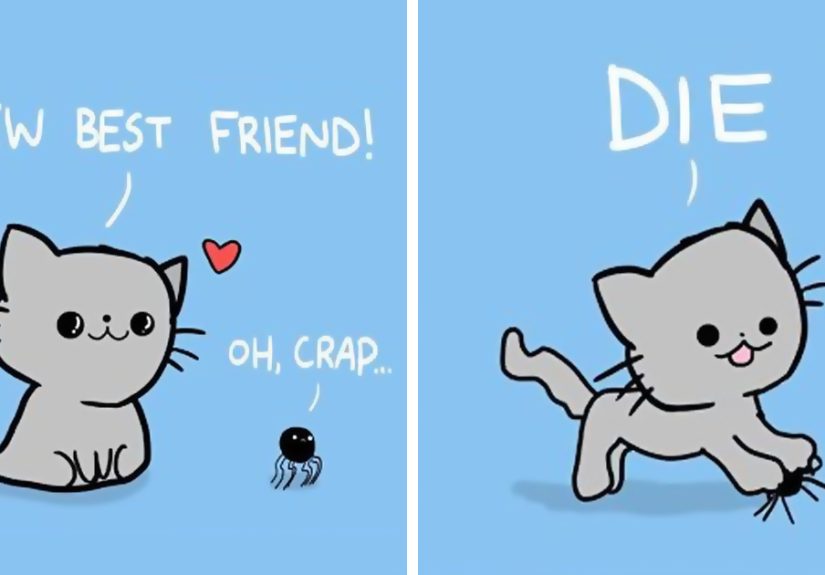
There is a reason cute offensive comics travel fast online. Cuteness lowers your defenses. Big eyes, simple linework, tiny animals, and innocent-looking characters tell your brain to expect something light. Then the joke arrives wearing muddy boots and kicks the door off its hinges. That contrast is funny because it creates instant surprise.
But surprise alone is not enough. Plenty of comics try shock and land with all the grace of a shopping cart rolling downhill. The better ones understand that “offensive” works only when it is paired with precision. The joke has to know where it is aiming. If the punch line is random cruelty, readers tune out. If it exposes awkward social rituals, petty jealousy, human insecurity, chaotic pet ownership, or the weird theater of everyday life, readers lean in.
That is what makes these relatable comics feel more clever than reckless. The offense is usually not the whole meal. It is the hot sauce. The real substance is observation. A passive-aggressive conversation, a cat acting like a tiny landlord, a sweet scene derailed by intrusive thoughts, a wholesome moment hijacked by chaos; these are the things that make dark humor comics feel less like empty provocation and more like emotional shorthand for modern life.
What Makes These 28 Comics Click
1. The visuals are friendly enough to disarm you
The art style in comics like these usually does not scream for attention through excessive detail. It whispers. Rounded characters, simple expressions, uncluttered panels, and clear staging make the joke easy to read in a second or two. That matters because webcomic humor lives and dies by immediacy. If readers need a map, a glossary, and a spiritual guide just to understand panel three, the laugh is already gone.
The cute visual language also creates contrast. When a harmless-looking bunny, cat, ghost, or blob of joy says something unhinged, the joke gains extra force. It is the comedic equivalent of being handed a cupcake and discovering it contains sarcasm, dread, and one extremely rude truth about adulthood.
2. The humor swings from silly to savage without losing rhythm
A strong collection does not rely on one note. If every comic goes full shock, the reader gets numb. If every comic stays wholesome, the edge disappears. The best funny webcomics know how to change tempo. One strip might be absurd and innocent, the next might be awkwardly relatable, and the one after that may come in like a gremlin with a knife made of sarcasm.
That variety keeps readers curious. They do not know whether the next comic will be cute, dark, rude, or weirdly emotional. That uncertainty becomes part of the appeal.
3. Relatability is doing more work than people realize
Relatable comics are not just “same here” content. At their best, they translate private embarrassment into public laughter. They take the tiny humiliations most people would rather not narrate out loud and turn them into little performances. That can mean social anxiety, overthinking, lazy self-sabotage, romantic awkwardness, people-pleasing, emotional avoidance, or simply the daily experience of trying to function while your brain keeps opening unnecessary tabs.
When a comic gets that right, readers do not just laugh because it is funny. They laugh because it is accurate. Accuracy is underrated in comedy. A perfectly observed joke can hit harder than a flashy one.
4. Cats are basically unpaid co-writers
If a comic collection includes cats, the odds of relatability go up immediately. Cats are funny because they behave like they signed a lease but refuse to contribute financially. They are elegant, petty, affectionate on strange terms, and somehow always one decision away from becoming folklore. In comics, they are ideal chaos engines.
A cat can function as comic relief, emotional mirror, silent judge, domestic saboteur, or tiny dictator. That range is gold for an indie comic artist. A cat joke can be wholesome in one panel and existential in the next without feeling forced. Readers who have ever lived with a cat know the truth: owning one is less like pet companionship and more like sharing space with a magical prank manager.
The Webcomic Advantage: Small Panels, Big Personality
Collections like this thrive because they are made for the internet. The structure is compact, the setup is quick, and the emotional payoff arrives before the scroll continues. That format fits how people actually consume humor online. You are not asking readers for an hour. You are asking for one beat of attention, then rewarding it immediately.
That is also why four-panel and short-form webcomics remain so effective. They are built for clarity. Setup, escalation, turn, punch line. It is practically architectural. The creator does not need fifty pages to build a mood. They need a clean premise, visual discipline, and the confidence to end the joke one panel earlier than expected.
There is another advantage too: webcomics feel personal. Even when they reach large audiences, they often retain the voice of one person making something odd, specific, and unmistakably theirs. That intimacy matters. Readers do not just follow a comic; they follow a sensibility. They come back because they like the way a creator sees the world: too cute to be cynical, too honest to be fake, and too funny to stay quiet.
When “Often Offensive” Actually Works
Let us be honest: offensive humor is a risky pet to keep. Feed it well, and it becomes a sharp comic voice. Neglect it, and it chews through the furniture. The line between edgy and lazy is thinner than artists like to admit.
So why do some offensive comics still land? Because they understand tension. The joke is not simply “look how outrageous I can be.” It is usually built on contrast between innocence and honesty, sweetness and bitterness, affection and frustration. In other words, the humor comes from collision.
That kind of dark comedy works best when it punches through hypocrisy, awkwardness, or human absurdity rather than targeting vulnerable people for easy laughs. Readers can feel the difference. One approach feels bold. The other feels like someone trying to win an argument with a kazoo.
In a collection like this, offensiveness is most effective when it behaves like seasoning rather than identity. The creator is not just “the offensive comic person.” They are an observer with range. Some jokes are gentle. Some are ridiculous. Some are a little rude. The offensive pieces land because they sit inside a broader emotional spectrum.
Why Readers Keep Sharing Comics Like These
Shareable comics usually have at least one of three qualities: they reveal something true, they express a feeling people struggle to phrase, or they make readers look slightly deranged in a fun way when they post them. A strong comic collection often does all three.
Funny cute comics also perform well because they invite low-pressure engagement. You can send one to a friend with no explanation. You can post one because it matches your mood. You can save one because it is somehow both dumb and profound, which is basically the internet’s favorite genre.
And because these comics often deal in emotional shorthand, they can travel across different audiences. Pet owners laugh. Introverts laugh. People in messy relationships laugh. People who use sarcasm as emotional furniture laugh. The comic becomes a tiny mirror, and everyone recognizes at least one reflection.
What Creators Can Learn From This Kind of Comic Collection
Use contrast like a weapon
The sweeter the setup, the stronger the surprise. That does not mean every joke needs a dark twist, but it does mean tonal contrast can do a lot of heavy lifting.
Keep the read effortless
Readers should understand the panel flow instantly. Good webcomic design is invisible design. The less friction between setup and punch line, the better the laugh.
Specific beats generic every time
“Life is hard” is not a joke. “Pretending not to hear your own microwave because you are emotionally unprepared for leftovers” is getting warmer. Specificity gives humor texture.
Build a voice, not just a format
Anyone can make short comics. Not everyone can make them feel recognizable. The real brand is not the panel count. It is the worldview.
The Experience of Reading Comics Like These
There is a very particular feeling that comes from reading a comic collection like this in one sitting. First you grin. Then you smirk. Then one comic hits a little too close to home and suddenly you are laughing with the uncomfortable energy of someone who just got emotionally pickpocketed by a cartoon animal.
That experience is part of the appeal. These comics do not simply entertain; they create recognition. You see your procrastination, your social weirdness, your affection for chaos, your bad habits, your tenderness, and your pettiness shrunk down into a few panels and handed back to you in a form that feels manageable. That is no small thing. Humor can make truth easier to hold.
For a lot of readers, cute but offensive webcomics become part of a daily rhythm. You check one while drinking coffee. You send another to a friend during work. You save one because it captures your relationship with your cat more accurately than any photo ever could. Over time, the comics become less like disposable content and more like emotional bookmarks.
They also work because they respect the intelligence of the audience. Even when a joke is silly, the better comics trust readers to understand subtext. A blank stare in panel two, a tiny visual callback in panel four, or the sudden collapse of a wholesome setup into chaotic honesty; these things reward attention. They make readers feel included in the joke rather than bludgeoned by it.
Another big part of the experience is tonal freedom. A collection with twenty-eight comics can move from sweetness to menace, from adorable nonsense to deadpan dread, without needing to justify itself every five seconds. That gives readers a fuller emotional ride. One joke can be pure fluff. The next can be weirdly existential. The next can feature a cat behaving like an offended aristocrat. That kind of variety mirrors how people actually live now: half sincere, half ironic, occasionally exhausted, and always one minor inconvenience away from dramatic inner narration.
There is also something refreshing about humor that is not trying to be polished into corporate friendliness. A comic that is a little awkward, a little rude, and a little too honest can feel more alive than something technically perfect but emotionally sterile. Readers often respond to that rawness because it feels handmade. It feels like a person with a point of view, not a committee with a brand strategy.
And then there is the re-read factor. The strongest comics in a collection like this are not one-and-done jokes. They are the kind you revisit because the rhythm is satisfying, the facial expressions are funny, or the premise remains painfully accurate months later. Maybe you return because the joke reminds you of your roommate, your partner, your pet, or your own brain on a particularly uncooperative Tuesday. Maybe you return because a line was so rude and so perfect that it still lives in your head rent-free.
That is the secret experience these comics offer: they make fleeting emotions feel shareable. They package embarrassment, affection, annoyance, anxiety, and absurdity into a form small enough to pass around, but sharp enough to stick. The result is not just a laugh. It is a little social connection. A little relief. A tiny confirmation that yes, other people are also navigating this circus, and thankfully, someone had the decency to draw it.
Final Thoughts
My 28 Funny, Cute, Sometimes Relatable, And Often Offensive Comics succeeds because it understands one of the oldest truths in comedy: the softer the face, the harder the punch line can land. The collection lives in that delightful intersection where adorable art, internet-age relatability, pet chaos, and sharp-edged humor all shake hands.
What makes these comics stand out is not just that they are funny. It is that they are strategically funny. They know how to disarm, how to escalate, and how to leave a weird little bruise of recognition. They feel modern because modern life itself is tonally confused. We are all trying to be functional, sincere, ironic, affectionate, and slightly unhinged at the same time. These comics get that.
That is why funny comics like these are more than quick entertainment. They are compact little survival tools for the emotionally overcaffeinated. Cute on the outside, chaotic on the inside, and far more relatable than most of us would like to admit.
Research basis synthesized from the original Never Stay Dead/Bored Panda feature and U.S. editorial coverage from The Verge, WIRED, Smithsonian Magazine, Vulture, The New Yorker, The Atlantic, Vox, The Washington Post, Publishers Weekly, Rolling Stone, Psychology Today, and NIH/PMC.