Table of Contents >> Show >> Hide
- What Is Moroccan Steamed Sheep’s Head?
- Before You Start: Sourcing, Prep, and Food Safety
- Ingredients
- Equipment You’ll Need
- Step-by-Step: Moroccan Steamed Sheep’s Head
- How to Eat It (Without Overthinking It)
- Flavor Upgrades (Optional, But Fantastic)
- Make It Easier: Smart Home-Cook Shortcuts
- What to Serve With Moroccan Steamed Sheep’s Head
- Leftovers and Storage
- FAQ
- Kitchen Stories and Serving Moments: The Experience of Making This Dish (Extra )
- Conclusion
If you grew up thinking “head” is something you wear hats on (and not something you cook), you’re not alone. But in Morocco, steamed sheep’s headoften called raasis a beloved, no-waste, big-flavor tradition. It’s especially popular around Eid al-Adha, when families have fresh lamb on hand and the kitchen turns into a warm, steamy, spice-scented celebration.
The best part? This dish is shockingly simple. No fancy marinades. No complicated sauce. Just tender meat, aromatic steam, and the Moroccan power couple: salt + cumin. If that sounds too basic, trust the processthis is one of those recipes where the “minimalism” is actually a flex.
What Is Moroccan Steamed Sheep’s Head?
Moroccan steamed sheep’s head is exactly what it says on the tinsheep’s head meat gently cooked with steam until it’s pull-apart tender. It’s traditionally served on a platter, and people pick off bite-sized pieces and dip them into a simple mix of salt and cumin. The vibe is communal, cozy, and very “we’re all in this together.”
Steaming keeps the meat juicy and soft, while onion and herbs in the steaming liquid perfume everything. The flavor is clean, lamb-forward, and warm with cuminless “spiced stew,” more “pure comfort with a North African accent.”
Before You Start: Sourcing, Prep, and Food Safety
Where to buy a sheep’s head (without making it awkward)
Your best bet is a butcher shop, halal market, or a well-stocked international grocery. Call ahead and ask if they can sell you a cleaned sheep’s head (sometimes split into pieces). If you want the easiest home-cooking experience, ask the butcher to:
- Clean it thoroughly
- Split it into manageable pieces (often quarters or smaller)
- Remove anything you don’t plan to cook (some people request this)
Food safety basics (quick, not scary)
Treat this like any raw meat: keep it cold, avoid cross-contamination, wash hands/tools, and cook it thoroughly. Because this is a long steam, the meat will be well-cooked by the time it’s tender. If you like using a thermometer, lamb is considered safe at 145°F (63°C) with a rest for whole cuts, but steaming to “pull-apart tender” typically goes beyond that anyway.
Ingredients
Main ingredients (classic and traditional):
- 1 sheep’s head, cleaned and cut into 4–8 pieces (ask your butcher to do this)
- 1 1/2 tablespoons salt
- 1 1/2 tablespoons ground cumin (plus extra for serving)
- 1 medium onion, very coarsely chopped or sliced
- 1 bunch parsley, tied into a bouquet
- Optional: a small bunch of cilantro, tied into a bouquet
For serving (the essential finishing move):
- Extra salt
- Extra ground cumin
- Moroccan bread (khobz), warm flatbread, or crusty bread
Equipment You’ll Need
- A large pot with a steamer basket or a couscoussier (Moroccan steamer pot)
- Optional: pressure cooker (stovetop or electric) with a steaming insert
- Tongs, a tray/platter, and small bowls for dipping spices
If you’re using a couscoussier or a steamer setup where steam can leak from the seam, it’s worth sealing the joint (some cooks use folded cloth or other methods) so the steam rises where you want it: into the food, not into your kitchen walls.
Step-by-Step: Moroccan Steamed Sheep’s Head
Step 1: Season the meat
Pat the pieces dry if they’re very wet. In a large bowl, mix the salt and cumin. Add the sheep head pieces and rub the seasoning all over. You’re not trying to build a crust herejust evenly coat the meat.
Step 2: Build aromatic steam
Fill the bottom pot with water (enough for a long steam, but not so much that it touches the steamer basket). Bring it to a boil.
Add the onion and the tied parsley bundle (and cilantro if using) to the boiling water. This is your “steam perfume.”
Step 3: Steam until tender (choose your method)
Method A: Pressure cooker (faster, still traditional vibes)
Place the seasoned meat into the steamer basket/insert. Lock the lid and bring to pressure. Reduce heat to maintain pressure and cook for about 2 hours, until the meat is very tender and pulls easily from the bone.
Let the pressure release safely, then carefully open. Check tenderness; if it needs more time, steam in 10–15 minute increments until it’s exactly where you want it.
Method B: Regular pot + steamer basket (slow and steady)
Place the meat in the steamer basket over simmering water. Cover tightly. Steam at a gentle simmer for about 3 1/2 to 4 hours, or until the meat pulls easily from the bone.
Check the water level occasionally and add boiling water as needed (cold water lowers temperature and slows your cooking).
Step 4: Serve like a Moroccan grill (at home)
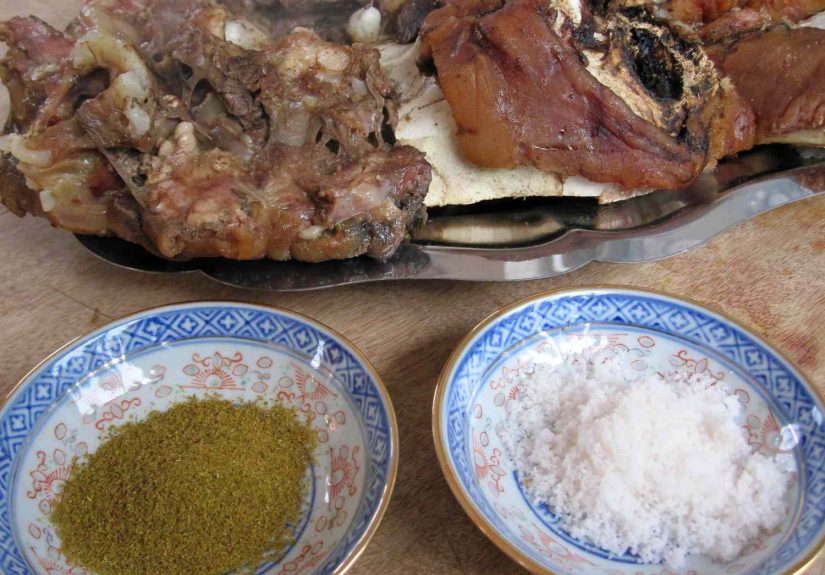
Transfer the steamed sheep’s head pieces to a large platter. In small bowls, mix salt and cumin for dipping (some people keep them separate; mixing is simpler and still delicious).
Serve immediately with bread. The meat is traditionally eaten by handno shame if you want a fork, but you may find fingers are the most efficient “tools” for this job.
How to Eat It (Without Overthinking It)
The most prized bites are often the tender cheek meat and the richly flavored bits around the jaw. Textures vary: some parts are silky-soft, others have a pleasant chew. That’s the funevery bite is a slightly different chapter.
A simple rhythm works best:
- Pull off a small piece of meat.
- Dip it into salt and cumin.
- Eat it with bread, and repeat until you realize you’ve become emotionally attached to cumin.
Flavor Upgrades (Optional, But Fantastic)
The classic version is intentionally minimal. But if you want to add a little extra personality while keeping it Moroccan-inspired, try one of these:
1) Pepper and garlic
Add a pinch of black pepper to the salt-cumin rub, and toss a few smashed garlic cloves into the boiling water. Gentle, aromatic, and still not “too much.”
2) A little paprika warmth
Add 1–2 teaspoons sweet paprika to the rub for a warmer color and mild sweetness.
3) Ras el hanout “special occasion” version
If you love Moroccan spice blends, add 1–2 teaspoons of ras el hanout to the rub. It brings a complex, fragrant warmth (often featuring spices like cumin, coriander, ginger, cinnamon, turmeric, and more). Use a light handthe dish is still meant to taste like lamb, not like your spice cabinet fell over.
4) Harissa on the side
Keep it classic on the platter, but offer harissa as an optional dip. It’s a great “choose your own adventure” move for guests.
Make It Easier: Smart Home-Cook Shortcuts
Use an electric pressure cooker
If you’ve got an Instant Pot-style cooker with a rack, it can work well. Keep the water below the rack, add onion/herbs to the water, and pressure-cook until pull-apart tender. You may need to adjust timing depending on size and how it’s cut.
No steamer basket? Improvise
A heat-safe colander set over a pot (with a tight lid) can work in a pinch. The main goal is keeping the meat above the water so it steams rather than boils.
What to Serve With Moroccan Steamed Sheep’s Head
- Bread: Moroccan khobz, warm flatbread, or any crusty loaf that can scoop and swipe
- Tea: Moroccan mint tea is the traditional pairing
- Salads: simple tomato-cucumber salad, olives, roasted peppers, or a smoky eggplant spread
- Something bright: lemon wedges can be nice on the side
Leftovers and Storage
If you somehow have leftovers (respect), pull the meat off the bones and store it in an airtight container in the fridge. Use within 3–4 days.
Reheat gentlysteaming is great, or warm it covered with a splash of water/broth so it stays moist. Leftover meat is excellent tucked into sandwiches, stirred into soups, or crisped in a pan for a richer texture.
FAQ
Does this taste “gamey”?
It tastes like lambrich, savory, and full-bodied. The steaming method keeps it clean-tasting, and cumin + salt sharpen the flavor in the best way.
Do I need a couscoussier?
Nope. It’s traditional and very handy, but a pot with a steamer basket (or a well-fitted colander setup) works.
How do I know it’s done?
The best test is tenderness: the meat should pull away easily. If it’s still clinging tightly, keep steaming. This is a “texture tells the truth” kind of recipe.
Kitchen Stories and Serving Moments: The Experience of Making This Dish (Extra )
Making Moroccan steamed sheep’s head isn’t just cookingit’s an event, the kind of slow, steamy project that changes the mood of a home. The first thing you notice is how little you actually have to “do” once it’s steaming. There’s no frantic stirring, no sauce that might break, no panic about whether you forgot the bay leaves (because the bay leaves were never invited). The dish asks for patience, not perfection. And that’s weirdly comforting in a world where every recipe online seems to demand twelve bowls and a moral failing if you don’t own a microplane.
The aroma is subtle at first: warm onion, green herbs, and that clean scent of steam. Then cumin enters the chatquietly, steadily, like someone turning up the bass on a song you didn’t realize you were already dancing to. The kitchen starts to feel like a place where time moves differently. You might brew tea. You might tidy up. You might stare into the pot like it’s a crystal ball that predicts dinner.
In Moroccan homes, dishes like this often come with a sense of tradition and togethernessfood that’s meant to be shared, not plated in separate, identical portions like a spreadsheet. There’s something about setting a large platter in the middle of the table that instantly changes the conversation. People lean in. They talk more. They laugh when someone gets overly ambitious with a piece and realizes they need a second hand (or a strategic piece of bread) to manage it.
The salt-and-cumin dip is the simplest “sauce” on earth, but it becomes part of the ritual. Everyone adjusts their own ratiosome go heavy cumin, some keep it salt-forward, and some treat the bowl like a seasoning checkpoint where every bite must pass inspection. And because different parts have different textures, people naturally start offering each other “the good bits,” which is basically the universal love language of shared meals.
If you’re making this for the first time, you might be surprised by how approachable it becomes once it’s cooked. Before steaming, it can feel intimidating simply because it’s unfamiliar. After steaming, it’s just tender meat on a platter, the kind that invites you to slow down and taste what you’re eating. It’s hearty without being heavy, deeply savory without needing a mountain of spices, and memorable in a way that “yet another chicken bowl” could never be.
And honestly? There’s a quiet pride that comes from pulling off a dish like this. Not because it’s hardbut because it’s brave in a small, everyday way. You tried something traditional, something rooted in a different food culture, something that respects the whole animal and turns simplicity into celebration. That’s not just dinner. That’s a story you’ll tell the next time someone asks, “So… what have you been cooking lately?”
Conclusion
Moroccan steamed sheep’s head is proof that “simple” can still be special. With just cumin, salt, aromatics, and time, you get tender meat that’s meant to be sharedno fancy tricks, no unnecessary drama, just real food with real history. If you’re curious, start with a cleaned, butcher-prepped head, steam it patiently, and let the salt-and-cumin dip do what it does best: make you wonder why you ever doubted cumin in the first place.