Table of Contents >> Show >> Hide
- When Tiny Acrylic Animals Come With Rent, Trauma, and a Podcast
- What Are “Millennimals”?
- Why Acrylic Works So Well for Tiny Animal Art
- The Power of Backstories in Visual Art
- Why These Little Animals Feel So Familiar
- Miniature Art and the Appeal of Small Worlds
- Handmade Collectibles in the Age of Personal Branding
- The Writing Is as Important as the Object
- How to Create a Character Like a “Millennimal”
- Why “Millennimals” Is More Than a Cute Joke
- Experience Section: What Making Tiny Acrylic Animals Teaches You
- Conclusion: Tiny Animals, Big Personalities
Note: This original article is written for web publication and synthesizes publicly available information about the “Millennimals” project, narrative art, miniature art, acrylic craft, laser-cut design, handmade collectibles, and character-based storytelling.
When Tiny Acrylic Animals Come With Rent, Trauma, and a Podcast
Some artists make landscapes. Some paint portraits. Some sculpt serious bronze figures that look like they are judging your shoes. And then there is the wonderfully specific world of “Millennimals”: tiny acrylic animals with names, personalities, flaws, fashion preferences, emotional baggage, and suspiciously detailed backstories.
The concept is immediately funny because it feels both absurd and oddly accurate. These little creatures are not just cute animals. They are tiny social observations. They are birds, foxes, bears, and other small characters that seem like they have LinkedIn profiles, complicated coffee orders, a “creative project” they never finish, and at least one tote bag from an independent bookstore. In other words, they are miniature personality studies wearing animal disguises.
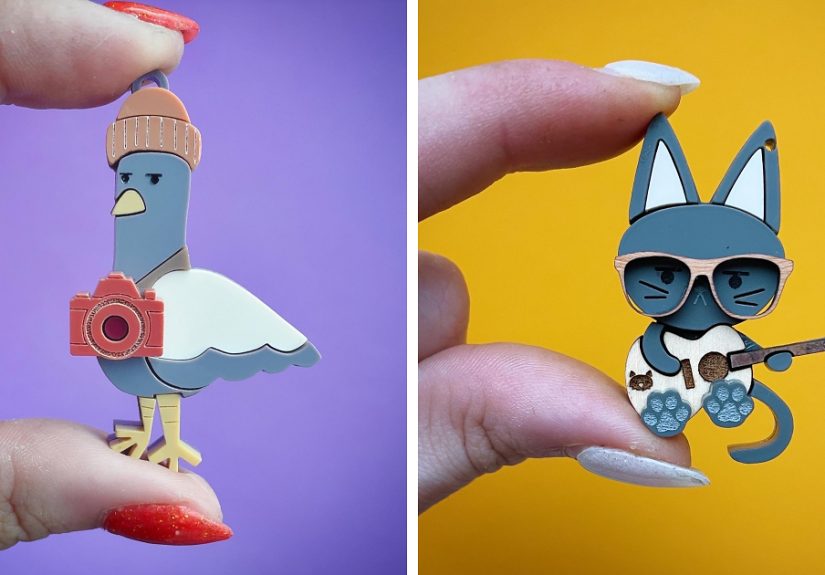
The original “Millennimals” idea, created by Kristy Edgar, combines several creative ingredients: acrylic material, laser-cut shapes, a love of tiny art, and a writer’s instinct for character. The result is a charming collection of little animals that do more than sit there looking adorable. Each one arrives with a backstory so specific that readers may feel a sudden, uncomfortable thought: “Wait. Do I know this person?” Worse, the answer may be, “Yes. It is me.”
What Are “Millennimals”?
Millennimals is a playful blend of “millennials” and “animals.” The name works because the project turns generational habits, lifestyle trends, social media quirks, and modern identity performances into small acrylic creatures. Instead of writing a straightforward essay about millennial culture, the artist gives us characters: a self-important creative type, a travel-obsessed influencer, a hyper-specific foodie, a startup philosopher, a plant parent with emotional support succulents, or a musician who records everything on cassette “ironically.”
That is the magic of the project. It is not mean-spirited; it is affectionate satire. The humor comes from recognition. These characters are exaggerated, yes, but not so exaggerated that they feel impossible. They are close enough to reality that they lightly tap you on the shoulder and whisper, “Remember that person who brought homemade kombucha to a housewarming party? We made him into an animal.”
Each figure has two layers. First, there is the visual appeal: a neat, tiny animal made from acrylic. Second, there is the written backstory, where the joke blooms. The animal may look simple at first glance, but the description gives it a full life. Suddenly, the creature has hobbies, opinions, taste in beverages, questionable tattoos, a tiny apartment full of plants, or a podcast with twelve episodes and two listeners, both of whom are related to them.
Why Acrylic Works So Well for Tiny Animal Art
Acrylic is an ideal material for this kind of project because it is clean, colorful, durable, and highly compatible with laser cutting. Compared with paper or cardboard, acrylic has a more polished finish. It can look bright, glossy, modern, and collectible. For miniature art, those qualities matter. A small object has to do a lot of visual work in a tiny space, and acrylic gives each shape crisp edges and a satisfying pop.
Laser-cut acrylic also allows for repeatable precision. That means an artist can create a series of characters with consistent size, shape, and finish while still changing colors, silhouettes, details, and accessories. A fox can feel different from a duck, a pigeon, a cat, or a squirrel without the artist having to reinvent the entire process from scratch. In the “Millennimals” universe, the material supports the joke: the animals look polished and intentional, almost like little boutique products, which makes their overly elaborate personalities even funnier.
Acrylic Gives the Characters a Modern Feel
There is something very contemporary about acrylic. It belongs in design studios, small-batch shops, craft fairs, online marketplaces, and laser-cutter workspaces. It feels less like an old-fashioned figurine and more like a clever collectible. That visual style matches the subject perfectly. These are not woodland creatures from a dusty storybook. They are modern animals who probably know the best co-working space in town and have opinions about cold brew extraction.
Small Scale Makes the Joke Sharper
Miniature art has a special psychological pull. People naturally lean in when they see tiny things. Small objects invite close attention, and close attention makes every detail feel important. With “Millennimals,” that intimacy becomes part of the humor. The viewer looks at a tiny animal and then reads a wildly specific biography. The contrast between the tiny physical object and the oversized personality creates the punchline.
The Power of Backstories in Visual Art
One reason this project works so well is that it uses narrative art. Narrative art is art that tells a story, and stories help viewers connect quickly. A simple animal shape may be cute, but a simple animal shape with a name, a career, a dating history, and a favorite type of reusable water bottle becomes memorable.
Backstories turn objects into characters. A small acrylic bird is decorative. A small acrylic bird named Branford who plays in a band nobody has heard of and delays rehearsal because he tunes by ear becomes a comedy sketch. A tiny creature who builds a startup, starts a podcast, and asks long “questions” at tech conferences becomes a social type. The art is no longer just something to look at; it becomes something to read, laugh at, and share.
This is especially effective online. In the age of fast scrolling, a visual hook gets attention, but a story keeps it. People may stop for the cute animal, then stay for the character description, then send it to a friend with the message, “This is absolutely you.” That shareability is not an accident. Specificity is what makes internet humor travel. The more precisely a joke describes a certain kind of person, the more universal it feels.
Why These Little Animals Feel So Familiar
The “Millennimals” characters are funny because they borrow from recognizable millennial stereotypes without relying on lazy clichés. Yes, there are references to podcasts, craft drinks, travel content, boutique hobbies, niche fashion, tech culture, plant obsession, literary pretension, gaming setups, and self-branding. But the humor works because the details are vivid. The characters are not simply “a hipster” or “an influencer.” They are specific individuals with names, routines, preferences, and contradictions.
That specificity is the secret sauce. A vague joke says, “Millennials like avocado toast.” A sharper joke invents a restaurant called something like “Avocado Nope,” adds reclaimed wood menus, philosophical cocktail names, communal tables, sustainable salmon, and a chef who owns too many carbon steel knives. Suddenly the joke has a world. You can smell the espresso. You can hear the indie playlist. You can feel the chair that looks beautiful but is terrible for your spine.
They Are Tiny Personality Mirrors
Many viewers enjoy this type of art because it offers gentle self-recognition. You might laugh at the travel vlogger animal, then remember you once described a weekend trip as “transformational.” You might laugh at the plant-loving character, then glance nervously at your windowsill jungle. You might laugh at the startup animal, then realize you have used the phrase “early-stage idea” to describe a Google Doc with three bullet points.
Good satire does not simply mock others. It leaves room for the audience to see itself. “Millennimals” succeeds because it feels like a group portrait of a generation that grew up online, entered adulthood during economic weirdness, developed strong opinions about coffee, and learned to turn every hobby into either a brand, a side hustle, or a healing journey.
Miniature Art and the Appeal of Small Worlds
Miniature art has always fascinated people. Small things create a sense of control, wonder, and intimacy. A tiny object feels like a secret world that can fit in your hand. Whether it is a dollhouse, a tiny painting, a miniature food sculpture, or a laser-cut acrylic animal, the appeal is similar: the viewer gets to enter a scaled-down universe where every detail matters.
In contemporary art and craft, small-scale work has gained new energy because it photographs well, ships easily, and feels personal. A tiny acrylic animal can sit on a desk, shelf, windowsill, or studio wall. It can become a conversation piece. It can be collected, gifted, or displayed as a small joke with surprisingly long legs. Unlike large artwork, which requires wall space and commitment, tiny art sneaks into daily life. It does not demand a room; it claims a corner.
That is part of the charm of “Millennimals.” The characters feel like collectibles, but they are also little stories. Owning one would be less like owning a decoration and more like adopting a tiny roommate with a complicated personality. You may think you are buying a cute acrylic raccoon. In reality, you are inviting in someone who has opinions about vinyl pressings and calls dinner “a curated grazing experience.”
Handmade Collectibles in the Age of Personal Branding
The rise of handmade marketplaces, custom gifts, and small creative businesses has made projects like “Millennimals” feel especially relevant. People are increasingly drawn to items that feel personal, humorous, and original. Mass-produced objects can be useful, but handmade collectibles offer a different kind of satisfaction: they feel like they came from a real person with a real imagination.
That matters in a world where so much visual culture is repeated, reposted, filtered, and algorithmically polished. A tiny acrylic animal with a strange backstory feels refreshingly human. It has a point of view. It does not look as if it was created by a committee in a beige conference room. It feels like someone had an idea, laughed at it, made it real, and then gave it a name that probably owns a ring light.
Why Backstory-Based Gifts Work
Backstory-based art also makes excellent gift material. People love gifts that say, “I saw this and thought of you,” especially when the connection is funny but affectionate. A “Millennimal” style character can capture a friend’s habits without needing to be a literal portrait. Maybe your friend is not actually a fox who teaches yoga, but spiritually? Yes. Absolutely. The fox has her energy.
Personalized and character-driven gifts often succeed because they combine humor with recognition. They make people feel seen. And sometimes, being seen as a tiny acrylic animal with a dramatic biography is the highest form of friendship.
The Writing Is as Important as the Object
One of the smartest parts of “Millennimals” is that the writing does not merely explain the art. It completes it. Without the descriptions, the animals would still be charming. With the descriptions, they become a series of miniature character studies. This is where the creator’s background in English becomes especially relevant. The humor depends on rhythm, voice, detail, and escalation.
A strong “Millennimals” backstory usually begins with a recognizable identity: musician, photographer, travel vlogger, tech founder, gamer, academic, foodie, or wellness enthusiast. Then it adds details that sharpen the character. What does this animal drink? What does it wear? What does it call its creative project? What kind of bag does it carry? What phrase does it overuse? What does it believe makes it different from everyone else, even though it belongs to a very crowded category of people who all believe they are different?
The best details are funny because they are unnecessary in the most necessary way. A character does not just like literature; he writes a dissertation with an absurdly academic title. A character does not just enjoy travel; she returns from a retreat with spiritual souvenirs, questionable translations, and a new accent. A character does not simply play games; she has a full streaming setup, imported collectibles, and a vocabulary made of platform-specific emotional weather reports.
How to Create a Character Like a “Millennimal”
For artists, writers, and makers inspired by this concept, the lesson is not to copy the project but to learn from its structure. The process begins with observation. Look at social types, habits, communities, and microcultures. Pay attention to the little details people use to build identity: clothing, hobbies, phrases, tools, décor, beverages, apps, and rituals.
Step 1: Start With an Animal Shape
Choose an animal that already carries a mood. A fox may feel clever and stylish. A pigeon can feel urban and underappreciated. A raccoon suggests chaos with tiny hands. A cat can be aloof, elegant, or secretly running a lifestyle newsletter. The animal does not need to match the human type perfectly; sometimes the mismatch makes it funnier.
Step 2: Give the Character a Name
The name matters. A good name sets the tone before the backstory begins. Names like Branford, Maxton, Zaylor, Iris, Jonquil, Bolan, Diantha, Journi, Ryon, or Talulah feel intentionally stylized. They sound like people who might have strong feelings about fonts, farmers markets, or whether “authenticity” can be scheduled into a content calendar.
Step 3: Build the Backstory With Specific Details
Specificity makes the character believable. Instead of saying “she likes coffee,” say she orders a half-caff oat milk latte with house-made lavender syrup and then says she is “actually cutting back.” Instead of saying “he likes music,” say he records ambient banjo covers on tape because digital audio “has no soul.” Details are the difference between a stereotype and a character.
Step 4: Add a Contradiction
Contradiction makes comedy. A character who preaches minimalism but owns 43 handmade mugs is funny. A wellness influencer who gets stressed when her meditation app updates is funny. A tech founder who wants to “disrupt connection” but cannot reply to a text is funny. The contradiction gives the backstory movement.
Why “Millennimals” Is More Than a Cute Joke
At first glance, “Millennimals” may look like a lighthearted internet art project, and it certainly is fun. But it also points to something deeper about modern identity. People today often build themselves through visible tastes: what they drink, where they travel, what they post, what they buy, what they avoid, what they collect, and what they claim to be “really into right now.”
The project gently pokes at the way identity can become performance. A person is not just a musician; he is a self-taught musician who uses analog equipment. A person is not just a traveler; she is a storyteller of global transformation. A person is not just a professional; he is building a startup, developing an app, and launching a podcast. The joke is not that these things are bad. Many of them are creative, ambitious, or sincere. The joke is that the performance can become so elaborate that it starts to look like a costume.
By turning these identities into animals, the artist makes them safer to laugh at. Animals soften the satire. A tiny acrylic creature can carry social commentary without sounding like a lecture. It can say, “Look how funny we are,” rather than, “Look how doomed we are.” That difference is important. The project has bite, but it is more nibble than attack.
Experience Section: What Making Tiny Acrylic Animals Teaches You
Making little acrylic animals with specific backstories is a surprisingly rich creative exercise. At first, it may sound simple: draw an animal, cut it out, give it a name, write a joke. But once you begin, you quickly discover that tiny characters demand big decisions. Every shape, color, accessory, and sentence has to earn its place. There is no room for lazy details when the entire animal may be smaller than your palm.
The first experience is learning how much personality can live in a silhouette. A rounded body feels gentle. Pointed ears feel clever. A long neck can look elegant or judgmental, depending on the angle. A tiny acrylic bird with a tilted head may look curious, anxious, or like it just remembered it left a voice memo unread. When you work small, posture becomes storytelling. A slight lean can suggest confidence. A wide stance can suggest someone who says “I’m just being honest” before ruining brunch.
The second lesson is that material changes the mood. Acrylic has a crisp, polished quality that makes even silly characters feel designed. It forces you to think about color in a direct way. A soft pastel animal feels nostalgic and gentle. A bold neon creature feels like it owns a ring light and uses the phrase “personal brand” without blinking. Transparent acrylic can create a ghostly, modern effect, while opaque acrylic feels more graphic and toy-like. The material becomes part of the character’s voice.
The third experience is discovering that writing backstories is basically people-watching with better boundaries. You begin collecting details from the world: the man at the café explaining blockchain to someone who did not ask, the woman photographing her soup from six angles, the friend who says they are “low maintenance” while unpacking three skincare bags. These details become ingredients. The goal is not to shame real people but to capture recognizable behavior in a way that feels playful.
The fourth lesson is restraint. It is tempting to give every character a ten-page biography, a childhood wound, a favorite candle scent, and a complicated relationship with their father. But short descriptions often work better. A few sharp details can suggest an entire life. The best backstory feels like the visible tip of a very ridiculous iceberg.
Finally, making these animals teaches you that humor and affection can live together. A good character should make people laugh, but it should also feel oddly lovable. The tiny animal may be pretentious, dramatic, over-caffeinated, chronically online, or emotionally attached to a sourdough starter, but it should still feel worthy of a little sympathy. After all, most of us are walking around with our own tiny backstories, trying to look polished while internally buffering. If a miniature acrylic raccoon can help us laugh at that, then it has done important cultural work.
Conclusion: Tiny Animals, Big Personalities
“Millennimals” is a delightful example of how small art can carry big personality. By combining acrylic craft, laser-cut precision, miniature design, and comic writing, the project turns little animals into sharp, funny reflections of modern life. Each creature feels like a collectible, a character, and a social joke all at once.
The reason the idea works so well is simple: it understands that people are made of details. Our coffee orders, hobbies, favorite bags, travel stories, podcasts, plants, playlists, apps, and carefully chosen words all reveal something about us. “Millennimals” gathers those details, exaggerates them lovingly, and gives them tiny ears.
In a crowded digital world, that combination of visual charm and narrative humor stands out. These little acrylic animals do not need to shout. They simply sit there, glossy and adorable, while their backstories do the emotional damage. And honestly, that is art.