Table of Contents >> Show >> Hide
- What CPR teaching teaches you about people
- CPR didn’t stay the sameand that’s a good thing
- The classroom methods that actually stick
- The reality check: cardiac arrests usually happen at home
- The barriers I saw again and again (and how we coached past them)
- When CPR isn’t one-size-fits-all
- What kept me teaching: the quiet wins
- A practical “lifetime CPR kit” for anyone reading this
- Looking back, the lesson is simple: courage is teachable
- Additional : the moments that shaped my CPR life
I’ve taught CPR in places that would never make the glossy brochure: a break room that smelled like microwaved fish, a church basement with folding chairs that squeaked in judgment, a high school gym where the echo made every “push hard and fast” sound like a military command. And yet, those are the rooms that convinced me CPR education isn’t just a skill. It’s a small, practical kind of hopeone you can carry in your hands.
When people ask what it’s like to teach CPR for a living, I tell them it’s a front-row seat to human nature. You see confidence show up late, fear show up early, and humor show up exactly when everyone’s chest compressions start drifting into “gentle patting.” (CPR is not a love tap. CPR is a serious pep talk for the heart.)
What CPR teaching teaches you about people
In every class, someone arrives convinced they’ll “freeze in a real emergency.” Someone else thinks CPR is basically what they saw on TV, which often looks like a dramatic shoulder shake followed by a single heroic breath and a commercial break. Teaching CPR means gently replacing myths with muscle memoryand helping people feel brave enough to act before they feel “ready.”
The surprising part? Most students don’t fear learning CPR. They fear doing it “wrong.” So a big slice of my job has been repeating a truth that experienced clinicians and guideline writers keep reinforcing in different ways: doing something quickly is usually better than doing nothing perfectly. The goal is fast action, strong compressions, and getting help on the way.
CPR didn’t stay the sameand that’s a good thing
If you’ve been around CPR long enough, you’ve watched it evolve. Not because people got bored and wanted new acronyms, but because science kept pointing to what matters most in the first minutes of cardiac arrest: circulation to the brain and heart. That evidence reshaped how we teach and how bystanders respond.
From “A-B-C” to “C-A-B”: compressions moved to the front of the line
Years ago, many people learned CPR as “Airway, Breathing, Compressions.” Then the recommended sequence shifted to “Compressions, Airway, Breathing” to get blood moving sooner and reduce delays. As an instructor, I felt the change instantly: students started doing something faster, instead of spending precious time trying to remember head-tilt angles and perfect seals before the first compression.
Hands-Only CPR made action simpler for untrained bystanders
Another major turning point was the rise of Hands-Only CPR for teens and adults who suddenly collapse. The message is intentionally simple: call for emergency help and push hard and fast in the center of the chest. For many people, removing rescue breaths from the “must-do” list reduced hesitationespecially for those worried about mouth-to-mouth, barriers, or just plain panic.
Teaching this didn’t replace full CPR training. It widened the on-ramp. People who would never sign up for a certification class could still learn a lifesaving response in minutesand that matters in communities where training access is uneven.
“High-quality CPR” became the standard, not just “any CPR”
As training matured, we started emphasizing not only doing compressions, but doing them well: pushing at an effective rate, going deep enough, letting the chest fully recoil, and minimizing pauses. It sounds technical until you try it for two minutes and realize: quality CPR is athletic. It’s rhythm, posture, and stamina. It’s why I spent years correcting elbows, repositioning shoulders, and repeating the same phrase: “Use your body weightyour arms are not hydraulic jacks.”
The classroom methods that actually stick
CPR training lives or dies by recall. In a real emergency, nobody gets extra credit for remembering page 12. People need a script that survives adrenaline.
The three-part mental checklist: check, call, compress
- Check: Is the person responsive? Are they breathing normally, or only gasping?
- Call: Activate emergency response (call 911 or direct someone to do it) and send for an AED if available.
- Compress: Start chest compressions hard and fast in the center of the chest.
I’ve watched this “check-call-compress” rhythm prevent mental traffic jams. When students can’t remember the details, they can still remember the sequenceand the sequence gets help moving.
Using rhythm without turning CPR into karaoke night
The recommended compression rate is often taught with music that lands in the same beat range. “Stayin’ Alive” is a classic for a reason: it’s catchy, it matches the tempo, and it gives nervous hands something steady to follow. (Yes, the irony is intentional. If the Bee Gees help someone survive, I consider that a public health win.)
But I always add a reminder: the beat is a tool, not a performance. Your priority is consistent compressions with minimal interruptionsno dramatic pauses for the chorus.
Demystifying AEDs: “the device that talks you through it”
Automated external defibrillators intimidate people until they don’t. The moment students see an AED give calm, step-by-step instructions, you can feel the room relax. AEDs are designed for lay rescuersmany will literally tell you where to place pads, when to stand clear, and when to resume compressions.
In workplace trainings, I leaned into the practical: where the AED is located, who retrieves it, how to keep compressions going while someone opens the cabinet, and why an AED program is part of a broader safety culturenot a fancy wall accessory.
The reality check: cardiac arrests usually happen at home
Here’s the statistic that changed the way I taught: out-of-hospital cardiac arrests most often happen in homes and residences. Not stadiums. Not airports. Not conveniently beside a first-aid poster. This means the person who needs CPR is often someone you loveand the person who can start CPR is often you.
That’s why I started telling students to practice a “home scenario” in their heads: Where would I put someone flat? Who calls 911? Do I know where the nearest AED is in my building or neighborhood? Planning isn’t pessimism. It’s preparedness.
And while CPR can dramatically improve outcomes when started immediately, too many people still don’t receive it. Across different registries and reports, bystander CPR rates have historically hovered far below “everyone who could help.” That gap is the space where education matters.
The barriers I saw again and again (and how we coached past them)
1) “What if I hurt them?”
I never promised CPR would feel gentle. Effective compressions are firm by design. But in cardiac arrest, the alternative to “maybe I hurt them” is “I definitely didn’t help them.” The goal is to keep blood moving until professional help arrives.
2) “What if I get sued?”
Legal fear is real, and it’s also often bigger than the risk. In the U.S., Good Samaritan principles generally aim to protect people who provide reasonable help in good faith during emergencies. I encouraged students to learn their local policies and remember the spirit of these laws: they’re meant to reduce hesitation and support bystanders who step in.
3) “What if I don’t remember everything?”
This one is my favorite to answer, because it’s where training pays off. If you call emergency services, dispatchers can guide you through what to do next. Also, the core actionscall, compress, use an AED if availableare the most important pieces to recall under stress.
4) “I’m not strong enough.”
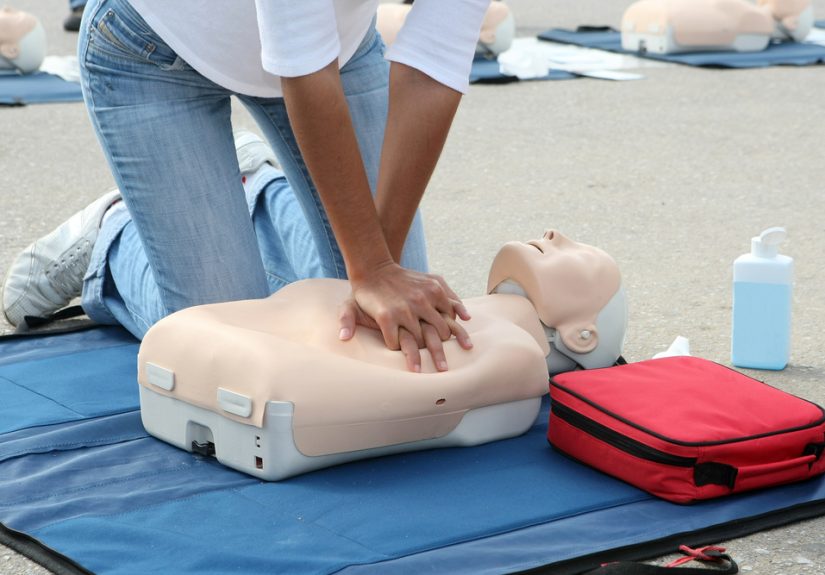
CPR is physically demanding. But technique helps more than people expect. When students stack shoulders over hands, lock elbows, and use body weight, compressions become doable for a wider range of bodies. We practiced switching compressors when possible, because fatigue is normaland planning for it improves quality.
When CPR isn’t one-size-fits-all
Hands-Only CPR is a powerful default for untrained bystanders responding to teens and adults who suddenly collapse. But there are situations where breaths matter moreespecially with children and infants, and in scenarios tied to drowning or airway problems. That’s why I always taught two layers of readiness:
- Layer 1: If you’re untrained and it’s a teen/adult sudden collapsecall and start chest compressions.
- Layer 2: If you’re trainedor it’s a child/infantbe ready to provide compressions with breaths as taught.
The point isn’t to overwhelm people with exceptions. It’s to encourage deeper training while still giving everyone a simple, lifesaving first move.
What kept me teaching: the quiet wins
Most CPR instructors don’t collect dramatic “I saved a life” stories like trophies. The wins are quieter and more human. It’s the student who practices compressions until their rhythm is steady instead of shaky. It’s the manager who adds an AED check to the monthly safety walk-through. It’s the teenager who goes home and makes their family promise: “If anything happens, we call 911, and we start compressions.”
Every so often, someone emails months later: “I didn’t freeze.” They rarely describe it like a movie. More often it’s messy and fast and frighteningand they acted anyway. As an instructor, you don’t forget those messages. They remind you that CPR training is a chain of small decisions that eventually becomes someone’s second chance.
A practical “lifetime CPR kit” for anyone reading this
- Refresh your training. Skills fade. A short refresher can rebuild confidence quickly.
- Know your local emergency number and how to describe your location. Seconds matter.
- Scout AED locations. Workplaces, gyms, schools, community centersmake it a habit to notice the cabinet.
- Practice good compression mechanics. Shoulders over hands, elbows locked, steady rhythm, full recoil.
- Accept imperfect action. Doing something now beats doing nothing while you search for “perfect.”
- Teach one other person. CPR knowledge spreads best person-to-person.
Looking back, the lesson is simple: courage is teachable
I used to think CPR training was mostly about technique: hand placement, depth, rate, sequences, and AED pads. Looking back, I think the real curriculum was couragethe kind that shows up before certainty, the kind that starts compressions while your brain is still catching up to what your eyes just saw.
CPR teaching gave me a lifetime of proof that ordinary people can do extraordinary things with two hands, a steady rhythm, and the willingness to begin. If you remember nothing else, remember this: call for help and start. The rest can be coached, corrected, and improved. Starting is the part that saves lives.
Additional : the moments that shaped my CPR life
If you want the honest highlight reel of a life teaching CPR, it’s not a montage of perfectly executed compressions. It’s a pile of tiny moments where people surprised themselves.
There was the first class where I realized “confidence” and “competence” arrive on different schedules. A guy in a suit sat in the front row like he was attending a shareholders’ meeting. He crushed the written quiz, then knelt beside the manikin and looked genuinely offended that it wouldn’t cooperate. His compressions were timidpolite, evenlike he was asking the manikin to consider waking up when convenient. After a few coached adjustments (shoulders over hands, elbows locked, use your body weight), he found the rhythm. He stood up, laughed, and said, “That was…weirdly empowering.” That sentence shows up in my head at least once a month.
I remember a group of high school students who came in acting like CPR was a boring health requirement. Ten minutes in, they were arguingpassionatelyabout who would be fastest at calling 911 and who would run for an AED. One kid asked, “So if it happens at home, it’s probably my grandma, right?” The room got quiet in the way only teenagers can get quiet when something feels suddenly real. We practiced the home scenario that day: clearing space, calling for help, starting compressions without waiting for permission from your own fear. When the bell rang, they left different than they arrived.
Then there were the workplace trainings, which taught me that CPR education is part psychology, part logistics. In one factory, everyone knew the AED existed, but nobody could point to it without playing a game of “hot or cold.” So we did a mini scavenger hunt. People laughed, but they also remembered. I learned that sometimes the most lifesaving thing you can teach is not “how” but “where.”
Some classes were about unlearning. I had students convinced CPR required finding a pulse like they were starring in a medical drama. I’d tell them, “In an emergency, we don’t audition. We act.” We practiced quick recognitionunresponsive, not breathing normallyand we moved into compressions. The goal was not to look cinematic. The goal was to keep blood moving.
And yes, I’ve had people cry. Not because compressions are sad (though two minutes can feel long), but because imagining a loved one needing CPR is heavy. When that happened, I tried to reframe it: learning CPR isn’t inviting tragedy. It’s building a bridge across the worst day imaginable. Most people will never have to use it. But if they do, they’ll be grateful they practiced when it was calm.
Looking back, the best part of teaching CPR was watching fear shrink. Not disappearfear is humanbut shrink enough that action could step in front of it. If I’ve left any legacy at all, I hope it’s this: somewhere, someone is walking around with a simple plan in their headcheck, call, compressand the belief that they’re allowed to help.