Table of Contents >> Show >> Hide
- The Exchange That Made the Interview Matter
- Why Stewart’s Pushback Landed So Hard
- Harris’s Dilemma: Loyalty Versus Political Oxygen
- The Backstory That Gives the Moment Its Weight
- What Harris Was Really Trying to Defend
- Why This Moment Still Resonates
- What the Moment Says About Harris
- Experiences Around the Topic: What This Moment Felt Like for Viewers, Voters, and the Democratic Base
- Conclusion
- SEO Metadata
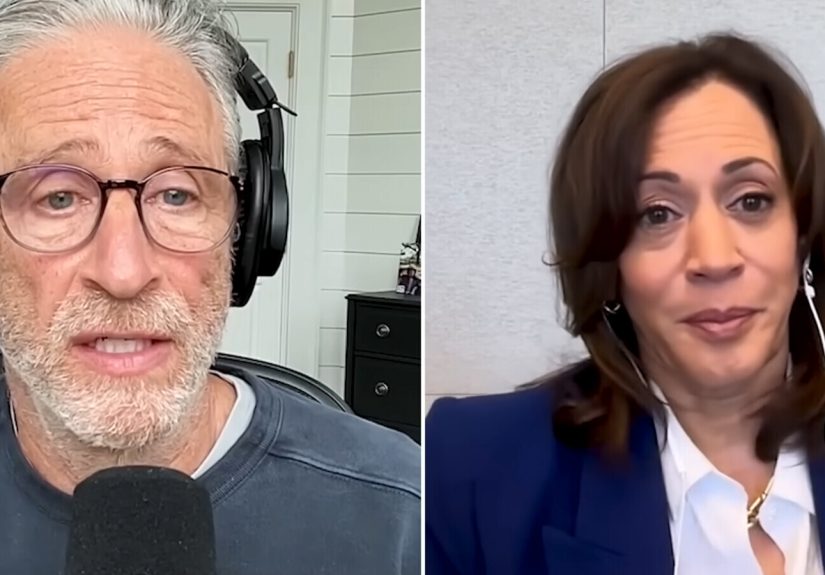
When Jon Stewart leaned in and asked Kamala Harris, “Do you really?” it was one of those political-media moments that felt bigger than the room it happened in. No shouting. No split screen. No dramatic cable-news music trying to convince your heartbeat to do cardio. Just a short question, delivered with the kind of raised-eyebrow disbelief Stewart has turned into an art form, after Harris said Joe Biden was “fully competent to serve.”
That exchange, from Harris’s October 2025 appearance on Stewart’s podcast The Weekly Show, landed because it put a spotlight on a question Democrats spent months trying to answer, dodge, soften, reframe, and occasionally outrun: if Biden was fully capable, why did so many voters feel otherwise? And if Harris knew that public anxiety was real, why didn’t she separate herself more clearly when she had the chance?
In other words, Stewart didn’t just press Harris on Joe Biden’s competence. He pressed on credibility, strategy, and the awkward space between private loyalty and public persuasion. Politics is full of careful phrasing, but Stewart’s question cut through the padding like a pocketknife through campaign foam.
The Exchange That Made the Interview Matter
Harris arrived on Stewart’s show to discuss her memoir 107 Days, which revisits the compressed, chaotic, almost absurdly short presidential campaign that began after Biden exited the 2024 race. She reflected on her affection for Biden and admitted that, in hindsight, she should have done more to distinguish herself. That alone was newsworthy. But the moment turned electric when Stewart tried to clarify that he was asking about policy and governance, not necessarily Biden’s personal capacity.
Harris then made the answer even more direct: she said Biden was “fully competent to serve.” Stewart’s response was immediate and unmistakably skeptical. Not cruel. Not theatrical. Just genuinely surprised. In politics, that can be more devastating than outrage. Outrage is expected. Surprise suggests a statement has failed the smell test with a smart, attentive audience.
Stewart’s follow-up mattered because he articulated the tension many Americans had already been wrestling with. Harris argued there was a distinction between running for president and being president. Campaigning, she suggested, is a marathon run at a sprint, with the added joy of public humiliation tossed in like tomatoes at a medieval fair. Governing is different. Stewart countered with the obvious concern: most voters see the presidency itself as physically and mentally relentless. If a candidate did not appear to have the stamina to campaign, why would they believe he had the stamina to govern?
That was the core of the moment. Not a gotcha. A credibility test.
Why Stewart’s Pushback Landed So Hard
Jon Stewart occupies an unusual place in American political culture. He is not a traditional beat reporter, but he is also not just a comedian tossing out one-liners and leaving the mess for somebody else. For years, his style has been to use humor as a crowbar: loosen the official talking points, pry up the polished surface, and see what is hiding underneath. Sometimes that produces a laugh. Sometimes it produces a wince. Usually, if he is doing it well, it produces both.
By the time Harris sat down with him, the Biden competence debate had been public, bruising, and impossible to separate from the 2024 election story. Biden’s June 2024 debate performance intensified concerns about his age and fitness. A few weeks later, on July 21, 2024, he dropped out of the race and endorsed Harris. That left Democrats in a political blender, trying to replace the top of the ticket with barely enough time to print yard signs, much less rebuild a national message.
So when Harris, nearly a year later, still defended Biden’s competence in such categorical terms, Stewart was voicing what a lot of viewers were probably thinking: are we being asked to believe something that clashes with what we all saw play out in real time?
That is why the exchange spread. Stewart wasn’t only pushing back on Harris. He was pushing back on the broader political habit of asking voters to ignore their own memory and accept a cleaner retrospective.
Harris’s Dilemma: Loyalty Versus Political Oxygen
To be fair to Harris, her position was never simple. Vice presidents are expected to be loyal. Presidential nominees are expected to look independent. Harris had to do both at once, which is roughly as graceful as trying to tap-dance in a canoe.
During the 2024 campaign, she often praised Biden’s judgment and experience. In interviews, she defended him even as the age issue swallowed more and more oxygen. At the same time, she struggled to answer questions about how she would be different. That challenge became glaring during her media blitz, including moments when she appeared reluctant to create clear daylight between herself and the administration she had served.
Her memoir later sharpened the internal critique. Harris wrote that it was “recklessness” to leave the reelection decision to Biden and Jill Biden alone. That is a strong word, and not one typically chosen by politicians who are looking to preserve a carefully gift-wrapped legacy. The book also makes clear that Harris felt constrained, sidelined, and, at times, disappointed by Biden’s circle.
But here is the political problem: once Harris publicly acknowledged that the situation had been mishandled, defending Biden as fully competent sounded less like a clarification and more like a collision. Voters tend to notice when two ideas keep bumping into each other. If it was reckless for the party to let him continue toward reelection, then competence becomes part of the conversation whether anyone likes it or not.
The Backstory That Gives the Moment Its Weight
Without the timeline, Stewart’s question would have been sharp. With the timeline, it became loaded.
Biden’s poor debate showing in June 2024 did not create all the age concerns around him, but it crystallized them. What had been a background murmur turned into a front-page drumbeat. Democrats publicly rallied around him for a time, while privately and semi-publicly worrying about whether the campaign could survive. When Biden eventually stepped aside in July, Harris became the Democratic standard-bearer with 107 days to run a national campaign. That compressed sprint defined everything that followed.
Harris’s memoir presents that period as extraordinary, historic, and deeply chaotic. She argues that more time might have changed the race and that interference, friction, and lingering baggage from Biden’s orbit made the task harder. That case is not frivolous. A last-minute handoff is a brutal way to launch a presidential bid.
Still, Stewart’s question exposed the lingering contradiction: Harris now critiques the process, the timing, and the political handling of Biden’s decision, yet still insists Biden was fully competent to serve. That may be emotionally sincere. It may even reflect a genuine distinction in her mind between governing ability and campaign stamina. But politically, it is a hard sell. Voters do not separate those concepts with seminar-level precision. They judge what they see, what they feel, and whether the explanation sounds sturdier than the doubt.
What Harris Was Really Trying to Defend
It is worth considering that Harris may not have been defending every public appearance, every strained moment, or every awkward answer from the 2024 cycle. She may have been defending something narrower: Biden’s ability to do the actual work of the presidency, make decisions, absorb briefings, and exercise judgment in office.
That is not a ridiculous distinction. Plenty of public officials are better at governing than campaigning. Campaigns demand stamina, performance, improvisation, repetition, emotional resilience, and the ability to sound excited about diner coffee for the ninth time that week. Governing, while no less intense, is structured differently.
But Stewart understood the weakness of that argument in electoral politics. Presidents do not get graded in separate categories by the average voter. The campaign is part of the job test. Visibility matters. Perception matters. Stamina on camera matters. The presidency is not a quiet back-office role where the public only sees the quarterly report.
That is why Harris’s explanation sounded logical in theory but fragile in practice. Stewart’s skepticism was not just about Biden. It was about whether Democrats still underestimate how voters interpret strength, clarity, and confidence.
Why This Moment Still Resonates
The Stewart-Harris exchange matters because it captures one of the Democratic Party’s biggest unresolved headaches after 2024: how to tell the truth about Biden’s decline as a political candidate without torching the administration’s legacy, humiliating a longtime party leader, or implicating everyone who defended him too long.
That is not merely a messaging puzzle. It is an identity puzzle. Parties want loyalty. Voters want candor. Staffers want discipline. The internet wants blood. Somewhere inside that circus tent, an actual human being has to answer a direct question on camera.
Harris tried to answer it in a way that preserved dignity, loyalty, and nuance. Stewart responded the way a skeptical viewer might. That combination is exactly why the clip hit so hard. It felt like a real collision between political language and public intuition.
There is also a broader media lesson here. Some of the most revealing political interviews no longer happen on traditional Sunday shows or in heavily managed campaign settings. They happen in spaces where the guest expects a conversational tone and suddenly finds that conversational does not mean easy. Stewart brought humor, but he also brought memory. He remembered what the country had just been through, and he refused to pretend otherwise.
What the Moment Says About Harris
For Harris, the interview was both helpful and exposing. Helpful because she came across as more candid than she often did during the campaign. She admitted regret. She acknowledged that distinguishing herself from Biden mattered more than she realized. She sounded like someone who had actually replayed the tape in her head instead of insisting every decision had been perfect. In modern politics, that alone is practically avant-garde.
But the interview was also exposing because it showed the limits of her willingness to break fully with Biden. Even while criticizing the process around his reelection decision, she would not cross the line into saying the public had valid reasons to question whether he should have remained the nominee. She stopped just short of the sentence many voters expected.
And that is where Stewart pressed. Not with a filibuster. Not with a lecture. Just with a brief expression of disbelief that forced the contradiction into the open.
Experiences Around the Topic: What This Moment Felt Like for Viewers, Voters, and the Democratic Base
Part of why this exchange traveled so quickly is that it tapped into an experience many Americans had already lived through, especially during the final stretch of the 2024 election cycle. For a lot of voters, the Biden competence debate was not an abstract argument about constitutional law or executive capacity. It felt personal, disorienting, and weirdly intimate. People were not just watching a candidate. They were watching a party try to narrate what they had seen with their own eyes.
For Democratic voters, the experience was often emotionally split. On one hand, many genuinely admired Biden, appreciated his legislative wins, and viewed him as a stabilizing figure after the Trump years. On the other hand, they could also sense the growing mismatch between the party’s reassuring language and the public’s visible concern. That creates a specific kind of political exhaustion: the feeling of being told not to panic while everyone in the room is quietly checking where the exits are.
For Harris supporters, the experience was even more layered. Many wanted her to succeed and believed she had been handed an almost impossible timeline. They watched her try to inherit an administration, honor a president, launch a campaign, introduce herself anew to skeptical voters, and answer for every weakness in the Democratic brand all at once. There was sympathy there, but also frustration. Every time she declined to draw a stronger contrast, some supporters likely felt the same silent groan Stewart later put into words.
For politically engaged viewers, the interview with Stewart felt familiar in another way: it resembled the conversations people were having at kitchen tables, in group chats, and in the scroll-happy purgatory of social media. Not ideological warfare, necessarily. More like incredulous fact-checking among friends. “Wait, are we really still saying this?” Stewart gave that reaction a national microphone.
Even for people outside the Democratic coalition, the moment was revealing because it showed how hard it remains for major political figures to speak plainly about decline, succession, and institutional self-preservation. Americans are used to politicians protecting their allies. What they are less tolerant of is the sense that obvious realities are being repackaged and sold back to them as brand-new truth.
That is the deeper experience attached to this story: a crisis of trust. Not just trust in one candidate’s health, or one vice president’s explanation, but trust that political leaders will level with the public before events force their hand. Stewart’s question landed because it briefly restored the feeling of normal human reaction in a space often dominated by overmanaged messaging. He sounded like a citizen who remembers last year. That should not feel radical. And yet, in American politics, it sometimes does.
Conclusion
Jon Stewart pressing Kamala Harris on Joe Biden’s competence was more than a viral interview beat. It was a compact replay of the Democratic Party’s biggest credibility problem after 2024. Harris tried to draw a line between campaign stamina and governing ability, between affection and analysis, between loyalty and hindsight. Stewart challenged whether that line made sense to ordinary people.
In the end, the power of the moment came from its simplicity. Harris offered a careful political answer. Stewart responded with a very human one. And in a media environment overflowing with spin, sometimes the most memorable question is the shortest one in the room: Do you really?