Table of Contents >> Show >> Hide
- Who Is Jessica Davis?
- A Multicultural Childhood With a Designer’s Eye
- How Heritage Shows Up in Her Design Philosophy
- From Chinese Antiques to Mid-Century Modern
- Atelier Davis: Personal, Layered, and Livable
- Nest Studio: Hardware With Personality
- Career Lessons From a Global Design Perspective
- Signature Elements in Jessica Davis’s Work
- The Palo Alto Eichler: A Clear Example of Her Approach
- Real Simple Home 2024 and the Rise of the “Snug”
- Identity, Advocacy, and AAPI Representation
- Why Jessica Davis’s Multicultural Upbringing Matters
- Additional Experiences and Reflections Related to Jessica Davis’s Story
- Conclusion
Note: This article focuses on Jessica Davis, founder of Atelier Davis and Nest Studio, and is based on publicly available interviews, profiles, and design-industry coverage.
Some designers arrive at a room with a tape measure, a paint deck, and a very serious face. Jessica Davis seems to arrive with all of that, plus a passport full of visual memories. Born in Sydney, raised across Hong Kong, Dallas, and other corners of the world, Davis built a creative point of view that feels layered, witty, polished, and refreshingly unafraid of color. Her story is not just about interior design. It is about identity, movement, belonging, and the beautiful chaos of learning to see home from more than one angle.
Today, Jessica Davis is best known as the founder of the interior design studio Atelier Davis and the founder and creative director of Nest Studio, a luxury hardware brand. Her work spans residential interiors, hospitality spaces, furniture, product design, and landscape concepts. But the real signature is harder to put in a catalog: a room that feels personal without feeling precious, global without looking like a souvenir shop, and sophisticated without taking itself too seriously.
Who Is Jessica Davis?
Jessica Davis is an American interior and product designer whose career connects art history, architecture, travel, and craft. She studied Art History at Princeton University, with a focus that leaned toward modern residential architecture and urban planning. Later, she earned a master’s degree in interior design from The New England School of Art and Design. Before launching her own businesses, she worked in different corners of the design world, including production work for Bob Vila’s Home Again and years at Wilson Associates, where she contributed to international hotel and resort projects.
That varied professional path matters. Davis did not simply wake up one morning and declare, “I shall design fabulous knobs!”although, frankly, the hardware world is better because she eventually did. Her experience gave her a rare combination of practical planning, product sensitivity, hospitality-scale discipline, and residential warmth. The result is a design language that treats every detail, from a sofa silhouette to a cabinet pull, as part of the same story.
A Multicultural Childhood With a Designer’s Eye
Davis’s multicultural upbringing is central to understanding her work. She has described herself as half Chinese, with a childhood shaped by time in Hong Kong, Australia, Texas, and the United States more broadly. Hong Kong, in particular, exposed her to a cosmopolitan mix of cultures, architecture, food, movement, and visual contrast. Texas offered a different kind of cultural education: bigger spaces, stronger regional identity, and the experience of feeling like an outsider in a place that did not always mirror her background.
That “in-between” feeling can be uncomfortable, especially for a young person trying to answer the deceptively simple question, “Where are you from?” But for a designer, it can become a superpower. Davis learned early that identity is not always a single, neat answer. It can be a collage. It can be Chinese antiques next to mid-century furniture, modern art over an heirloom rug, or a family object displayed in a room that otherwise feels completely contemporary.
How Heritage Shows Up in Her Design Philosophy
Davis does not appear to use heritage as a predictable decorative formula. Her interiors are not about dropping a few “Asian-inspired” objects into a room and calling it meaningful. Instead, her multicultural background seems to shape the way she thinks: mix periods, respect memory, keep the architecture honest, and let the people who live in the space remain visible.
That distinction is important. Cultural design can become shallow when it turns into costume. Davis’s approach is more nuanced. Her work often embraces the “melting pot” idea: a layered mix of traditions, personal artifacts, art, color, and functional modern living. In this sense, multicultural interior design is not about proving where a person comes from. It is about creating a home that can hold every chapter of that person’s story.
From Chinese Antiques to Mid-Century Modern
One reason Davis’s rooms feel so collected is that her own visual education began at home. She has spoken about growing up around Chinese antiques, oriental rugs, mid-century modern furniture, and modern art. That mix trained her eye to see contrast as natural rather than risky. A carved antique piece does not have to fight with a clean-lined chair. A bright textile does not have to apologize to a minimalist wall. A room can be both elegant and a little mischievous.
This is where Davis’s work becomes especially appealing to modern homeowners. Many people today inherit objects, travel, move between cities, blend families, and build lives that do not fit one design category. Davis’s rooms suggest that your home does not need to choose one personality. It can be thoughtful, playful, collected, and still perfectly livable.
Atelier Davis: Personal, Layered, and Livable
Atelier Davis, her design studio, is known for balancing original architectural character with modern comfort. The firm works across residential and hospitality interiors, as well as furniture, product, and landscape design. Its projects often show a respect for the “bones” of a house while introducing unexpected colors, materials, and decorative moments.
That balance is one of Davis’s strengths. She does not flatten a historic or mid-century home into a generic showroom. Instead, she works with what already exists, then adds fresh life. Period details are not treated like museum ropes that say “do not touch.” They become the foundation for rooms that can handle children, dinner parties, family collections, and the occasional pillow fort. Design, in her world, is beautifulbut it also has to survive real life.
Nest Studio: Hardware With Personality
Davis launched Nest Studio in 2012 after noticing a gap in the market for interesting luxury hardware. Cabinet pulls, knobs, towel bars, and accessories are often treated as background details, but Davis saw them as tiny architectural moments. Hardware is touched every day. It changes how a kitchen, bathroom, or cabinet feels in the hand. In other words, it is small but mightylike espresso, punctuation, or a toddler with a marker.
Nest Studio reflects Davis’s belief that details can make a home feel special without becoming overly formal. The brand’s work connects function with sculptural beauty, using refined finishes, strong shapes, and a designer’s attention to proportion. It also shows how her multicultural and product-focused thinking overlap: every object can carry influence, craft, and character, even when its job is as practical as opening a drawer.
Career Lessons From a Global Design Perspective
Davis’s path also shows the value of not following a perfectly straight career line. She moved through art history, television production, interior design education, hospitality design, product design, entrepreneurship, and advocacy. Each step added another layer. Instead of making her work scattered, those experiences made it richer.
For creative professionals, this is a useful lesson. A background that seems “too mixed” may actually become your strongest asset. Davis’s multicultural upbringing and varied career helped her become fluent in different design languages. She can understand architecture, product, art, client storytelling, and the practical realities of building a business. That is not confusion. That is range.
Signature Elements in Jessica Davis’s Work
1. Color With Confidence
Davis often uses color in ways that feel bold but not chaotic. Her rooms may include deep reds, blues, greens, corals, or yellows, but the palette usually has structure. Color is not thrown into the room like confetti after three cups of coffee. It is layered through textiles, art, furniture, walls, and accessories so the space feels energetic but intentional.
2. Art as a Storytelling Tool
Art plays a major role in her interiors. Rather than using artwork as a final patch for an empty wall, Davis treats it as a meaningful part of the room’s identity. This makes sense given her art history background. In her work, art can guide color, create emotional focus, or reveal something about the people who live there.
3. Mixing Periods and Styles
One of Davis’s most recognizable strengths is her comfort with mixing. Antique objects, contemporary art, mid-century forms, custom details, and global references can live together in her spaces. This mix gives her interiors a collected-over-time quality, even when the design has been carefully planned.
4. Architecture as the Starting Point
Davis has repeatedly emphasized the importance of architecture. Her interiors often begin by listening to the building: its lines, light, proportions, history, and relationship to the landscape. This approach keeps even the most colorful spaces grounded.
5. Rooms That Feel Human
Perhaps the most important feature is warmth. Davis’s spaces are polished, but they rarely feel stiff. They are designed for families, collections, pets, books, snacks, homework, conversations, and life’s daily messes. A beautiful room that cannot handle a real Tuesday is not much use to anyone.
The Palo Alto Eichler: A Clear Example of Her Approach
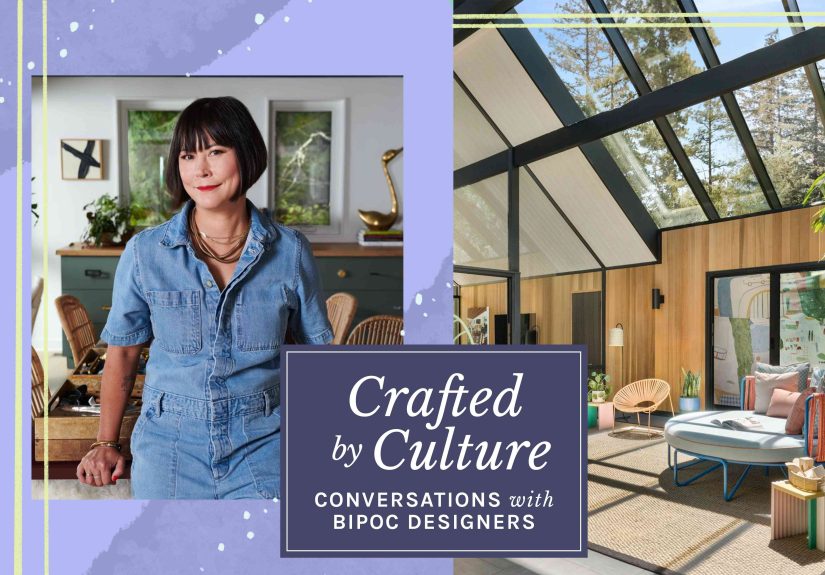
One of Davis’s standout projects is a renovation of a historic Eichler home in Palo Alto, completed with Gustave Carlson Design. Eichler homes are known for modernist ideals: open layouts, indoor-outdoor flow, post-and-beam structure, and abundant natural light. In this project, the design team respected the original architecture while adapting it for a modern family with a strong art collection and a love of color.
The result is a strong example of Davis’s multicultural and layered thinking. Clean architectural lines create the calm foundation. Art, color, wallpaper, furniture, and family-friendly details bring personality. The home does not become a frozen tribute to mid-century modernism. It becomes a living space for today, full of movement, creativity, and warmth.
Real Simple Home 2024 and the Rise of the “Snug”
Davis’s work in the 2024 Real Simple Home also reflects her talent for cozy, personality-rich spaces. Atelier Davis designed a den and a playful children’s room in a restored Brooklyn brownstone. The den leaned into the idea of the “snug,” a lounge-like retreat that feels intimate, layered, and comfortable.
The popularity of the snug makes sense in a world where people want homes to work harder emotionally. A room is no longer just a room. It may need to be a reading corner, movie zone, nap headquarters, work escape, and snack sanctuary. Davis’s version of comfort does not mean beige emptiness. It means texture, mood, pattern, and a little bit of fun.
Identity, Advocacy, and AAPI Representation
Davis is also a founding member and president of the Asian American Pacific Islander Design Alliance, known as AAPIDA. The organization supports visibility, collaboration, advocacy, dialogue, community, and mentorship for AAPI professionals in the home and design industries.
This advocacy connects directly to her personal story. Davis has spoken about feeling like an outsider in an industry that has often been white and Eurocentric. By helping build AAPIDA, she has turned that experience into community-building. Her role suggests that design is not only about beautiful rooms. It is also about who gets seen, who gets supported, and whose stories are allowed to shape the industry’s future.
Why Jessica Davis’s Multicultural Upbringing Matters
Jessica Davis’s story matters because it challenges the idea that good design must come from one fixed tradition. Her work shows that beauty can come from movement, mixture, memory, and contradiction. A room can be modern and nostalgic. It can be refined and playful. It can honor Chinese-American heritage, Texas practicality, Hong Kong cosmopolitan energy, and American family life without turning into a checklist.
In SEO terms, people may search for “Jessica Davis interior designer,” “Atelier Davis,” “Nest Studio hardware,” or “multicultural interior design.” But the deeper reason her work resonates is emotional. Many people today live between places, cultures, and identities. Davis creates interiors that make that complexity feel not only acceptable, but beautiful.
Additional Experiences and Reflections Related to Jessica Davis’s Story
There is a practical lesson in Davis’s multicultural upbringing for anyone trying to create a meaningful home: do not edit out your history too quickly. Many homeowners hide inherited objects because they worry those pieces will not match the new sofa, the fresh paint color, or the glossy inspiration image saved on their phone. Davis’s work suggests the opposite. The object that “doesn’t match” may be the thing that gives the room a soul.
Imagine a family with a carved wooden chest from a grandparent, a modern sectional, a stack of children’s books, and artwork collected during travel. A less thoughtful design approach might remove everything unusual to create a clean, market-friendly look. But a more personal approach would ask better questions: What does the chest mean? Where should the art be placed so it feels celebrated? Which colors connect the old object to the new furniture? How can the room feel fresh without erasing the family’s memory?
This is where Davis’s example becomes useful beyond celebrity design coverage. Her work encourages people to think like editors, not erasers. Editing means choosing what matters, giving it space, and arranging it with intention. Erasing means chasing a trend until the room could belong to anyone. A home shaped by real experience will always have more depth than a room assembled only from what is currently popular.
Another experience related to her story is the feeling of cultural translation. People who grow up between cultures often learn to read rooms quickly. They notice what is said and unsaid, what feels formal or relaxed, what objects carry status, and what details make people feel welcome. In interior design, that sensitivity is powerful. A designer must understand not only what clients say they want, but also how they live, what they value, and what they may be afraid to show.
For example, a client may say, “I want a modern home,” but still own family pieces, travel souvenirs, handmade textiles, or art that matters deeply. The job is not to force those pieces into a cold modern box. The job is to create a modern framework generous enough to hold them. Davis’s multicultural design perspective offers a model for that kind of generosity.
Her story also speaks to creative confidence. When someone has moved through many places, the pressure to “pick one lane” can be intense. But Davis’s career proves that layered identity can become a creative foundation. Her rooms do not succeed despite their mix of influences. They succeed because of it. That is an encouraging message for designers, writers, artists, students, and entrepreneurs who worry that their background is too complicated to explain neatly.
Finally, Davis’s work reminds us that comfort and sophistication are not enemies. A room can include fine art, custom hardware, bold color, children’s spaces, family storage, and cozy corners without losing elegance. The best homes are not perfect stage sets. They are places where life has permission to happenwith better lighting, better drawer pulls, and hopefully fewer mystery crumbs under the sofa.
Conclusion
Jessica Davis’s multicultural upbringing shaped her work by teaching her to value contrast, memory, movement, and personal storytelling. From Sydney to Hong Kong to Texas and beyond, she developed an eye that sees beauty in mixture rather than uniformity. Through Atelier Davis and Nest Studio, she turns that perspective into interiors and products that are colorful, layered, practical, and deeply human.
Her career also reflects a larger shift in American design. Today’s most compelling spaces are not about copying one style perfectly. They are about creating homes that reflect real people with real histories. Davis’s work shows that heritage does not need to be loud to be powerful. Sometimes it appears in a rug, a color choice, a piece of hardware, a family collection, or simply the courage to let a room be as complex as the person who lives in it.