Table of Contents >> Show >> Hide
If you ever want to know what “organized chaos” looks like, just stand on a street corner in Old Delhi for five minutes.
In that short time, you’ll see rickshaws weaving through crowds, spice vendors shouting prices, temple bells ringing, and
kids turning any scrap of pavement into a cricket field. That’s the energy I tried to capture when I took 22 photos
showcasing life on the streets of Old Delhi.
Old Delhi is the historic heart of India’s capital, a dense maze of lanes built during the Mughal era and still buzzing
with life today. Around Chandni Chowk, Jama Masjid, and the Khari Baoli spice market, you get an almost overwhelming mix
of sound, color, scent, and emotion. Street tours highlight these neighborhoods as the best places to experience
“real” Delhi, with guides leading travelers past jalebi stands, textile shops, gold jewelry stores, and mountains of
chillies and cardamom pods.
My 22 images are not a full documentary of Old Delhi that would take a lifetime and several terabytes of storage.
Instead, they’re small windows into the daily rhythm of the streets: the people who live and work there, the way history
and modern life collide, and the tiny unscripted moments that make this neighborhood unforgettable.
Why Old Delhi Is a Street Photographer’s Daydream
Old Delhi is frequently listed as one of the world’s most photogenic urban areas, and it’s not hard to see why.
Travel photographers rave about its layers: crumbling Mughal-era havelis, neon shop signs, tangled electric wires,
and the constant movement of people and vehicles. Guided street photography walks recommend finding a central base and
then exploring on foot, giving yourself time to absorb the chaos before you start raising the camera.
In my series, a lot of frames are built around that motion. One image freezes a bicycle rickshaw mid-turn as a motorbike
squeezes past, their shadows stretched across sunlit cobblestones. Another shot focuses on a group of women in bright
saris bargaining at a fabric stall. You barely see the shopkeeper’s face, but his outstretched hand and the calculator
in it tell you everything about how many times he’s done this exact dance.
The light in Old Delhi is a character by itself. In the morning, soft haze wraps the rooftops; by midday, sunlight drops
sharp beams into the alleys, creating pockets of brightness where vendors arrange their wares like they’re on a stage.
Toward evening, hanging bulbs and neon signs take over, casting an orange and pink glow on the crowd. I tried to use that
light as a storytelling tool: silhouettes at Jama Masjid, harsh shadows in the spice lanes, warm reflections in
metal tea kettles.
Scenes Behind the 22 Photos
1. Chandni Chowk: The Original “Moonlight Square”
Many of the photos in this series were taken around Chandni Chowk, the old market designed in the 17th century by
Jahanara Begum, daughter of the Mughal emperor Shah Jahan. The area originally had a central pool that reflected
the moonlight, giving the market its name “Chandni Chowk” roughly meaning “Moonlight Square.” The pool is gone,
replaced by a clock tower and modern storefronts, but the idea of a meeting place at the center of life is still true.
One of my favorite frames from Chandni Chowk shows a tangle of rickshaws stuck in a bottleneck that, to an outsider,
looks like gridlock and, to locals, looks like Tuesday. The drivers lean casually on their handlebars, chatting like
they have nowhere in particular to be. In the background, you can just make out the red walls of the shops and a
faded hand-painted sign for sweets.
Another photo captures a brief pause: a shop shutter half-closed, a boy sitting under it, legs folded, eyes locked on my
lens with that classic “Are you done yet?” expression kids worldwide have perfected. Behind him, layers of posters,
advertisements, and election stickers create an unintentional collage.
2. Khari Baoli: Where the Air Tastes Like Spice
If cameras could record smell, the shots from Khari Baoli would come with a warning label. This is Asia’s largest
wholesale spice market, and it has been trading in chillies, lentils, nuts, and dried fruit since the 1600s. Travel
and food writers describe it as a sensory overload the air is so thick with spice dust that you can feel it in your
throat, and your eyes water as workers empty huge sacks of red chillies into metal trays.
In one frame, I focused on the hands of a vendor scooping turmeric with a dented tin cup, the vibrant yellow powder
almost glowing against his dark, spice-stained palms. In another, a porter with a mountain of burlap sacks balanced on
his back threads his way through a narrow alley. The people around him barely look up this is just everyday life.
The spice shops are stacked like color charts. My photos show pyramids of chili powder, heaps of dried red peppers,
and stainless-steel bowls filled with cardamom pods and cloves. Some stalls are so full that the only free space is a
tiny stool for the shopkeeper and a patch of floor for customers to stand. Tour descriptions often mention short
rickshaw rides to the market to give visitors a “movie scene” experience of Old Delhi traffic; honestly, the real
drama starts once you’re off the vehicle and trying not to sneeze in a faceful of chili.
3. Street Food: Storytelling Through Snacks
No Old Delhi photo series is complete without honoring its legendary street food. Chandni Chowk is famous for
parathas in Paranthe Wali Gali, syrupy jalebis, fluffy bedmi puri, creamy lassi, and winter-only treats like
Daulat ki Chaat basically cloud-like milk foam dusted with sugar and saffron. Food writers describe the neighborhood
as a “living buffet” where each lane specializes in something different, from slow-cooked nihari to delicate
stuffed kulfi.
A handful of my images zoom in on these tiny edible dramas. In one, a vendor drops jalebis into a sizzling pan, the
batter forming orange spirals that harden into crisp rings before getting dunked in syrup. Another photo shows a man
expertly flipping parathas on a griddle the size of a car tire, while customers hover with plates in hand, hoping
they’re next.
Street food tours often highlight the etiquette here: share tables, don’t linger too long, and try what’s recommended.
In my photos, you can see strangers standing shoulder-to-shoulder at a stall, balancing plates, and wearing identical
“this is so good” expressions. You almost don’t need captions the smiles do the job.
4. Faith, Ritual, and Everyday Spirituality
Old Delhi is also a deeply spiritual place, home to Jama Masjid, several historic temples, and a Sikh gurdwara that
runs a large community kitchen. Walking tours often combine heritage stops with food and market visits, so you can go
from photographing quiet courtyards to dodging scooters in seconds.
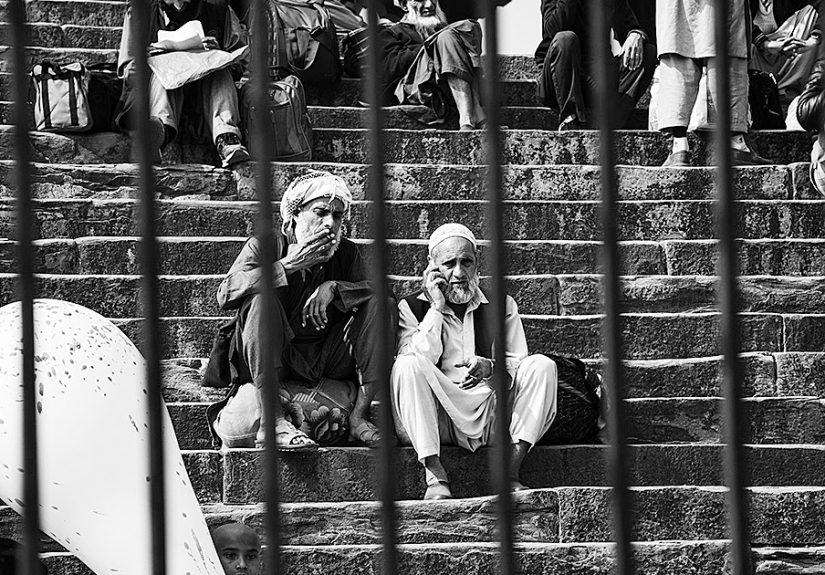
One of my favorite photos in the series is taken just outside Jama Masjid, where a group of pigeons takes off all at
once, wings catching the light against the mosque’s sandstone walls. In the foreground, a man sits with his shoes
off, staring into the distance, completely calm while chaos swirls around him.
Another image, shot outside a Sikh temple, focuses on volunteers carrying large pots of food for the langar
(community kitchen). You can’t hear the clanging metal or the hum of prayers in a still image, but you can feel the
sense of service in the way they move steady, practiced, purposeful.
Ethics, Consent, and Respect on Crowded Streets
As photogenic as Old Delhi is, it’s important to remember that it’s not a theme park. It’s home for millions of people,
and they’re not there to be extras in anyone’s travel slideshow. Photography guides emphasize being open, polite, and
honest about what you’re doing smiling, making eye contact, and asking permission whenever possible.
In India, photographers are generally advised to avoid sensitive sites like military areas and to pay attention to
posted signs in religious or government buildings where cameras might be restricted. More importantly, it’s considered
basic courtesy to ask before taking close-up portraits, especially of women or children. Some people will say no, some
will say yes, and some will say, “Yes, but send the picture to my WhatsApp.”
With my 22 photos, I tried to lean toward scenes that show context rather than single out individuals in vulnerable
situations. Whenever I took a close portrait, I made sure the person agreed and felt comfortable. Many actually
enjoyed seeing the playback and called friends over to check out how they looked and to be fair, they were right,
they looked great.
The best Old Delhi images, in my opinion, feel like an invitation, not an intrusion. You want viewers to feel they’re
stepping into a shared moment, not peeking through a keyhole.
How Old Delhi Changes the Way You See Cities
Spending time photographing Old Delhi also rewires how you look at other cities. After navigating these lanes, most
other “busy” streets feel strangely quiet. You get used to watching multiple layers of action at once: a vendor pouring
chai, a motorbike slipping past, a cat on a ledge, a kid flying a kite from a rooftop, and wires overhead framing
everything like a messy spiderweb.
Travel blogs often describe Old Delhi as “overwhelming but addictive,” and that phrase matches my experience.
At first, it feels like too much too loud, too crowded, too spicy, too bright. Then, slowly, you start to notice the
small things: a shopkeeper’s routine, the same dog sleeping in the same doorway every day, the way the light hits a
certain alley at 4 p.m. This is where the strongest images live, and where my 22 photos try to linger.
Old Delhi doesn’t present you with neat compositions. You have to find them in the chaos and once you start seeing
them, it’s hard to stop.
Extended Reflections: What I Learned from Photographing Old Delhi
Taking these photos wasn’t just about filling a memory card; it was about learning how to be present in a place that
moves faster than your shutter speed. Here are some of the deeper lessons that came out of those hours on Old Delhi’s
streets.
Life Moves in Layers, Not in Lines
In many Western cities, life is organized into lanes and schedules. People walk in straight lines, cars stay in marked
boxes, and any horn honk feels like a mini-crisis. Old Delhi laughs gently at that idea. Traffic here is more like a
river it flows around obstacles, splits, recombines, and somehow everyone gets where they need to go.
As a photographer, that teaches you to embrace layers instead of waiting for a “clean” frame. Some of my favorite images
from the series are the ones that felt too busy at first glance: a woman crossing in front of the camera just as I
pressed the shutter, a hand entering the frame holding a phone, a stray dog appearing in the corner. Instead of ruining
the shot, these details ended up adding movement and honesty.
Patience Beats Fancy Gear
It’s tempting to think you need the latest camera to photograph a place as visually intense as Old Delhi. The truth?
You mostly need comfortable shoes and patience. Standing at the same intersection for 20 minutes, watching the light
shift and people pass, gave me stronger images than racing from sight to sight trying to “collect” landmarks.
On one corner near the spice market, I watched a pattern emerge: a cycle-rickshaw would pull up, a worker would unload
sacks of spices, a quick negotiation would happen, and the whole scene would reset for the next cart. By the fourth or
fifth repetition, I knew exactly when to click the shutter to capture the moment when the sack was mid-air and the
workers’ faces were fully visible.
Respect Opens More Doors than Any Press Pass
Respect sounds like a cliché, but in Old Delhi it’s basically a superpower. A quiet “Namaste,” a smile, or a moment
spent buying a cup of chai before asking for a portrait can transform suspicion into curiosity. Several of the portraits
in my 22-photo series only happened because I put the camera down first and had a conversation.
One shopkeeper initially waved me away. Instead of insisting, I stepped aside, bought some snacks from the stall next
door, and just hung around. After a few minutes, he asked where I was from and whether I was a professional
photographer. The short conversation led to a relaxed portrait of him sitting on a stack of rice sacks, grinning like he
owned the street which, in a way, he did.
Old Delhi Stays with You Long After the Flight Home
Even after I left and the dust of Old Delhi had been washed off my shoes, fragments of the place kept showing up in my
thoughts the echo of the call to prayer near Jama Masjid, the smell of frying snacks at sunset, the way the streets
suddenly quieted for a moment before roaring back to life.
Looking back at the 22 photos now, I see them less as “content” and more as tiny anchors for memory. Each frame connects
to a bigger, messier moment: the vendor who insisted I taste a snack I couldn’t pronounce, the child who photobombed a
serious scene with the world’s goofiest face, the brief rain shower that turned the lane into a reflective mirror of
lights and feet.
If you ever find yourself in Delhi and have a camera or just a smartphone with a halfway decent lens spending a day
in Old Delhi is one of the richest visual experiences you can give yourself. Go with curiosity, patience, and respect,
and you’ll come away with more than just photos. You’ll come away with new eyes for the life happening on every street,
in every city, everywhere.
And if you’re scrolling through a Bored Panda-style list of Old Delhi shots right now: consider this your gentle nudge
to someday trade the scrolling for strolling. The streets are waiting.