Table of Contents >> Show >> Hide
- The ICU Is Not Just Another Hospital Unit
- Why ICU Nurses Feel Like They Are Drowning
- The Moral Injury No One Sees on the Schedule
- Patients Are Sicker, Families Are Scared, and Nurses Are the Bridge
- Workplace Violence and Verbal Abuse Are Part of the Flood
- The Hidden Cost of “Just One More Shift”
- What ICU Nurses Actually Need
- Why This Matters to Everyone, Not Just Nurses
- How Patients and Families Can Help Without Becoming Hospital Administrators Overnight
- The Future of ICU Nursing Depends on Action, Not Slogans
- Experiences From the Deep End: What “We Are Drowning” Feels Like
- Conclusion: Throw the Rope Before the Unit Goes Under
There is a particular sound the ICU makes at 3:17 a.m. It is not silence. It is never silence. It is the soft hiss of ventilators, the steady argument of infusion pumps, the occasional alarm that sounds like a microwave having a nervous breakdown, and the squeak of sneakers belonging to people who have not sat down since dinner. If the unit is short-staffed, that sound changes. The alarms feel sharper. The hallway feels longer. The coffee tastes more like a legal requirement than a beverage.
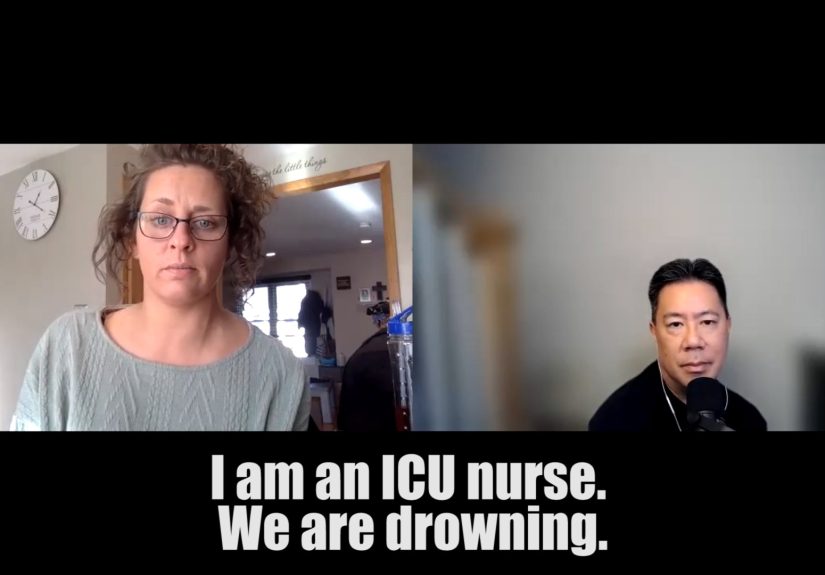
I am an ICU nurse, and when I say we are drowning, I do not mean we are having a rough week. I mean the water has been rising for years. The intensive care unit has become the place where every crack in the healthcare system eventually leaks through: nurse staffing shortages, burnout, workplace violence, aging patients, delayed discharges, sicker admissions, moral distress, and the kind of administrative overload that makes you wonder whether the computer or the patient is technically in charge.
ICU nurses are trained for pressure. We expect emergencies. We expect codes, sepsis, organ failure, family grief, hard decisions, and the sacred chaos of trying to keep someone alive one minute at a time. What we did not sign up for is being asked to deliver gold-standard care with duct tape, skipped lunches, and a staffing grid that looks like it was assembled during a power outage.
The ICU Is Not Just Another Hospital Unit
An intensive care unit is where medicine becomes minute-by-minute. Patients are not simply “sick.” They are unstable, ventilated, sedated, septic, bleeding, recovering from major surgery, dependent on vasopressors, receiving continuous dialysis, or attached to machines whose names sound like NASA equipment. One small change in blood pressure, urine output, oxygen saturation, mental status, or lab values can signal a dangerous turn.
That is why ICU nursing is not task-based work. It is surveillance, interpretation, intervention, education, documentation, advocacy, and emotional labor braided together in twelve-hour shifts. We titrate medications that can save a life or crash a blood pressure. We spot subtle deterioration before it becomes a headline. We explain the unexplainable to families who are hearing words like “multi-organ failure” for the first time. Then we walk into the next room and do it again.
Safe ICU care depends on time, attention, and skilled staffing. When those three ingredients are missing, everyone feels it. Patients feel it through delayed care. Families feel it through unanswered questions. Nurses feel it in their bodies, their sleep, their marriages, and the strange way they can remember every alarm from work but forget why they walked into the pantry.
Why ICU Nurses Feel Like They Are Drowning
1. Staffing Shortages Turn Every Shift Into Triage
The nursing shortage is not an abstract workforce trend. It is the empty assignment box on the charge nurse’s sheet. It is the patient who needs one-to-one care but cannot get it because there are three other critically ill patients and no extra nurse. It is the experienced nurse leaving bedside care because the job has become physically punishing and emotionally unsustainable.
In healthy staffing conditions, ICU nurses can anticipate problems. In unsafe staffing conditions, we spend more time reacting. That difference matters. The ICU should be a place where subtle signs are caught early: a rising lactate, a new irregular rhythm, a tiny drop in oxygenation, a family member saying, “He seems different.” When a nurse is stretched too thin, those signals are easier to miss. Nobody becomes a nurse because they want to cut corners. The corners get cut when the system hands you a circle and calls it a square.
Hospitals often talk about efficiency, but in the ICU, “efficiency” can become dangerous if it ignores acuity. Two patients on paper may not equal two patients in reality. One may be awake, stable, and waiting for a step-down bed. Another may be intubated, septic, on multiple drips, and one cough away from chaos. Staffing must reflect patient complexity, not just head counts.
2. Burnout Is Not a Personal Weakness
Let us retire the idea that nurse burnout can be solved with pizza in the break room. Pizza is lovely. Pizza has done nothing wrong. But melted cheese cannot fix chronic understaffing, mandatory overtime, moral injury, workplace violence, or the feeling of being professionally responsible for outcomes you are not institutionally resourced to achieve.
Burnout is not simply being tired. It is emotional exhaustion, detachment, and a shrinking sense that your work matters. ICU nurses may still love nursing while being wounded by the conditions under which nursing is performed. That is a difficult truth, but pretending otherwise helps no one.
Burnout also affects patient care. When nurses are overloaded, the risk of missed care rises. Missed care can mean delayed turning, late medications, incomplete education, less monitoring, slower response to alarms, or fewer moments to comfort a terrified family. In the ICU, the “small things” are not small. Skin care prevents wounds. Oral care helps prevent ventilator-associated pneumonia. Accurate intake and output can change a treatment plan. A calm explanation can help a family make a decision they will remember forever.
The Moral Injury No One Sees on the Schedule
Moral injury happens when nurses know what patients need but cannot provide it because of barriers outside their control. It is not the same as stress. Stress says, “This is hard.” Moral injury says, “This is wrong, and I am part of it even though I did not create it.”
For ICU nurses, moral injury can look like caring for a patient who should have had earlier treatment but arrived after delays. It can look like watching a family wait hours for answers because every physician, nurse, respiratory therapist, and social worker is already pulled in five directions. It can look like keeping someone alive on machines while knowing the family has not fully understood the prognosis. It can look like being told to “do more with less” until less becomes the operating model.
Nurses carry these moments home. We replay them while brushing our teeth. We remember the patient’s daughter who asked whether her father was suffering. We remember the hand we held while the monitor slowed. We remember the time we wanted to stay longer in one room but another alarm demanded us elsewhere. There is no checkbox for that in the electronic health record.
Patients Are Sicker, Families Are Scared, and Nurses Are the Bridge
The ICU has always cared for critically ill people, but today’s patients often arrive with multiple chronic conditions: heart failure, kidney disease, diabetes, cancer, chronic lung disease, obesity, immune suppression, or complications from infections. Sepsis alone remains a major driver of ICU admissions and hospital deaths in the United States. Many cases begin before the patient even reaches the hospital, which means the ICU often inherits a crisis already in motion.
At the bedside, nurses are the bridge between technology and humanity. We know the ventilator settings, but we also know the patient used to sing in church. We know the vasopressor dose, but we also know the spouse has not eaten since yesterday. We know the lab values, but we also know the family needs someone to translate “guarded prognosis” into language that does not sound like it was printed on a hospital brochure.
This bridge role is beautiful, but it is heavy. ICU nurses absorb fear from every direction. Families want certainty. Physicians want updates. Administrators want throughput. Patients want relief. The chart wants documentation. The pump wants attention. The bladder scanner wants to be found immediately, although it has apparently joined the witness protection program.
Workplace Violence and Verbal Abuse Are Part of the Flood
Healthcare workers face verbal threats, physical assaults, intimidation, and harassment far more often than most people realize. ICU nurses are not immune. Families are under extreme stress. Patients may be delirious, withdrawing from substances, neurologically impaired, frightened, or in pain. Those realities explain some behavior, but they do not erase the harm.
Being screamed at while hanging life-saving medication is not “part of the job.” Being threatened because visitation rules exist is not “customer service.” Being grabbed, shoved, kicked, or cornered is not a funny story for later. It is workplace violence, and it adds another layer to why nurses leave.
Hospitals need real prevention strategies: adequate security, clear reporting systems, trauma-informed de-escalation training, leadership follow-through, visitor policies that are enforced consistently, and a culture that treats staff safety as patient safety. A nurse who feels unsafe cannot function at their best. A unit that normalizes violence is already taking on water.
The Hidden Cost of “Just One More Shift”
ICU nurses are masters of pushing through. We push through hunger, full bladders, sore backs, grief, adrenaline crashes, and the unique humiliation of realizing the granola bar in your pocket has been crushed into medical-grade dust. We trade shifts. We stay late. We come in on days off. We cover holes because patients need us and our coworkers need us.
But “just one more shift” has a cost. Fatigue affects concentration. Chronic stress affects immune function, mood, memory, and relationships. Nurses who are always recovering from work eventually have no energy left to live outside of work. That is not dedication. That is depletion wearing comfortable shoes.
The profession cannot rely on nurses’ guilt as a staffing strategy. Compassion should be honored, not exploited. A nurse’s willingness to help should not become the foundation of a broken system.
What ICU Nurses Actually Need
Appropriate Staffing Based on Acuity
Safe staffing must account for how sick patients are, not just how many bodies are in beds. ICU assignments should reflect ventilators, vasoactive drips, continuous renal replacement therapy, neurological monitoring, admissions, discharges, procedures, isolation needs, and family complexity. The charge nurse should not need a crystal ball and a minor in wizardry to make the assignment work.
Experienced Nurses at the Bedside
New nurses are valuable, but they need mentorship. An ICU staffed mostly by beginners is like asking a group of student pilots to land planes during a thunderstorm. They may be brilliant, hardworking, and brave, but they need experienced clinicians beside them. Retention is patient safety. Keeping seasoned nurses at the bedside should be treated as a strategic priority, not a nostalgic wish.
Real Mental Health Support
Healthcare workers need confidential, accessible mental health resources without stigma or professional punishment. Peer support, decompression spaces, trauma response after critical events, and leadership that notices distress before resignation letters appear can make a difference. But support must be paired with systems change. Otherwise, it becomes a bandage on a flood.
Less Administrative Noise
Documentation matters. Compliance matters. Quality tracking matters. But when nurses spend more time feeding the chart than caring for the patient, something has gone sideways. Technology should support bedside care, not turn ICU nurses into data-entry athletes with stethoscopes.
Leadership That Listens Before the Exit Interview
Many nurses have been telling leaders exactly what is wrong for years. They do not need another survey that disappears into a conference room. They need visible action: safer ratios, better float policies, protected breaks, functional equipment, support staff, violence prevention, retention bonuses that reward loyalty, and staffing plans created with bedside nurses at the table.
Why This Matters to Everyone, Not Just Nurses
If you never work in healthcare, ICU nurse burnout still affects you. It affects you when your parent has sepsis. It affects you when your child needs emergency surgery. It affects you when your spouse is placed on a ventilator. It affects you when the nurse caring for someone you love has three alarms ringing, two medications overdue, one family waiting for an update, and no backup coming.
Nursing conditions are patient conditions. A hospital cannot claim excellence while ignoring the exhaustion of the people delivering care. The public sees the compassion of nurses, but it also needs to see the infrastructure behind that compassion. Skill cannot compensate forever for unsafe workloads. Kindness cannot replace staffing. Heroism is not a workforce plan.
How Patients and Families Can Help Without Becoming Hospital Administrators Overnight
Families cannot fix the nursing shortage at the bedside, but they can make the environment safer and more humane. Choose one family spokesperson when possible. Write down questions. Understand that delays often mean another patient is crashing, not that your nurse has forgotten you. Speak respectfully, even when you are scared. Ask how to help with simple comfort measures if appropriate. And when care is excellent, say so to leadership, not just to the nurse. Compliments are nice; documented recognition can help.
Patients and families can also support policies that improve healthcare staffing, workplace safety, and mental health resources. The ICU is not separate from the community. It is where community health, public policy, hospital finance, and human vulnerability collide under fluorescent lights.
The Future of ICU Nursing Depends on Action, Not Slogans
“Thank you, healthcare heroes” was a phrase heard often during the pandemic. Many nurses appreciated the sentiment. But gratitude without action becomes wallpaper. It covers cracks without repairing the wall.
The future of ICU nursing requires investment in people. That means building pipelines for new nurses while protecting experienced nurses from burnout. It means designing flexible staffing models that reflect real-time acuity. It means reducing unnecessary administrative burden. It means treating nurse well-being as a measurable safety priority. It means understanding that retention is not only about pay, although pay matters. Retention is also about respect, safety, voice, workload, and the ability to go home knowing you gave the care your patients deserved.
Experiences From the Deep End: What “We Are Drowning” Feels Like
There are shifts that begin badly before you even clock in. You can feel it in the parking garage. Your phone buzzes with a staffing request. The group chat is already full of messages: “Can anyone come in?” “We have three admissions waiting.” “Respiratory is slammed.” You walk onto the unit and the charge nurse gives you the look. Every nurse knows the look. It says, “I am about to hand you an assignment I hate, and I need you to understand that I hate it too.”
One room has a patient on a ventilator whose oxygen level keeps dipping whenever they are turned. Another has a septic patient whose blood pressure depends on medications running through pumps that must be watched like toddlers near an open paint can. A third room is waiting for a transfer, but there is no bed available. The family in the hallway wants an update. The lab calls with a critical result. The physician rounds quickly because there are consults stacked across the hospital. The IV pump beeps. Then another pump beeps. Somewhere, a bed alarm joins the choir. It is not dramatic music. It is just Tuesday.
The hardest part is not always the blood, the codes, or the machines. Sometimes the hardest part is knowing what good care would look like and having to settle for the safest care possible in the moment. Good care would be sitting with the wife who is trying to understand why her husband is not waking up. Safe care, in that moment, may be checking the medication drip next door because a blood pressure is falling. Good care would be brushing a patient’s hair, moisturizing cracked lips, repositioning gently, explaining each step slowly. Safe care may be doing the urgent pieces first and carrying the guilt of what had to wait.
There are moments of grace too. ICU nurses are not machines, even if we spend our lives managing them. We laugh at absurd things because laughter is sometimes the only pressure valve available. Someone brings cookies. Someone finds the missing bladder scanner and receives the kind of applause usually reserved for Olympic medalists. A patient squeezes your hand after days of sedation. A family says, “Thank you for treating him like a person.” A patient who once needed three drips and a ventilator comes back weeks later walking slowly, smiling, carrying a card. Those moments refill the cup. The problem is that the cup now has holes in it.
When ICU nurses say we are drowning, we are not saying we hate nursing. Many of us love it deeply. We love the science, the teamwork, the privilege of being present when life is fragile and truth is stripped down to its bones. We love seeing someone survive what seemed impossible. We love teaching new nurses how to trust their assessment skills. We love the strange family that forms on night shift, where someone will help you boost a patient, silence a pump, and remind you to eat half a sandwich like you are a raccoon caught behind the vending machine.
But love cannot make oxygen out of water. Nurses need systems that allow them to breathe. We need staffing that matches acuity, leaders who act on what bedside staff report, security that takes threats seriously, technology that reduces burden instead of multiplying it, and a culture that stops confusing sacrifice with professionalism. ICU nurses can handle hard. We do hard every day. What we cannot keep handling is preventable harm disguised as normal operations.
Conclusion: Throw the Rope Before the Unit Goes Under
ICU nurses are not asking for easy work. Easy was never part of the bargain. We are asking for safe work, honest staffing, meaningful support, and healthcare leadership brave enough to admit that the current model is not sustainable. The ICU is where the sickest patients go when every second matters. The people caring for them should not have to fight the system while fighting for lives.
When an ICU nurse says, “We are drowning,” hear it as both a warning and an invitation. A warning that patient care is at risk when nurses are exhausted, unsupported, and stretched beyond reason. An invitation to build something better before more nurses leave the bedside, before more patients experience missed care, and before the next crisis arrives to expose what was already broken.
The water is rising. ICU nurses are still here, still holding the line, still answering alarms, still explaining, still advocating, still catching the tiny changes that save lives. But no one can tread water forever. It is time to stop applauding from the shore and start sending help.