Table of Contents >> Show >> Hide
When people hear the name Hurricane Irene, they often remember the dramatic forecasts, the East Coast panic-buying, and the collective question that followed: Was it overhyped? That question misses the point. Irene was not a “nothing burger” with rain. It was a sprawling, destructive storm that showedvery loudly, very wetly, and with zero regard for weekend plansthat a hurricane does not need blockbuster wind speeds to do blockbuster damage.
The most important thing to understand about Hurricane Irene damage is this: the storm’s worst destruction came from flooding, storm surge, infrastructure failures, and prolonged power outages, not from some cinematic Category 3 landfall in Manhattan. By the time Irene hit North Carolina, it had weakened to a Category 1 hurricane. That sounds modest until you remember that floodwater does not care about your category label. It just shows up, rearranges roads, humbles bridges, and leaves homeowners staring at muddy drywall like it personally insulted them.
Why Hurricane Irene Still Matters
Irene hit in late August 2011 and moved up the East Coast at a moment when the region was already vulnerable. Soils were saturated. Rivers were primed. Communities from North Carolina to New England were dense, infrastructure-heavy, and full of places where too much water could turn into a full-blown crisis in a hurry. Irene became a case study in how a “weaker” hurricane can still produce historic inland flooding, widespread transportation shutdowns, and long recovery timelines.
That is why the damage story of Irene still matters today. It changed how many emergency managers, newsrooms, and ordinary residents talk about hurricane risk. It reminded everyone that the phrase “only a Category 1” can be dangerously misleading. In the world of disaster analysis, Irene was basically a giant soggy memo that said: please stop focusing on wind alone.
The Damage Story the Wind Scale Didn’t Capture
A Category Label Can Hide a Bigger Disaster
One reason Irene caused so much damage is that the storm was broad, slow enough to dump enormous rainfall, and operating over a region that was already too wet for comfort. In practical terms, that meant river flooding, flash flooding, slope failures, washed-out roads, and neighborhoods cut off from the outside world. The storm’s footprint was huge, and its impacts stretched far inland. That is not the sort of thing a category number communicates especially well.
In fact, one of Irene’s major lessons is that hurricane damage is about exposure plus water plus timing. A storm can weaken in maximum sustained winds and still become more dangerous for a larger number of people if it expands, lingers, or pushes rain into already saturated terrain. Irene did exactly that. The result was a disaster that looked less like a single coastal punch and more like a long trail of expensive, exhausting, region-wide disruption.
Where Hurricane Irene Hit Hardest
North Carolina and the Outer Banks
Irene made landfall near Cape Lookout, North Carolina, and the Outer Banks took an immediate beating. Storm surge and wave action damaged Highway 12, creating breaches that cut communities off and stranded residents on Hatteras Island. This was not cosmetic storm damage. When a highway on a barrier island fails, the issue is no longer “bad weather.” It becomes access to emergency services, fuel, food, medical care, and basic mobility. Irene exposed just how fragile those beautiful, narrow coastal landscapes can be when the ocean decides it would like the road back.
North Carolina also saw heavy flooding, power outages, and coastal erosion. The storm’s coastal impact was serious, but Irene’s reputation as a damaging event grew even larger as it kept moving north and converted from a coastal danger into an inland flood machine.
New Jersey, New York, and the Mid-Atlantic
As Irene tracked north, it produced major flooding in New Jersey and eastern Pennsylvania, along with storm surge issues along the shore. New Jersey experienced record-breaking river crests in some locations, and several dams failed during the storm. Tidal flooding and beach erosion added another layer of losses, turning Irene into a multi-front problem: river flooding inland, surge along the coast, and infrastructure disruption almost everywhere in between.
New York had a split experience. New York City avoided the absolute worst wind damage because the storm’s strongest winds stayed over water east of the center. But “dodged the worst” does not mean “nothing happened.” Storm surge still caused major property damage in parts of the city and on Long Island. Power outages spread across the region. Transit systems were shut down. Airports were disrupted. Amtrak service was suspended. New York City’s mass transit closure became one of the most memorable symbols of the storm because it was historic, disruptive, and a vivid reminder that modern cities are not invincible just because they have subways and confidence.
Long Island and parts of Connecticut also faced significant damage from surge, wind, and outages. Trees came down. Utility restoration took time. For many households, Irene was less about one dramatic moment and more about a long, irritating, expensive stretch of darkness, debris, spoiled groceries, and the sudden realization that freezers are only heroic for so long.
Vermont and Inland New England
If there is one place that defines Hurricane Irene flood damage, it is Vermont. Irene’s rainfall over steep terrain and narrow river valleys produced catastrophic flooding. Roads vanished. Bridges were destroyed or damaged. Communities were isolated for days. Historic covered bridges were swept away or battered. Small towns that looked postcard-perfect one week looked like disaster documentaries the next.
In Vermont alone, floodwaters damaged or destroyed more than 480 bridges, around 960 culverts, and roughly 500 miles of state highways. Broader storm assessments described nearly 2,400 roads, about 300 bridges, and hundreds of homes and businesses damaged or destroyed in southern Vermont. The scale of the infrastructure loss was staggering. This was not just about basements taking on water. It was about communities being physically severed from one another.
Upstate New York also suffered severe inland flooding, especially in the Catskills, where some towns became temporarily uninhabitable. Agricultural losses were significant as well. Farms in New York and Vermont saw fields submerged, barns damaged, livestock killed, and crops flattened or washed out. Irene was a house problem, a highway problem, a farm problem, a utility problem, and a public-finance problem all at once. That is how big disasters get expensive in a hurry.
How Much Damage Did Hurricane Irene Cause?
This is where historical reporting gets a little messy, and honestly, disaster accounting often does. Different organizations measure different things. Some count insured losses. Some count broader economic losses. Some focus on a region instead of the whole event. So if you see different totals for Hurricane Irene damage cost, that does not mean someone made it up while holding a weather map and a dart.
A useful way to explain the numbers is this:
- Insured losses were commonly estimated in the range of about $3 billion to $4 billion.
- Northeastern flooding damage alone was estimated at more than $7 billion in some official summaries.
- Broader total damage estimates for the overall event reached roughly $15.8 billion, depending on the methodology used.
That range tells the real story. Irene was expensive at every level: personal, local, state, regional, and national. It damaged homes, roads, bridges, rail lines, farms, beaches, utilities, and businesses. It forced large-scale emergency response and long-tail recovery. It also left millions without power, which created secondary losses that do not always show up neatly in first-wave estimates: spoiled food, business closures, hotel stays, generator costs, delayed freight, and repair bills that kept arriving like unwanted subscription emails.
Why Irene Was So Destructive
1. Saturated Ground
The Northeast had already seen significant rainfall before Irene arrived. That meant less capacity to absorb additional rain. Once Irene dumped more water, runoff escalated quickly and river levels surged.
2. A Large Storm Footprint
Irene expanded and affected a broad geographic area. Even where peak winds were lower than feared, the storm’s size helped spread damaging rain, surge, and outages over a huge stretch of the East Coast.
3. Terrain in Places Like Vermont
Mountain valleys are beautiful until they become funnels for fast-moving floodwater. In Vermont and nearby inland areas, topography amplified the impact and turned heavy rain into devastating washouts.
4. Water, Water, and More Water
Storm surge mattered. Wind mattered. But the starring role belonged to water in all its forms: coastal surge, inland flooding, flash flooding, and erosion. Irene was the kind of storm that turned drainage systems into suggestions.
What Hurricane Irene Changed
Irene influenced emergency planning in a few big ways. First, it strengthened the case for treating inland flooding as a top-tier hurricane hazard, not a side note after storm surge graphics. Second, it reinforced the need for early transit shutdown decisions in major metro areas. Third, it exposed the vulnerability of aging infrastructureespecially roads, bridges, culverts, dams, and power systemsto extreme rainfall events.
It also helped shape the public conversation around forecast communication. Some critics argued the storm had been overhyped because it was not an apocalyptic wind catastrophe in New York City. But that criticism missed the fact that many of the worst outcomes happened inland, after the coast grabbed the headlines. Emergency managers have spent years trying to solve that communication gap ever since. Irene was a big reason why.
Experiences From the Aftermath: What Irene Felt Like on the Ground
To understand Hurricane Irene damage, you have to move past the satellite images and stand, at least mentally, where people actually stood after the storm. In coastal communities, the first feeling was often disbelief. The road was still there on Friday, then on Sunday it was sand-covered, cracked open, or gone. In the Outer Banks, people dealt with breached highways, downed lines, and the eerie reality of being temporarily cut off on a barrier island. The ocean did not just threaten the edge of town; it rewrote the map.
In suburbs and small cities farther north, the experience was different but no less disruptive. Irene arrived with long hours of rain, wind, and power flickers that eventually turned into full outages. Refrigerators went quiet. Phones became clocks counting down battery percentages. Families listened to weather radios, checked on elderly neighbors, and learned that a storm does not need to smash every window to take over your life. Sometimes it just turns everything off and makes every basic task strangely complicated.
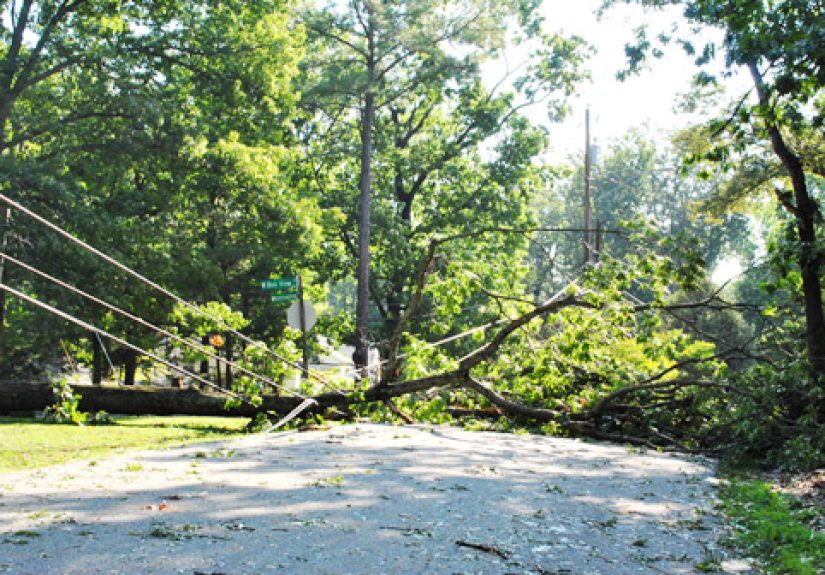
Then came the inland devastation. In Vermont and parts of upstate New York, people woke up to roads ripped apart, driveways ending in midair, and rivers running where rivers were absolutely not supposed to run. Mud covered storefronts. Bridges that had seemed permanent suddenly looked temporary in hindsight. Town centers were coated in silt. Residents found themselves shoveling river-bottom sludge out of homes, schools, shops, and town buildings. Recovery was measured not in dramatic rescues alone, but in wheelbarrows, bleach, chainsaws, and borrowed excavators.
For farmers, Irene was brutal in a particularly cruel way. Fields disappeared under brown water just when late-summer crops should have been approaching harvest. Fences twisted. Hay was ruined. Livestock had to be moved fast, sometimes through conditions that made “fast” nearly impossible. Barns took damage. Equipment sat in muck. The storm did not just destroy one day’s work; it erased months of labor and threatened the financial stability of operations that already run on narrow margins.
There was also the strange emotional rhythm common to disasters. During the storm, adrenaline carried people through. After the storm, reality arrived with the mud line on the wall. The cleanup phase was physically exhausting and psychologically repetitive: clear debris, call the insurer, wait for the utility, throw things out, save what you can, repeat. Communities that looked scenic and calm to outsiders were operating like emergency logistics zones. Helicopter supply drops in isolated towns were not abstract “response operations.” They were proof that ordinary life had temporarily stopped functioning.
And yet, one of the enduring experiences associated with Irene was resilience. Neighbors checked on neighbors. Volunteer crews showed up. National Guard helicopters flew supplies into cut-off towns. Local businesses improvised. Communities shared generators, meals, chainsaws, extension cords, and the sort of practical wisdom that never appears in glossy preparedness brochures. Irene left behind damage, yes, but it also left behind a record of how Americans respond when the roads wash out and the forecast becomes a lived reality. It was messy, muddy, expensive, exhaustingand deeply human.
Final Thoughts
Hurricane Irene damage was not defined by one skyline, one storm-surge number, or one cable-news image. It was defined by the accumulated impact of flooding, infrastructure failure, evacuations, shutdowns, agricultural losses, and long recovery arcs across a huge section of the East Coast. Irene was a reminder that hurricane risk is not just a coastal story and not just a wind story. It is a water story, an infrastructure story, and a resilience story.
If Hurricane Sandy later became the storm that dominated public memory, Irene was the warning shot that came first. It showed how a broad, rain-heavy storm could paralyze major cities, isolate rural communities, and pile up billions in damage without fitting the neat Hollywood version of a hurricane disaster. That is exactly why Irene still deserves attentionand why its lessons still matter whenever another storm starts climbing the East Coast with a deceptively modest label.