Table of Contents >> Show >> Hide
- Where the “Paycheck Movie Sequels” Idea Came From
- Warren Buffett’s Complaint: When Asset Gathering Becomes the Main Plot
- Howard Marks’ Version: Not Everyone Is a Genius, and the Fee Machine Knows It
- Why the Movie Sequel Metaphor Works So Well
- The Numbers Make the Metaphor Harder to Ignore
- Hollywood, Meet Wall Street: The Business Incentives Are Cousins
- What Investors Should Actually Learn From Marks and Buffett
- Not Every Sequel Is Cynical, and Not Every Fee Is Too High
- Experiences That Make This Topic Feel Uncomfortably Real
- Conclusion
- SEO Tags
What do a legendary value investor, an Oaktree memo machine, and Hollywood’s obsession with second acts have in common? More than you might think. On the surface, the phrase “paycheck movie sequels” sounds like a complaint from a grumpy film critic who just paid $19 for popcorn and disappointment. But as a metaphor for modern finance, it is almost too perfect.
The idea is simple: once something becomes a hit, the incentives change. The first success is usually built on craft, discipline, timing, and a little luck. The sequel, however, can be built on something less noble: brand recognition, audience inertia, and the irresistible smell of easy money. That is the thread connecting Howard Marks, Warren Buffett, and the economics of movie sequels. All three point toward the same uncomfortable truth: after early success, people and institutions can start monetizing reputation more aggressively than they monetize actual quality.
That is why this topic still resonates. It is not really about Hollywood alone, and it is not only about hedge funds, mutual funds, or Wall Street fee structures. It is about incentives. And once incentives drift out of alignment, quality often follows them right off the cliffusually with a marketing campaign and a very confident trailer.
Where the “Paycheck Movie Sequels” Idea Came From
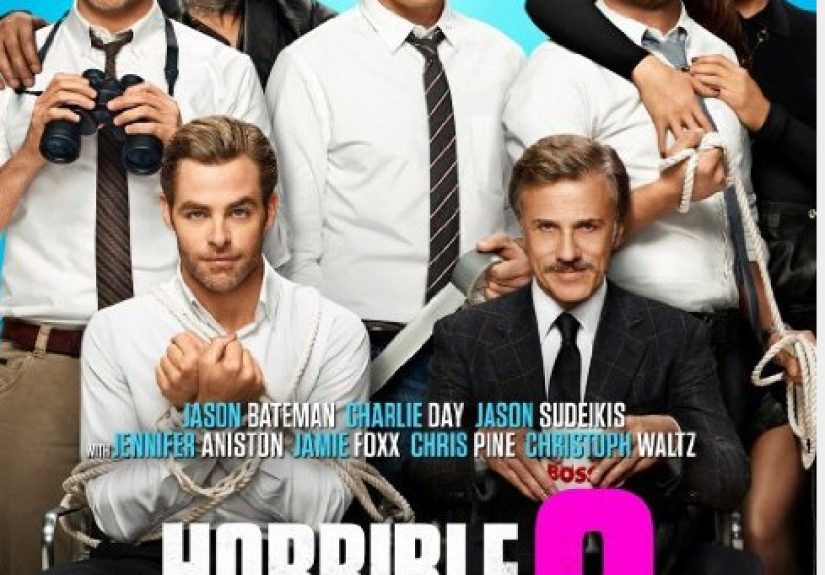
The phrase became memorable in finance circles after a 2015 essay that connected Jason Bateman’s candid comments about movie sequels with investment management fees. The setup was delightfully odd and therefore unforgettable. Bateman, discussing Horrible Bosses 2, joked that some sequels are basically a payday for everyone involved. It was funny because it felt true. The first movie wins over the audience; the sequel cashes in on that trust. Sometimes the follow-up is great. Sometimes it feels like the cast showed up, hit their marks, and quietly invoiced the studio.
That same essay then pivoted to Warren Buffett and Howard Marks, arguing that parts of the asset-management world can work similarly. A fund builds a reputation through real skill, a favorable cycle, a strong narrative, or all three. Investors pile in. Assets swell. Fees remain rich. And before long, the machine can generate plenty of money for the manager even if the future looks much less impressive than the dazzling original release.
That comparison lands because it captures a recurring business pattern: early excellence can create later complacency. In Hollywood, the original hit creates sequel demand. In investing, the strong track record creates asset-gathering momentum. In both cases, the audience often assumes the next installment will be worth the ticket price simply because the first one was.
Warren Buffett’s Complaint: When Asset Gathering Becomes the Main Plot
Warren Buffett has spent years criticizing high-fee investment products, especially when the fee structure keeps rewarding managers regardless of whether investors are actually receiving exceptional results. His issue is not that talent should never be paid. Buffett is too practical for that. His issue is that the economics of large pools of capital can become absurdly favorable to the manager.
His logic is brutally simple. If a firm manages tens of billions of dollars and takes a meaningful annual management fee on those assets, it can make enormous sums before performance fees even enter the picture. At that point, the fixed-fee stream starts to matter more than the supposed brilliance. Performance becomes the trailer. Asset gathering becomes the franchise.
This is classic Buffett thinking. He strips away the glossy language and follows the incentives. If a business gets paid handsomely just for being chosen, it may focus more on remaining chosen than on remaining excellent. That does not make every manager dishonest. It does make the structure vulnerable to bloat, style drift, and a lot of polished storytelling.
Buffett has made similar points elsewhere when criticizing fund fees more broadly. He has argued that investors often pay too much for active management, and he has repeatedly championed low-cost index investing for most people. That view is not based on anti-intellectualism. It is based on the grim arithmetic of costs. Fees come out of returns with the reliability of gravity. The manager may or may not outperform. The invoice always does.
Howard Marks’ Version: Not Everyone Is a Genius, and the Fee Machine Knows It
If Buffett often sounds like a Midwestern accountant with X-ray vision, Howard Marks sounds like the thoughtful professor who still remembers where all the bodies are buried. Marks has long warned that incentive-heavy investment structures can distort behavior, particularly when fee arrangements spread far beyond the rare managers who truly deserve them.
One of his most memorable criticisms is that decades ago there were relatively few hedge funds, many run by genuinely exceptional people. As the industry multiplied, however, the idea that thousands upon thousands of firms all deserved elite-level economics became harder to defend with a straight face. Marks’ point was not that talent vanished. It was that elite pricing expanded far faster than elite skill.
He also warned about the danger of what he called the management fee machine. That phrase deserves a standing ovation. It captures the temptation to prioritize stable fee income over difficult alpha generation. Once a firm can earn a fortune through assets under management alone, preserving the machine can become more important than producing outstanding investor outcomes. Risk-taking may become oddly selective: aggressive enough to sell the dream, cautious enough not to break the business model.
Marks is not condemning all performance fees. In fact, his view is more nuanced than that. Truly exceptional managers may justify exceptional compensation. The problem is what happens when “exceptional” becomes the industry default setting, like every restaurant describing its fries as “award-winning.” At some point, the adjective stops doing any useful work.
Why the Movie Sequel Metaphor Works So Well
The metaphor works because both Hollywood and money management sell a blend of quality and expectation. Audiences do not buy tickets based only on objective analysis; they buy familiarity, nostalgia, trust, and hope. Investors do the same. A star manager with a famous record can attract assets the way a familiar movie title attracts opening-weekend dollars.
The first product, whether film or fund, typically has to earn its place. The sequel benefits from memory. And memory is a profitable thing. The audience remembers how much they enjoyed the original. The investor remembers how great the returns used to look. Both are vulnerable to the same mental shortcut: this worked before, so it will probably work again.
But scale changes the game. In finance, a strategy that worked beautifully at smaller asset levels may become less nimble as capital floods in. The edge can get diluted. In entertainment, the hunger and originality that made the first film pop may fade once the sequel becomes a committee-designed revenue event. The jokes get louder, the explosions get bigger, and the soul quietly exits through a side door.
That is why the phrase paycheck movie sequels is more than a funny jab. It describes what happens when the economics of success start feeding on the reputation of success.
The Numbers Make the Metaphor Harder to Ignore
This is not just clever wordplay. The data around fees and performance make Buffett’s and Marks’ concerns feel very current. Regulators continue to remind investors that fees and expenses directly reduce returns. That sounds obvious, yet it remains one of the most ignored lines in all of investing. People will obsess over basis points of expected outperformance while shrugging at a fee structure that quietly eats real money every year.
Meanwhile, the broader fund marketplace has become more fee-sensitive. Average mutual fund expense ratios have fallen substantially over the past few decades, helped by no-load funds, index products, ETF competition, and investor demand for cheaper options. Morningstar’s recent reporting also shows that U.S. investors have continued to move toward lower-cost funds. In other words, the market has become smarter about price overall, even if some corners of the business still charge like it is 2006 and the BlackBerry is forever.
And then there is performance. The latest SPIVA scorecards continue to show that a large share of active managers underperform their benchmarks over time. That does not mean active management is impossible, useless, or fraudulent. It means the hurdle for justifying high fees is highand should be. If most active strategies fail to beat the benchmark after costs, then charging premium prices for average results starts to look exactly like the financial version of a sequel that got greenlit because the poster art tested well.
Hollywood, Meet Wall Street: The Business Incentives Are Cousins
Hollywood keeps making sequels for a reason: they reduce uncertainty. Franchises give studios built-in awareness, easier marketing, and a better chance of attracting a large audience on opening weekend. The same logic appears in finance. A firm with a recognizable name, a respected founder, or a famous performance streak can raise capital more easily than an unknown shop with similar or better discipline.
That does not guarantee the sequelor the next fund vintagewill be bad. It does mean the commercial logic is clear. Studios are not charities for originality. Asset managers are not nonprofit monasteries devoted to pure alpha. Both industries respond to incentives, distribution power, and audience psychology.
The Horrible Bosses franchise itself makes the point nicely. The first film was a meaningful commercial success. The sequel still generated real box-office money, but it did far less business worldwide than the original. That is the danger of sequel economics: familiarity can sell the second ticket, but it cannot always sustain long-term enthusiasm. In investing, the equivalent is a fund that keeps attracting money because of what it once was, even as its future edge gets thinner, more crowded, and more expensive.
And yes, this is the point where someone says, “But plenty of sequels are excellent.” Absolutely. The Godfather Part II exists, and so do a handful of great active managers. The problem is not that excellence in a sequel is impossible. The problem is that business systems often start assuming the sequel deserves premium treatment before it proves anything.
What Investors Should Actually Learn From Marks and Buffett
1. Ask whether you are paying for skill or for a story
A great past record can reflect real talent, but it can also reflect favorable conditions, good timing, or a style that happened to be in fashion. Buffett’s warning is that popularity itself can become monetized. When that happens, fees may be tied more to narrative strength than future value.
2. Watch what happens when the fund gets big
Scale can create efficiencies, but it can also reduce flexibility. A strategy that once danced like Fred Astaire may start moving like a conference buffet table. Investors should ask whether the manager shares economies of scale through lower fees, breakpoint pricing, or other structural benefits.
3. Respect how much fees compound
One of the least glamorous truths in finance is also one of the most powerful: costs compound too. A fee that looks small in a brochure can become enormous over an investing lifetime. That is why low-cost investing remains such a persistent Buffett theme.
4. Exceptional pricing should require exceptional evidence
Howard Marks is not saying no one deserves premium economics. He is saying premium economics should be rare. Investors should treat every expensive strategy with skepticism until it proves that its process, capacity discipline, and long-term results genuinely justify the toll.
5. Alignment matters more than branding
Some firms actively pass scale savings on to clients. Others mostly keep the benefits for themselves. The difference matters. Buffett and Marks, in their own styles, keep pushing investors back to that basic question: Who really benefits most from this structure?
Not Every Sequel Is Cynical, and Not Every Fee Is Too High
It would be lazy to turn this into a cartoon. Some managers are superb. Some active funds are worth owning. Some performance fees can align incentives when structured well. Likewise, some sequels deepen characters, sharpen themes, and improve on the original. The existence of cash-grab follow-ups does not eliminate the possibility of genuine second acts.
But Buffett and Marks are useful precisely because they refuse to be hypnotized by industry defaults. They ask the embarrassing questions out loud. Why are investors still paying so much? Why do huge funds keep charging as though scale never happened? Why does everyone claim to be exceptional? Why does the audience keep buying tickets to things that look suspiciously pre-sold?
Those questions cut through jargon. And once they are asked plainly, the answers are often not flattering. Sometimes the sequel exists because the world needed another chapter. Sometimes it exists because the first one bought everyone a nicer house.
Experiences That Make This Topic Feel Uncomfortably Real
Anyone who has spent time around investingor around a multiplex on a Friday nighthas probably felt this idea in practice, even without naming it. The experience usually begins with optimism. An investor hears about a celebrated fund manager who crushed it over the past decade. The pitch deck is polished, the pedigree is impressive, and the story is irresistible. It feels like being told the original film was hilarious, sharp, and beloved, so naturally the sequel should be worth seeing too. By the time the investor asks what the fee structure looks like, the emotional purchase has often already happened.
Then comes the second experience: the quiet realization that success changes behavior. Once a fund gets big, the mood can shift from hungry to careful, from creative to managerial. The operation becomes smoother, the branding stronger, and the language more institutional. But the edge does not always scale with the assets. Investors begin to notice that returns are respectable rather than remarkable, while the fees still act like the manager is walking on water. It is the financial version of leaving a sequel and saying, “That was fine, I guess,” while also knowing “fine” was not what the price implied.
A third experience is even more common: fee blindness. Many investors focus on market performance, manager charisma, or recent headlines, while fees remain tucked into the background like a stagehand dressed in black. They are easy to ignore because they do not arrive with dramatic music. They just quietly reduce what the investor keeps. That makes the eventual realization strangely personal. It is not just that the fund underperformed. It is that the investor paid extra for the privilege of being underwhelmed. Nobody enjoys that plot twist.
There is also the advisor-room experience. A client asks a simple question: “Why is this fund more expensive than the cheaper option?” Sometimes the answer is thoughtful and grounded. Other times the response sounds suspiciously like a movie studio explaining why the reboot has to cost more because there are now three helicopters, two international locations, and a very serious poster. More complexity, however, does not automatically create more value. Investors eventually learn that sophistication and usefulness are not synonyms.
On the brighter side, there is a refreshing experience when incentives are aligned. Investors encounter firms that actually reduce fees, explain costs clearly, and behave as though client outcomes matter more than preserving a premium image. That experience feels different. It feels less theatrical. There is less swagger, fewer magic tricks, and more arithmetic. Oddly enough, that often builds more trust, not less.
And that may be the deepest lesson in the whole Howard Marks & Warren Buffett on paycheck movie sequels discussion. People do not mind paying for quality. They mind paying sequel prices for sequel effort. Whether the setting is Hollywood or Wall Street, the audience eventually notices the difference.
Conclusion
The brilliance of the “paycheck movie sequels” metaphor is that it compresses a complicated financial critique into a picture everyone understands. A hit creates trust. Trust attracts money. Money attracts opportunism. And unless discipline steps in, the sequel can become more about monetizing the original than living up to it.
That is the shared insight running through Warren Buffett’s fee criticism and Howard Marks’ warnings about incentive structures. They are not merely arguing that high fees are annoying. They are arguing that business incentives can slowly pull institutions away from excellence and toward extraction. The first success may be earned. The later cash machine may be merely maintained.
For investors, the practical takeaway is wonderfully boring and therefore incredibly valuable: inspect the fees, question the narrative, respect capacity limits, and do not confuse fame with future edge. In movies, sometimes the sequel surprises you. In investing, it is better not to bet on surprise when arithmetic is already trying to warn you.