Table of Contents >> Show >> Hide
- What Exactly Is Your Pulse?
- What’s a Normal Pulse Rate?
- Main Places to Check Your Pulse
- Before You Start: Simple Prep Tips
- How to Check Your Pulse at Your Wrist (Radial Pulse)
- How to Check Your Pulse at Your Neck (Carotid Pulse)
- Other Pulse Points You Might Hear About
- How Often Should You Check Your Pulse?
- Using Your Pulse to Gauge Exercise Intensity
- When Your Pulse Is a Red Flag
- Heart Rate vs. Blood Pressure: Not the Same Thing
- Common Mistakes When Checking Your Pulse
- Step-by-Step Summary: How to Check Your Pulse
- Real-Life Experiences with Checking Your Pulse (500+ Words of “Been There, Done That”)
- Final Thoughts
Your heart is working around the clock, but most of the time you only notice it when you sprint for the bus, drink too much coffee, or watch a terrifying plot twist. Checking your pulse is one of the simplest ways to see how that hard-working muscle is doing. You don’t need a smartwatch, a fancy monitor, or a medical degreejust your fingers, a watch, and a little know-how.
In this guide, you’ll learn what your pulse is, how to find it in different spots on your body, how to count it correctly, what “normal” heart rate ranges are, and when an unusual pulse is a sign to call your doctor (or 911). We’ll wrap up with real-life examples of how people use pulse checks in everyday life so this doesn’t just feel like a textbook you accidentally opened.
Quick safety note: This article is for general education only and is not a substitute for medical advice, diagnosis, or treatment. If you ever think you might be having a medical emergency, call your local emergency number right away.
What Exactly Is Your Pulse?
Your pulse is the rhythmic “thump” you feel when your heart pumps blood through your arteries. Every beat you feel is one heartbeat. When you count how many times it beats in a minute, you’re measuring your heart rate, usually expressed as beats per minute (bpm).
Each time your heart contracts, it pushes blood into your arteries. That pressure wave travels along your blood vessels and can be felt in places where an artery is close to the surfacelike your wrist or neck. That’s why you can “feel your pulse” in several different spots.
Checking your pulse can give you basic information about:
- How fast your heart is beating (heart rate)
- How regular the rhythm is (steady vs. irregular)
- How your body responds to exercise, stress, illness, or medication
It’s a simple, low-tech way to keep an eye on your heart health between doctor’s visits.
What’s a Normal Pulse Rate?
For most healthy adults, a normal resting heart rate is usually around 60 to 100 beats per minute. Athletes and very fit people may have resting heart rates below 60 bpm, sometimes even in the 40s, and still be perfectly healthy. Children and infants naturally have higher heart rates than adults.
A few things that can affect your pulse:
- Recent exercise or physical activity
- Stress, anxiety, or strong emotions
- Caffeine, nicotine, alcohol, and some medications
- Fever, illness, dehydration
- Time of day (your heart rate is often lower when you’re relaxed or sleeping)
That’s why it’s helpful to take your pulse when you’re at rest and feeling calm if you want a good baseline resting heart rate.
Main Places to Check Your Pulse
You can feel your pulse in several places, but these are the most commonly used in everyday life:
- Radial pulse (wrist) – The go-to spot for most people
- Carotid pulse (neck) – Easy to feel, often used during exercise checks
- Brachial pulse (inner elbow) – Often used in babies or when taking blood pressure
- Apical pulse (chest) – Listened to with a stethoscope by health professionals
- Dorsalis pedis (top of the foot) – Used more in clinical exams than at home
For home use, focusing on your wrist and neck pulse is usually plenty.
Before You Start: Simple Prep Tips
For the most accurate resting heart rate:
- Sit or lie down and relax for 5 to 10 minutes.
- Avoid intense exercise, caffeine, or smoking for at least 30 minutes beforehand.
- Remove tight clothing or jewelry that might compress your wrist or neck.
- Have a watch, clock, or phone with a second hand or timer handy.
Important: Always use the index and middle fingers, not your thumb. Your thumb has its own pulse, which can confuse your counting.
How to Check Your Pulse at Your Wrist (Radial Pulse)
The radial pulse is one of the easiest to check and is commonly used for routine measurements. Here’s a step-by-step guide:
- Position your hand. Turn one hand palm-up and relax it on a table or your lap.
- Locate the pulse point. On the thumb side of your wrist, find the groove between the bone and the tendon. That’s where your radial artery runs close to the surface.
- Place your fingers. Use the pads of your index and middle fingers from your other hand. Gently press in that groove until you feel a rhythmic tapping or throbbing.
- Adjust your pressure. If you don’t feel anything, don’t panicjust adjust your fingers slightly up, down, or sideways, and vary the pressure. Too hard and you might block the blood flow; too light and you may not feel it.
-
Count the beats. Once you feel the pulse clearly, start a timer and count:
- For 60 seconds for the most accurate reading, or
- For 30 seconds and multiply by 2, or
- For 15 seconds and multiply by 4 if you’re in a hurry.
- Record the number. Write down your heart rate in beats per minute and note how you feel (calm, stressed, post-exercise, etc.).
While counting, also pay attention to whether the beats come evenly or feel random or “skipped.” A noticeably irregular rhythm is worth mentioning to your health care provider.
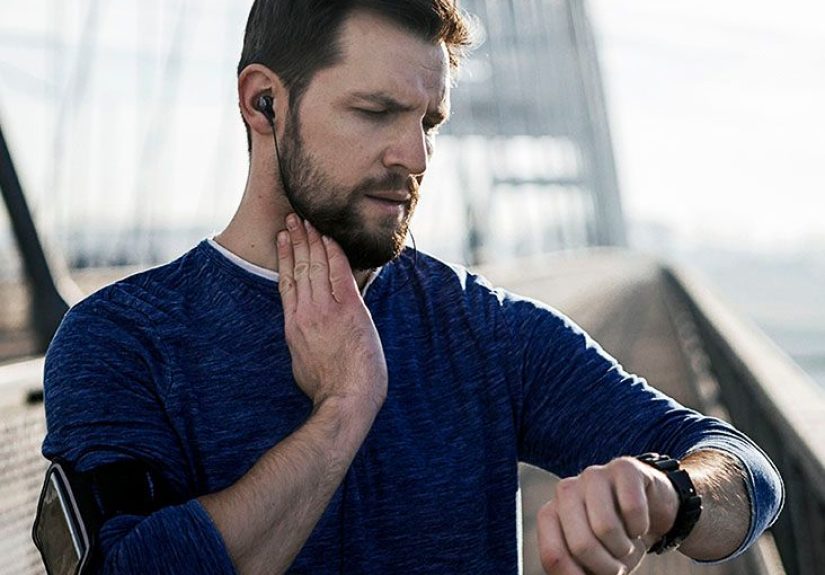
How to Check Your Pulse at Your Neck (Carotid Pulse)
The carotid arteries are big vessels in your neck that supply blood to your brain. The pulse here is usually strong and easy to feel, but you do need to be careful.
Important safety rules:
- Never press both sides of your neck at the same time. That can reduce blood flow to your brain and make you dizzy or faint.
- Use only gentle pressureno “mashing” your neck.
- If you’ve been told you have carotid artery disease or blockages, ask your doctor before checking your carotid pulse.
- Get comfortable. Sit or lie down with your shoulders relaxed.
- Locate the area. Place your index and middle fingers just to one side of your windpipe, in the groove between your trachea and the large muscle at the side of your neck.
- Feel for the pulse. Gently press until you feel a strong, regular thumping.
- Count your heart rate. Just like at the wrist, count for 60 seconds (or 15 seconds and multiply by 4).
This spot is often used by exercise enthusiasts who want a quick post-workout check when they don’t have a monitor handy.
Other Pulse Points You Might Hear About
Brachial Pulse (Inner Elbow)
The brachial pulse runs along the inside of your upper arm, near the elbow. It’s often used in babies and young children or when taking blood pressure with a manual cuff.
- Bend your elbow slightly and turn your palm up.
- Place your index and middle fingers just above the crease of the elbow, toward the inside of your arm (the side closest to your body).
- Press gently until you feel the pulse and count as usual.
Apical Pulse (Chest)
The apical pulse is taken over your heart itself, usually with a stethoscope. This is something health care professionals commonly doespecially in children, people with heart conditions, or when pulses in the wrist are hard to feel.
At home, most people won’t be listening to their apical pulse (unless you really enjoy medical gadgets), but you might see your doctor or nurse do this during an exam.
Pulses in the Foot
Doctors sometimes check pulses on the top of the foot or behind the ankle to see how well blood is flowing to the legs and feet. This is more of a clinical check than an everyday self-measurement, but it’s helpful to know that your pulse isn’t just a “wrist or neck” thing.
How Often Should You Check Your Pulse?
There’s no one perfect schedule, but these general ideas can help:
- Healthy adults: An occasional check when you’re relaxed is usually enough, unless your doctor says otherwise.
- People with heart disease, high blood pressure, or using certain medications: Your doctor may recommend more frequent checks or ask you to log your heart rate along with your blood pressure.
- During exercise: Some people like to check their pulse to see if they’re in their “target heart rate zone” for fitness. Many use fitness trackers, but you can still do this with your fingers and a watch.
Just remember: your pulse is one piece of the puzzle, not the whole story of your health.
Using Your Pulse to Gauge Exercise Intensity
You’ve probably heard of target heart ratea range of heartbeats per minute that helps you know whether you’re exercising hard enough (but not too hard). A common rough formula is to estimate your maximum heart rate as 220 minus your age, then aim for a percentage of that number during moderate or vigorous exercise, depending on your fitness level and your provider’s guidance.
For example, if you’re 40, your estimated maximum heart rate is about 180 bpm. A moderate-intensity workout might target around 50–70% of that number. Rather than chasing perfect math in the middle of a jog, think of pulse checks as a way to spot trendsis your heart rate higher or lower than usual for the same workout, or recovering faster over time?
Many people combine pulse checks with the simple “talk test”: if you can talk but not sing while exercising, you’re probably in a moderate-intensity zone. If you can only say a few words at a time before needing a breath, you’re likely in vigorous territory.
When Your Pulse Is a Red Flag
A single high or low reading doesn’t automatically mean something is wrong. You might have just walked up the stairs, had coffee, or been stressed. But some pulse patterns are worth getting checked out.
Contact a health care professional if you notice:
- A resting heart rate consistently above 100 bpm or below about 50 bpm (if you’re not an athlete), especially with symptoms
- Frequent feelings of your heart “racing,” “fluttering,” or skipping beats
- Heart rate that stays unusually high long after you stop exercising
- Unusual fatigue, dizziness, or shortness of breath with minor activity
Call emergency services right away if your unusual pulse is accompanied by any of the following:
- Chest pain, pressure, or discomfort
- Shortness of breath or trouble breathing
- Fainting or feeling like you’re about to pass out
- Sudden weakness, trouble speaking, or vision changes
Your pulse can be an early clue that something is off, but only a health care professional can diagnose what’s actually going on.
Heart Rate vs. Blood Pressure: Not the Same Thing
It’s easy to mix up heart rate and blood pressure, but they measure different aspects of your cardiovascular system:
- Heart rate (pulse): How many times your heart beats per minute.
- Blood pressure: The force of blood pushing against your artery walls as your heart beats and relaxes, written as two numbers (like 120/80).
You can have a normal heart rate and high blood pressure, or the reverse. Both are important, but a pulse check alone doesn’t tell you your blood pressurejust how fast and how regularly your heart is beating.
Common Mistakes When Checking Your Pulse
Even something this simple has a few easy traps. Avoid these:
- Using your thumb instead of your index and middle fingers
- Pressing too hard and accidentally blocking the artery
- Counting while talking, moving, or laughing
- Measuring right after a stressful moment and assuming it’s your “resting” heart rate
- Checking both sides of your neck at once (definitely a no-go)
If your reading seems odd, take a moment to relax and try again. If it still seems strange or you feel unwell, reach out to your health care provider.
Step-by-Step Summary: How to Check Your Pulse
- Sit or lie down and relax for 5–10 minutes.
- Decide which site you’ll use: wrist (radial) or neck (carotid) works best for most people.
- Use your index and middle fingers (not your thumb).
- Gently press over the pulse point until you feel a steady beat.
- Count the beats for 60 seconds, or for 15 seconds and multiply by 4.
- Write down your heart rate and any symptoms or notes (like “after running” or “felt dizzy”).
- Share unusual patterns or concerns with your health care professional.
Real-Life Experiences with Checking Your Pulse (500+ Words of “Been There, Done That”)
Learning how to check your pulse becomes a lot more interesting when you see how people use it in real life. It’s not just a skill for nurses and fitness influencersit’s something regular people use to understand their bodies better.
1. The Runner Who ditched the Gadget (Sometimes)
Mia is a recreational runner who loves her smartwatch a little too much. One day, the battery died halfway through a long run. She still wanted to know whether she was in her usual training zone, so she tried something wild: she used her fingers.
At the end of her next interval, she stopped, placed two fingers on her neck, counted for 15 seconds, and multiplied by four. Her heart rate estimate was surprisingly close to what her smartwatch usually showed. Over time, she got good enough at it that she could guess her heart rate from how she felt, then confirm it with a quick pulse check. The watch became a tool, not a crutch.
2. The Anxious Heartbeat Checker
Then there’s Daniel, who went through a stressful period where his heart felt like it was constantly racing. Every little flutter sent him down a search-engine rabbit hole. His doctor recommended two things: basic breathing exercises and simple, structured pulse checks.
Instead of checking his pulse every five minutes (which was making him more anxious), he agreed to measure it twice a day when calmonce in the morning and once in the eveningand write down the numbers. After a couple of weeks, a pattern emerged: his resting heart rate was actually within a normal range. Yes, it went up during stressful moments, but it came back down again.
That log helped Daniel and his doctor talk about anxiety, stress management, and what truly concerning symptoms would look like. Checking his pulse became less about panic and more about understanding his body’s natural responses.
3. The New Parent and the Tiny Pulse
Babies are tiny, adorable, and occasionally terrifying when they get sick. Emma’s baby spiked a fever one night, and she noticed his breathing seemed a bit faster. At the clinic, the pediatric nurse calmly took the baby’s pulse at the brachial artery near the inside of the arm.
Watching the nurse count the beats and compare them to age-appropriate normal ranges was oddly reassuring. The nurse explained that children naturally have higher heart rates than adults and showed Emma where the brachial pulse was so she could feel it herself if she ever needed to check at home.
For Emma, learning how to feel that tiny pulse didn’t turn her into a pediatrician, but it gave her one more way to feel informed instead of helpless when her child was sick.
4. The Everyday Blood Pressure Log Keeper
Mark has high blood pressure and a home blood pressure monitor. His doctor also asked him to record his pulse each time he checked his blood pressure. At first, this felt like extra homework. But after a month of jotting down the numbers, Mark noticed something interesting: on days when he was more stressed and slept poorly, his heart rate was noticeably higher.
That pattern didn’t just help his doctorit helped Mark see the impact of sleep, food, and stress on his heart. He started taking a short walk after dinner and putting his phone away earlier at night. Slowly, both his blood pressure and heart rate numbers improved. The pulse column on his log sheet became a small, steady reminder that his choices were adding up.
5. The “Just Curious” Check
Not every pulse story is dramatic. Some are just people being curious. Maybe you’re sitting on the couch, notice your heart beating a little faster during a thriller, and decide to check your pulse. Maybe you’re trying a new workout and want to see how hard your heart is working. Maybe you’re just fascinated by the idea that something you can’t see is keeping you alive, beat by beat.
In all these situations, knowing how to check your pulse gives you a quick, hands-on connection to your health. It doesn’t replace your doctor, your yearly checkups, or medical testsbut it does bring you into the conversation about your own body.
Final Thoughts
Checking your pulse is a small habit that can teach you a lot. With just two fingers and a watch, you can see how your heart responds to rest, stress, exercise, or illness. You can track changes over time, notice patterns, and start more informed conversations with your health care team.
The goal isn’t to obsess over every beatyour heart already has that job covered. Instead, think of pulse checks as an easy, empowering way to stay tuned in to one of the most important rhythms in your life.