Table of Contents >> Show >> Hide
- Why Email Job Applications Still Matter
- Before You Write a Single Word, Read the Job Posting Like It Owes You Money
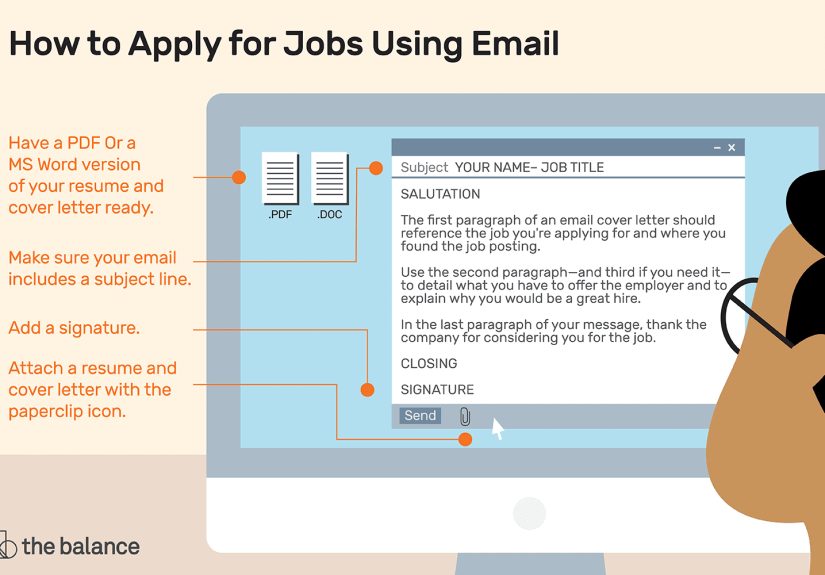
- Start With a Subject Line That Makes Sense
- How To Write the Email Body
- Should Your Cover Letter Go in the Email Body or as an Attachment?
- How To Tailor Your Email for Each Job
- Name Your Attachments Like a Professional Adult
- Best Practices for Tone and Formatting
- Common Mistakes That Sink Email Applications
- When and How To Follow Up
- Experience-Based Advice: What Real Job Seekers Learn the Hard Way
- Final Thoughts
Applying for jobs by email sounds simple. You find the opening, attach your resume, write “Please see attached,” and hit send like a brave little warrior of the workforce. Then you wait. And wait. And begin wondering whether your carefully crafted message got lost in the recruiter’s inbox, abducted by spam filters, or buried under 147 emails with subject lines like “Resume” and “Hi.”
Here’s the good news: applying for jobs using email is still a smart, effective way to reach employers when the posting asks for it or when you’re contacting a hiring manager directly. The bad news is that email applications can go sideways fast. One vague subject line, one sloppy attachment name, one message that reads like it was typed on a roller coaster, and your application starts looking less “hire me” and more “I am chaos in business-casual form.”
This guide will show you how to apply for jobs using email the right way: professionally, clearly, and with enough personality to sound human without sounding like you’re writing fan mail to a sandwich. You’ll learn what to include, what to avoid, how to structure your message, how to attach your resume, and how to follow up without becoming That Person.
Why Email Job Applications Still Matter
Not every employer wants applications through a giant online portal that asks you to upload your resume and then retype every word of it into seventeen little boxes from the year 2004. Some employers, especially smaller companies, startups, nonprofits, and direct recruiters, still ask candidates to apply by email. In other cases, you may email a hiring manager after a referral, networking conversation, career fair, or job inquiry.
That means your email is not just a delivery method. It is part of your application. In many cases, it is the first writing sample an employer sees. Before anyone opens your resume, your email tells them whether you can communicate clearly, follow directions, and present yourself professionally. In other words, your email is your digital handshake. Try not to make it sweaty.
Before You Write a Single Word, Read the Job Posting Like It Owes You Money
The first rule of applying for jobs using email is simple: follow the employer’s instructions exactly. If the posting says to use a specific subject line, use it. If it asks for a PDF resume and a separate cover letter, send both. If it wants writing samples, portfolio links, transcripts, or a job ID number, include them exactly as requested.
This is not busywork. Employers often use email instructions as a quick filter. They want to see who pays attention to detail. If the posting says “Subject line: Marketing Coordinator Application – Your Name” and you send “Hey there,” you may be telling them more about your candidacy than you meant to.
Before drafting your email, gather everything you need:
Your email job application checklist
- Your updated resume
- A tailored cover letter, if requested
- Portfolio, work samples, or certifications, if relevant
- The exact job title and job number
- The correct name and email address of the recipient
- A professional email address you actually check
That last one matters more than people think. If your email address looks like it was created during a sugar rush in middle school, now is the time to retire it with dignity. An address based on your real name is the safest choice.
Start With a Subject Line That Makes Sense
Your subject line should instantly tell the employer what your message is about. Recruiters move fast, and a clear subject line helps your application get noticed, sorted, and found later.
Strong subject lines usually include the job title, your name, and sometimes a job ID or referral if the posting requests it. Keep it direct. Keep it professional. Keep the mystery level at approximately zero.
Good subject line examples
- Application for Sales Associate – Maya Patel
- Graphic Designer Application | Jordan Lee
- Job Application: Project Coordinator – Alex Nguyen
- Referred by Dana Smith: Business Analyst – Chris Taylor
- Marketing Manager, Job ID 1842 – Taylor Johnson
Bad subject line examples
- Resume
- Hello
- Job
- Important!!!
- Please Read ASAP
Your goal is not to sound clever. Your goal is to sound easy to understand. Email applications are not the time to become an experimental poet.
How To Write the Email Body
The best job application emails are short, tailored, and readable. They are not life stories. They are not autobiographies. They are not emotional monologues about how you have wanted to work in office administration ever since you first alphabetized your crayons.
A good email body does five things:
- Greets the recipient professionally
- States the job you are applying for
- Briefly explains why you are a strong fit
- Mentions the attached documents
- Ends with a polite closing and contact information
A simple structure that works
Opening: Say why you are writing and identify the position.
Middle: Highlight two or three qualifications that match the role.
Closing: Mention attachments, thank them, and invite next steps.
Example email body
Dear Ms. Ramirez,
I am writing to apply for the Administrative Assistant position listed on your company website. With three years of experience supporting office operations, scheduling, document management, and customer communication, I believe I would be a strong addition to your team.
In my current role, I manage calendars for two department leaders, coordinate internal reports, and help streamline daily workflows. I am especially drawn to this opportunity because your company’s focus on responsive client service and organized operations closely matches my background and strengths.
I have attached my resume and cover letter for your review. Thank you for your time and consideration. I would welcome the opportunity to discuss how my skills can support your team.
Sincerely,
Maya Patel
555-123-4567
[email protected]
LinkedIn: linkedin.com/in/mayapatel
That’s it. Clean, relevant, and not trying to win a Pulitzer Prize before lunch.
Should Your Cover Letter Go in the Email Body or as an Attachment?
The answer is gloriously unsatisfying: it depends on the employer’s instructions.
If the posting asks for a cover letter attachment, send one. If it says to include your cover letter in the email body, do that instead. If it does not specify, a short, strong email plus an attached cover letter is usually a safe and professional option.
Think of the email body as your concise introduction and the cover letter as the expanded version. Your email should never repeat your resume line for line. Instead, it should connect your strongest qualifications to the role and give the employer a reason to open the attachments.
How To Tailor Your Email for Each Job
This is where many applicants get lazy, and lazy emails tend to have the life expectancy of a snow cone in July. Employers can spot a generic message fast. If your email could be sent to fifty companies without changing a word, it is probably too generic.
Tailoring does not mean rewriting your entire personality for every opening. It means making sure your message reflects the specific role, the company, and the qualifications they care about most.
Easy ways to tailor your email application
- Use the exact job title from the posting
- Mention where you found the job
- Reference one or two skills that match the description
- Include a referral if someone connected you
- Use keywords naturally when relevant
- Show genuine interest in the company or mission
For example, if the job description emphasizes client communication and scheduling, mention your experience in those areas. If it highlights data reporting, mention a specific reporting task you handle well. Do not just say you are “hardworking,” “motivated,” and “passionate.” Everyone says that. Even the guy who attached the wrong resume says that.
Name Your Attachments Like a Professional Adult
Attachment names matter. A file called resumefinalFINAL2.pdf does not radiate confidence. Neither does newresumeediteduseone.pdf, which sounds like even you are unsure whether this is the correct file.
Use simple, descriptive file names. Include your name and the document type. If relevant, include the role.
Strong file name examples
- Jordan-Lee-Resume.pdf
- Jordan-Lee-Cover-Letter.pdf
- Jordan-Lee-Portfolio.pdf
- Jordan-Lee-Project-Manager-Resume.pdf
Unless the employer requests a different format, PDF files are often the safest option because they preserve formatting better across devices. And before sending, open every attachment. Yes, every single one. This is how you avoid accidentally emailing a blank file, an outdated resume, or your grocery list. Although if your grocery list is exceptionally strategic, maybe save that talent for project management roles.
Best Practices for Tone and Formatting
Your job application email should sound professional, but it does not need to sound robotic. You are aiming for confident and respectful, not “Greetings, esteemed gatekeeper of corporate destiny.”
Use this tone
- Polite
- Direct
- Specific
- Warm but professional
Avoid this tone
- Too casual
- Too salesy
- Too desperate
- Too wordy
Formatting also matters. Use short paragraphs. Avoid giant blocks of text. Use a standard font and clean signature if your email client allows it. If you include a link to LinkedIn or a portfolio, make sure it actually works and leads somewhere helpful rather than a digital ghost town last updated during a group project in 2021.
Common Mistakes That Sink Email Applications
If you want your email application to stand out for the right reasons, avoid these classic mistakes:
1. Sending a blank email with only attachments
This feels abrupt and careless. Always include a message.
2. Using the wrong company or job title
Copy-and-paste errors are brutal. Few things say “I value this opportunity” less than emailing Company B about why you are excited to join Company A.
3. Ignoring the employer’s instructions
If the posting asks for a specific subject line, document format, or sample, follow it exactly.
4. Writing too much
Your email is not the place for your full life story. Keep it focused.
5. Attaching the wrong file
This happens more than people admit. Double-check every attachment before sending.
6. Forgetting to proofread
Typos in a job application email can make you look rushed or careless. Read it out loud before sending. You will catch more than you think.
7. Applying from an unprofessional email address
If your address sounds like a gaming handle, a joke, or a cry for help, change it.
When and How To Follow Up
Once you send your application, resist the urge to follow up twelve hours later with “Just checking!” Employers need time to review candidates. A polite follow-up is fine if you have not heard back after about one to two weeks and the posting does not say otherwise.
Your follow-up should be brief, respectful, and easy to skim.
Sample follow-up email
Subject: Follow-Up on Application for Content Writer – Jamie Brooks
Dear Mr. Ellis,
I hope you are doing well. I wanted to follow up on my application for the Content Writer position submitted on April 3. I remain very interested in the opportunity and would be glad to provide any additional information.
Thank you for your time and consideration. I appreciate your review and look forward to hearing from you.
Best regards,
Jamie Brooks
That’s enough. No guilt trips. No “I know you’re busy, but…” No dramatic closing scene where you imply you have been standing outside the inbox in the rain.
Experience-Based Advice: What Real Job Seekers Learn the Hard Way
Here’s the part nobody tells you when you start emailing job applications: the process is not hard because email is complicated. It is hard because tiny details carry surprising weight. Most applicants do not get rejected because they used the wrong shade of professionalism. They get ignored because their message looked generic, careless, or forgettable.
One common experience job seekers talk about is realizing too late that the email itself mattered almost as much as the resume. A candidate might spend hours polishing bullet points and then send an email that says only, “Attached.” That can feel efficient to the sender, but to the employer it may feel lazy. A short message with context, enthusiasm, and courtesy tends to land much better.
Another lesson people learn is that personalization does not need to be dramatic. You do not have to write a masterpiece. Even one line explaining why you are interested in that specific role can make the email feel more thoughtful. A sentence like “I’m especially interested in this opportunity because of your community outreach work” sounds much stronger than a generic statement about being a hardworking team player.
Many applicants also discover that subject lines are doing more work than they realized. Recruiters sort and scan quickly. If your subject line clearly identifies the role and your name, you make their job easier. That sounds small, but hiring processes are full of small decisions. Easy-to-review candidates often create better first impressions.
Then there is the attachment problem, which deserves its own cautionary museum. People send resumes with confusing file names, old versions, corrupted files, or documents that were never updated for the role. Smart job seekers learn to create a tiny pre-send ritual: check the recipient, check the subject line, check the attachment names, open each file, then send. It takes two minutes and can save your application from becoming a cautionary tale.
Experience also teaches that professional does not mean stiff. Some candidates become so formal that they sound unnatural. Others swing the other way and sound too casual. The sweet spot is respectful, clear, and human. You are not trying to impress employers with Victorian prose, and you are definitely not texting a friend about weekend plans. You are showing that you can communicate like someone they would trust with clients, coworkers, and deadlines.
Finally, experienced job seekers learn not to pin all their hope on one email. Even a great application may not receive a response right away. That does not always mean you did something wrong. Hiring can be slow, inboxes get crowded, and decisions take time. The healthiest approach is to send strong applications, track where you applied, follow up professionally, and keep moving. Momentum matters. Confidence matters. And yes, having a spreadsheet can be weirdly empowering.
The best email applications feel easy to read because a lot of thought went into making them simple. That is the real secret. Good job search emails are not flashy. They are clear, targeted, polished, and respectful. They quietly tell an employer, “I understand how professional communication works, I understand what this role needs, and I’m ready to make your life easier.” That message, when delivered well, is powerful.
Final Thoughts
If you want to know how to apply for jobs using email successfully, remember this: your email is part introduction, part writing sample, part first impression, and part proof that you can follow directions without wandering off into the wilderness. A strong email job application is clear, tailored, concise, and polished. It makes the employer’s job easier and makes your candidacy easier to remember.
So before you send your next application, slow down for five extra minutes. Check the instructions. Tighten the subject line. Personalize the message. Name the files clearly. Proofread everything. Then send it with confidence. Because in a crowded inbox, professionalism is not boring. It is memorable.