Table of Contents >> Show >> Hide
- Why Nuclear Radiation Is So Damaging in the First Place
- The Real Secret: Survival Is a Damage-Management Game
- The Most Famous Radiation-Tolerant Animals
- What About Cockroaches?
- Do Animals in Chernobyl Prove Radiation Is Not a Big Deal?
- Why Scientists Care So Much About These Animals
- Experience and Perspective: What This Topic Feels Like in the Real World
- Conclusion
- SEO Tags
Say the words nuclear radiation and most people picture instant doom, glowing wastelands, and maybe one very confused movie lizard stomping through downtown. Reality is both less cinematic and more interesting. Ionizing radiation is genuinely dangerous. It can damage DNA, disrupt cells, and raise the risk of sickness, sterility, and cancer. But nature, being nature, has spent millions of years inventing weird workarounds for almost everything. That includes radiation damage.
Some animals are not “immune” to radiation, and they definitely are not strolling around asking gamma rays to “hit me with your best shot.” What certain species can do is survive levels of radiation exposure that would be devastating for humans. Their advantage comes from a toolkit of biological tricks: protecting DNA, repairing it quickly, limiting oxidative stress, slowing metabolism, and sometimes entering a dried-out dormant state that makes damage harder to trigger in the first place.
That distinction matters. Surviving exposure to nuclear radiation is not the same thing as enjoying it, thriving forever in it, or becoming a tiny superhero with rent-control problems. It means some animals are better at managing the biological chaos radiation causes. Scientists study these creatures because their survival strategies may eventually help improve cancer treatment, radiation protection, biotechnology, and even space travel.
Why Nuclear Radiation Is So Damaging in the First Place
To understand why some animals handle radiation better than others, it helps to know what radiation actually does. Ionizing radiation carries enough energy to knock electrons out of atoms and molecules. In living tissue, that can damage cells directly by breaking chemical bonds in DNA, or indirectly by splitting water molecules and creating reactive compounds that then attack DNA, proteins, and cell membranes.
In plain English: radiation is a molecular vandal. It can slice DNA strands, scramble normal cell processes, and leave cells struggling to repair the mess. High doses delivered quickly can cause acute radiation sickness. Lower or chronic exposure can still add up over time by increasing mutation rates and cancer risk. So when an animal survives high radiation, it is not dodging damage completely. It is controlling, limiting, or repairing it better than most species can.
The Real Secret: Survival Is a Damage-Management Game
Animals that tolerate radiation well usually rely on a combination of protective mechanisms rather than one magic gene. Think of it less like a force field and more like a very efficient disaster response team.
1. Better DNA Protection
Some animals appear to shield their DNA from damage before it becomes catastrophic. Tardigrades are the headline act here. Researchers have identified a unique protein called Dsup, short for “damage suppressor,” that helps reduce DNA breakage under stress. It is one reason tardigrades became famous in radiation biology, though it is not the only reason they are so hardy.
2. Faster and More Effective DNA Repair
Radiation often causes double-strand breaks, which are among the most dangerous kinds of DNA damage. A few animals can repair these breaks with startling efficiency. Newer research on tardigrades shows they can dramatically ramp up DNA-repair genes after exposure, almost as if the cell suddenly calls every repair crew in the city and tells them to cancel lunch.
3. Strong Antioxidant Defenses
Radiation injury is not only about DNA. It also damages proteins, and proteins are essential for the enzymes that repair DNA in the first place. Some radiation-tolerant animals seem especially good at protecting proteins from oxidative stress. Bdelloid rotifers, for example, are thought to owe much of their extraordinary resistance to unusually effective antioxidant protection.
4. Desiccation Tolerance and Dormancy
Several radiation-resistant animals are also masters of surviving dehydration. That is not a coincidence. Desiccation and radiation can produce similar kinds of cellular damage, especially DNA breaks and oxidative stress. Species that evolved to survive drying out may have accidentally built a side hustle in radiation tolerance. When metabolism slows down and water content drops, there is less opportunity for radiation-driven chemistry to cause havoc.
The Most Famous Radiation-Tolerant Animals
Tardigrades: Tiny Legends With Serious Lab Credentials
Tardigrades, also called water bears, are the celebrities of the radiation-resistance world. These microscopic animals can endure extreme cold, heat, dehydration, vacuum, and high doses of ionizing radiation. In laboratory settings, some tardigrade species have survived radiation exposures far beyond what humans can tolerate.
For years, the obvious question was: how? Scientists now think the answer is layered. Tardigrades do suffer DNA damage from radiation, but they appear exceptionally good at repairing it. They also produce unusual proteins, including Dsup, that help protect chromosomes. Recent work has shown that certain tardigrades react to ionizing radiation by sharply increasing the expression of DNA-repair genes, which suggests their resilience is active, dynamic, and highly coordinated.
In other words, tardigrades are not invincible. They are incredibly prepared. That is a much more useful trait in biology than invincibility anyway. Invincibility is for comic books. Preparation is for evolution.
Bdelloid Rotifers: The Quiet Champions
If tardigrades are the rock stars, bdelloid rotifers are the underrated virtuosos quietly shredding in the back room. These microscopic freshwater animals are among the most radiation-resistant animals ever studied. Research has shown they can recover from radiation doses that shatter their genomes into many pieces.
That sounds impossible until you remember that life is basically chemistry plus persistence. Bdelloid rotifers appear able to reassemble the damage thanks to powerful repair machinery, while their antioxidant defenses protect critical proteins from being wrecked during the process. Scientists argue that this protection of proteins may be one of the biggest keys to their resilience. DNA can sometimes be repaired. Repair systems themselves cannot work if their protein components are destroyed first.
Rotifers are also famous for surviving desiccation, which again supports the idea that adaptation to drying out may have prepared them for radiation. Evolution rarely builds one feature for one purpose only. Nature loves a two-for-one coupon.
Nematodes: Small Bodies, Big Resilience
Nematodes, or roundworms, are another group that has caught scientists’ attention. In 2024, researchers studying worms collected in the Chornobyl Exclusion Zone reported that environmental radiation exposure had not systematically damaged their genomes or made them uniquely tolerant compared with non-Chornobyl relatives. That finding was important for two reasons.
First, it suggested that at least some worm species are naturally resilient enough that chronic exposure does not leave the dramatic genomic signature people might expect. Second, it reminded everyone to slow down before declaring “super worms” or “radiation-proof animals.” The researchers were careful: this did not mean Chornobyl is safe. It meant nematodes are already pretty tough creatures.
That kind of toughness is scientifically valuable. Because worms reproduce quickly and are easy to study, they give researchers a handy model for investigating why some animals tolerate DNA damage better than others.
The Sleeping Chironomid: Survival by Drying Out
One of the most fascinating cases is Polypedilum vanderplanki, sometimes called the sleeping chironomid. This tiny midge from Africa can survive almost complete dehydration by entering a state called anhydrobiosis. In that state, metabolism nearly stops, and the larvae become astonishingly tolerant to multiple stresses, including high doses of radiation.
Why does this happen? When the larvae are dried out, the chemistry inside their cells changes dramatically. There is much less water available for radiation to split into damaging reactive molecules, and the larvae also appear to activate stress-response and repair pathways that help them recover when conditions improve. Scientists studying this insect see it as one of the clearest examples of how desiccation tolerance and radiation tolerance can overlap.
What About Cockroaches?
Ah yes, the cockroach. No article about radiation-resistant animals can avoid this six-legged urban legend. The popular myth says cockroaches would survive a nuclear apocalypse and inherit the Earth while humans become a tragic footnote. The truth is less dramatic.
Cockroaches are indeed more radiation-tolerant than humans, partly because their cells divide less frequently. Cells are especially vulnerable to radiation during division, so slower-dividing tissues can sometimes weather exposure better. But that does not mean cockroaches can survive a nuclear blast. The heat, shockwave, and extreme immediate conditions of an actual explosion would kill them just fine, thank you very much.
So the myth needs a trim. Cockroaches are hardy. They are not miniature bunker consultants. If anything, the real lesson is that many insects can handle radiation better than mammals, but even then, the champions of radioresistance are usually microscopic animals like tardigrades and rotifers, not the roach in your kitchen pretending the lease is in its name.
Do Animals in Chernobyl Prove Radiation Is Not a Big Deal?
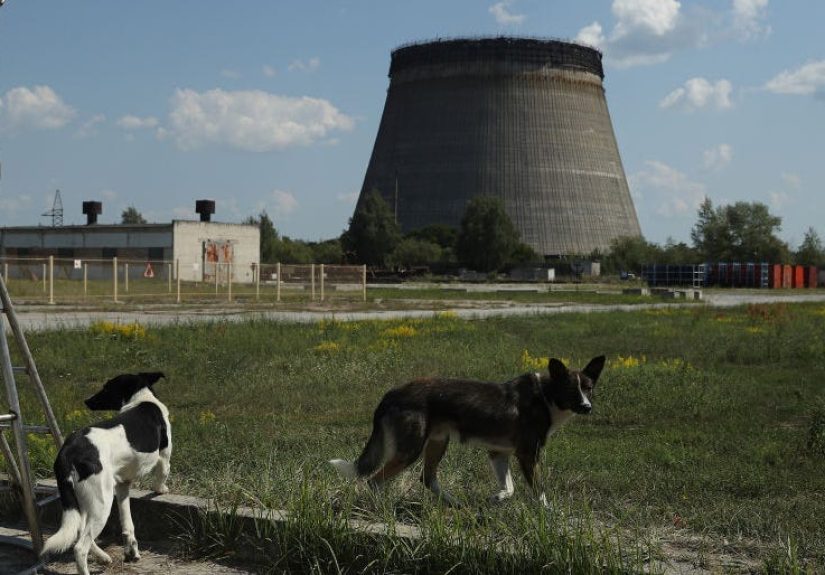
No, and this is where internet summaries often face-plant. The Chernobyl and Fukushima regions are valuable natural laboratories, but the science is complicated. Some studies have found abundant wildlife in parts of Chernobyl, including large mammals. One likely reason is simple: fewer humans. Remove roads, farming, noise, hunting, and habitat fragmentation, and many species rebound.
But population abundance does not automatically mean individuals are unharmed by radiation. Other studies have reported damage, stress, reproductive effects, cataracts, or other problems in certain species. Researchers also disagree about how strong, widespread, or long-lasting those effects are, because field conditions are messy. Animals move, radiation exposure varies by location and time, and many other environmental factors are involved.
There are also hints of adaptation in some cases. Darker tree frogs in the region have been linked to higher melanin, which may have offered some protection early on. Certain rodents and plants have shown signs consistent with stronger antioxidant or DNA-repair responses. But scientists remain cautious. Chernobyl wildlife is not proof that radiation is harmless. It is proof that biology, ecology, and evolution are annoyingly complicated in the most scientifically productive way possible.
Why Scientists Care So Much About These Animals
This research is not just about marveling at microscopic weirdos, although that is absolutely part of the fun. Radiation-resistant animals may help scientists develop better ways to protect healthy tissue during radiation therapy, improve recovery after accidental exposure, and design new tools for medicine, biotechnology, and space exploration.
Tardigrade proteins, especially Dsup, have already inspired experiments in human and mammalian cells. The idea is not to turn people into water bears. The idea is to learn how nature reduces DNA damage and then adapt that strategy in a controlled medical setting. That could matter for cancer patients receiving radiation, astronauts exposed to cosmic radiation, or emergency workers operating in contaminated environments.
In short, when scientists study a rotifer surviving what looks like molecular catastrophe, they are also asking a very human question: how can we protect our own cells better?
Experience and Perspective: What This Topic Feels Like in the Real World
There is something strangely humbling about reading radiation biology research or following field studies from places like Chornobyl. On paper, the subject sounds cold and clinical: dose rates, DNA breaks, oxidative stress, repair pathways, mutagen tolerance. But the moment scientists begin describing actual animals, the topic becomes vivid. Suddenly the story is not just about radiation. It is about persistence.
Imagine a researcher peering into a microscope at a tardigrade that should, by all common sense, be in terrible shape after intense exposure. Instead, it is still there, tiny and stubborn, behaving like the laws of fragility are more of a suggestion. Or picture scientists collecting worms in a contaminated landscape, expecting a genomic horror show and finding something subtler: not invulnerability, but resilience. That kind of result changes how a person thinks. It replaces simple fear with a deeper respect for biology.
The real experience of this topic is often the experience of having assumptions corrected. Most people grow up with a very binary idea of radiation: safe or deadly, normal or mutant, fine or finished. Nature does not operate in those neat categories. Different species respond differently. Different tissues respond differently. Dose matters. Timing matters. Hydration matters. Life stage matters. Ecological context matters. One species may decline while another hangs on, adapts, or rebounds because other pressures disappeared.
There is also an emotional tension in this field. On one hand, radiation-tolerant animals are fascinating and sometimes even funny. Tardigrades look like vacuum cleaner bags with opinions. Rotifers sound like obscure indie bands. The sleeping chironomid sounds like it belongs in a bedtime story for biologists. On the other hand, the places and conditions that make this research urgent are often linked to disaster, contamination, and human suffering. That contrast is impossible to ignore.
For scientists, one of the most important experiences tied to this topic is learning restraint. The public loves headlines about “mutant wolves,” “super worms,” or “animals that laugh at radiation.” Good researchers usually respond with a slower, more careful message: let’s measure first. Let’s compare species. Let’s separate chronic exposure from acute exposure. Let’s not confuse survival with immunity or abundance with health. That discipline is part of the story too, and honestly, it may be the most impressive survival trait in modern science.
There is a practical side as well. Studying radiation-tolerant animals can feel hopeful. Every insight into DNA protection, antioxidant defense, or stress recovery hints at real applications for medicine. A mechanism that helps a microscopic animal survive may one day help reduce side effects in radiation therapy or protect cells during long-duration spaceflight. So the experience of this topic is not just wonder. It is usefulness. Curiosity here has a destination.
And maybe that is why the subject stays with people. These animals do not make radiation benign, and they do not rewrite the risks of nuclear accidents. What they do offer is a reminder that life can be astonishingly inventive under pressure. The lesson is not “radiation is no problem.” The lesson is that survival sometimes depends on hidden strengths, repair done in time, and systems that keep working when everything should have fallen apart. That is true in cells, in ecosystems, and frankly, in life beyond the lab too.
Conclusion
Some animals can survive exposure to nuclear radiation not because they are magically immune, but because evolution equipped them with extraordinary ways to limit damage and recover from it. Tardigrades use protective proteins and rapid DNA repair. Bdelloid rotifers combine powerful antioxidant defenses with exceptional recovery skills. Certain worms and desiccation-tolerant insects show that resilience can come from low water content, dormancy, and efficient cellular maintenance. Even the famous cockroach, while tougher than humans, is more myth than miracle.
The deeper story is that radiation tolerance is a biological strategy, not a comic-book trait. It depends on chemistry, timing, repair capacity, and ecological context. And the more scientists learn from these animals, the more likely it becomes that their survival tricks could inspire better human protections in medicine, environmental health, and space science. Nature is not telling us that radiation is harmless. It is showing us that some forms of life have learned how to negotiate with danger better than we have.